


For U.S.-based travelers who fly Lufthansa or other Star Alliance carriers, the Lufthansa Miles & More World Elite Mastercard can be a powerful but niche tool. It is one of the very few ways in the United States to earn Miles & More miles directly from everyday spending, and it comes with features like mileage protection and an annual companion ticket. Used well, it can help you reach a Europe trip in business class or keep a hard-earned balance from expiring. Used poorly, it can leave value on the table and lock you into an inflexible mileage program. If you are opening or using this card for the first time, understanding how it actually works in the real world is essential.
Get the latest updates straight to your inbox!
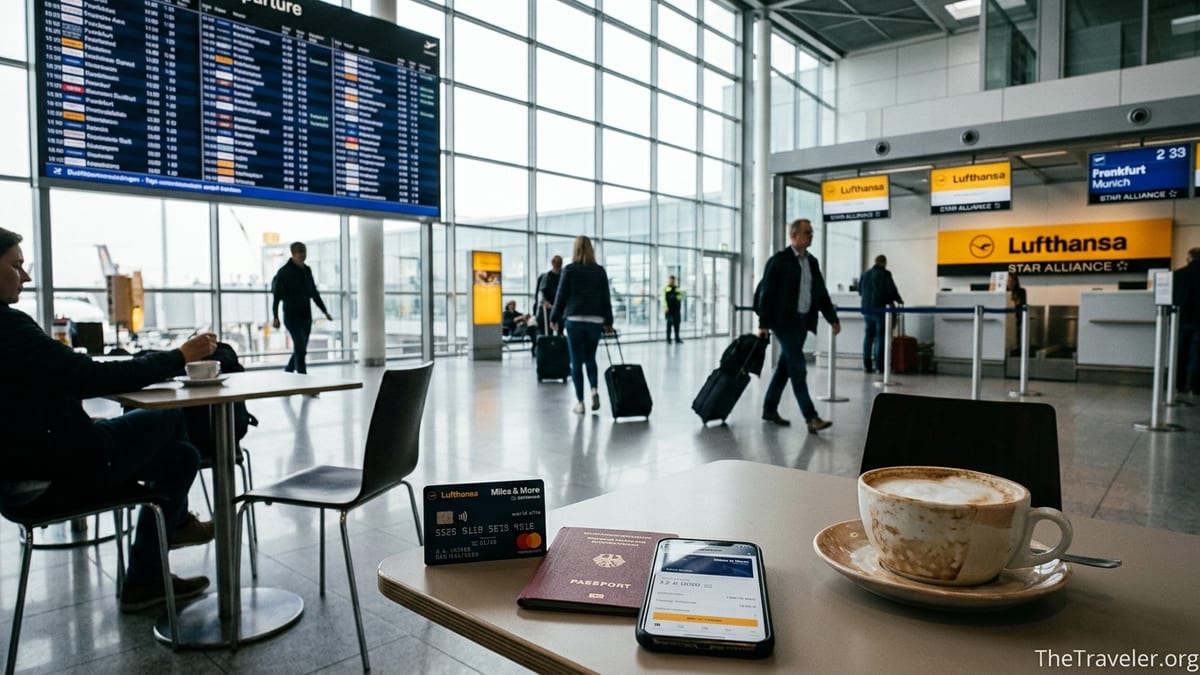
How the Miles & More Mastercard Fits Into the Lufthansa Ecosystem
The Miles & More World Elite Mastercard, issued in the U.S. by Barclays, earns miles directly in Lufthansa’s Miles & More frequent flyer program rather than in a flexible bank currency. That is the card’s main appeal and its main limitation. Because major U.S. programs like Chase Ultimate Rewards, American Express Membership Rewards and Capital One Miles do not transfer to Miles & More, this card is effectively the only mainstream way for most U.S. residents to build a meaningful Miles & More balance without flying. At the same time, every mile you earn is locked into that ecosystem, so you need to be reasonably sure you will use Lufthansa Group or Star Alliance awards.
In practical terms, this card is best suited to travelers who fly Lufthansa, SWISS, Austrian, Brussels Airlines or other Miles & More airlines at least occasionally, or who have a very specific redemption in mind. For example, a New York traveler planning to book two business class awards on Lufthansa from Newark to Munich next summer might use the welcome bonus from this card to top up a balance earned from previous flights. Someone who mainly flies domestic routes on low-cost carriers in the United States and rarely visits Europe will find it harder to use the miles efficiently.
The card typically carries an annual fee in the neighborhood of 89 U.S. dollars and does not charge foreign transaction fees, which makes it usable on trips abroad without extra surcharges on international purchases. However, it is not a general-purpose rewards powerhouse the way a broad travel card from a U.S. bank might be. If you are adding it to an existing wallet, think of it as a specialized tool rather than a primary everyday card.
Earning Miles on Everyday Spending and Flights
Once your card is active, your first task is learning where it earns the most. Current publicly available information shows that cardholders earn 2 Miles & More miles per dollar spent with airlines in the Lufthansa Group and 1 mile per dollar on most other purchases. This structure means that putting a 1,200 dollar Lufthansa ticket from Chicago to Frankfurt on the card will earn roughly 2,400 miles from the credit card, on top of the award miles you earn from the flight itself in the Miles & More program. A 1,200 dollar month of mixed grocery, gas and streaming expenses, on the other hand, will generate only around 1,200 miles from card spend.
For many travelers, that earning rate is lower than what they could achieve by using a flexible travel card that earns two or more transferable points per dollar on broad categories like dining or travel. The reason to keep spending on the Miles & More card is not that it out-earns those products in a vacuum, but that it earns in a currency you cannot easily get any other way. If you are working toward a specific Miles & More redemption, even that 1 mile per dollar on a weekly supermarket run can be valuable.
When you combine card spend with paid flights, the numbers become more compelling. Consider a traveler based in Los Angeles who flies Lufthansa economy round-trip to Zurich once per year at an average fare of 900 dollars. The flight itself might earn in the ballpark of a few thousand Miles & More miles, depending on fare class and status. If that same traveler also consistently puts 1,500 dollars per month of general spending on the card, they could add roughly 18,000 miles per year from card spend alone. Over two or three years, that steady accumulation begins to move them toward a long-haul award, especially if they also capture a welcome bonus.
Welcome Bonus, Companion Ticket and Other Key Benefits
For new cardholders, the headline feature is usually the welcome bonus. Recent public offers have been in the region of 60,000 Miles & More miles after meeting a minimum spend requirement of around 3,000 dollars in the first 90 days. Exact terms can change, but this ballpark is useful for planning. If you time large purchases such as a summer flight to Europe, annual insurance premiums or home projects in those first three months, you can collect a chunk of miles big enough to cover at least a one-way transatlantic economy ticket plus taxes and fees.
The card also offers an annual companion ticket, typically issued each year after you pay your annual fee and meet any published requirements. In practice, this benefit is most useful for travelers who buy paid Lufthansa or Lufthansa Group tickets in higher cabin classes or less discounted fare buckets. The companion ticket often requires you to pay full or nearly full fare for the first passenger, after which the second passenger flies on a reduced fare but still pays taxes and fees. A realistic example would be a couple in New York booking two economy tickets to Vienna in the early summer shoulder season. The primary traveler might pay a standard 1,100 dollar fare, while the companion fare is discounted but still carries around 200 to 300 dollars in taxes and surcharges.
Other benefits are more straightforward. The card has no foreign transaction fees, so a 50 euro dinner in a Berlin bistro or a 200 Swiss franc hotel bill in Geneva will not incur the extra 3 percent fee that some non-travel cards charge. The card may also provide secondary travel protections, such as trip cancellation or lost luggage coverage, but you should read the current guide to benefits that comes with your card to understand the specific limits and exclusions. As an added nuance for frequent flyers, Miles & More periodically allows cardholders to convert a portion of their earned award miles into status points each calendar year, which can help push you toward Miles & More elite tiers if you are already flying regularly.
Protecting Your Miles From Expiring
One of the most important reasons many travelers apply for the Lufthansa Miles & More Mastercard is mileage protection. By default, Miles & More award miles are subject to a relatively strict expiration policy. Under the core program rules, miles are valid for 36 months from the date they are earned and then expire at the end of the corresponding calendar quarter if unused. For example, miles earned on a flight in October 2025 would ordinarily expire on December 31, 2028 if you did nothing with them in the meantime.
Holding a qualifying Miles & More credit card and using it regularly can stop that expiration clock. Current program rules explain that if you have held a Miles & More credit card for at least three months and make at least one qualifying purchase per month, your award miles remain valid indefinitely for as long as those conditions are met. That protection typically applies not only to miles earned from the card itself, but also to miles earned from flights and other partners that post to the same Miles & More account. In practice, that means a U.S. cardholder with 80,000 miles accumulated over several years of flying to Frankfurt for work can keep that balance intact by simply charging something small, such as a monthly streaming bill or a 10 dollar coffee run, to the card every month.
It is important to note that this protection is not usually retroactive. Once miles have actually expired, getting the card later will not bring them back. If you know you have a significant balance with older miles approaching the three-year mark, it is wise to apply for the card and begin using it at least several months before the expiry quarter shown in your Miles & More account. The mileage summary in your online profile and monthly emails from the program typically show which miles are scheduled to expire at the end of the current quarter, which can serve as a reminder to check that your card is active and has posted recent transactions.
Planning Realistic Award Redemptions With Your New Miles
Once your first batch of miles from the welcome bonus and initial spending posts, the natural next step is planning how to use them. Miles & More publishes award charts for Star Alliance and partner flights, with required mileage amounts based on regions and cabin class. As of early 2026, a standard one-way economy Star Alliance award between North America and Europe typically falls around the mid-20,000s to low-30,000s in miles, while business class one-way awards tend to run in the 60,000 to 70,000 mile range, depending on the specific chart and any promotional offers at the time.
In concrete terms, a first-time cardholder who earns a 60,000 mile welcome bonus could reasonably expect that balance to cover a round-trip economy award on a Star Alliance airline between, for example, Boston and Frankfurt, plus taxes and surcharges. Alternatively, they might use the same 60,000 miles to book a one-way business class seat from Chicago to Zurich or New York to Munich and pay cash for the other direction. Taxes and carrier-imposed surcharges on transatlantic awards booked through Miles & More can be significant, often a few hundred dollars per ticket, so it is wise to price the full cash total during the booking process before committing your miles.
The program also offers special award types, such as mileage bargains and round-the-world awards, that can provide better value if your travel plans are flexible. For instance, a mileage bargain promotion might reduce the miles required for a round-trip economy ticket between Washington Dulles and Vienna for off-peak dates, effectively stretching a 60,000 to 70,000 mile balance further than the standard chart. On the other end of the spectrum, a world award flight in business class can require several hundred thousand miles but allow you to piece together a multi-continent journey that would be very expensive with cash.
Because Miles & More miles are not easily replaced from U.S. bank points, first-time cardholders should think carefully before redeeming for low-value options such as small merchandise items or low-denomination vouchers. In many cases, saving miles for flights in premium cabins on long-haul segments, where cash fares routinely exceed 3,000 dollars round trip, can generate much better real-world value for each mile. Running a quick comparison between the miles required and the equivalent cash fare for your chosen route will help you decide whether to pay with miles, cash or a mix.
Putting the Card to Work on an Actual Trip
To understand how the Miles & More Mastercard performs in everyday use, imagine a traveler based in San Francisco who has just been approved for the card in April. The welcome offer requires 3,000 dollars in spending within 90 days. They plan a family trip to Europe in August, with flights from San Francisco to Frankfurt and onward to Rome on Lufthansa, and then a return from Munich to San Francisco. A typical peak-summer economy fare for that itinerary might run around 1,400 dollars per person when booked several months in advance.
If they put two of those tickets on the Miles & More card, they will easily clear the 3,000 dollar minimum spend and unlock the welcome bonus of approximately 60,000 miles. The flight purchases generate about 6,000 award miles from the card itself, since Lufthansa purchases earn 2 miles per dollar, and the flights also earn additional miles in the Miles & More program based on distance and fare class. After the trip, they might see a combined total near 80,000 miles between the welcome bonus, ticket spend and flight miles, depending on exact earnings.
On top of that, the no foreign transaction fee feature means that their 800 euro hotel bill in Rome, multiple 50 euro restaurant meals and a 200 euro train pass purchase in Munich all post at close to the interbank exchange rate without an added 3 percent surcharge. If they had used a non-travel U.S. card that charged foreign transaction fees, that same week of spending might have cost them an extra 100 dollars or more in fees. While those foreign purchases only earn 1 mile per dollar on this card, the savings on fees plus the additional miles are meaningful when stacked with the value of the welcome bonus.
When they return home, the family might decide to save their miles for a future trip in a higher cabin. If economy round trips between the West Coast and Europe are commonly priced around 30,000 to 35,000 miles each way, they could instead aim for a business class one-way from Los Angeles to Zurich next spring, which could require around 60,000 to 70,000 miles. As long as they keep the card open, continue to make at least a small purchase each month, and watch for any changes to terms, the miles earned from this initial trip and welcome offer will not expire while they work toward that premium redemption.
The Takeaway
Using the Lufthansa Miles & More Mastercard for the first time is easiest when you are clear about what it does well and what it does not. It is not designed to be a top-earning general travel card for every purchase, and its miles are less flexible than many U.S. bank rewards currencies. Where it shines is in three areas: giving U.S. travelers a practical path to earn Miles & More miles from everyday spending, protecting a hard-earned balance from expiry and helping to unlock specific high-value redemptions on Lufthansa Group and Star Alliance flights.
For travelers who rarely fly to Europe, do not care about Star Alliance partners and simply want cash back or broadly useful bank points, this card is unlikely to be the best choice. For those who regularly find themselves on Lufthansa flights between cities like New York and Frankfurt, Chicago and Munich, or San Francisco and Zurich, or who are building toward a business class redemption that only Miles & More can offer at a reasonable mileage level, the card can be a smart, targeted addition to a wallet.
If you are just getting started, focus first on earning the welcome bonus efficiently with planned purchases, then on setting up a small recurring charge to protect your miles each month. From there, take the time to explore the Miles & More award charts, compare taxes and surcharges across different routes and cabins, and think about how your new miles can turn into real-world trips. With a bit of planning, the card can shift from being just another piece of plastic to a concrete tool for future journeys.
FAQ
Q1. Is the Lufthansa Miles & More Mastercard worth it for a first-time cardholder?
It can be worthwhile if you plan to redeem Miles & More miles for Lufthansa Group or Star Alliance flights and value mileage protection. If you rarely fly those airlines or prefer flexible bank points, other cards may offer better long-term value.
Q2. How many miles can I realistically earn from the welcome bonus?
Recent public offers have been around 60,000 Miles & More miles after meeting a spending requirement of roughly 3,000 dollars in the first 90 days. Exact details can change, so always check the current application terms.
Q3. How does the mileage protection benefit actually work?
Under current rules, if you have held a Miles & More credit card for at least three months and make at least one qualifying purchase per month, your award miles are protected from expiring as long as those conditions remain in place.
Q4. What kind of award flights can I book with 60,000 Miles & More miles?
Approximately 60,000 miles can often cover a round-trip economy ticket between North America and Europe on a Star Alliance airline, or a one-way business class ticket on certain routes, plus taxes and surcharges.
Q5. Are taxes and fees high on Lufthansa Miles & More award tickets?
Carrier-imposed surcharges on transatlantic itineraries booked through Miles & More can be substantial, often several hundred dollars per ticket. It is important to compare the total cash cost, not just the miles required.
Q6. Does the card charge foreign transaction fees when I use it abroad?
No. The Lufthansa Miles & More Mastercard does not charge foreign transaction fees, so you can use it to pay in euros, Swiss francs or other currencies without an extra percentage-based surcharge.
Q7. Can I transfer points from other U.S. cards into Miles & More instead of using this card?
Major U.S. bank programs such as Chase Ultimate Rewards and American Express Membership Rewards do not currently transfer directly to Miles & More. That is why this co-branded Mastercard is one of the only practical ways for U.S. consumers to earn Miles & More miles from card spending.
Q8. How should I use the annual companion ticket benefit?
The companion ticket usually works best when you are buying paid Lufthansa or Lufthansa Group tickets in cabins and fare classes where the base fare is relatively high. You pay a qualifying fare for the primary ticket, then the companion flies on a discounted fare while still paying taxes and fees.
Q9. What happens to my miles if I close the credit card?
If you close the card and do not have Miles & More elite status or another form of mileage protection, your miles will again be subject to the standard 36-month expiration rule. Any miles that are already older may begin to expire at the end of the relevant calendar quarter.
Q10. Should I use this card for all my everyday spending?
It can make sense to put regular spending on this card if you are actively working toward a Miles & More redemption or need to maintain mileage protection. However, many travelers pair it with a general travel card that earns higher rewards on common categories for non-Lufthansa-related purchases.