


More news on this day
Thousands of regional commuters in Victoria are facing prolonged disruption after a nationwide Telstra outage shut down the entire V/Line rail network, with passenger services suspended across the state and no clear timeline for when trains will resume.
Get the latest news straight to your inbox!
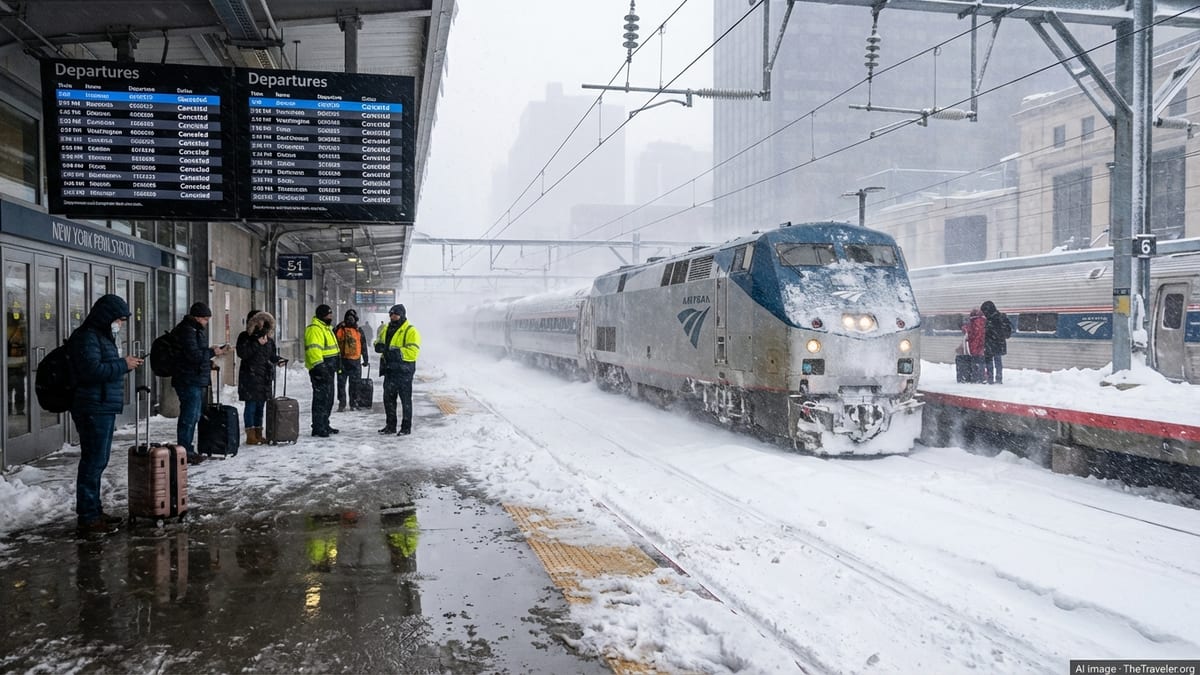
Safety systems offline as radio failure halts every V/Line train
Publicly available information shows that the shutdown began early on Wednesday, July 8, when a fault in Telstra’s telecommunications systems disrupted the radio network V/Line relies on to safely operate trains. Reports indicate that the failure affected both passenger and freight operations, forcing all V/Line services to be held at their nearest stations and preventing new services from departing.
Coverage from Australian broadcasters and regional outlets describes scenes of deserted platforms at Melbourne’s Southern Cross station and halted trains across the regional network. The disruption extended along key corridors linking Melbourne with Geelong, Ballarat, Bendigo, Gippsland and the north-east, effectively cutting off rail access for many regional centres during the busy morning peak.
Information released via government channels states that the radio network issue is directly linked to the wider Telstra outage, which impacted mobile and data services nationally from around 4:30am. Although Telstra has since restored most general services, rail communications used for train control and safety have remained unstable, leaving the regional operator unable to restart passenger operations.
V/Line’s own public updates refer to “no estimated time for rectification” and advise that trains are expected to remain suspended into Thursday morning at least. The lack of a definitive restoration window has amplified frustration among passengers already on board trains when services were halted, as well as those stranded at intermediate stations without alternative transport.
Limited coaches and crowded roads leave regional travellers stuck
With rail services offline, V/Line and the state’s transport department have turned to coach replacements and road transport to move stranded passengers. However, regional news outlets report that only a very limited number of coaches are available, and many lines have no guaranteed replacement services at all. Passengers have been urged through public notices to defer non-essential travel, highlighting the constrained capacity of the bus network to absorb thousands of displaced rail users.
On key commuter routes such as the Geelong and Ballarat lines, reports from local media indicate that coach services filled quickly, leaving late-arriving passengers with few options other than private vehicles or carpooling. Social media posts and community forums describe commuters left waiting on platforms with little information beyond repeated advice to seek alternative travel arrangements.
The disruption comes on top of long running concerns among regional Victorians about the reliability and resilience of their transport options. Earlier coverage in 2026 documented problems such as “ghost bookings” on V/Line coaches and limited frequency on remote routes, particularly in areas like Mildura where residents already depend heavily on a small number of daily services. For those communities, the sudden loss of the rail system has intensified existing anxieties about isolation and access to essential appointments, work and education.
Traffic conditions on major arterial roads into Melbourne reportedly deteriorated through the day as more people turned to cars. Observers noted heavier congestion on the western and northern corridors, where many of the state’s fastest growing outer suburbs rely on V/Line services for daily commuting.
Disruption to continue into Thursday with no clear end in sight
By Wednesday evening, multiple regional newspapers and broadcasters were reporting that the shutdown would extend through the evening peak and into Thursday morning, leaving many passengers preparing for at least another day of uncertainty. The Department of Transport and Planning has publicly confirmed that no V/Line trains will operate during the Thursday morning peak, with only a reduced coach network attempting to cover key routes.
Statements published on the V/Line website emphasise that teams are still assessing the communications failure and that trains cannot be permitted to operate until the radio network is fully stable. The operator notes that there is no “clearance time” yet for safe resumption of services, reinforcing the message that disruption will be ongoing rather than quickly resolved.
For travellers already away from home, the absence of even a skeleton rail timetable has created acute difficulties. Commenters in regional communities have highlighted cases of passengers stranded overnight in smaller towns, in some instances with limited accommodation options and few local transport alternatives. Calls have grown for more detailed and frequent public updates so that people can make informed decisions about whether to wait, attempt to travel by road, or delay journeys entirely.
Online discussion among affected passengers underscores a sense that the system offers little predictability. Several contributors describe repeated cancellations and equipment failures in recent weeks on certain lines, arguing that Wednesday’s network-wide outage is part of a broader pattern of instability that leaves regional residents bearing a disproportionate share of the risk when critical infrastructure fails.
Outage renews scrutiny of reliance on single telecoms network
The events of July 8 have sparked renewed debate about how heavily rail safety systems should depend on a single commercial telecommunications provider. Technical explanations shared in public forums suggest that V/Line’s Regional Rail Communications Network is closely tied to Telstra infrastructure, creating a single point of failure when network timers or switching equipment malfunction.
Transport commentators and local government representatives have pointed to the outage as evidence that regional rail needs more robust redundancy. Some councils, particularly in fast-growing corridors such as Melton in Melbourne’s outer west, have long argued that electrification, line duplication and upgraded signalling are essential to cope with rising demand and reduce vulnerability to external shocks.
Policy statements released in response to the outage indicate that federal and state agencies will review how the failure unfolded and what safeguards were in place. Communications and transport ministers have publicly committed to a formal investigation into the causes and consequences of the Telstra breakdown, including its impact on emergency services and critical infrastructure such as rail networks.
Advocacy groups for public transport users are expected to use the investigation process to push for greater transparency around contingency planning. Questions are being raised about whether alternative communications channels, slower “manual” working of trains, or dedicated rail-only networks could have allowed at least limited passenger services to continue, reducing the number of people stranded far from home.
Regional communities call for long-term fixes, not temporary workarounds
Beyond the immediate scramble for replacement coaches and car rides, the shutdown is reshaping the wider conversation about transport equity in regional Victoria. Communities that have experienced repeated disruptions on V/Line services in recent years are using the latest outage to press for accelerated investment in infrastructure that can keep pace with rapid population growth.
Publicly available commentary from local councils and residents highlights particular concern in growth corridors where regional rail doubles as suburban commuter transport. In places like Melton and the outer west, where passenger numbers are surging and trains are often reported as overcrowded, any extended suspension of services can quickly spill over into broader economic and social impacts.
Transport analysts note that the outage has exposed how dependent many regional towns are on a single mode of public transport. Air services are sparse and expensive on most corridors, and coach networks often mirror rather than truly replace rail, leaving limited resilience when a system-wide failure occurs. As a result, some commentators argue that long-term solutions will need to combine more frequent services, upgraded infrastructure, and diversified communications systems to avoid future mass strandings.
For now, passengers have been urged through official notices and media reports to regularly check updates, expect continued disruption and, where possible, delay non-essential journeys. With no firm restoration timeline and investigations only just beginning, many V/Line users face the prospect of remaining stranded, or relying on improvised travel arrangements, for longer than they had hoped.