


For UK travellers, the Halifax Clarity Credit Card and the Barclaycard Rewards Visa have become go-to options for avoiding painful foreign transaction fees. Both promise fee-free spending overseas and competitive exchange rates, yet they behave quite differently once you start withdrawing cash, paying off balances and using them back home. Understanding those differences before you fly can easily save you tens of pounds on a single trip and help protect your credit record.
Get the latest updates straight to your inbox!
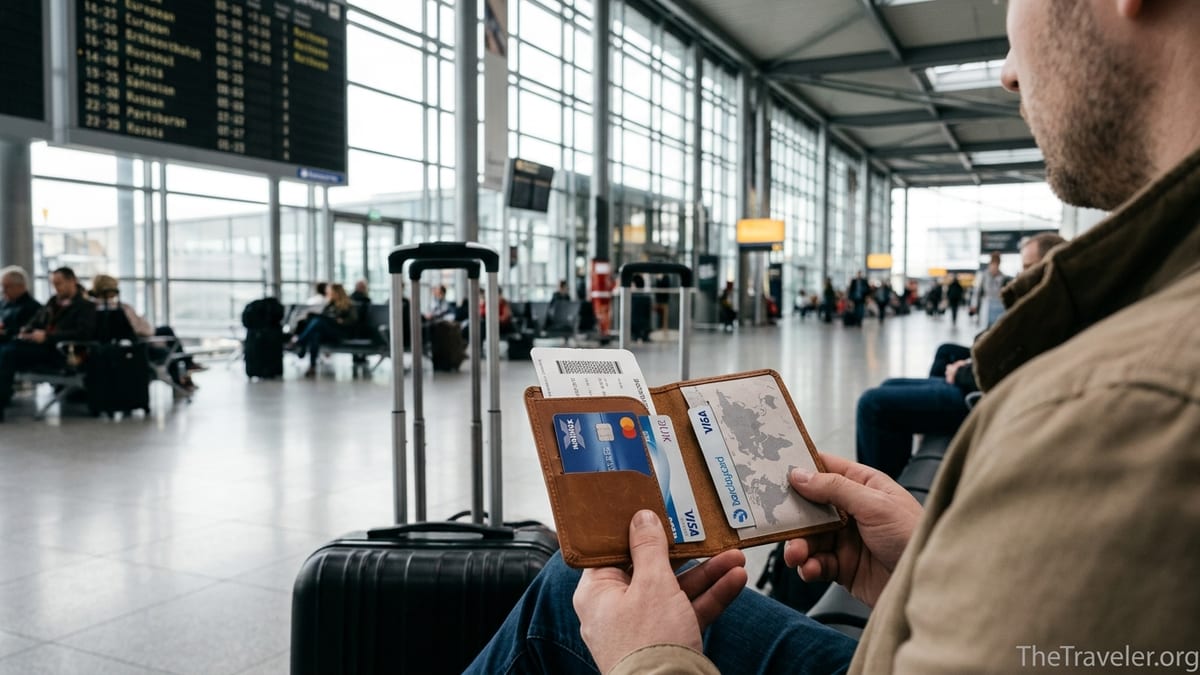
How These Cards Work for Day-to-Day Travel Spending
At a high level, Halifax Clarity and Barclaycard Rewards do a very similar job on holiday: they let you pay in local currency with no non-sterling transaction fee, using the standard Mastercard (Halifax) or Visa (Barclaycard) exchange rate. In practice, that usually means a noticeably better rate than most high street debit cards that add around 2.75 to 3 percent on top. If you tap your Halifax Clarity for a €50 restaurant bill in Lisbon or use Barclaycard Rewards to pay 1000 NOK for a museum pass in Oslo, you will normally see a clean conversion to pounds with no extra loading from the card issuer.
Both cards are free to hold, with no annual fee. Halifax Clarity is a pure travel card with no rewards, while Barclaycard Rewards pays a modest cashback on eligible purchases, typically around 0.25 percent, credited monthly to your statement. That means a family spending about £2,000 a year in foreign currency on hotels, car hire and meals might receive roughly £5 in annual cashback from Barclaycard Rewards. It is not a huge sum, but over time it offsets at least part of the trip cost and effectively tilts the value-for-money equation slightly towards Barclaycard for pure spending.
Where these cards start to feel different is in how they handle cash and interest. For simple point-of-sale purchases in shops, restaurants, petrol stations and attractions, both are extremely competitive compared with mainstream UK credit cards and current-account debit cards. As long as you choose to pay in the local currency, not in pounds, you will usually be close to the interbank rate plus the small margin built into the card network’s rate. That is why many frequent travellers now treat one of these cards as their default way to pay abroad, using their normal UK debit card only as a backup.
Fees, Interest and the Real Cost of Cash Withdrawals
The headline attraction of Halifax Clarity is that it charges no Halifax cash withdrawal fee and no foreign currency transaction fee when you use an ATM abroad. That means if you take out 200 euros from a bank ATM in Barcelona, Halifax will not add a flat cash fee or a percentage charge on top. The drawback is that interest on that cash starts accruing from the day of withdrawal, at the card’s cash interest rate, which is typically in the mid-20s percent range APR. Even if you clear your statement in full, that period between the withdrawal date and the statement payment date still attracts interest.
In real terms, that cost can remain modest if you repay promptly. Travellers on UK money forums commonly report that taking out around £100 equivalent in cash for a week and then repaying as soon as they see the transaction results in interest of roughly £1 or less. This is because interest is calculated daily, so a ten-day window at an annual rate in the 20-something percent range only produces a tiny cash cost. However, if you leave that holiday cash sitting on the card for months, the cost compounds quickly and completely wipes out the benefit of avoiding ATM fees.
Barclaycard Rewards also charges no foreign transaction fee and no cash withdrawal fee, both at home and abroad, but the interest treatment is more forgiving if you manage the card carefully. Provided you pay your full statement balance on time, you can often avoid interest on cash withdrawals altogether, effectively treating an ATM in Rome or New York much like a normal purchase. Where people run into trouble is when only part of the balance is paid, or when they misunderstand that interest on cash usually starts from the day of withdrawal until the day it is fully repaid. Used with discipline, Barclaycard Rewards can make fee-free and interest-free foreign cash a reality; used casually, it still charges interest much like Halifax Clarity.
The key practical difference for travellers is how you intend to manage payments. If you are comfortable logging into your Halifax app on your phone from a hotel in Athens and immediately paying off £200 of cash withdrawals the same day, Clarity’s “no cash fee, but instant interest” model can still be cheap. If you would rather let everything run to the next statement date and simply pay that in full, Barclaycard Rewards is often kinder to you on cash, effectively hiding the day-by-day interest behind a simple rule: pay in full and you avoid it.
Spending Scenarios: City Breaks, Road Trips and Long Adventures
Consider a three-day city break in Paris. You stay in a mid-range hotel costing €450 in total, eat out for around €200, buy museum and metro tickets costing another €100 and withdraw €100 in cash for small cafés that still prefer notes and coins. If you use Halifax Clarity for every purchase and ATM, all billed in euros, your total spend might convert to roughly £700 at the Mastercard rate. There will be no Halifax foreign transaction or cash fees, and if you only use the cash slowly and then pay it off within a week of returning home, the interest on the €100 cash is likely to be just a few pence. In that tight time frame, Clarity delivers exactly what it promises: a simple, low-cost travel card.
Now imagine the same trip with Barclaycard Rewards. The hotel, restaurants and tickets still convert to around £700, with no foreign transaction fee and a similar Visa exchange rate. You receive a small cashback credit, maybe around £1.75 for that trip, which appears on your next statement. For the €100 cash withdrawal, you again pay no ATM or foreign currency fee from Barclaycard’s side. If you then pay your full Barclaycard balance on or before the due date, any interest on that withdrawal is typically avoided altogether, making the cash effectively free beyond minor network conversion margin and any local ATM operator surcharge.
On a longer adventure such as a three-month sabbatical through Southeast Asia, behaviours can change. Some travellers like to keep a float of local cash for street food, small taxis and island ferries, taking out the equivalent of £150 to £200 at a time in Thailand, Vietnam or Indonesia. If you repeatedly withdraw cash with Halifax Clarity and let the balance ride until the direct debit pays your statement each month, you will see small but persistent interest charges; those can add up over twelve or more withdrawals. In that situation, someone using Barclaycard Rewards and paying their statement in full each month might end up spending slightly less overall on the same pattern of withdrawals.
Impact on Credit Files and Everyday Use in the UK
Both Halifax Clarity and Barclaycard Rewards are standard UK credit cards regulated in the same way as domestic cards. They report your credit limit, utilisation and payment behaviour to the UK credit reference agencies. Where things diverge is how frequent cash withdrawals are interpreted. Cash advances on any credit card can be a red flag to some lenders, because repeated domestic cash withdrawals often signal financial stress. Travellers withdrawing foreign currency abroad using a specialist travel card can end up looking similar on paper.
With Halifax Clarity, cash withdrawals are clearly flagged as cash transactions. Regularly taking money from ATMs, even if it is just €50 here and there on a city break, can contribute to a pattern of cash usage on your file. Many experienced users therefore recommend keeping Halifax Clarity primarily for purchases and using it for cash only when necessary, particularly if you plan to apply for a mortgage or a large loan in the near future. In practice, an occasional withdrawal on holiday is unlikely to cause major harm, but heavy use month after month might.
Barclaycard Rewards also treats ATM usage as cash transactions, but the overall impact on your credit report still centres on whether you pay on time and keep your utilisation sensible. If you repeatedly withdraw £200 abroad and then clear your full statement, what future lenders see is consistent full repayment rather than long-term debt. The fact that Barclaycard does not levy extra fees for UK cash withdrawals can tempt some people to treat it like a cheap overdraft at home, which is where credit scores can suffer if balances are not cleared.
For everyday use at home in the UK, Barclaycard Rewards is slightly more attractive because of its cashback, which applies to domestic as well as overseas purchases. Using it for your weekly supermarket shop, petrol station visits and online subscriptions can gradually accumulate a small cashback rebate without any special effort. Halifax Clarity does not pay rewards, so most cardholders prefer to keep it specifically for travel, online foreign-currency bookings and possibly larger protected purchases where Section 75 consumer protection matters more than rewards.
Choosing Based on Your Travel Style and Habits
If you mainly take one or two short holidays a year and rarely need foreign cash, either card will work well for you. Someone booking a package holiday to Tenerife or a week in Orlando might pay for flights and hotel on Barclaycard Rewards to earn cashback, then use Halifax Clarity or the same Barclaycard at restaurants and theme park gates with similar results. In such cases, the decision may come down to which brand you already bank with, which sign-up offer looks more appealing at the time, or which credit limit you are offered.
Travellers who regularly need cash on the road should consider their own discipline. If you know you will not remember to make manual payments mid-trip and you prefer to set up a full-direct-debit and forget about it, Barclaycard Rewards arguably has the edge. Used that way, the combination of no cash fee, no foreign transaction fee and no interest when you pay your statement in full can make it close to a best-in-class solution for getting occasional euros, dollars or yen from ATMs without fuss.
On the other hand, if your priority is simplicity and you want a card that is widely recommended with a long track record as a travel workhorse, Halifax Clarity is hard to ignore. Many UK travellers have used it for years in destinations as varied as New York, Dubai and Tokyo precisely because they know there will be no surprise currency loading and that any cash interest can be kept tiny by repaying promptly using the mobile app. For some, that peace of mind and familiarity outweigh the small cashback that Barclaycard offers.
It is also worth considering what other cards and accounts you already have. If you use a modern app-based bank that offers a fee-free debit card for foreign purchases but charges a small fee on cash withdrawals, pairing that with Halifax Clarity for ATMs and Barclaycard Rewards for larger hotel and car-hire payments can be overkill. Many travellers instead pick a simple combination: one of these credit cards plus one well-regarded fee-free debit card as backup, then test both on a short European break before a big long-haul trip.
Practical Tips for Using Either Card Abroad
Whichever card you choose, one rule remains critical: always pay in the local currency. When a hotel terminal in Madrid or a gift shop in Florida asks whether you want to be charged in pounds or in the local currency, choosing pounds triggers so-called dynamic currency conversion, which adds its own hefty markup and wipes out the benefit of having a specialist travel card. With both Halifax Clarity and Barclaycard Rewards, you generally want the transaction to run through in euros, dollars or other local currency so that only the card network’s rate is used.
For cash, look for ATMs attached to reputable banks rather than independent machines in touristy bars or corner shops. Even though Halifax and Barclaycard do not add their own cash withdrawal fees abroad, the local ATM operator is free to charge one. It is not unusual to see a €3 or €4 machine fee appear on screen in central Prague or Barcelona. In that scenario, it is usually better to take out a slightly larger amount once rather than repeat small withdrawals, because the flat fee is applied each time by the machine, not by your UK card issuer.
Back home, set up alerts and direct debits through your online banking. Both Halifax and Barclaycard allow you to receive push notifications when your card is used, which is useful in crowded overseas settings where card cloning and double-charging can occur. A full direct debit for the statement balance is one of the simplest ways to avoid interest on purchases for both cards and to ensure that any short-term holiday borrowing is properly cleared. If you ever plan to carry a balance, consider whether a low-interest or 0 percent promotional card for domestic use might be better, keeping your travel card for fee-free overseas spending only.
Finally, keep an eye on changes. Card issuers occasionally adjust foreign usage terms, cashback levels or representative APRs. Before a big trip, it is worth scanning the latest summary box in your online banking or the issuer’s website to confirm that the foreign transaction fees and cash withdrawal rules have not changed since you first took out the card. Although both Halifax Clarity and Barclaycard Rewards have been stable for some time, travel cards in the UK market do evolve, and what is true one summer can shift by the next.
The Takeaway
For most UK travellers, both the Halifax Clarity Credit Card and the Barclaycard Rewards Visa are excellent tools for cutting the hidden costs of spending abroad. They strip away the typical 3 percent foreign transaction fee that many standard cards still charge and allow you to benefit from competitive network exchange rates. The real dividing lines appear when you start factoring in cashback, how you use cash machines and how disciplined you are about repaying the balance.
Choose Barclaycard Rewards if you value a card that pulls double duty at home and abroad, pays small but genuine cashback on everyday spending and, when managed carefully, can let you withdraw cash overseas without fees or interest. Opt for Halifax Clarity if you want a straightforward, time-tested travel specialist with no foreign transaction fees and no cash withdrawal fees, and you are prepared to repay cash withdrawals quickly to keep interest to pennies. Many experienced travellers carry both, but for a first foray into fee-free holiday spending, picking the one that best matches your repayment habits matters more than chasing marginal differences in exchange rates.
FAQ
Q1. Which card is cheaper for everyday spending abroad, Halifax Clarity or Barclaycard Rewards?
For normal purchases in shops, restaurants and hotels abroad, both cards are usually very similar in cost because neither charges a foreign transaction fee and both use standard card network exchange rates. Barclaycard Rewards has a slight edge thanks to its small cashback on purchases, but the difference on a typical short trip is usually only a few pounds, so your payment habits and preference for cashback versus simplicity matter more than pure cost.
Q2. How do cash withdrawals abroad compare between Halifax Clarity and Barclaycard Rewards?
Both cards allow fee-free foreign cash withdrawals in the sense that neither adds its own ATM or foreign currency fee. The key difference is interest: Halifax Clarity charges interest on cash from the day of withdrawal until it is repaid, even if you clear the statement in full, while Barclaycard Rewards can effectively avoid interest if you pay your full statement balance by the due date. If you intend to repay quickly or mid-cycle, Halifax can still be cheap; if you prefer to let everything run to statement date, Barclaycard Rewards is often kinder for cash.
Q3. Is one card better for my credit score than the other?
Neither card is inherently better or worse for your credit score; what matters is how you use them. Paying on time, keeping your utilisation moderate and avoiding persistent unpaid balances will help your profile with both Halifax Clarity and Barclaycard Rewards. Frequent cash withdrawals on any credit card can look less favourable to some lenders, so if you expect to apply for a major loan soon, keep cash use occasional and focus on card purchases rather than treating either card like an overdraft.
Q4. Which card should I take if I only go on one holiday a year?
If you only travel once or twice a year, either card will work very well as long as you use it mainly for purchases in local currency and pay the balance in full. Barclaycard Rewards is slightly more versatile because you can also use it at home to earn a little cashback on your normal shopping. Halifax Clarity remains a strong choice if you prefer a dedicated travel card and like the idea of keeping all your overseas spending neatly separated from your everyday domestic credit card.
Q5. Can I use these cards to book flights and hotels online in foreign currencies from the UK?
Yes, both cards are well suited to booking flights, hotels and car hire online in foreign currencies, whether you are reserving a New York hotel in US dollars or a Tokyo apartment in yen. As long as the transaction is processed as a purchase in the foreign currency, you should benefit from the 0 percent foreign transaction fee on either Halifax Clarity or Barclaycard Rewards. Just check that the booking site is not converting the price into pounds before you pay, as that can add its own markup.
Q6. Do Halifax Clarity and Barclaycard Rewards work well for car hire deposits abroad?
Both cards are widely accepted by international car hire companies and provide the standard protections and insurance coverage that come with most UK credit cards, although you should always read the rental company’s terms. Because car hire firms often take a sizeable security deposit, it can make sense to use whichever card gives you the higher available credit limit to avoid tying up too much of your utilisation. For the actual rental charge, either card will give you fee-free foreign spending when billed in the local currency.
Q7. Is there any situation where my bank might still charge extra when I use these cards overseas?
Halifax and Barclaycard do not add their own foreign transaction fees on these particular cards, but local providers abroad can still impose charges. Independent ATM operators may levy their own withdrawal fee, and some shops or hotels may apply dynamic currency conversion or separate service charges. Those costs are outside the control of your UK card issuer, so always watch on-screen prompts and receipts, choose to pay in local currency and, where possible, use ATMs attached to major banks rather than stand-alone machines in tourist hotspots.
Q8. Which card is better if I plan to carry a balance after my trip?
Neither Halifax Clarity nor Barclaycard Rewards is designed for long-term borrowing, as both typically have representative APRs in the high twenties for purchases and similar or higher rates for cash. If you know you will not be able to clear your holiday spending quickly, a 0 percent purchase or balance transfer card may be more appropriate, and you could then move the balance onto that promotional card after the trip. In that scenario, you might still use Clarity or Barclaycard Rewards for the trip itself to avoid foreign fees, but you would not leave the debt sitting on them.
Q9. Can I use both cards on the same trip, or is that overkill?
Many frequent travellers do carry both, using Barclaycard Rewards for most purchases and occasional UK spending to earn cashback, and keeping Halifax Clarity as a backup or for specific uses such as car hire deposits. Having two cards from different issuers also provides resilience if one card is blocked by a fraud check or a damaged chip. However, for an occasional traveller, a single well-chosen card plus a backup debit card is usually enough; the main benefit of two cards appears when you travel often or for long periods.
Q10. What is the single most important habit to keep these cards cheap when travelling?
The most important habit is to pay your balance in full and on time, especially after trips where you have used ATMs. Doing so keeps purchase interest at zero, minimises or removes cash interest depending on the card and ensures you avoid late payment fees. Combined with always choosing to pay in local currency and avoiding unnecessary withdrawals from fee-laden ATMs, this simple routine is what allows travellers to squeeze maximum value from both Halifax Clarity and Barclaycard Rewards year after year.