


More news on this day
Powerful back to back earthquakes in Venezuela are intensifying safety concerns for travelers as the United States reexamines its existing travel advisory and broader global risk assessments for seismic and humanitarian emergencies.
Get the latest news straight to your inbox!
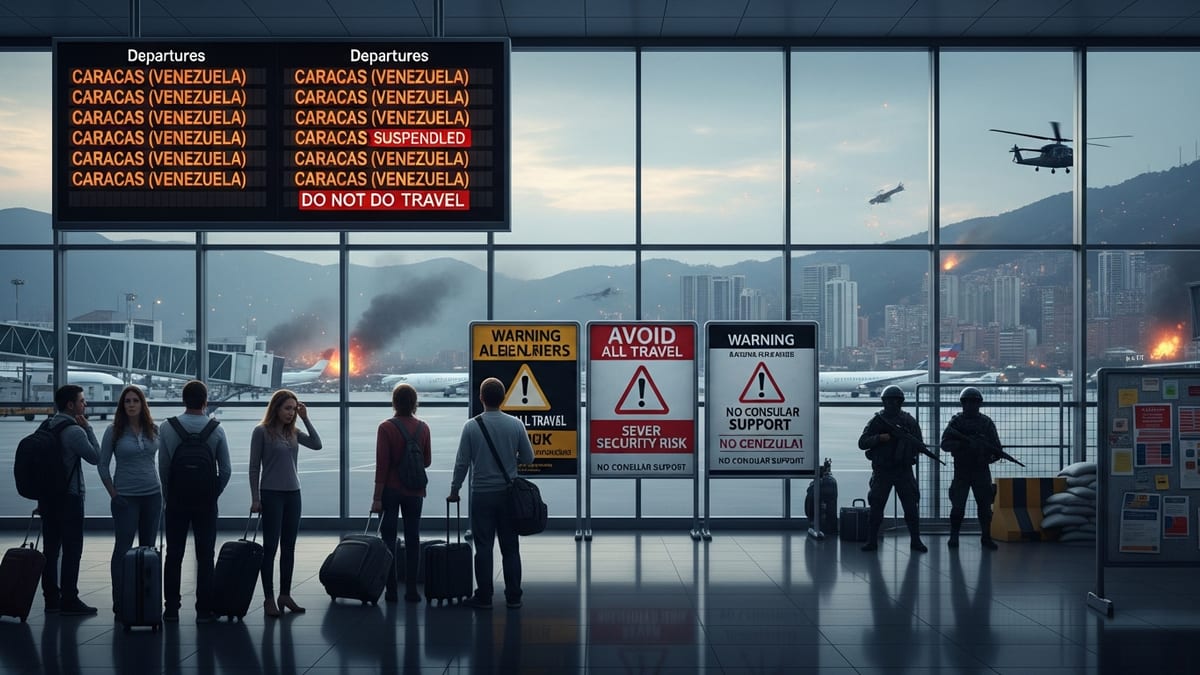
Venezuela Reels From Double Earthquake Impact
Venezuela is confronting a deepening crisis after a rare doublet of major earthquakes struck the country on June 24, 2026, with magnitudes of 7.2 and 7.5 recorded within seconds of each other. Seismologists describe the sequence as an unusual pairing of powerful shocks along the complex fault system of north central Venezuela, with shaking felt across multiple states including Yaracuy, Carabobo, La Guaira and the Capital District.
Published reporting indicates that the death toll has climbed into the hundreds, with thousands more injured and entire neighborhoods reduced to rubble. International coverage shows satellite imagery and on the ground visuals of collapsed apartment blocks, buckled highways and damaged port facilities, while local responders work amid continuing aftershocks that keep residents outdoors and fearful of further building failures.
Humanitarian updates from agencies active in the country describe severe disruptions to health services, power, water and telecommunications in the hardest hit zones. Hospitals in affected cities are treating large numbers of trauma injuries while at the same time coping with damaged infrastructure, fuel shortages and constrained access to medicines and medical supplies.
Rescue and relief operations are expanding with support from foreign governments and international organizations, but access to some mountain and coastal areas remains difficult due to landslides, fractured roads and damaged bridges. Travel within Venezuela is consequently unpredictable, with aviation, road and port links subject to rapid change as damage assessments continue.
Existing US Advisory: “Reconsider Travel” Amid Compounded Risks
Long before the June earthquakes, Venezuela was already subject to one of the strictest U.S. travel advisories in the Western Hemisphere. Publicly available information from the U.S. Department of State shows a Level 3 advisory in place for Venezuela in mid 2026, urging travelers to reconsider travel because of crime, civil unrest, poor health infrastructure and the absence of routine consular services on the ground.
That advisory followed several years in which Venezuela had at times been listed at Level 4 under the U.S. system, the most severe category reserved for countries where the risk to life and safety is considered extreme. Independent explanations of the advisory levels emphasize that a Level 4 designation signals a recommendation not to travel and may reflect armed conflict, widespread crime, breakdown of services or other exceptional threats.
The recent quake disaster has layered acute natural hazard risk over an already fragile security and institutional environment. Analysts focusing on consular policy note that in such situations, Washington typically reexamines whether existing advisories accurately capture both chronic and sudden onset risks, including the potential for health crises, infrastructure collapse and secondary unrest linked to disaster response.
While any formal shift in Venezuela’s level would appear only after an official review process, global travelers are already interpreting the combination of preexisting warnings and the new seismic emergency as a strong signal to postpone nonessential trips. Travel insurers and risk consultancies are similarly revisiting their country assessments, which can influence coverage terms and corporate travel approvals.
Airports, Ports and Tourist Corridors Under Strain
Transport infrastructure is central to the immediate travel impact. Reports from aviation and maritime monitoring outlets indicate that key airports serving Caracas and the Caribbean coastline have experienced intermittent closures and operational restrictions as engineers check runways, terminals and navigation systems for structural damage. Even where facilities remain technically open, schedules have been disrupted by diversions, crew displacement and a surge in humanitarian flights.
Ports along the northern coast, already crucial for fuel and cargo imports, are also coping with quake related damage to quays, warehouses and access roads. Some cruise itineraries that once skirted Venezuelan waters had already been modified because of security and sanctions considerations; the latest seismic events make a near term return of mainstream cruise calls to Venezuelan ports even less likely.
For overland travel, road damage presents a major obstacle. Visual assessments shared by regional media show cracked viaducts, collapsed overpasses and rockfalls in mountain corridors linking coastal cities to interior states. Even in areas that did not suffer catastrophic damage, authorities and aid groups are urging extreme caution due to the risk of aftershock induced landslides and delayed structural failures.
Accommodation options in affected cities are tightening as hotels take in displaced residents, aid workers and journalists. Prospective visitors are warned by travel risk firms that confirmed reservations may not reflect present realities, as properties close for repairs, operate on emergency power or shift to relief use, with limited ability to communicate changes during ongoing connectivity outages.
Aftershocks and Regional Seismic Concerns
The June 24 doublet has also sharpened attention on Venezuela’s broader seismic profile and the implications for travel across northern South America and the southern Caribbean. Geological overviews cited in international media highlight that Venezuela lies along a complex plate boundary and has a record of destructive earthquakes, even though major events are relatively infrequent compared with some Pacific Rim countries.
Scientists referenced in recent coverage note that a doublet of two major quakes so close together in time is uncommon but not unprecedented, and may increase the probability of significant aftershocks in the weeks ahead. These aftershocks are often smaller in magnitude than the main shocks yet can cause disproportionate damage when they strike already weakened buildings or trigger new landslides.
Travel safety specialists point out that seismic risk does not stop at national borders. The June events generated a brief tsunami advisory for parts of the Caribbean, underscoring that strong earthquakes in northern Venezuela can have implications for nearby islands and coastal regions. Even when tsunami alerts are quickly canceled, the possibility of strong currents or localized surges can affect small harbors and coastal tourism infrastructure.
For travelers considering transits through the wider region, this means monitoring not only conditions in Venezuela but also advisories from neighboring jurisdictions, airlines and cruise operators. Heightened awareness of building codes, hotel construction standards and local emergency preparedness measures is increasingly seen as a key component of responsible travel planning in seismically active zones.
How Travelers Are Advised to Respond Now
In the immediate term, most travel risk guidance aligns around a few core themes. Nonessential leisure travel to Venezuela is widely characterized as highly inadvisable, given the combination of systemic security challenges, limited consular assistance and now a major natural disaster. Those who are already in the country are urged in public guidance materials to prioritize personal safety, stay alert to aftershock risks and follow local emergency instructions disseminated through reputable media and official alert systems.
Travelers with essential business or humanitarian responsibilities are being encouraged to coordinate logistics through experienced security and response providers, with contingency planning for sudden route changes, curfews or fuel shortages. Companies with staff in Venezuela are reviewing evacuation and shelter in place protocols, as well as revisiting thresholds for suspending operations in high risk areas.
For the wider traveling public, the Venezuela earthquakes form part of a broader pattern of climate and hazard focused risk reassessments within global travel. Governments, airlines and tour operators are increasingly incorporating natural disaster exposure alongside political and health factors when calibrating advisories and route networks. The current U.S. review of its guidance on Venezuela is one of several such evaluations unfolding worldwide as authorities update global safety messaging in light of recent events.
Travel experts recommend that prospective visitors to any high risk destination check multiple sources, including national travel advisories, airline notices and independent security briefings, and maintain flexible plans that can adapt quickly if conditions deteriorate. In the case of Venezuela, the scale of the June earthquakes and the country’s existing vulnerabilities suggest that meaningful improvements in on the ground safety and infrastructure may be measured in months or years rather than days.