


Venice Marco Polo Airport is many travelers’ first glimpse of the lagoon city, and it can feel confusing if you are used to ordinary city airports with metro lines and taxis everywhere. This guide walks you through the airport step by step, from landing and collecting your bags to choosing the right transfer by water or road, plus what to expect with lounges, parking, nearby hotels, and first-time traveler tips.
Get the latest updates straight to your inbox!
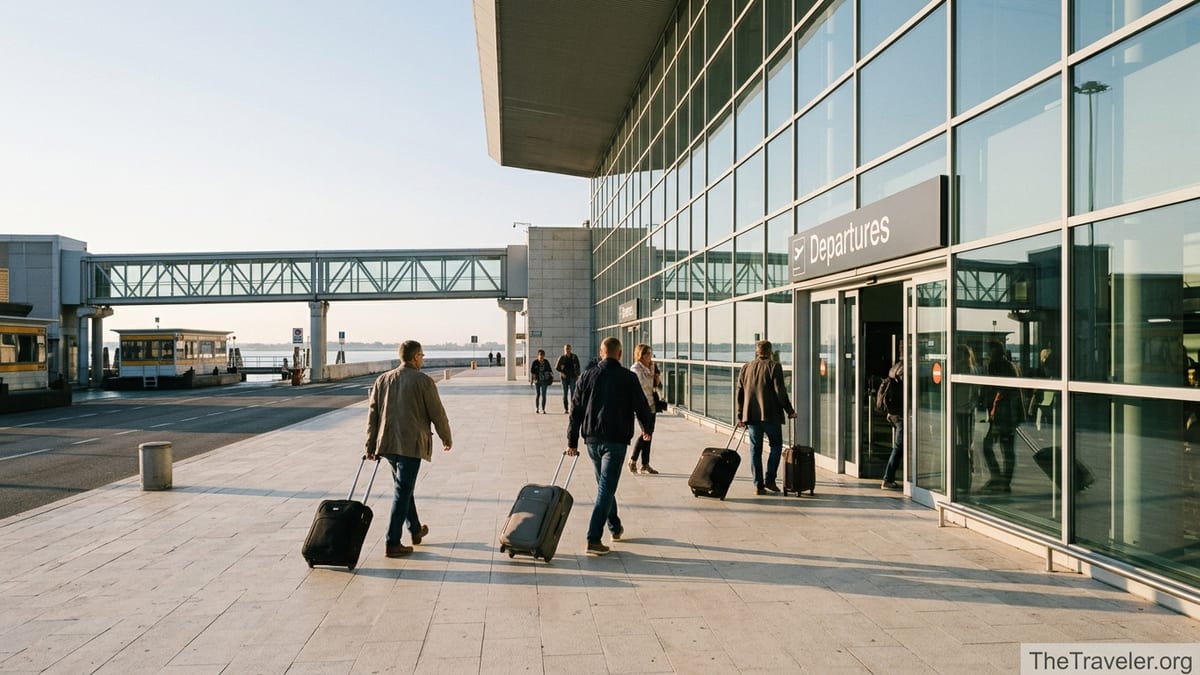
Getting Oriented at Venice Marco Polo Airport
Venice Marco Polo Airport (VCE) sits on the mainland about 13 kilometers from central Venice and around 8 kilometers from Mestre. The passenger terminal is compact by international standards, with arrivals on the ground floor and departures on the upper floor. English signage is clear throughout, and you will see frequent references to "water transport" and "bus to Venice" as soon as you exit customs.
After landing, you walk from the gate through passport control, then down into the baggage reclaim area. Immediately after customs there is a arrivals hall with car rental counters, ATMs, a tourist information point, and several ticket machines for public transport companies. If you already know you will use a bus into Venice, this is a convenient place to buy tickets before you step outside.
The key orientation point at the airport is that water transport and road transport leave from different areas. Buses and land taxis depart directly in front of the terminal at ground level. The water terminal is a separate dock reached by a covered pedestrian walkway with moving sidewalks; it takes around 7 to 10 minutes on foot from arrivals to the boats. Clear signs for "Water Transport" or the Italian "Trasporti via d’acqua" guide you from the terminal to the dock.
For connections onward into Italy, Venice Marco Polo also has regular buses to Venice Mestre railway station, where you can board long-distance trains toward Milan, Verona, Florence, Trieste and other cities. If you are catching a same-day train, factor at least 60 to 90 minutes between scheduled flight arrival and train departure, as lines at passport control and baggage claim can grow during busy hours.
Arrivals, Baggage, and Customs
On arrival, non-Schengen passengers typically pass through passport control before entering baggage claim, while many European Union flights arrive directly into the reclaim hall. Baggage belts are close together and clearly numbered; overhead screens show your flight and belt number. Compared with very large hubs, walking distances at Venice Marco Polo are modest, which helps if you are tired after a long flight.
Customs formalities for most visitors are light. After collecting luggage, you walk through the green channel if you have nothing to declare. Once you step into the public arrivals hall you cannot re-enter baggage claim, so double-check you have all suitcases. If your bag is missing, the lost luggage desks for individual airlines or handling agents are usually located just before you exit into the public hall, not after it.
In the arrivals area you will find several services useful to first-time visitors: currency exchange counters, ATMs from major Italian banks, a small supermarket-style shop for snacks and water, and ticket offices or machines for ACTV (local public transport), ATVO (airport coach), and Alilaguna (water bus). While exchange counters are convenient, their rates are often less favorable than withdrawing euros from an ATM with your bank card, so many travelers withdraw a modest amount of cash there and rely on cards once in the city.
As you step outside, pay attention to the signs above the exits. Doors leading to the bus stops and taxi rank are clearly marked with icons. If you intend to continue by water, follow the indoor signage first rather than going outside; it is generally easier to reach the moving walkway to the dock from inside the terminal building.
Departures, Check-in, and Security
Departures at Venice Marco Polo are on the upper floor of the terminal. If you arrive by bus or taxi, escalators and elevators take you from the curbside up to check-in. Airline check-in islands are grouped by carrier and flight; large overhead screens list flights with corresponding counters. Many European airlines and low-cost carriers encourage online check-in, but if you have luggage to drop or need document checks for long-haul flights, plan to arrive at least 2 hours before European departures and 3 hours before intercontinental departures.
Security checks at Venice Marco Polo are centralized after check-in. Lines can fluctuate sharply depending on the time of day and the cruise schedule, as many cruise passengers depart on weekend mornings. During peak summer periods, morning security queues can exceed 20 to 30 minutes, while at quieter times they may take only 10 minutes. When planning, it is safer to build in extra time, particularly if you also expect to shop or use a lounge airside.
Once through security, you enter the airside departures area with duty-free shops, fashion boutiques, cafes, and restaurants. The terminal itself is modern with plenty of glass and natural light, and seating areas look out over the runway and lagoon. Some gates require a short walk downstairs to bus gates for remote aircraft stands, so check your boarding pass and allow a few extra minutes once boarding begins.
If you are connecting to another Schengen flight, you normally will not pass passport control again, but non-Schengen departures may have an additional passport check just before the gate. Families and passengers with reduced mobility can request assistance when booking their flight; designated meeting points and service desks are signposted in the departures area, and the airport can arrange wheelchair assistance through security and to the aircraft door.
Transport by Bus, Taxi, and Car
For many travelers, the simplest and most economical way to reach Venice from Marco Polo Airport is by bus. Two main companies operate between the airport and Venice’s road terminus at Piazzale Roma: ACTV, the local public transport company, and ATVO, a private coach operator. Typical travel time is about 20 to 25 minutes, depending on traffic.
ACTV’s urban line 5, often called the Aerobus, runs frequently between the airport, Mestre, and Piazzale Roma. Tickets are usually priced in the low double digits in euros one way from the airport, and can be bought at ACTV or Venezia Unica ticket machines in arrivals, at some newsstands, or from machines near the bus stops. Buses are standard city buses with multiple stops on the mainland, which makes them slightly slower but flexible if you are staying in the Mestre area.
ATVO runs an express coach from the airport to Piazzale Roma with limited or no intermediate stops. Coaches typically have under-floor luggage storage and assigned space for suitcases, which can be more comfortable if you are carrying large bags. One-way fares are in a similar price range to ACTV, and round-trip tickets offer a modest discount; you can purchase them at ATVO counters or vending machines in the arrivals hall and near the bus bays.
Land taxis are readily available outside the terminal. Official white taxis use a metered fare, with typical daytime prices to Piazzale Roma starting in the several tens of euros, depending on traffic and time of day. If you are a family or group of three or four with multiple bags, a land taxi can be cost-competitive with separate bus tickets and offers a direct drop-off at Piazzale Roma or mainland hotels. Car rentals are also present at the airport, but keep in mind that private cars are not allowed inside historic Venice; you would park on the mainland or at car parks near the city entrance and then continue by foot or boat.
Water Transport: Alilaguna and Water Taxis
Venice is unique in that one of the most scenic airport transfers in the world departs directly from its water terminal. From arrivals, you follow signs to "Water Transport" and take an escalator up to the first floor, then cross a series of moving walkways in a covered bridge that leads to the docks. The walk takes roughly 7 to 10 minutes with luggage trolleys allowed.
The main scheduled waterbus operator from the airport is Alilaguna. Its colored lines connect the airport with key points in the lagoon, including Murano, the Lido, and various stops in Venice such as Fondamente Nove, Rialto, San Marco, and the railway station area. Common lines include the Blue Line and Orange Line, which together cover much of historic Venice. Boats are similar to larger waterbuses, with indoor seating and some outdoor space; the journey into the city typically takes from 50 to 80 minutes depending on your stop.
Tickets for Alilaguna can be bought at counters in arrivals, automatic machines at the airport, or directly at the dock. Prices are higher than the land buses but still well below a private water taxi; one-way fares into central Venice are usually in the mid-teens in euros, with small supplements for extra luggage and options for round-trip or combined tickets. For example, a traveler heading to the Rialto area might board the Orange Line at the airport and ride directly to Rialto stop, stepping off within a short walk of many hotels.
Private water taxis are the premium option. These wooden or fiberglass boats take you and your luggage directly from the airport dock to a pier close to your hotel’s location, often within a few minutes’ walk of the front door. The experience crossing the lagoon by private boat, especially at sunset or after dark with the city lights reflecting on the water, is memorable. The price reflects that: airport to central Venice can easily reach into the low hundreds of euros per boat, although the cost can be shared across groups up to 6 or 8 depending on the operator. If you are arriving late at night, traveling with small children and multiple suitcases, or celebrating a special occasion, many travelers consider a private water taxi worthwhile.
Parking, Hotels, and Overnight Stays
For those arriving by car, Venice Marco Polo Airport offers a mix of short-term and long-term parking within walking distance of the terminal. Multi-story car parks near the terminal are suitable for short stays of a few hours or days, with higher daily rates. Slightly more distant surface lots generally offer lower prices for multi-day parking but may require a brief shuttle or longer walk. As prices and arrangements can change, it is sensible to check current conditions and, when possible, reserve a space online ahead of time, particularly during peak summer holiday periods.
Several business-class hotels cluster around the airport access road and in the nearby village of Tessera. Properties from familiar international chains sit alongside local Italian hotels and guesthouses. Many of these offer dedicated airport shuttles, especially in the early morning to match popular departure waves between 6:00 and 9:00. For example, a traveler with a 7:00 departure might stay at a hotel in Tessera the night before, take a 5:15 shuttle to the terminal, and still have time for check-in and security without stress.
If you prefer to spend your last night in the historic center rather than near the runway, consider staying close to Piazzale Roma or the Santa Lucia railway station. This area provides straightforward access to the airport buses and taxis while still allowing you to enjoy an evening stroll along the Grand Canal. An early-morning flyer could, for instance, sleep near the station, wheel luggage a few minutes to Piazzale Roma, catch the first ATVO coach or ACTV bus to the airport, and arrive in time for check-in.
Overnight airport stays inside the terminal are technically possible, but Venice Marco Polo is not designed as a 24-hour hub with extensive overnight facilities. Seating in the landside area is limited and not especially comfortable for sleeping. For very early flights, even a basic hotel room nearby often provides better rest than trying to sleep in the terminal.
Airport Lounges, Services, and Facilities
Venice Marco Polo offers a main lounge used by several airlines and card programs, as well as selected airline-branded spaces depending on partnerships. The primary independent lounge sits airside after security and serves Schengen and many non-Schengen departures. Access is usually available for business-class and elite passengers on partner airlines, and for holders of certain lounge membership cards, with paid entry sometimes available when capacity permits.
Inside the lounge, travelers typically find a buffet with light meals and snacks, an assortment of Italian and international drinks, Wi-Fi, workspaces, and quiet seating with runway views. For example, a passenger flying in economy to Paris with a Priority Pass membership could arrive early, clear security, and spend an hour in the lounge catching up on email with a cappuccino and a small plate of antipasti before boarding.
Elsewhere in the terminal, free Wi-Fi is generally available, and charging points are increasingly common near gate seating and in some cafes. Shopping includes a mix of duty-free perfume and cosmetics, Italian fashion brands, leather goods, and local specialties such as Venetian glass or regional food products. While airport prices are rarely the cheapest way to buy souvenirs, picking up a small box of Venetian cookies or a jar of pesto can be a pleasant last-minute reminder of the trip.
Families can make use of baby-changing facilities and accessible toilets located in multiple points both landside and airside. For passengers needing medical support, a first-aid station is located within the terminal. If you have reduced mobility, you should notify your airline at least 48 hours before travel so that dedicated staff at the airport can assist with wheelchairs, lifts, and transport through security and to the aircraft.
Practical Tips for First-Time Travelers
First-time visitors to Venice often underestimate walking times with luggage, especially when stairs and bridges are involved. When choosing between transport options from Marco Polo Airport, consider not only price and travel time but also where you will actually be dropped off relative to your accommodation. For example, taking an ATVO coach to Piazzale Roma and then a vaporetto on the Grand Canal might be cheaper than a private water taxi, but if your hotel is in a quiet alley far from any vaporetto stop, you may face a 15-minute walk over multiple bridges with heavy bags.
If you opt for Alilaguna, check in advance which line serves your destination and how often it runs at your arrival time. A traveler landing midday in June might find a Blue or Orange Line departure every 30 minutes, while late-night arrivals could see less frequent service. Similarly, if you have a very early flight home, verify that the first waterbus or land bus departure will get you to the airport with the recommended check-in buffer; if not, staying near the airport or booking a private transfer could be worth the extra cost.
Tickets for buses and boats should be purchased before boarding whenever possible. At Marco Polo Airport there are dedicated machines and counters just past arrivals, and at Piazzale Roma there are ticket offices and machines for both ACTV and ATVO. On city vaporetti you must validate your ticket by tapping it on the electronic readers before boarding. Travelers who plan to use public transport frequently during their stay may find good value in time-limited passes from the local transport authority, which can include both waterbuses and some bus routes.
Finally, keep local customs in mind. Queues at bus doors or boat jetties can be somewhat fluid, but it is considered polite to allow passengers to disembark first. On waterbuses, store large suitcases in designated luggage areas and avoid blocking doorways. In summer, bring a refillable water bottle; temperatures on the lagoon can be hot and humid, and air conditioning on some boats and buses is modest by North American standards.
The Takeaway
Venice Marco Polo Airport is your gateway to one of the world’s most distinctive cities, and understanding how it works goes a long way toward a relaxed arrival and departure. The airport itself is manageable in size, with straightforward arrivals and departures areas, clear signage, and a reasonable choice of shops, cafes, and lounges.
Your main planning decisions focus on transport: choosing between affordable buses to Piazzale Roma, scenic Alilaguna waterbuses direct to the islands, or fast but costly private water taxis. Combine this with a realistic look at your luggage, flight time, and hotel location, and you can pick the option that best balances comfort, cost, and experience.
By allowing enough time for check-in and security, buying tickets before boarding, and checking the latest schedules before you fly, even a first-time visitor can move confidently through Venice Marco Polo Airport. That means less time worrying about logistics and more time enjoying the view as the domes and bell towers of Venice rise out of the lagoon on your way into the city.
FAQ
Q1. How long does it take to get from Venice Marco Polo Airport to central Venice?
Typical travel time is 20 to 25 minutes by bus to Piazzale Roma, about 50 to 80 minutes by Alilaguna waterbus depending on the line and stop, and around 30 to 45 minutes by private water taxi.
Q2. What is the cheapest way to reach Venice from the airport?
In most cases the cheapest options are the ACTV urban bus line 5 or the ATVO airport coach to Piazzale Roma, with one-way fares usually in the low double digits in euros per person.
Q3. Should I book a private water taxi in advance?
Advance booking is recommended, especially during summer, weekends, or late-night arrivals. It guarantees a boat and a clear meeting point, and can save time compared with arranging a taxi on the spot.
Q4. Is Alilaguna included in regular Venice public transport passes?
No, Alilaguna is a separate company from the city’s ACTV system. Time-based ACTV passes generally cover vaporetti and some buses but not Alilaguna airport waterbuses, so you need a separate ticket for those.
Q5. How early should I arrive at Marco Polo Airport before my flight?
Plan to arrive around 2 hours before European flights and 3 hours before long-haul departures. In peak summer or on busy cruise weekends, adding an extra 30 minutes is sensible.
Q6. Can I walk from the airport to Venice?
No, there is no pedestrian route across the lagoon from the airport to Venice. You must use a bus, taxi, waterbus, or private water taxi to cross.
Q7. Where is the water terminal in relation to the main airport building?
The water terminal is connected to the main terminal by a covered pedestrian walkway with moving sidewalks. It is about a 7 to 10 minute walk from the arrivals area to the docks.
Q8. Are there hotels within walking distance of Venice Marco Polo Airport?
Yes, several hotels are located in the nearby Tessera area along the airport access road. Some are close enough to walk in 10 to 20 minutes, and many offer shuttle services to and from the terminal.
Q9. Is Venice Marco Polo Airport open at night?
The airport operates for early-morning and late-evening flights, but facilities are more limited overnight. While staying in the terminal is possible, most travelers find a nearby hotel more comfortable.
Q10. Can I store luggage at Venice Marco Polo Airport?
Services such as left-luggage or baggage storage are sometimes available at or near the terminal, but offerings and hours can change, so it is best to check current details shortly before you travel.