

More news on this day
Vienna International Airport is positioning itself as a stronger Central European hub, with new airline routes, a major Terminal 3 expansion and enhanced rail links set to improve global and domestic connectivity over the next several years.
Get the latest news straight to your inbox!
New Routes Strengthen Vienna’s Global Network
Vienna Airport’s role as a transfer hub for Central and Eastern Europe is being reinforced by a steady stream of network additions from home carrier Austrian Airlines and other operators. Publicly available information on Austrian’s 2026 summer schedule indicates the airline plans to serve 133 destinations from Vienna, including 113 short and medium haul routes and 20 long haul destinations. The program adds new seasonal links to cities such as Alicante, Bastia, Bergen, Bilbao, Mytilini, Ohrid and Ponta Delgada, widening leisure options across the Mediterranean and North Atlantic islands.
Earlier network growth focused on long haul expansion to North America and Asia, with Austrian introducing Vienna to Boston service in 2024 and consolidating flights to key US and Canadian gateways alongside Asian and African destinations. The airline has continued to refine frequencies to popular long haul cities and to adjust capacity in line with demand recovery. Industry coverage notes that Austrian’s long haul capacity from Vienna climbed back to and slightly above pre‑pandemic levels by mid decade, underpinning Vienna Airport’s ambitions to compete with other European hubs for transatlantic and intercontinental traffic.
Low cost and leisure carriers are also contributing to Vienna’s connectivity story. Airlines using Terminal 3 and other facilities have expanded point to point services to holiday destinations around the Mediterranean, the Canary Islands and the Red Sea, while some operators have trimmed capacity in response to local tax and fee structures. Even with these adjustments, the overall trend at Vienna is toward a broader network footprint and greater seat capacity, benefiting both local travelers and transfer passengers.
Terminal 3 Expansion Targets Future Growth
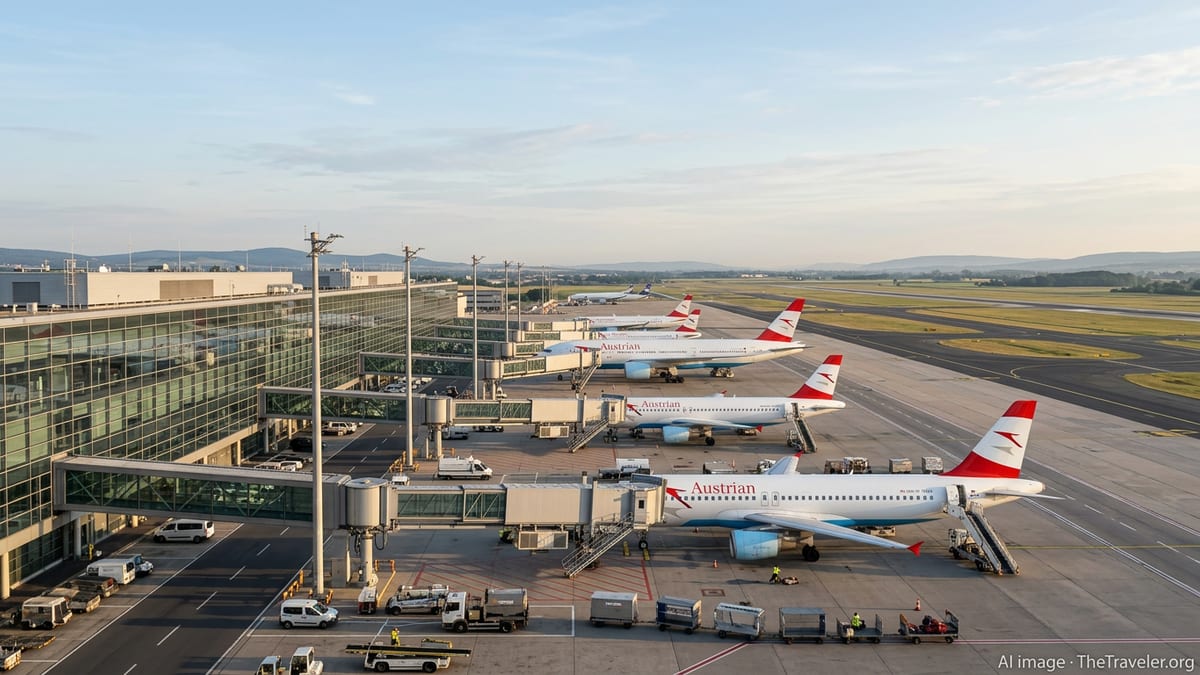
Vienna Airport’s physical infrastructure is being reshaped to accommodate the rising traffic. Construction company releases and airport documentation describe a southward expansion of Terminal 3, often referred to as part of the terminal’s ongoing Skylink development. The project, led by Austrian contractor PORR, is designed as a design and build undertaking that adds new gate areas, waiting zones and circulation space while integrating closely with existing check in, security and baggage systems.
The Terminal 3 building, opened in 2012, was originally dimensioned for up to around 30 million passengers per year but has been operating steadily closer to that ceiling as demand recovered. Forecasts published for the Flughafen Wien Group point to approximately 32 million passengers at Vienna alone in 2025, with further growth anticipated thereafter. The new expansion is therefore intended to relieve congestion at peak times, improve passenger flow for transfer traffic and provide additional contact gates for widebody aircraft serving long haul routes.
Project descriptions emphasize efficient integration with current boarding areas and lounges, with a focus on flexible use of gates between Schengen and non Schengen operations. The expanded terminal sections are expected to feature more natural light, upgraded wayfinding and additional retail and food outlets that align with the airport’s strategy of increasing non aeronautical revenue. When completed, the enlarged Terminal 3 should give Vienna more headroom to handle simultaneous banked departures and arrivals across short, medium and long haul networks.
Rail Links Tighten Airport to City and Regions
While airlines broaden Vienna’s reach in the sky, new and upgraded rail links are tightening the airport’s connectivity on the ground. The dedicated City Airport Train continues to provide a non stop link between Vienna International Airport and the Wien Mitte transport hub in approximately 16 minutes, offering in town check in for selected airlines and synchronised schedules with arriving and departing flights. Regular regional and long distance services operated by Austria’s national rail company also serve the airport station, giving passengers direct access to main line routes.
Larger national rail projects are enhancing the airport’s catchment area by reducing journey times between Vienna and Austria’s regions. The commissioning of the Koralm Railway and the progressive completion of the Semmering Base Tunnel have significantly shortened travel between Vienna, Graz and Klagenfurt. These improvements are expected to encourage more travelers from southern provinces to choose Vienna for long haul and European connections instead of driving or using smaller regional airports.
Public transport planners highlight that faster rail links support climate and congestion goals by shifting some domestic feeder traffic from short haul flights and road travel to electrified rail. In practice, this means that passengers from cities several hours away by car can reach Vienna Airport in a shorter and more predictable time window by train, connecting directly into long haul departures. Together with local S Bahn and regional services, the upgraded long distance lines are turning the airport into a more accessible hub for a wider swath of Austria and neighboring countries.
Passenger Growth Underscores Hub Ambitions
Traffic statistics released by Flughafen Wien show steady growth in passenger volumes across the group’s airports, with Vienna remaining the primary driver. After the sharp rebound from 2022 onward, passenger numbers at Vienna have continued to rise, supported by both point to point demand and connecting traffic from Central and Eastern Europe. Group forecasts cited in investor presentations anticipate about 42 million passengers across Vienna, Malta and Kosice in 2025, with around three quarters of that figure expected at the Austrian hub.
Long haul markets such as North America and Asia have been important contributors to this recovery, even as demand patterns shift in response to economic conditions and airline capacity decisions. Vienna’s position at the crossroads of east west and north south traffic flows allows it to draw passengers from secondary cities across the region, funnelling them into transatlantic and intercontinental departures. Additional European routes announced for upcoming seasons are likely to further strengthen this feeder network.
At the same time, the airport is contending with a competitive environment in which neighboring hubs are also investing heavily in infrastructure and route development. Pricing, air traffic taxes and environmental regulations influence airline decisions about where to base aircraft and open new routes. Vienna’s strategy of combining terminal expansion, ground access improvements and a coordinated route development effort with its main home carrier is intended to keep the airport attractive for both network airlines and leisure operators.
What Travelers Can Expect in the Coming Years
For passengers, the mix of new routes, an enlarged terminal and stronger rail links is expected to translate into more choice and smoother journeys. The expanding European schedule from Austrian and partner airlines will open up additional nonstop options to coastal Spain, Greek islands, the Azores and Nordic destinations, alongside a stable portfolio of established city and holiday routes. On long haul sectors, ongoing fleet renewal and capacity adjustments should progressively increase comfort and reliability on services to North America, Asia and Africa.
Within the terminal, travelers are likely to see a gradual shift as construction progresses, with some temporary changes to walking routes offset by the promise of more spacious departure areas, extra seating and a broader range of retail and dining once the new sections open. The integrated design of the Terminal 3 extension aims to shorten transfer distances for certain connections and to improve the overall passenger flow at busy times of day.
On the ground, more frequent and faster rail services from Austria’s provinces will make it easier to plan same day airport journeys without relying on short haul domestic flights or long drives. The combination of the City Airport Train, S Bahn lines and long distance services gives travelers multiple options at different price points and journey speeds. Taken together, these developments indicate that Vienna International Airport is entering a new phase as a more connected, higher capacity gateway linking Central Europe with the wider world.