


More news on this day
Vietnam is preparing to switch on one of Southeast Asia’s most closely watched aviation projects, with the new Long Thanh International Airport slated to begin commercial operations in 2026 and reshape regional travel flows around Ho Chi Minh City.
Get the latest news straight to your inbox!
A New Mega-Hub East of Ho Chi Minh City
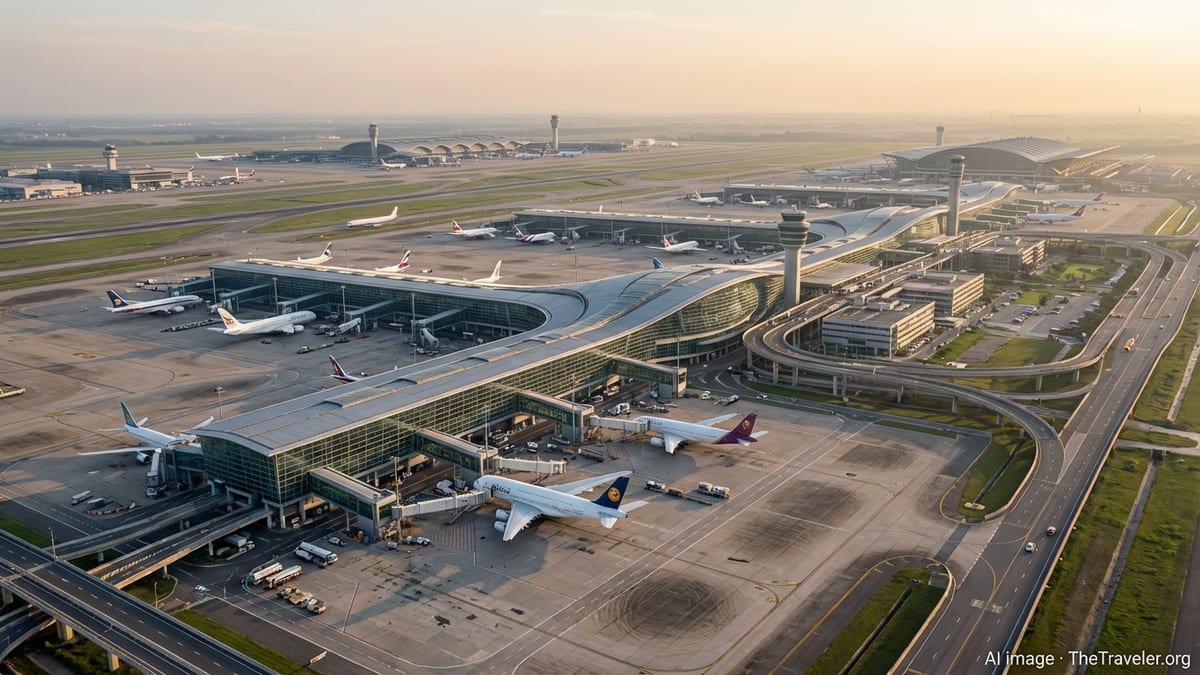
Long Thanh International Airport is rising in Dong Nai province, around 40 kilometers east of central Ho Chi Minh City, as Vietnam’s largest aviation infrastructure project to date. Publicly available planning documents describe Phase 1 as including a 4,000‑metre runway, a large passenger terminal and supporting infrastructure designed to meet the highest ICAO 4F standards, enabling operations by widebody aircraft on long-haul routes.
Recent government directions and industry briefings indicate that Phase 1 is targeted for completion in the third quarter of 2026, with commercial services expected to start in the final months of the year. Earlier schedules pointing to technical test flights in late 2025 have shifted into a consolidated push to achieve full readiness for passenger operations in 2026, following Covid‑era disruptions and supply chain delays that slowed early construction progress.
Once Phase 1 is fully operational, the airport is planned to handle around 25 million passengers a year and up to 1.2 million tonnes of cargo, according to project descriptions referenced in investor reports and official planning updates. Subsequent phases would scale the complex to multiple runways and terminals, positioning Long Thanh as a major gateway for southern Vietnam and a potential competitor to established hubs such as Bangkok, Kuala Lumpur and Singapore.
Industry analyses emphasize that Long Thanh is being developed as a “smart green airport,” incorporating more efficient airside layouts, modern baggage systems and digitalized passenger processing to address the congestion and ageing facilities that have long plagued Tan Son Nhat International Airport inside Ho Chi Minh City.
Shifting Traffic from Tan Son Nhat to a Purpose-Built Hub
Ho Chi Minh City’s existing Tan Son Nhat airport has been operating well beyond its designed capacity for years, with peak-season crowding and limited room for runway expansion. Aviation planners in Vietnam have therefore framed Long Thanh as the long-term solution to unlock growth, particularly for international and long-haul traffic, rather than a mere supplementary facility.
According to recent coverage in Vietnamese and international media, the Airports Corporation of Vietnam has outlined a roadmap that begins shifting flights to Long Thanh from the start of the winter 2026 season. Initial plans foresee long-haul international routes, including cargo operations, moving first, before a broader redistribution of services in 2027.
By that stage, publicly available proposals suggest that Long Thanh is expected to handle more than 90 percent of international passengers to and from the Ho Chi Minh City area. Tan Son Nhat would retain a role focused largely on domestic flights and some short-haul regional services, easing pressure on its constrained airfield while preserving convenient city-proximate links.
This two-airport strategy mirrors models seen in other large metropolitan areas, but with a more decisive shift of international traffic to the newer facility. Analysts note that consolidating long-haul and most foreign carriers at Long Thanh is intended to streamline connections, reduce delays caused by congestion, and create a more predictable environment for airlines planning new routes into southern Vietnam.
Connectivity: Expressways First, Rail Links Later
Building a mega-hub 40 kilometers from downtown Ho Chi Minh City is only part of the challenge. Equally critical is how quickly and comfortably travelers can reach it. Publicly available transport plans highlight a web of expressways, ring roads and future rail lines intended to tie Long Thanh into the wider southern economic region.
Recent progress reports indicate that key expressway segments linking Ho Chi Minh City, Long Thanh and neighboring provinces are being accelerated to coincide with the airport’s opening. Projects such as the Ben Luc – Long Thanh expressway and upgrades to the Ho Chi Minh City – Long Thanh – Dau Giay route are described as nearing completion around 2026, with additional ring road sections planned to follow.
Rail connectivity is expected to lag road access. Official planning documents and expert commentary point to a longer-term vision that includes a dedicated rail link or integration into future high-speed and urban rail networks, but detailed timelines remain tentative. For the first years of operation, most passengers are likely to rely on express buses, private cars and airport shuttle services.
Travel industry observers note that the success of Long Thanh as a regional hub will depend heavily on how seamless these ground connections prove in practice. Fast, reliable links between District 1, major hotel areas, industrial zones and nearby tourism destinations will be crucial if the new airport is to compete effectively with better-connected regional rivals.
Tourism and Regional Competition Across Southeast Asia
The timing of Long Thanh’s entry onto the regional stage coincides with a broader rebound in Southeast Asian tourism and intensifying competition among gateway airports. Analysts at major securities houses and consulting firms have pointed to the project as a pillar of Vietnam’s ambition to attract more long-haul visitors, high-spending tourists and business travelers.
With Phase 1 designed around widebody operations and intercontinental connections, Ho Chi Minh City is expected to become a stronger transit point between Northeast Asia, Europe and Australia. Publicly available assessments suggest that airlines will be able to schedule more late-night and early-morning arrivals and departures at Long Thanh than at capacity-constrained Tan Son Nhat, opening space for new routes and improved connectivity.
Tourism planners anticipate knock-on benefits for coastal destinations such as Phu Quoc, Nha Trang and Mui Ne, as well as for emerging cultural and nature-focused itineraries in the Mekong Delta. Easier long-haul access could also support Vietnam’s push to grow meetings, incentives, conferences and exhibitions, particularly in and around Ho Chi Minh City and nearby resort developments.
Regionally, Long Thanh is expected to intensify competition with other hub airports for transfer traffic. While Singapore and Bangkok maintain significant advantages in scale and connectivity, Vietnam’s lower operating costs and growing domestic market may appeal to carriers looking to diversify their networks. Industry reports argue that if operational performance and passenger experience at Long Thanh match expectations, the new hub could gradually attract a larger share of Southeast Asia–bound itineraries.
Economic Ripple Effects Beyond the Runways
Beyond passenger numbers and flight schedules, Long Thanh is already influencing economic planning across southern Vietnam. Investor briefings and local business coverage describe heightened interest in logistics parks, industrial zones and real estate projects in Dong Nai and neighboring provinces, reflecting expectations of a long-term freight and tourism boom around the airport.
Forecasts from securities analysts project that improved connectivity may support higher industrial land rents and growing demand for warehousing and value-added logistics services, as manufacturers and e-commerce operators seek to locate closer to the new gateway. The airport’s cargo facilities, combined with expressway upgrades, are seen as critical in repositioning southern Vietnam as a more efficient export platform.
At the same time, observers point to challenges that will shape how transformative Long Thanh ultimately becomes. These include ensuring that access roads do not become new congestion bottlenecks, managing environmental impacts, and coordinating airport development with housing, services and public transport for workers in surrounding districts.
For the wider travel industry, the coming two years are likely to be a period of adjustment as timetables, tour packages and distribution networks are reoriented around the new hub. By late 2026, as the first regular flights begin to land at Long Thanh, travelers across Southeast Asia will start to see how far Vietnam’s bold airport gamble can go in redrawing the region’s connectivity map.