


More news on this day
Oman Air is set to connect Muscat and Tashkent with new non-stop flights from June 2026, and special summer fares are drawing attention to Uzbekistan’s capital as an emerging city-break destination.
Get the latest news straight to your inbox!
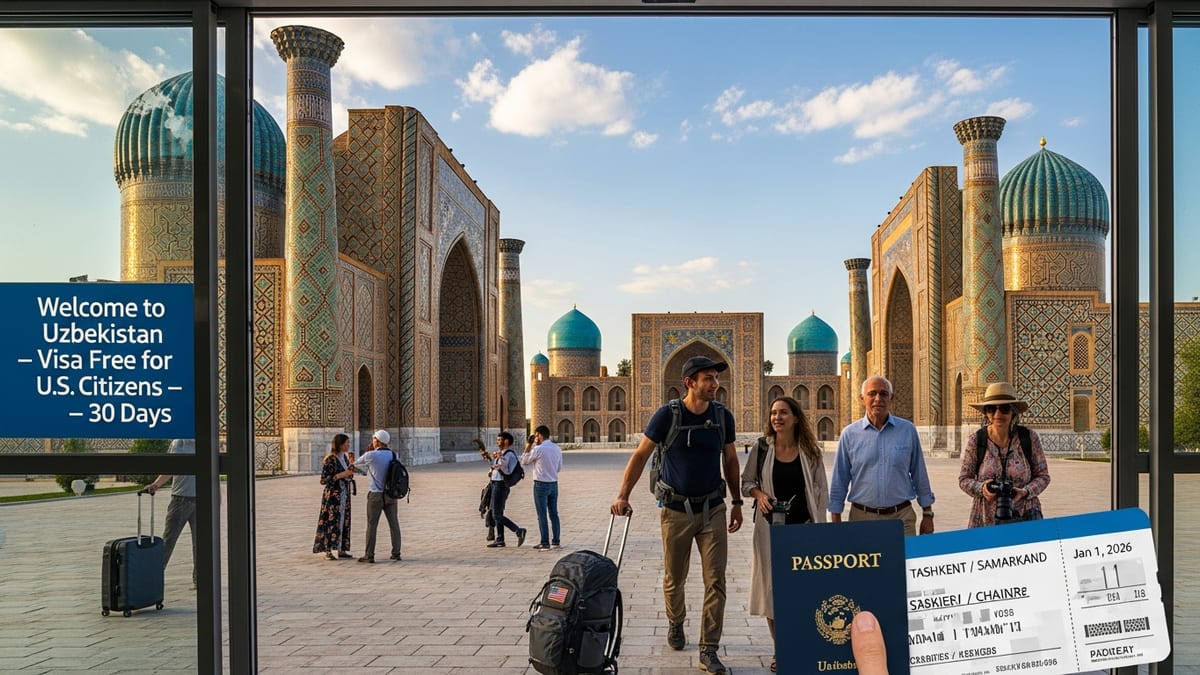
New Route Links Muscat to Central Asia in Under Four Hours
Publicly available information shows that Oman Air will inaugurate direct services between Muscat and Tashkent on 1 June 2026, marking the carrier’s first scheduled route into Central Asia. The service is planned to operate twice weekly, creating a non-stop link between Muscat International Airport and Islam Karimov Tashkent International Airport.
Industry data indicates that the flight time on the Muscat to Tashkent sector will be around three hours and forty-five minutes, placing the Uzbek capital within easy reach for leisure and business travellers from Oman and the wider Gulf region. Observers note that the schedule is designed to feed Oman Air’s network, giving passengers from India, the Middle East and parts of Europe a new one-stop option into Uzbekistan.
Reports from aviation trackers and specialist travel media suggest that the Muscat–Tashkent flights will join a wave of network additions by Oman Air across 2026, as the airline focuses on building a more regionally diversified schedule. The Tashkent launch is presented as a strategic step that balances point-to-point demand with growing interest in Central Asia as a tourism and trade corridor.
Seats on the new route have already appeared in booking systems, with the first flights scheduled at the start of the peak summer travel period. Capacity will initially be limited to two rotations per week, but analysts say performance over the first season could influence future frequency increases.
Special Summer Fares Aim to Stimulate Leisure Travel
To support the launch, Oman Air is promoting special summer fares between Muscat and Tashkent, targeting holidaymakers looking for an alternative to traditional regional destinations. Fare information available through online agencies and the airline’s own booking channels shows discounted introductory prices during the first months of operation.
The timing of the offer coincides with the broader summer outbound season from the Gulf, when residents typically seek cooler or culturally rich destinations. By positioning Tashkent with promotional pricing, Oman Air appears to be leveraging pent-up demand for new city-break options that combine heritage, green urban spaces and contemporary amenities.
Travel agents in the region are highlighting the Muscat–Tashkent combination for multi-stop itineraries, pairing short stays in Oman with onward travel to Uzbekistan at competitive through-fares. Packaging the route within broader summer promotions is expected to raise awareness among travellers who may be unfamiliar with Central Asia but are attracted by value-focused offers.
Observers note that introductory fare campaigns have been a common tactic in Oman Air’s recent route launches, helping to quickly build load factors and test market response. The Muscat–Tashkent summer deals follow this pattern, with early-booking incentives likely to appeal both to budget-conscious travellers and to frequent flyers exploring new destinations.
Tashkent: A Blend of Rich Heritage and Modern Elegance
Tashkent, home to more than two million residents, is increasingly promoted as a city that balances deep historical roots with a contemporary, design-forward skyline. According to tourism board materials and destination reports, visitors encounter a patchwork of Soviet-era boulevards, restored Islamic architecture and glass-fronted commercial districts.
The city’s cultural landscape is anchored by madrassas, mosques and traditional neighbourhoods that trace their lineage to the Silk Road era, while extensive urban redevelopment has brought new museums, civic squares and shopping avenues. Travel features in regional media frequently highlight Tashkent’s leafy parks, metro stations decorated with elaborate mosaics and a growing café and restaurant scene that combines Uzbek cuisine with international influences.
Modern infrastructure means that many of Tashkent’s key attractions are accessible within a compact radius, making it well suited to short stays facilitated by the new Oman Air schedule. City guides point out that visitors can move from historic quarters to contemporary art spaces and high-end hotels within a single day, reinforcing the marketing message of a destination that merges tradition with modern elegance.
For Muscat-based travellers accustomed to established regional city-break hubs, Tashkent offers a contrasting experience in climate, architecture and culture. The new direct flight shortens the psychological and practical distance to Central Asia, placing its museums, markets and tree-lined avenues within a long weekend’s reach.
Strengthening Oman–Uzbekistan Tourism and Business Links
According to published coverage from aviation and economic outlets, the Muscat–Tashkent route forms part of a broader effort by Oman and Uzbekistan to deepen cooperation in tourism, trade and investment. Air connectivity is described as a catalyst for business delegations, cultural exchanges and joint tourism initiatives between the two countries.
Policy announcements in both capitals in recent years have focused on easing travel and promoting two-way visitor flows, with Uzbekistan’s wider visa facilitation measures for many nationalities improving onward access via Tashkent. Industry commentators suggest that Muscat’s role as a hub gives Uzbek travellers additional options to reach the Gulf, the Indian subcontinent and parts of Europe using a single connection.
For Oman, the new link complements national tourism strategies that emphasise diversification beyond traditional source markets. By opening a route into Central Asia, Oman Air is seen as supporting efforts to attract visitors interested in desert, coastal and cultural experiences that differ from those in Uzbekistan yet remain connected through shared Silk Road heritage narratives.
Business travel is also expected to benefit, with sectors such as logistics, construction, agriculture and education already identified by analysts as areas of growing bilateral interest. Direct air services typically reduce travel times and lower transaction costs, making exploratory and follow-up visits more feasible for companies in both countries.
What Travellers Can Expect From the New Service
Oman Air plans to deploy narrowbody aircraft on the Muscat–Tashkent route, in line with many of its regional and medium-haul operations. Scheduling information published by the airline and aviation data providers points to a configuration that includes both economy and business class cabins, aiming to serve a mix of leisure guests, corporate travellers and tour groups.
Passengers connecting in Muscat will be able to link the Tashkent service with Oman Air flights to destinations across the Middle East, South Asia and select European cities. Travel analysts say this could make the route particularly attractive to travellers from India and the Gulf looking for a relatively short, single-stop journey to Central Asia, as well as to Uzbek travellers seeking a new connection to the Indian Ocean and Arabian Peninsula.
As with other Oman Air services, travellers can expect standard hub-based conveniences at Muscat International Airport, including modern terminal facilities and coordinated minimum connection times. Tashkent’s main airport has been undergoing phased upgrades, and recent reports describe improved passenger handling and expanded terminal capacity designed to accommodate rising visitor numbers.
With special summer fares now drawing attention to the launch, the Muscat–Tashkent route is emerging as one of the most closely watched additions to Oman Air’s 2026 network. Its performance over the first season will be seen as a test of regional appetite for Central Asian city breaks and of the airline’s broader strategy to position Muscat as a bridge between the Gulf and emerging markets.