


More news on this day
Viking Yi Dun has departed Shanghai on a sixty-day Afro-Euro-Asian Discovery itinerary, a Chinese-language luxury voyage that threads together the South China Sea, the Indian Ocean and the Mediterranean in one extended grand journey.
Get the latest news straight to your inbox!
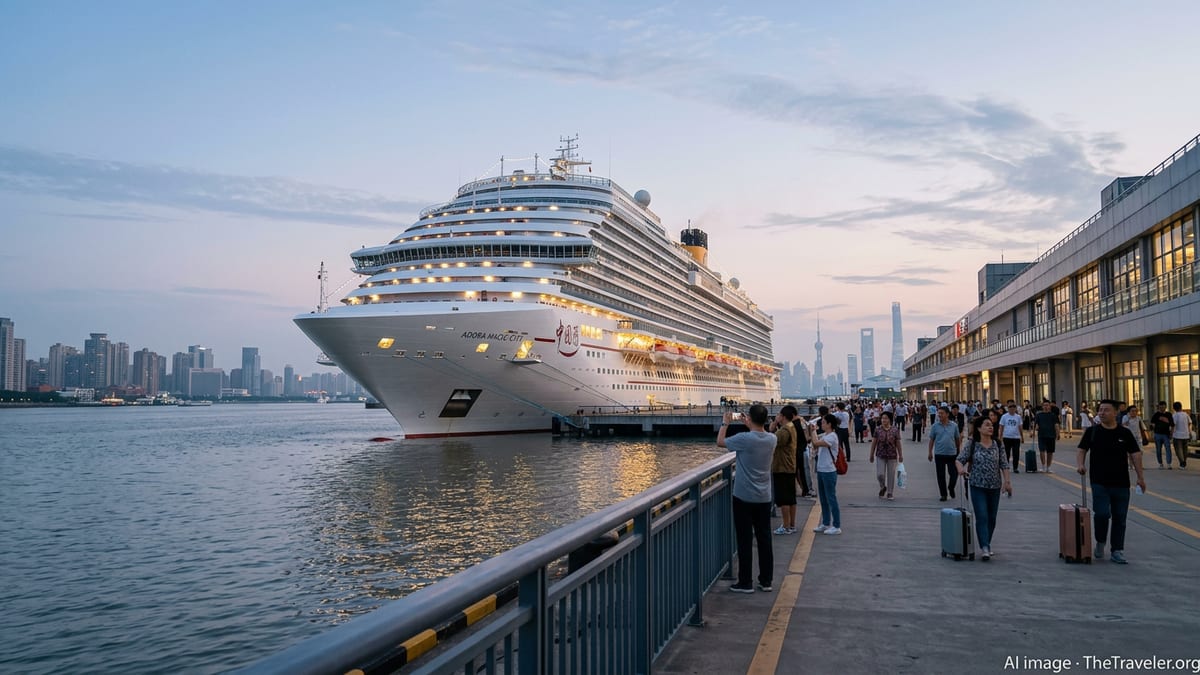
Chinese-Language Luxury Voyage Sets Sail From Shanghai
The 930-guest Viking Yi Dun, operated as part of a joint venture between Viking and China Merchants, is widely described as China’s first Chinese-flagged luxury cruise ship tailored to international ocean standards. For this latest deployment, the vessel has embarked from Shanghai on a marathon route that links Asian hubs and African and European coasts, packaged for primarily Chinese-speaking guests.
Publicly available information on the itinerary indicates that the sixty-day sailing combines extended sea days with port-intensive segments, positioning the cruise as a slow-travel alternative to multi-leg air itineraries. The voyage is promoted as a seamless journey that allows guests to depart from a major Chinese gateway and reach Europe and back by sea, while remaining in a familiar onboard language environment.
Onboard, Viking Yi Dun is configured in line with the rest of Viking’s ocean fleet, with Scandinavian-inspired interiors and an emphasis on destination-focused enrichment rather than large-scale entertainment. Reports indicate that signage, announcements and programming on this journey lean heavily toward Mandarin, supported by Chinese cuisine options alongside Viking’s established international menus.
The sailing continues the ship’s role as a bridge between China’s resurgent outbound cruise demand and the wider global network of long-haul itineraries. Industry analysts have noted that extended grand journeys of this type are becoming a signature element of Viking’s deployment strategy, connecting multiple regions under a single booking.
Route Spans South China Sea, Indian Ocean and Mediterranean
According to published deployment materials, the Afro-Euro-Asian Discovery voyage traces a broad arc from East Asia through the Indian Ocean and onward to the Mediterranean, before reversing course. Initial segments focus on the South China Sea, with calls or scenic sailing days positioned to showcase China’s southeastern approaches and neighboring waters that have featured prominently in the line’s recent Asia programs.
From there, the itinerary is scheduled to cross the Indian Ocean, a body of water that features in several of Viking’s long-haul “Grand Journeys” connecting Europe, Africa and Asia. The crossing typically includes calls at ports along the Indian Ocean rim, where guests can join shore excursions centered on maritime heritage, regional cuisine and historic trading centers that once linked East and West by sea.
Once in the Mediterranean, the program is expected to draw on Viking’s extensive portfolio of European ports. The line has a longstanding presence in both the western and eastern Mediterranean, and publicly available marketing materials highlight classic cultural calls in countries such as Italy, Greece and Spain on similar grand itineraries. For guests boarding in Shanghai, this allows a single continuous voyage that moves from Chinese coastal scenery to iconic European waterfronts without a change of ship.
Operationally, the itinerary also positions Viking Yi Dun within established seasonal flows. Cruise line materials for comparable grand voyages show ships repositioning between Europe and Asia by routing through the Suez Canal and the Red Sea or, in some seasons, incorporating segments along Africa’s Atlantic coast. The Afro-Euro-Asian Discovery journey follows this broad pattern while framing the experience for a Chinese-speaking audience.
Chinese-Market Focus With Global Itinerary Ambitions
Viking Yi Dun has been at the center of efforts to create premium cruise products that originate in China while matching international hardware and service standards. Earlier China-focused deployments concentrated on coastal and regional sailings, including itineraries along the South China Sea, East China Sea and Yellow Sea that highlighted lesser-known Chinese ports to overseas visitors.
The current sixty-day journey extends that concept outward, pairing a familiar onboard environment for Chinese guests with a route that reaches multiple continents. According to coverage of Viking’s broader strategy, grand voyages are designed to appeal to experienced cruisers who are comfortable spending several weeks or more at sea and who value educational programming, destination lectures and regionally grounded cuisine over short-break entertainment.
For the Chinese outbound market, the Afro-Euro-Asian Discovery itinerary offers an alternative to traditional package tours that rely on back-to-back flights and hotel stays. Guests can unpack once in Shanghai and then follow a continuous narrative of maritime travel that mirrors historic sea routes linking Asia, Africa and Europe, but delivered on a modern vessel with contemporary amenities.
At the same time, the ship’s participation in such a long-haul program underscores Viking’s interest in maintaining a bridge between its China deployment and its core strongholds in Europe. Public filings describing Viking Yi Dun’s role within the company’s fleet refer to the vessel as part of a China-focused partnership, but one that can be integrated into global itineraries as demand and operating conditions evolve.
Onboard Experience Blends Nordic Design and Chinese-Language Service
Although Viking Yi Dun is marketed to the Chinese-speaking segment on this sailing, its onboard design is closely aligned with that of Viking’s other ocean ships. Consumer and trade descriptions highlight a restrained Nordic aesthetic, all-veranda accommodations and public spaces centered on libraries, lounges and observation areas rather than large casinos or theme-park-style attractions.
For the Afro-Euro-Asian Discovery voyage, this hardware is overlaid with programming meant to resonate with Chinese guests traveling through diverse regions. Shore excursions are framed with Mandarin-language guiding in key ports, while onboard lectures and cultural presentations are adapted to reflect both Chinese perspectives and local narratives encountered along the route.
Dining follows Viking’s established approach of multiple complimentary venues supplemented by specialty options, with published materials on China sailings noting an expanded emphasis on Chinese dishes, regional flavors and tea culture. At the same time, international menus remain available, particularly as the ship moves into Mediterranean waters where guests may want to sample local ingredients and European classics.
Reports on previous deployments suggest that the language mix among staff is tailored to ensure smooth communication for Chinese passengers while preserving the global character associated with Viking’s crews. For guests, this creates a hybrid environment where service norms feel familiar, but the voyage itself crosses several cultural and geographic frontiers.
Long-Haul Sea Journeys Reflect Wider Cruise Market Trends
The launch of a sixty-day Afro-Euro-Asian Discovery program from Shanghai reflects a wider trend in the cruise industry toward extended itineraries that link multiple regions in a single sailing. Cruise analysts note that such voyages appeal to travelers with flexible schedules who are seeking more immersive, narrative-driven journeys rather than standalone one- or two-week holidays.
Viking has been expanding its portfolio of these long-haul routes, with grand journeys that can stretch from several weeks to more than five months across different ships and seasons. The inclusion of a Shanghai-originating, Chinese-language voyage within this framework demonstrates how these products are being localized for specific markets while still drawing on a shared operational template.
The timing of the itinerary also aligns with a broader recovery in international cruise demand across Asia, Europe and Africa. After several years of disruption, capacity has returned in stages, and cruise lines have been looking to differentiate their offerings beyond standard regional circuits. By tying together the South China Sea, Indian Ocean and Mediterranean under one banner, Viking Yi Dun’s latest sailing seeks to stand out in a crowded marketplace.
For Shanghai, the departure of a high-profile, sixty-day voyage underscores the city’s enduring role as a strategic homeport for long-haul cruise operations. As additional itineraries are announced and refined, observers will be watching how demand from Chinese travelers evolves for complex, multi-continent sea journeys that begin and end close to home.