

Connecticut was not a state I expected to feel so personal. On a map it looks like a compact connector between New York and Boston, a place you pass through on the Northeast Corridor. But on a recent trip that stretched from the salt-streaked docks of Mystic to the fall-tinted hills of Litchfield County and the pizza-scented streets of New Haven, I discovered a quieter, very human scale of New England. Connecticut revealed itself as a patchwork of intimate experiences: conversations with museum guides, briny breezes off the Long Island Sound, late-night slices in student haunts, and backroad drives where every turn seems to reveal another white steeple rising over a town green.
Arriving in a Small State with Big Layers
Coming into Connecticut by train from New York City, the first surprise is how quickly the skyline gives way to marsh, river, and low-profile towns. The state feels immediately smaller and calmer, with inlets of the Long Island Sound cutting inland and commuter stations emptying into walkable main streets. From the window, there are hints of historic industry, old brick mills and factory stacks, but they are softened now by trees and water views. It feels like a place that has already lived through its loudest chapter and settled into something more reflective.
Driving, that sense deepens. Distances are short, but the landscapes change quickly: suburban clusters outside Stamford and Norwalk, then long, shady stretches of Route 2 and I-84, then the sudden drama of a river crossing or a ridge line in the northwest hills. GPS says it is an hour from one end of the state to the other, but practically, the pockets of character are so distinct that each region feels like its own small country. There is a maritime Connecticut, a college-town Connecticut, a corporate-corridor Connecticut, and a rural, almost storybook Connecticut of farms, orchards, and stone walls.
What stands out most on arrival is the scale. Connecticut feels approachable. Big-ticket attractions exist, but they do not dominate your field of view. Instead, trips often start with smaller ambitions: a single museum, a single harbor, a single hike. The reward is that you rarely feel rushed. It is possible to build a day around one or two experiences and still leave room for lingering conversations with locals, a late-afternoon coffee on a town green, or an unplanned detour to an ice cream stand that looks like it has been there forever.
Harbor Air and Wooden Decks in Mystic
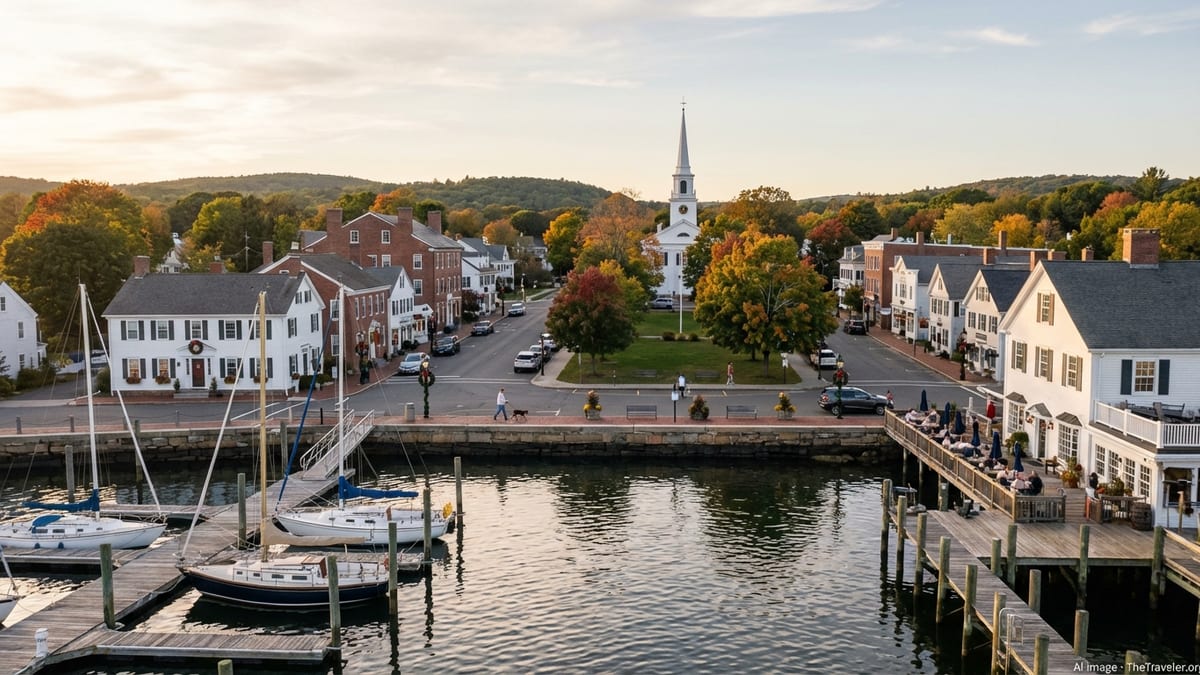
My time in Mystic began with the smell of the river at low tide and the slow creak of boats nudging their moorings. Mystic is the coastal village many people picture when they think of Connecticut: shingled houses, a drawbridge that halts traffic several times a day, and weathered decks that seem built for sunsets. The town is compact enough to cross on foot, and that is part of its charm. Mornings mean strolling along the riverfront as shopkeepers hose down sidewalks and kayakers pass beneath the bridge, calling up to onlookers leaning on the rail.
The Mystic Seaport Museum reinforces the sense that this town has always faced the water first. Spread across a recreated historic seafaring village and real working shipyard, it blends maritime history with live craft demonstrations and docked vessels that you can board. Exhibits about whaling and shipbuilding acknowledge both the romance and the cost of the sea, and the staff have the easy, conversational style that invites questions. There is nothing abstract about it: tar, rope, and polished wood all feel close at hand, and the stories are told with a clear-eyed sense of how maritime life shaped New England as a whole.
Not far away, the Mystic Aquarium gives the town a different energy, especially for families. It is the kind of place where children’s excitement provides the background soundtrack as you drift from tank to tank. Between the seaport, aquarium, and neighboring shopping village styled like an old New England lane, you can easily fill a weekend without ever straying far from the water. Evenings tend to return to the river. Outdoor tables at local restaurants glow under string lights, the drawbridge lifts against a deepening sky, and if you are lucky enough to catch an off-season night, the town feels like it belongs mostly to locals and a handful of visitors lingering over late dinners.
Hartford’s Quiet Cultural Depth
Hartford, the state capital, often appears in travel plans as a practical waypoint. Yet my visit underscored how much quieter cultural depth the city holds if you give it time. Hartford is a city of contrasts: polished office towers on one block, ornate nineteenth-century homes on the next, and the slow, wide presence of the Connecticut River threading through it all. It does not announce itself loudly, and that is exactly why its highlights feel like discoveries rather than obligations.
The Mark Twain House sits slightly apart from downtown, in a neighborhood of wide streets and mature trees. Walking up to the dark, richly detailed home is like stepping onto the set of American literary history. Inside, guided tours bring the space to life, linking individual rooms to specific works. It is another reminder that Connecticut’s cultural footprint is far bigger than its physical size, and that the state has long been a backdrop for American stories. Nearby, the Harriet Beecher Stowe Center adds another layer, offering context about activism, literature, and the conversations that shaped the nineteenth century in New England.
Back in the center of Hartford, the Wadsworth Atheneum stands out as a calm, airy temple to art. Known as one of the oldest continually operating public art museums in the country, it combines serious historical collections with a manageable scale. You can move from Baroque canvases to American landscapes and modern works without feeling overwhelmed. The museum does not have the crowds of major coastal institutions, which leaves space to stand in front of a single painting and simply stay with it. For a city that is often reduced to office parks and insurance companies in the popular imagination, Hartford’s museums and historic houses quietly insist that visitors take it more seriously.
New Haven: Pizza, Campus Stones, and Nightlife
New Haven is the Connecticut city that feels most alive after dark, and much of that energy revolves around Yale University. Walking out of the train station, you quickly find yourself on streets framed by collegiate Gothic buildings, leafy quadrangles, and libraries that look like cathedrals. Students on bikes, tour groups, and alumni clutching coffee cups all move through the same public spaces. The campus is open, porous, and surprisingly easy to navigate on foot. Tours and visitor centers provide entry points, but it is just as rewarding to wander into a courtyard, glance at a stained-glass window, or step into an art gallery without an agenda.
For many visitors, New Haven’s defining experience is its pizza. The local apizza style, thin-crusted and often slightly charred, has built a national reputation. The names are well known now, from venerable coal-fired institutions marking a century of operation to newer spots drawing crowds of students and visiting families. On weekends, lines curl down the sidewalks on Wooster Street and beyond, with visitors debating toppings like the regionally famous white clam pie. Recently, New Haven’s passion for pizza took the form of a record-breaking pizza party downtown, where thousands gathered to share slices and affirm the city’s unofficial role as a pizza capital.
Eating your way through New Haven’s pizza culture is almost a sightseeing activity in itself. A dedicated pizza tour walks guests between several classic and newer pizzerias, weaving through Yale’s buildings along the way. Beyond pizza, there are late-night burger counters that claim a place in American culinary history, along with cafes, breweries, and music venues that keep the streets lively well into the evening. On my own visit, it was the combination that made the city feel so memorable: viewing rare books in a campus library in the afternoon, catching a student theater performance at dusk, and ending the night under neon lights with a still-steaming slice on a paper plate.
Litchfield County and the Allure of Connecticut’s Backroads
Leaving the coastal and urban corridor for the northwest hills of Connecticut feels like stepping into a different state. The interstate gives way to two-lane roads, and the horizon begins to ripple with low mountains. Stone walls line fields, church steeples peek above stands of maple and oak, and village greens appear almost suddenly as you come around a bend. This is the Connecticut that has fed countless novels and television depictions of a certain kind of small-town New England. Litchfield County, in particular, has become a magnet for leaf peepers and city dwellers seeking a quieter, greener retreat.
In autumn, that reputation is well deserved. Country roads near towns like Litchfield, Kent, and Cornwall turn into informal scenic byways, lined with trees that shift from green to deep red, orange, and gold. Travel outlets regularly call out these towns for their fall foliage, describing the patchwork of lakes, glades, and forested hills that surround them. Along the Housatonic River, historic covered bridges frame views that look ready-made for postcards, especially as the season peaks in October. Trails in state parks and forests lead to overlooks where the entire valley seems to burn with color in the late-afternoon sun.
Outside of peak foliage, Litchfield County retains its appeal in quieter ways. Farm stands offer local produce and baked goods, antique shops cluster around town centers, and small inns and bed-and-breakfasts occupy old houses with wide porches. Apple orchards and pumpkin patches form part of the seasonal rhythm, along with community festivals that celebrate local harvests and crafts. Even in winter, when the leaves are gone, there is a stark beauty in the bare hills, frozen ponds, and plume of smoke rising from farmhouse chimneys. Driving the backroads here, windows cracked to let in the crisp air, you begin to understand why so many visitors talk about these towns as a softer, more relaxed counterpart to the coastal Hamptons.
Seasonal Flavors and Local Traditions
More than in many small states, the experience of Connecticut shifts with the seasons in visible, flavorful ways. Summer along the coast means clam shacks, ice cream stands, and long evenings near the water. Menus lean hard into seafood and soft-shell crab, and outdoor patios fill with families and day-tripping city residents. This is also the season when places like Mystic feel busiest, and lodging prices there and along the shoreline tend to rise accordingly. Packing patience for crowds and making reservations in advance can make the difference between a relaxed meal and a long wait on the sidewalk.
Fall, by contrast, belongs to inland Connecticut. Orchards near towns like Glastonbury and others along the Connecticut River host apple-picking days, corn mazes, and harvest festivals. One long-standing festival on the riverfront plans to mark a milestone anniversary in 2025, pairing craft vendors and live music with peak foliage by the water. Across the state, farms roll out cider doughnuts, fresh-pressed juice, and seasonal baked goods that quickly become travel memories in their own right. In the northwest hills, trailheads and small parking lots fill with cars bearing plates from neighboring states as visitors chase the brief window of peak color.
Winter and early spring can feel more introspective, but they also provide opportunities to explore without crowds. Museums in Hartford and New Haven, historic houses, and small-town galleries are easier to navigate. Hotel rates often soften, and local restaurants lean into comfort food and hearty menus. The weather can be unpredictable, shifting from powdery snow to rain and back again, but on clear days a walk around a quiet town green or a bundled-up stroll by the river has its own appeal. By late spring, the state shifts again. Lawns green up, college campuses buzz with graduation, and outdoor dining returns to patios from Stamford to Stonington.
Practical Impressions: Getting Around and Planning a Trip
What makes Connecticut particularly approachable is how manageable it feels for a traveler. The major coastal train line connects New York and Boston through cities like Stamford, New Haven, and New London, making car-free visits to those hubs feasible. Branch lines and commuter services add options, though schedules can be thinner on weekends, so planning ahead is wise. Within cities, downtowns are compact and walkable, especially around college campuses and historic districts. Rideshares and taxis fill the gaps, particularly at night.
To reach inland towns, state parks, and rural corners, a car becomes more or less essential. The distances are modest, but travel times can stretch when you leave the highways for slower, winding roads. That is part of the pleasure, though. Some of my favorite moments in Connecticut happened not at headline attractions, but on unplanned detours prompted by a small sign for a farm stand, a glimpse of water through the trees, or a steeple that appeared just over a ridge. Fuel and toll costs add up less than in larger states simply because you rarely drive for hours on end.
In terms of cost, Connecticut tends to land in the middle to upper range within New England. Coastal areas and popular tourist towns are often more expensive, especially in summer and early fall. Inland areas, smaller cities, and off-season visits can feel more budget-friendly, with locally run inns and motels undercutting big-brand hotels. Dining follows a similar pattern. Iconic pizzerias and waterfront restaurants can be priced like comparable spots in larger cities, while diners, delis, and family-owned eateries away from the main corridors often deliver hearty meals at more modest prices. Traveling midweek, especially outside peak foliage or summer beach season, usually yields better values across the board.
The Takeaway
Before this trip, I thought of Connecticut as a place people passed through on their way to somewhere else. After several days of moving deliberately from harbor to hilltop, campus quad to orchard, that impression feels outdated. What emerges instead is a state that rewards attention to small details and a willingness to slow down. Connecticut’s appeal is cumulative. It builds in layers: the unexpected richness of a museum in Hartford, the smell of coal-fired crust on a chilly evening in New Haven, the sight of a wooden ship’s rigging etched against the sky in Mystic, the sudden reveal of a valley blazing with October color in the northwest hills.
This is not a destination built around one defining monument or single must-see view. It is, rather, a place where the pleasures are human-scale and often quietly shared: a barista recommending a nearby trail, a docent pausing a tour to answer a curious question, a farmer slipping an extra apple into your bag. In a region where some destinations feel like carefully curated sets, parts of Connecticut still feel lived-in and unvarnished. That combination of authenticity, variety, and accessibility makes it a state worth visiting in its own right and worth returning to in different seasons. For travelers willing to trade grand gestures for smaller, more personal experiences, Connecticut offers an unexpectedly rich and enduring journey.
FAQ
Q1. What is the best time of year to visit Connecticut?
The answer depends on what you want. Summer is ideal for coastal towns and beach days, while October is usually the sweet spot for peak fall foliage inland.
Q2. Do I need a car to explore Connecticut?
You can see New Haven, Hartford, and some coastal towns by train and on foot, but a car is very helpful for reaching rural areas, state parks, and small villages.
Q3. Is Connecticut an expensive state to visit?
Prices are moderate to high by U.S. standards. Coastal hotspots and peak foliage season can be pricey, while inland towns and off-season visits are more budget-friendly.
Q4. How many days should I spend in Connecticut?
A long weekend works for one or two regions, such as Mystic and New Haven. Five to seven days allows time to combine the coast, a city, and the northwest hills.
Q5. Is New Haven’s pizza really worth the hype?
If you enjoy thin, slightly charred crust and simple toppings, yes. The local apizza style has a devoted following, and tasting it is part of experiencing New Haven.
Q6. Are Connecticut’s small towns welcoming to visitors?
Generally yes. Many communities rely on tourism and local spending, and visitors who are respectful, patient, and curious are usually met with warmth and helpful suggestions.
Q7. What should I pack for a trip to Connecticut?
Pack layers, comfortable walking shoes, and a waterproof jacket. Weather can shift quickly, especially in spring and fall, and evenings often feel cooler near the water.
Q8. Is Connecticut a good destination for families?
Very much so. Aquariums, seaport museums, beaches, orchards, and easy hikes give families plenty of low-stress options that appeal to a range of ages.
Q9. How crowded does Connecticut get during peak foliage?
Popular viewpoints, orchards, and backroads can be busy on sunny weekends in October, but crowds are usually manageable if you start early or visit midweek.
Q10. Can I visit Connecticut without planning far in advance?
In quieter seasons you can be flexible, but in summer and around peak foliage it is wise to book lodging and key activities ahead to avoid limited choices.