


More news on this day
Travelers moving through Portland International Airport at the start of the busy summer period are facing a wave of schedule disruptions, with publicly available tracking data showing 36 delayed flights and three cancellations affecting routes across the United States and Canada on Monday.
Get the latest news straight to your inbox!
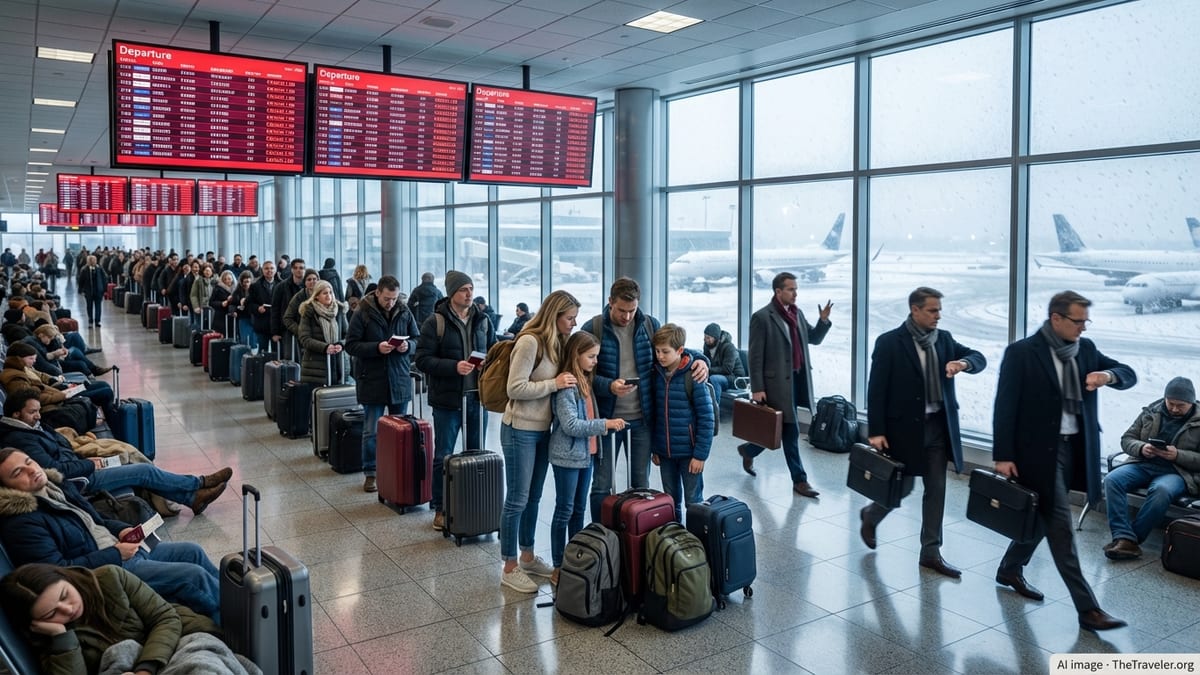
Delays Ripple Across Major Carriers at PDX
Flight-tracking boards at Portland International Airport reflected a patchwork of delays across several major carriers, including Allegiant Air, Alaska Airlines, Horizon Air and United Airlines. Data compiled from real-time tracking services and airline status pages indicated that both departures and arrivals were affected, creating knock-on issues for connections across North America.
The disruptions were most noticeable on short and medium-haul routes linking Portland with key hubs such as Los Angeles, Dallas Fort Worth, Denver and several Canadian gateways. Some Alaska and Horizon services operating under the same corporate umbrella showed revised departure times, with passengers advised through digital channels to monitor updates closely.
United Airlines flights connecting Portland with major East Coast and Midwest destinations also recorded delays, contributing to a broader pattern of schedule adjustments across multiple time bands. Allegiant Air, which focuses on leisure-oriented routes, accounted for part of the disruption profile, particularly on services timed to meet peak vacation travel demand.
While the overall number of cancellations remained relatively limited compared with daily traffic at Portland, the combination of three canceled flights and dozens of delays was enough to create visible congestion at gates and check-in areas, especially during early morning and late afternoon waves.
Impact on Travelers Across the United States and Canada
The Portland disruptions reached far beyond Oregon, affecting travelers on connecting itineraries spanning the United States and Canada. Passengers bound for destinations in California, Texas and the East Coast reported extended layovers, missed onward connections and last-minute rebookings routed through alternate hubs.
Canadian-bound travelers also faced added uncertainty, as delayed departures from Portland compressed connection times at transborder hubs. Flight-status portals showed altered arrival times for services feeding into larger networks, increasing the likelihood of overnight stays or rerouting for some passengers with tight schedules.
The timing of the disruption, coinciding with an early-summer travel surge, amplified its impact. Many flights operating at or near capacity left limited flexibility for same-day rebooking, prompting some travelers to accept later-day or next-day departures. In several cases, itineraries that typically involve a straightforward single connection expanded into more complex multi-stop journeys.
Families traveling on vacation, as well as business travelers with fixed meeting times, appeared especially vulnerable to the knock-on effects. Social media posts and public commentary highlighted a mix of frustration and resignation as travelers adjusted plans and sought updated information from airline apps and airport displays.
Operational Strain in a Busy Summer Travel Environment
The pattern of delays and cancellations at Portland is unfolding within a broader environment of high demand and tight airline capacity. Recent aviation data for the Pacific Northwest show rising passenger volumes across several carriers, including Alaska and Allegiant, at a time when airlines continue to navigate fleet utilization, crew availability and turnaround constraints.
Industry observers note that Portland has grown into a significant connecting point in the region, with a mix of legacy carriers, low-cost airlines and regional affiliates such as Horizon Air funneling traffic through a relatively compact terminal footprint. This means even a modest number of off-schedule aircraft can quickly translate into crowding at certain gates and pressure on ramp operations.
Publicly available airline statistics for 2025 and early 2026 have already indicated a competitive environment, with some carriers trimming or reshaping networks while others add capacity on high-demand routes. In that setting, irregular operations at a key airport like Portland can have an outsized impact, as spare aircraft and crew resources are limited and recovery windows narrow.
Travel analysts point out that recurring congestion, even on a limited scale, can erode traveler confidence during the peak season, especially for those connecting through multiple hubs. The events in Portland serve as a reminder that complex networks remain vulnerable to local disruptions that can cascade across entire route systems.
How Airlines and the Airport Are Managing Disruptions
According to publicly accessible flight-status tools, airlines serving Portland leaned heavily on digital communication and automated rebooking options to manage the day’s irregular operations. Many passengers received revised departure times, updated gate assignments and reissued boarding passes through mobile apps and email notifications rather than at traditional service counters.
Alaska Airlines and its regional partner Horizon Air, which together handle a substantial share of Portland’s traffic, displayed rolling updates on their status pages as individual flights shifted by increments of minutes or hours. United and Allegiant similarly reflected schedule changes online, with some affected services showing adjusted departure and arrival estimates throughout the day.
At the airport level, live-arrival and departure boards provided a consolidated view of the evolving situation, indicating where delays were concentrated and which flights had moved into canceled status. Ground operations appeared to prioritize turning arriving aircraft quickly to protect later departures, particularly on busy domestic trunk routes.
Public information available from aviation data providers suggested that the disruption pattern was spread across operators rather than concentrated in a single airline or route. This diffuse impact can complicate recovery, as it limits the ability of any one carrier to backfill problems with spare capacity, especially when aircraft and crews are already tightly scheduled.
What Passengers Can Expect in the Coming Days
Based on current schedule data and broader seasonal trends, travelers using Portland in the days ahead are likely to encounter generally normal operations punctuated by intermittent pockets of delay. Airlines often attempt to recover quickly from single-day disruptions, but follow-on effects can persist as aircraft and crew rotations work their way back into alignment.
Public guidance from airlines such as Allegiant emphasizes the importance of checking flight status frequently on the day of travel and arriving at the airport earlier than usual when conditions appear unsettled. Similar advice is echoed across the industry, particularly for passengers with tight connections or international segments that offer fewer daily frequencies.
Industry data for recent months underscore that, while large-scale nationwide meltdowns have become less frequent, localized disruptions like those seen at Portland remain a recurring feature of modern air travel. Weather, air traffic management, technical checks and staffing constraints can interact in complex ways, leaving airlines and airports to manage shifting operational pictures hour by hour.
For now, the situation at Portland International Airport serves as a timely indicator of how quickly routine schedules can be disrupted during the peak travel season. With 36 delays and three cancellations recorded across multiple carriers in a single day, travelers are being reminded once again that flexibility and real-time information are essential tools for navigating today’s aviation landscape.