


More news on this day
Operations at Hangzhou Xiaoshan International Airport in eastern China experienced significant disruption on June 16, with publicly available flight-tracking data showing clusters of delays and cancellations affecting China Eastern, Hainan Airlines, XiamenAir, Air China and China Southern, and complicating connections across mainland China and nearby regional hubs.
Get the latest news straight to your inbox!
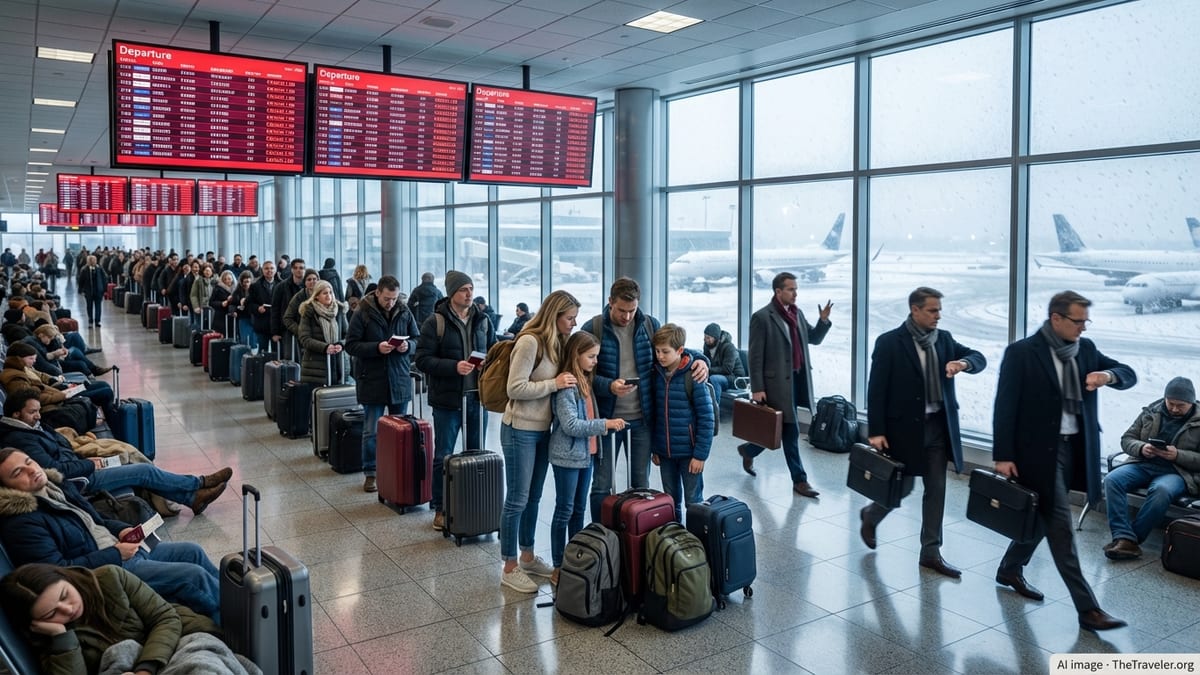
Clusters of Cancellations and Long Delays
Real-time departure and arrival boards for Hangzhou Xiaoshan International Airport on June 16 showed a pattern of scattered cancellations and extensive delays across the schedule rather than a complete shutdown, pointing to what appears to be a rolling operational challenge rather than a single, isolated incident. Several flights operated by Air China from Hangzhou to domestic destinations such as Haikou, Tianjin and Chengdu were listed as canceled in the evening wave, while others remained en route or landed behind schedule.
Alongside cancellations, long delays affected departures and arrivals across different airlines. Flights operated by XiamenAir, China Southern and China Eastern on core trunk routes linking Hangzhou with major cities including Guangzhou, Kunming and Chengdu were reported as delayed at various points in the day, stretching passenger waiting times and complicating onward connections. Public dashboards indicated that, taken together, the day’s disruptions amounted to well over a hundred delayed movements, alongside a smaller number of outright cancellations.
The pattern left travelers exposed to uncertainty throughout the day, particularly during the busy evening peak when domestic services bunch together. While many delayed flights eventually departed or landed, the cumulative effect of late aircraft and re-timed turns rippled across carriers that use Hangzhou as a focus city, contributing to congestion both on the ground and in the surrounding airspace.
Hangzhou Xiaoshan is a major node in China’s domestic network, serving as a key base or focus city for Air China, China Eastern, China Southern, Hainan Airlines and XiamenAir. Any operational problems at the airport can therefore have outsize effects, especially when they strike on a day with heavy traffic across the country.
Impact on Connections Across China and Greater Bay Hubs
The disruption at Hangzhou reverberated across China’s dense web of domestic routes, which normally connect the Zhejiang capital to dozens of cities from Harbin in the northeast to Kunming in the southwest. China Eastern, China Southern, Hainan Airlines and XiamenAir all operate extensive domestic networks from Hangzhou, meaning that irregular operations quickly spilled over into missed or endangered connections for travelers attempting same-day transfers.
The disruption was also felt on routes feeding into major coastal and Greater Bay gateways. Services between Hangzhou and Guangzhou, Shenzhen and other Pearl River Delta cities operated by China Southern and partner carriers form important feeder links for passengers connecting onward to Hong Kong, Macau and Southeast Asia. Delays to those flights risked eroding minimum connection times at downstream airports, pushing some travelers onto later departures or forcing overnight stays.
While published timetables show regular services between Hangzhou and regional hubs such as Hong Kong and Macau, as well as onward links throughout East and Southeast Asia, irregular operations at an origin airport can quickly cascade through the timetable. Passengers scheduled to travel from secondary Chinese cities into Hangzhou and then on to Hong Kong, for instance, would have faced a heightened chance of misconnecting if their inbound flight encountered a significant delay on June 16.
Publicly available schedule data also highlight how Hangzhou functions as a transfer point between China’s domestic network and international services operated by Chinese and foreign carriers. Even a limited number of cancellations and a larger field of delays at Hangzhou can therefore disrupt travel plans that extend far beyond China’s borders, affecting itineraries that involve Hong Kong, Macau and onward long-haul flights.
Operational and Weather Factors Behind the “Air Chaos”
Weather conditions and airspace management frequently play a decisive role in day-of-operations performance at Chinese airports, and Hangzhou is no exception. Meteorological information and broader regional flight data for June 16 pointed to overcast conditions in eastern China and pockets of convective activity that can require additional spacing between aircraft, leading to holding patterns and slower throughput on arrival and departure.
Such conditions tend to produce a mix of delays and selective cancellations, particularly on shorter domestic routes where airlines may thin frequencies or consolidate passengers rather than operate heavily delayed rotations. The result, as reflected in public flight-status boards for Hangzhou, is a patchwork of flights that depart and arrive roughly on time, others that run significantly late, and a subset that are canceled outright when operational constraints become too tight.
In China’s tightly coordinated airspace, even modest disturbances can have knock-on effects as air traffic management authorities adjust flows into busy terminal areas. Carriers operating from Hangzhou often need to sequence their departures through these regulated slots, which can generate extended taxi and holding times. When several large airlines with broad fleets and dense schedules are all affected on the same day, the strain can resemble what many passengers describe as “air chaos,” even if the airport itself remains open and functioning.
Operationally, disruption can also be magnified by aircraft and crew rotations that link Hangzhou to multiple cities over the course of a single day. A late inbound flight from a western or northeastern city may push its outbound sector behind schedule, which then cascades into later rotations touching other high-demand markets.
Passenger Experience and Travel Advice
For passengers, the uneven pattern of cancellations and an extensive number of delays at Hangzhou on June 16 underscored the importance of building buffers into itineraries that rely on tight domestic connections. Same-day transfers from smaller inland cities through Hangzhou to reach coastal hubs, Hong Kong, Macau or Southeast Asia can become particularly vulnerable when weather or air traffic constraints disrupt the flow of flights.
Travel forums and consumer guidance frequently recommend that passengers traveling during peak summer periods or the lead-up to major holidays allow extra time for connections, especially when itineraries involve separate tickets or different carriers. The events at Hangzhou highlight how even on an ordinary weekday outside major holiday peaks, operational pressures can still lead to lengthy delays that jeopardize onward travel plans.
Publicly accessible airline policies generally state that travelers whose flights are significantly delayed or canceled are entitled to reaccommodation on later services operated by the same carrier, subject to availability. However, passengers with complex multi-airline itineraries, including those routed through Hong Kong and Macau, can face additional challenges if delays on a domestic leg cause them to miss an onward flight marketed by a different airline.
For future travel through Hangzhou, observers suggest that passengers monitor flight status closely on the day of departure, use airline and airport apps when available, and consider greater connection times between domestic and international or regional services. The June 16 disruption has again shown that when several of China’s largest airlines encounter operational headwinds at the same airport, the effects can quickly spread across the wider network.