


More news on this day
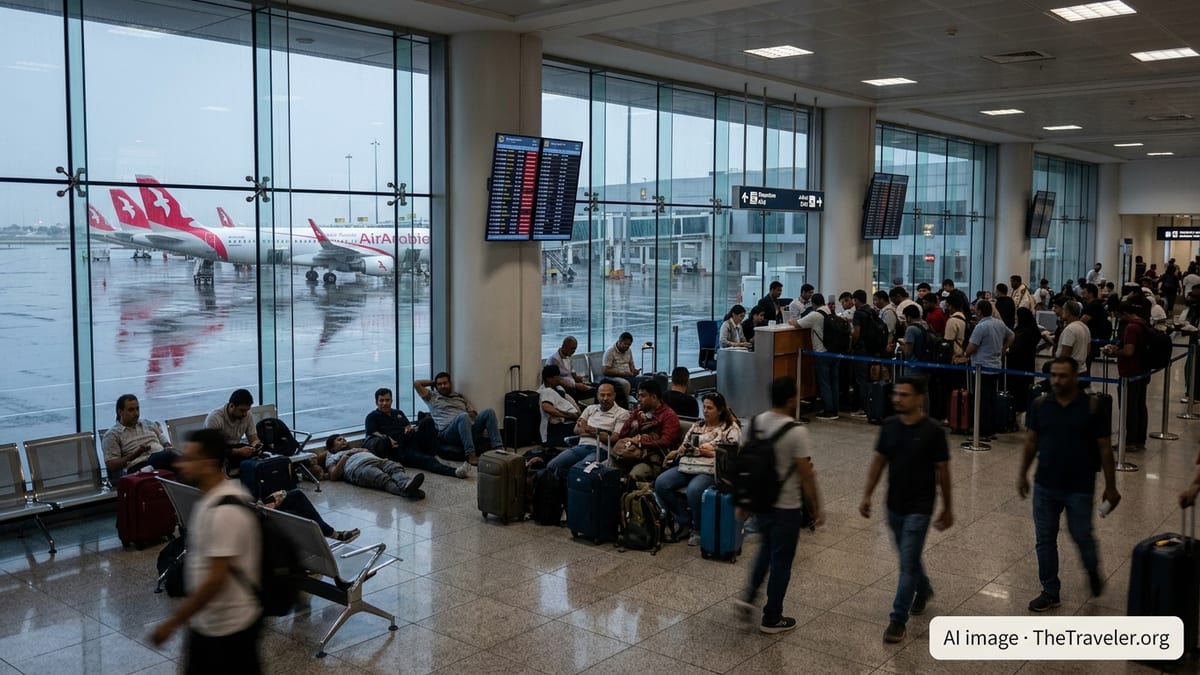
Passengers at Houston’s George Bush Intercontinental Airport faced hours of disruption today as a new round of weather-related delays and cancellations rippled through flight schedules across the United States, Mexico, Canada and parts of the Caribbean.
Get the latest news straight to your inbox!
Ground Disruptions Snarl Departures at Major United Hub
Houston Bush Intercontinental, a key hub for United Airlines and an important gateway for American, Delta and several regional and international carriers, experienced another difficult operational day as thunderstorms and unstable conditions in southeast Texas slowed traffic into and out of the airport. Publicly available flight-tracking data show multiple departure banks pushed back by rolling delays, with selected departures held at gates or on the ramp while storms passed through the area.
Industry dashboards tracking same-day activity at Bush Intercontinental indicated roughly five cancellations tied to the latest weather pattern, alongside around 100 delays affecting flights operated by United, American, Delta and their regional partners, including Mesa Airlines, SkyWest, Envoy Air and PSA Airlines. Services by foreign carriers such as Emirates and WestJet were also touched by the wider disruption as connecting passengers and crews were caught up in the congestion.
Operations into Houston have been under particular strain in recent days. Earlier this week, a ground stop was temporarily imposed at Bush Intercontinental during a burst of intense thunderstorms, forcing arriving flights to hold or divert and putting additional pressure on later departures as airlines worked to recover their schedules.
While the airport itself remained open, the combination of convective weather, air-traffic flow restrictions and knock-on crew availability issues created a patchwork of delays rather than a single prolonged shutdown. Travelers reported extended time waiting on aircraft for new departure slots and crowded gate areas as departure times were repeatedly adjusted.
Network Impact Reaches Across U.S., Mexico, Canada and Caribbean
Because Houston Bush Intercontinental functions as a major connecting point, the disruption was felt far beyond Texas. According to live flight-status boards, delayed departures and arrivals radiated through domestic routes linking Houston with cities such as Los Angeles, Denver, Chicago, Washington and New York, as well as cross-border services to Mexico, Canada, the Caribbean and other parts of Latin America.
United’s long-haul departures to South America and transborder flights into Mexico experienced cascading schedule changes after earlier feeder flights from smaller markets arrived late or departed behind schedule from Houston. At the same time, American and Delta flights routed through their own hubs contended with misaligned connections when passengers originating in Houston missed onward services.
Carriers with smaller schedules at Bush Intercontinental, including WestJet and Emirates, were indirectly affected when passengers booked on multi-leg itineraries reached Houston behind schedule from previous segments. This led in some cases to rebookings onto later flights and overnight stays when onward services departed before connecting customers could clear immigration, customs or security checks.
The impact was also visible at regional airports that rely on Houston as a primary link to the national network. Communities across Texas, the Gulf Coast, northern Mexico and parts of the Caribbean faced limited alternatives when Houston-bound regional jets operated by Mesa, SkyWest, Envoy and PSA departed late or were consolidated, reducing frequency during peak travel hours.
Multiple Carriers and Regional Partners Manage Recovery
The disruption highlighted the dependence of major airlines on regional partners that operate flights under shared brands. Publicly accessible route and operations data show Mesa Airlines, SkyWest, Envoy Air and PSA Airlines flying a significant share of short-haul services into Houston on behalf of United, American and Delta. When weather or airspace restrictions arise at a large hub, these feeder airlines often absorb much of the initial impact.
On this latest day of disruption, numerous regional flights into and out of Houston showed departure and arrival times pushed back, reflecting both local weather challenges and congestion in the national airspace system. Delays of 30 to 90 minutes were common on selected short-haul routes, while a smaller number of flights were canceled outright when aircraft or crews could no longer be repositioned in time to operate safely within duty limits.
Major carriers worked within these constraints to reposition aircraft and crews, using available slack in the schedule to restore reliability later in the day. However, the tightly interconnected nature of hub-and-spoke systems meant that a relatively small number of cancellations and around 100 delayed flights were sufficient to generate widespread inconvenience for travelers relying on tight connections or same-day returns.
According to publicly available performance reports from previous years, regional affiliates such as Mesa, PSA, Envoy and SkyWest often post higher cancellation and delay rates than their mainline partners during weather events, partly because they operate shorter segments that are more easily dropped or consolidated when schedules must be quickly restructured.
Passengers Face Long Waits, Missed Connections and Limited Options
For passengers on the ground at Bush Intercontinental, the operational nuances behind the disruption translated into long lines at check-in counters, busy customer-service desks and crowded concourses. Travelers shared accounts of waiting through multiple rolling delay notifications as departure times in airline apps and airport displays moved later into the evening.
Those with onward connections to Mexico, Canada and Caribbean islands were among the hardest hit. Even when their Houston departure eventually left, the accumulated delay often meant that connecting flights from other hubs had already departed, forcing travelers to accept rebookings that stretched itineraries by many hours or an extra night. Limited hotel availability near the airport further complicated recovery for those arriving late at night.
Families and business travelers alike confronted tough choices about whether to remain at the airport in hope of a same-day departure or to reschedule trips entirely. With the busy summer travel period under way, nearby alternative routes from other Texas airports offered only partial relief, as many flights were already operating close to capacity.
Travel forums and social media platforms reflected growing frustration, with some users drawing comparisons between the latest disruption and previous episodes of severe delay at Houston-area airports that featured lengthy security lines and prolonged waits at baggage claim. Others emphasized the role of severe weather and airspace constraints, noting that airlines had limited flexibility to operate normally when storms repeatedly passed over key routes into and out of Houston.
What Travelers Can Expect in Coming Days
Industry forecasting tools suggest that additional scattered thunderstorms are possible across parts of Texas and the Gulf Coast in the short term, raising the risk of further local slowdowns at Houston Bush Intercontinental and other regional airports. However, there were signs late in the day that airlines were beginning to stabilize operations, with some evening flights departing roughly on time as storm cells moved away from major arrival and departure corridors.
Publicly available guidance from carriers and airport operators consistently encourages passengers to monitor flight status closely on the day of travel, check in as early as possible and allow extra time at the airport when weather or air-traffic constraints are anticipated. Same-day rebooking options within airline apps can provide additional flexibility when operations become constrained, although seat availability may be limited on popular routes.
Travel analysts note that Houston’s location in a region prone to convective storms means that summer travel through Bush Intercontinental is particularly vulnerable to periodic disruptions, even on days when skies appear clear at ground level for part of the day. When thunderstorm activity intersects with peak departure waves for large hub carriers and their regional partners, relatively modest operational challenges can quickly escalate into broader network issues.
As airlines assess the latest wave of disruptions, passengers whose journeys were affected are expected to continue seeking information about refunds, vouchers and schedule changes in line with each carrier’s published policies. With the busy vacation season advancing, many travelers are likely to factor Houston’s recent operational volatility into future routing decisions, weighing the airport’s extensive connectivity against the risk of weather-driven delays.