

More news on this day
A rapidly escalating crisis in West Asia has slammed global aviation, as the United Arab Emirates joins Saudi Arabia, Qatar, Kuwait, Bahrain, Lebanon and other regional states in facing sweeping airspace restrictions that are forcing mass flight cancellations, diversions and frantic rescheduling for travellers around the world.
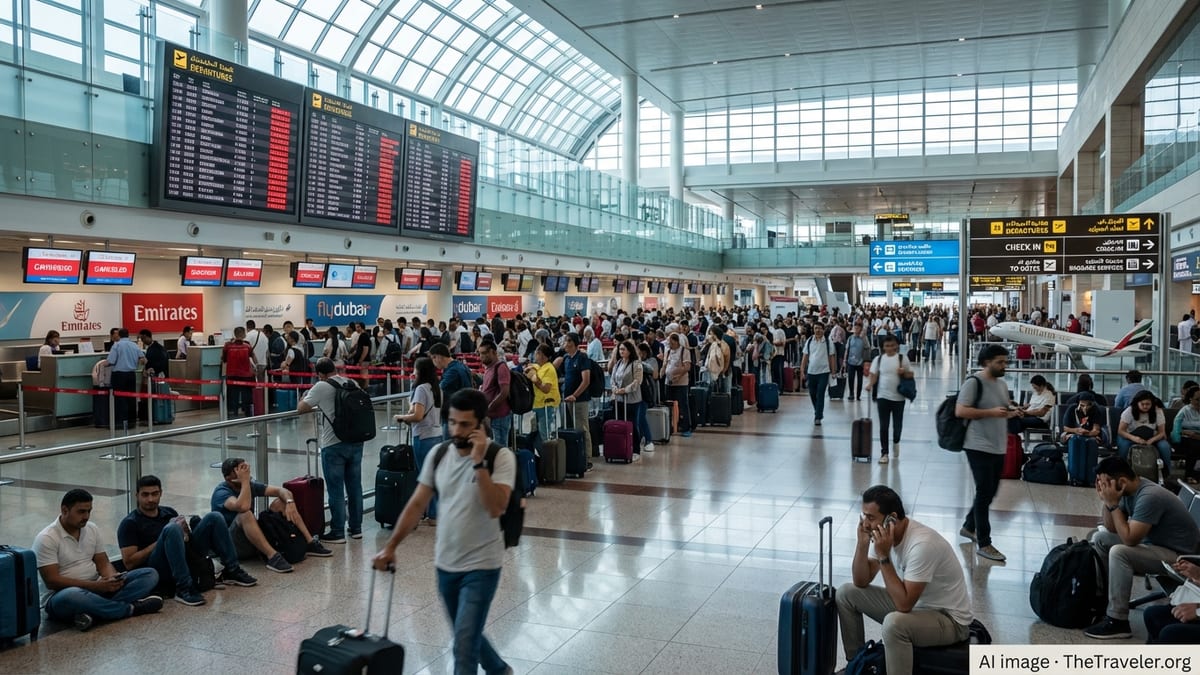
Airspace Closures Push Gulf Hubs to a Standstill
Within hours of coordinated strikes involving Iran, the United States and Israel, a string of West Asian countries moved to close or severely restrict their airspace, hitting some of the world’s busiest long-haul corridors. Authorities in the UAE announced a temporary and partial shutdown of their skies, while Qatar, Kuwait, Bahrain, Iraq and others imposed full or near-complete closures. Lebanon has also been swept into the disruption as airlines suspend links to Beirut amid heightened security concerns.
The immediate impact has been concentrated on critical hub airports in Dubai, Abu Dhabi and Doha, which together handle hundreds of thousands of connecting passengers daily for carriers such as Emirates, Etihad Airways and Qatar Airways. Aviation data from Cirium and flight-tracking platforms indicate more than 1,800 flights cancelled across the region in a matter of days, with Dubai and Abu Dhabi among the hardest hit. Additional reports from Gulf and Indian airports suggest the tally of disrupted services is already far higher as schedules continue to unravel.
Regional media and airport authorities report that Dubai International Airport and Abu Dhabi’s Zayed International Airport have both suffered direct missile or drone incidents linked to the latest escalation, adding a security dimension to what had initially been treated as a precautionary airspace shutdown. Officials in the UAE have confirmed injuries in Dubai and casualties in Abu Dhabi. While core airport infrastructure remains largely intact, the psychological impact on travellers and carriers has been immediate.
Smaller Gulf gateways in Bahrain and Kuwait are also under strain. Kuwait’s main airport has reported damage after an Iranian strike, with the government publicly inspecting the site and airlines cancelling services into and out of the country. In Bahrain, partial sky closures have led to some of the highest cancellation ratios in the region, with more than half of inbound flights grounded on key days of the crisis.
Ripple Effects for Global Airlines and Tour Operators
Because Gulf carriers serve as essential bridges between Europe, Asia, Africa and Australasia, the shutdown of West Asian airspace is radiating across global networks. Major international airlines including British Airways, Lufthansa, Air France, Turkish Airlines, Air India and others have either suspended flights into affected countries or are rerouting around closed skies, adding hours to flight times and straining crew and fleet resources.
In India, where Gulf routes are lifelines for migrant workers and leisure travellers, airports such as Bengaluru’s Kempegowda International have reported dozens of cancellations in a single day on services to Abu Dhabi, Dubai, Doha, Riyadh, Jeddah and Dammam. Airlines from low-cost carriers to full-service operators have trimmed schedules or temporarily suspended certain West Asia rotations, while setting up help desks and emergency hotlines to manage stranded passengers.
Tour operators in Europe, Asia and North America say they are facing a surge in calls from anxious customers with trips routed through the UAE, Saudi Arabia, Qatar and neighbouring states. Many are scrambling to rebook itineraries via alternative hubs in Istanbul, Cairo or European capitals, though availability is tightening rapidly as airlines consolidate capacity. Industry consultants warn that if airspace avoidance persists, higher fuel burn, longer flight paths and reduced aircraft utilisation could put sustained pressure on airline margins and ticket prices.
Package tour specialists focused on stopover stays in Dubai, Doha and Abu Dhabi, as well as cruise itineraries using Gulf ports, are reporting a wave of postponements and cancellations. Several have paused sales of new departures touching the region until there is more clarity over the duration and geographic scope of the disruptions.
What Travellers With Upcoming West Asia Itineraries Should Expect
Travellers booked to or through the UAE, Saudi Arabia, Qatar, Kuwait, Bahrain, Lebanon and nearby countries over the coming days should expect continued volatility, even as authorities and airlines review restrictions on a rolling basis. Flight schedules published online may no longer be reliable, with some services still appearing as “operational” despite being highly unlikely to depart while airspace remains constrained or security assessments are ongoing.
Airlines are generally offering free date changes or rerouting for passengers whose journeys touch affected hubs, although the exact flexibility varies by carrier and ticket type. In many cases, customers can move travel to later dates, shift to different transit points, or request vouchers. Full refunds are being granted on a more limited basis, often tied to outright cancellations rather than anticipated disruption.
Travellers already in transit are being re-accommodated on alternate routings where possible, but hotel capacity near major diversion airports is tightening. Transport authorities in several countries are advising passengers not to go to the airport until they have received written confirmation that their flight is operating. Those with complex multi-stop itineraries, including onward connections to Africa, South Asia or Australasia, should contact airlines or agents proactively to verify every leg.
For those planning future holidays or business trips, travel advisors recommend building in additional buffer time, opting for flexible fares or changeable hotel bookings, and considering travel insurance policies that explicitly cover security-related disruption and airspace closures. While the situation remains fluid, most tour operators are advising against non-essential new bookings through the most severely affected hubs until air corridors stabilise.
Safety, Insurance and Practical Planning Considerations
Government travel advisories for West Asia have hardened in recent days, with several foreign ministries elevating risk levels for the UAE, Qatar, Kuwait, Bahrain, Lebanon and neighbouring states, particularly for transit through major airports. While there is currently no blanket evacuation order for foreign nationals in most Gulf countries, some governments are preparing contingency plans to assist citizens should conditions worsen or airspace closures be prolonged.
Security experts stress that the majority of incidents to date have involved targeted strikes on infrastructure rather than indiscriminate attacks on civilian aircraft in flight, and that international rules still require thorough risk assessments before airspace is declared unsafe. Nonetheless, the combination of missile activity, rapidly changing military calculations and dense commercial traffic has prompted airlines to act conservatively, prioritising rerouting and cancellation over operating through contested skies.
On the insurance front, coverage can vary significantly. Standard travel policies may treat conflict-related disruption as a “known event” once advisories are in place, potentially limiting claims for new bookings made after specific dates. However, many travellers with existing reservations could still be eligible for compensation for additional accommodation, meals or alternative transport if their flights are cancelled or heavily delayed. Policyholders are being urged to document all expenses and keep records of airline notifications.
Practical steps recommended by travel advisers include regularly checking airline apps and official social media feeds, keeping contact details updated in bookings, and ensuring passports and visas remain valid in case of re-routing through third countries. Passengers should also be alert to scams, such as unofficial websites or unsolicited calls offering “priority rebooking” for a fee, and should only modify reservations through airlines, accredited agents or trusted corporate travel providers.
How Long Could the Disruptions Last?
Aviation analysts caution that the biggest unknown for travellers and the tourism sector is duration. If airspace closures and missile activity ease within days, airlines are likely to restore much of their Gulf capacity relatively quickly, although backlogs and aircraft repositioning could mean lingering delays and schedule adjustments. Travel demand for the UAE, Saudi Arabia, Qatar and neighbouring destinations may recover swiftly once confidence returns, as has been seen after previous regional security scares.
If, however, military tensions harden into a prolonged standoff, airlines could be forced into more permanent rerouting away from traditional West Asia corridors. That would lengthen journey times between Europe and Asia, compress capacity at alternative hubs, and potentially reshape tourism flows for months. Destinations that rely on Gulf stopovers and feeder traffic, from Indian Ocean resorts to East African safari lodges, could see softer bookings as travellers opt for simpler routings.
Tour operators contacted across Europe and Asia say they are planning for multiple scenarios, from a rapid de-escalation allowing near-normal summer schedules, to a rolling pattern of intermittent closures that makes long-term planning challenging. Many are drawing on crisis playbooks honed during the pandemic, keeping inventory flexible and focusing on clear communication with clients as conditions evolve.
For now, the message from airlines, airports and industry bodies is that travellers should stay informed, stay flexible and be prepared for plans involving the UAE, Saudi Arabia, Qatar, Kuwait, Bahrain, Lebanon and the wider region to change at short notice as the West Asia crisis continues to unfold.