


More news on this day
Travelers using Palm Beach International Airport in West Palm Beach are facing fresh disruption after a cluster of cancellations on six high‑demand routes operated by JetBlue, Delta, United and other carriers, affecting links to Boston, Atlanta, Newark, New York LaGuardia and additional Northeast gateways.
Get the latest news straight to your inbox!
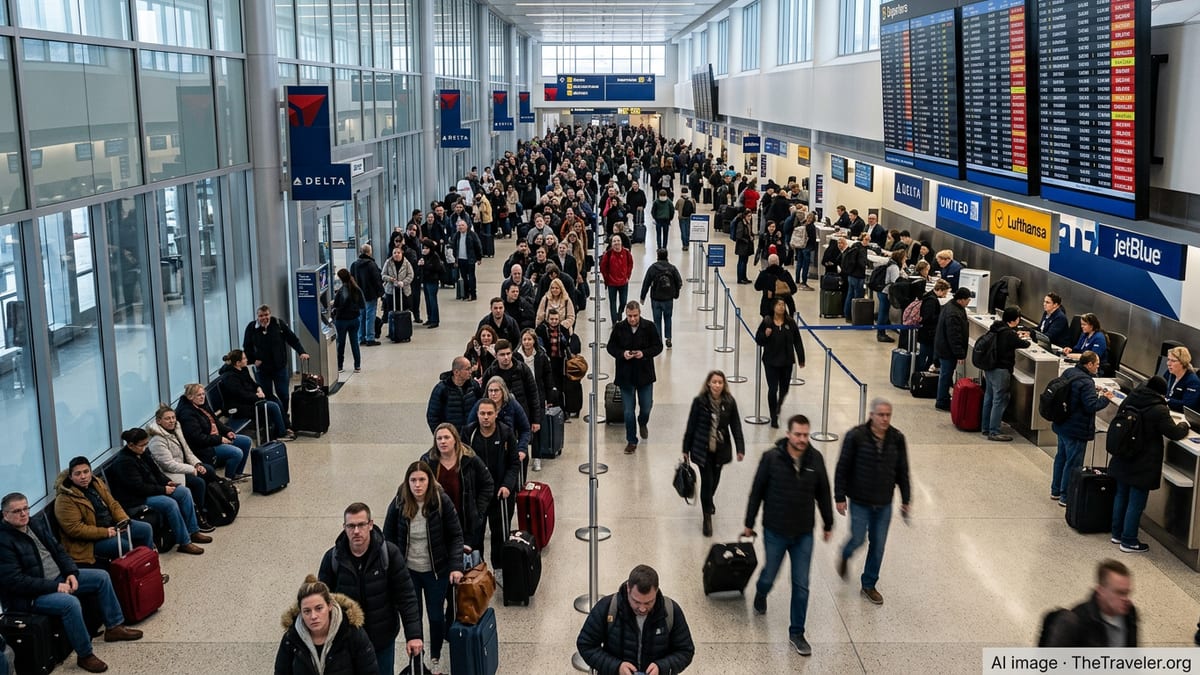
Cluster of Cancellations Hits Core Northeast and Southeast Links
Publicly available schedules and tracking data for early July show that several nonessential but high‑traffic flights into and out of West Palm Beach have been scrubbed on short notice, concentrating the impact on a handful of core business and leisure markets. While Palm Beach International continues to handle a full slate of arrivals and departures overall, specific departures to Boston, Atlanta, Newark and New York LaGuardia have been removed from operating timetables on select days, leaving passengers with fewer nonstop choices and tighter connections.
Reports indicate the pattern includes at least six key flights that typically anchor morning and evening banks for major airlines. These rotations are widely used by South Florida residents commuting to Northeast cities, as well as visitors heading in the opposite direction for vacations or family travel. The lost frequencies are particularly noticeable on days when only one or two remaining nonstops are available, increasing the risk that those services will be heavily booked or sell out altogether.
The disruption comes at the height of the summer season, when demand to and from coastal Florida and major East Coast hubs usually spikes. Any reduction in options on popular city pairs such as West Palm Beach to Boston or West Palm Beach to Atlanta can create ripple effects across airline networks, as missed connections lead to rebookings and overnight stays in intermediate cities.
A review of recent operations shows the cancellations are not limited to a single carrier. JetBlue, Delta and United all appear in schedule adjustments affecting West Palm Beach links with New York area airports, Boston Logan and Atlanta, although each airline has made different tactical decisions about which flights to drop or consolidate.
JetBlue Adjusts West Palm Beach Links to Boston and New York
JetBlue, one of the largest players in the South Florida to Northeast market, has made several schedule changes this summer as part of a broader reshaping of its network. Published coverage of the airline’s 2026 plans notes that the carrier has been pruning some routes while reinforcing others, especially on contested corridors linking Florida with Boston, New York and Newark. Industry commentary suggests that part of this shift includes trimming lower‑performing frequencies in favor of concentrating capacity at peak times.
For West Palm Beach, that strategy has translated into intermittent cancellations on flights that traditionally serve as convenient nonstops to Boston and New York area airports. On certain days, specific West Palm Beach services to LaGuardia and Newark that once appeared in timetables no longer show as operating, forcing travelers to consider alternatives through other New York airports or via connections in Orlando and Fort Lauderdale. In practice, that can turn what is normally a sub‑three‑hour hop into an all‑day journey.
Separate travel‑advice documents posted earlier this year point out that JetBlue passengers have increasingly encountered controllable disruptions, such as crew availability or aircraft rotations, along with uncontrollable issues like weather and air traffic delays in the congested Northeast corridor. When those pressures coincide with an already lean schedule out of a medium‑sized airport such as West Palm Beach, the loss of even one flight can remove a major share of daily seats on a route.
Travel forums and consumer posts also reflect rising frustration with last‑minute notices and limited rebooking options when a canceled JetBlue departure is the only nonstop of the day from West Palm Beach to a particular city. In some cases, travelers have described being routed through alternative hubs or rebooked on partner airlines, but often at the cost of longer itineraries and lost time.
Delta and United Scale Back Select Atlanta and Newark Services
Delta and United, which both market frequent connections between Palm Beach County and their hub airports, have also made targeted cuts that affect West Palm Beach travelers. According to schedule and flight‑tracking records for early July, Delta has removed or retimed one of its West Palm Beach to Atlanta services on at least one day, tightening the spread of departures into fewer operating windows. Atlanta is a critical gateway for domestic and international connections, and any thinning of service from West Palm Beach can cascade into missed onward flights for passengers headed to the Midwest, West Coast or overseas.
On the United side, traffic between West Palm Beach and Newark remains one of the airport’s busiest corridors. However, data from recent days shows individual United rotations between the two airports shifting times or disappearing entirely on select dates, a sign that the carrier is adjusting its schedule to reflect aircraft availability, demand trends or operational constraints. One JetBlue‑focused analysis published this spring also noted that the airline’s evolving partnership with United may encourage more cross‑booking on Newark routes, potentially influencing how many standalone flights each brand maintains to and from South Florida.
For passengers who rely on Newark as a primary gateway, the effective loss of a single West Palm Beach frequency can significantly narrow choices for early‑morning or late‑evening departures. This can be especially challenging for business travelers seeking same‑day round trips or those coordinating with cruise departures and international connections out of the New York area.
The interplay between Delta, United and JetBlue is particularly visible in West Palm Beach because all three airlines use nearby hubs to funnel connecting traffic. When each makes independent cuts or cancellation decisions around the same time, the combined effect can feel like a coordinated reduction in service even when the airlines are acting separately.
Weather, Congested Airspace and Airline Resets Drive Disruption
Analysts following the industry point to a combination of short‑term and structural issues driving the current wave of disruptions. Regional weather systems affecting Florida and the Northeast have repeatedly slowed traffic in and out of Boston, Newark and New York area airports this year. When storms back up arrivals and departures at major hubs, airlines often respond by cancelling out‑and‑back flights from smaller markets like West Palm Beach to keep aircraft and crews positioned for busier trunk routes.
At the same time, several widely circulated explainer documents on 2026 flight operations have highlighted airline‑wide resets as carriers confront thin margins and staffing challenges. JetBlue has been cited as aggressively trimming underperforming or highly competitive flights, including some connecting Boston and New York with secondary Florida airports. United and Delta have also fine‑tuned schedules by shaving individual frequencies to rebuild reliability and reduce the number of flights that operate with minimal buffer time between turns.
Boston, Atlanta, Newark and LaGuardia sit at the center of some of the most crowded airspace in the United States. Any traffic management initiative or ground delay program can rapidly cascade into cancellations for flights that originate in good weather but are heading toward constrained airports. For West Palm Beach, that means a service can be canceled even when local skies are clear, simply because there is no available arrival slot at the destination at the scheduled time.
Industry observers note that summer is often the most fragile period for these networks, because high demand leaves little slack in aircraft and crew rotations. A delayed incoming aircraft from Boston or Newark can easily cause an outbound West Palm Beach departure to miss its assigned slot, at which point cancelling the flight and rebooking passengers is sometimes the only operationally viable choice.
What Travelers From West Palm Beach Should Expect Now
For travelers planning to fly in or out of West Palm Beach in the coming days, the immediate effect of the latest cancellations is reduced flexibility on some of the most popular routes. With fewer nonstops to Boston, Atlanta, Newark and LaGuardia on select dates, remaining flights are likely to be fuller and less forgiving for last‑minute changes. Standby options may also be limited when the next available departure is sold out or operates only once per day.
Passenger‑rights summaries and airline customer‑service outlines generally advise travelers to monitor their itineraries closely, especially when flying in peak summer or during active weather systems. For those departing West Palm Beach, that can mean checking flight status repeatedly in the 24 hours before travel and being prepared to move quickly if a rebooking opportunity appears on an earlier or later flight. Many airlines now allow self‑service changes through their apps or websites when a flight is canceled, which can be faster than seeking assistance at an airport counter.
Travel experts also suggest building in additional time when connecting via Boston, Atlanta, Newark or LaGuardia, and considering alternate routings through other hubs such as JFK, Orlando or Fort Lauderdale if schedules allow. Although these options may add a connection, they can sometimes provide more departure‑time choices than relying solely on a single nonstop that has recently seen cancellations.
For West Palm Beach and its tourism‑driven economy, the immediate concern is ensuring that visitors can still reach the region with minimal disruption. While the current wave of cancellations is focused on specific flights rather than a wholesale pullback in service, continued volatility on key routes to Boston, Atlanta, Newark and LaGuardia will keep pressure on airlines and travelers alike as the busy summer travel period continues.