


More news on this day
A recent CBC segment featuring host Natasha Fatah and stranded WestJet passenger Anuj Dhawan has drawn renewed attention to the frustrations Canadian travelers face when flights are abruptly cancelled, itineraries unravel and support channels struggle to keep up.
Get the latest news straight to your inbox!
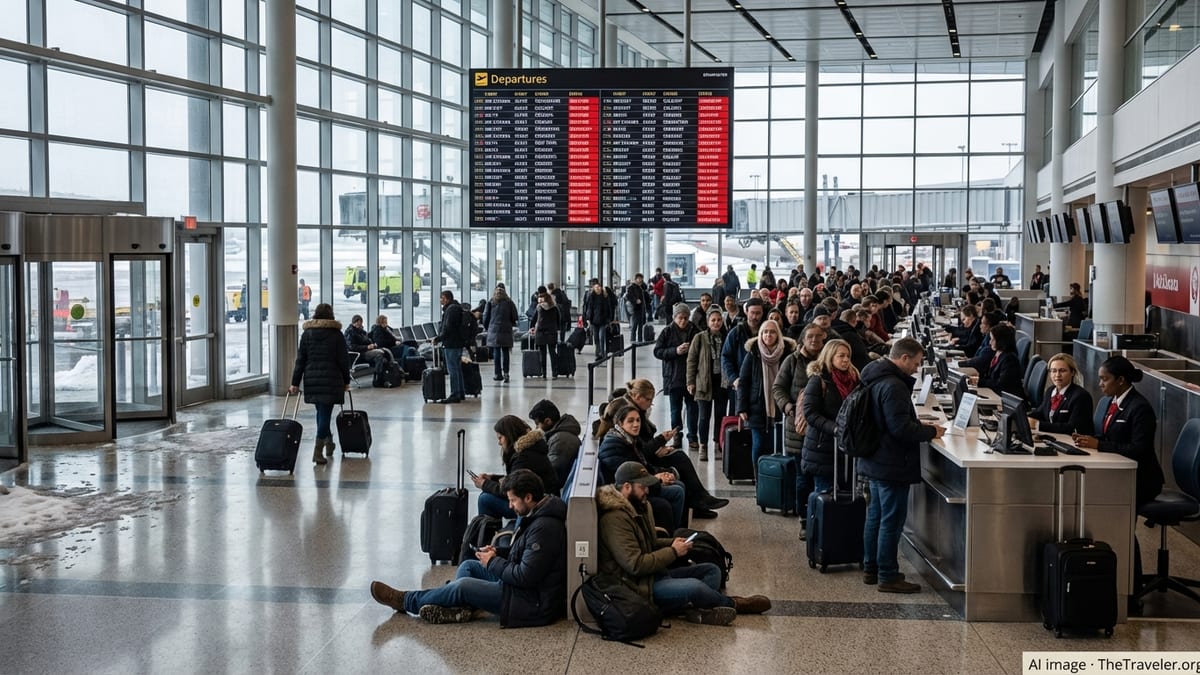
A Canceled Flight Turns Into a Days-Long Ordeal
According to published coverage and broadcast clips, Anuj Dhawan’s troubles began when his WestJet flight was cancelled with little warning, leaving him and other passengers scrambling for alternatives. The disruption reportedly left him stuck far from his intended destination, facing mounting costs and uncertainty about when he would be able to travel.
Dhawan later described his experience to CBC host Natasha Fatah, outlining how quickly a routine trip can be derailed when a flight is pulled from the schedule. Accounts indicate that he was left to navigate long lines, limited rebooking options and incomplete information, a scenario that has become familiar to many Canadian air travelers in recent years.
The incident reflects a broader pattern in which passengers confronted with cancellations must juggle hotel bookings, missed connections and work or family obligations. While individual stories vary, Dhawan’s account illustrates how the burden of disruption often falls squarely on travelers, even when the triggering event lies outside their control.
CBC Conversation Amplifies Passenger Frustrations
The exchange between Fatah and Dhawan has been cited in media reports as emblematic of a growing sense of frustration among Canadian air passengers. By sharing his story on a national platform, Dhawan added a personal dimension to an issue that is often discussed in terms of statistics and regulatory language.
During the conversation, he reportedly emphasized the confusion and stress that followed the cancellation, including difficulties understanding what assistance was available and how quickly WestJet could provide an alternative itinerary. Viewers were presented with the perspective of a traveler caught in the middle of a complex operational and regulatory environment.
For many audiences, the segment echoed recent travel seasons marked by widespread delays and cancellations across multiple Canadian carriers. Publicly available information shows that spikes in demand, staffing constraints and severe weather events have combined to create repeated periods of intense strain on airline operations.
What Canadian Air Passenger Protections Provide
Dhawan’s experience has also renewed attention on the Canadian framework that governs flight disruptions. The Air Passenger Protection Regulations set out minimum standards of treatment and, in some circumstances, compensation when flights are delayed or cancelled for reasons within an airline’s control.
Public guidance indicates that airlines must generally provide rebooking or refunds when flights are cancelled, with additional obligations for food, accommodation and compensation depending on the reason for the disruption and the length of the delay. However, passenger advocates have frequently noted that understanding and pursuing those rights can be challenging, particularly in the middle of a stressful trip.
Academic work and consumer-rights commentary describe a system in which travelers are often unsure whether a cancellation is categorized as within or outside airline control, a distinction that can determine whether they are offered cash compensation or only a refund or voucher. Dhawan’s account, as presented in media coverage, fits into this landscape of uncertainty, in which travelers must rapidly interpret complex rules while trying to secure a way home.
WestJet and Industry Pressures Under Scrutiny
WestJet, like other Canadian carriers, has experienced intense scrutiny in recent travel seasons as operational challenges have mounted. Reports indicate that severe weather events, system-wide congestion and resource constraints have periodically led to large clusters of cancellations and delays affecting thousands of passengers.
Industry analysis suggests that airlines must balance tight schedules and high demand with the need to maintain resilience in their operations. When those systems come under strain, any single cancellation can ripple across an entire network, affecting crews, aircraft positioning and onward connections. In that context, Dhawan’s cancelled flight represents just one node in a web of dependencies that can be difficult to untangle once problems arise.
Consumer advocates have argued that the current regulatory environment still leaves too much of the risk on travelers, who may face out-of-pocket costs while they wait for claims to be processed. Incidents such as the one highlighted by CBC continue to fuel debate over whether compensation standards and enforcement mechanisms are sufficient to encourage airlines to prioritize reliability and clear communication.
Growing Calls for Clearer Communication and Accountability
Reactions to Dhawan’s story, as reflected in commentary and social media discussion, underscore a common theme in recent Canadian travel disruptions: passengers want clearer, faster and more consistent information when their flights are cancelled. Many travelers report that uncertainty about rebooking timelines, hotel coverage and eventual compensation can compound the initial disappointment of a missed flight.
Analysts note that communication gaps can erode trust in airlines, even when disruptions stem from factors such as weather or air traffic limitations. When customers are left waiting in crowded terminals or on overloaded phone lines, confidence in future bookings may be affected, particularly for travelers who do not fly frequently and may be unfamiliar with their rights.
The segment featuring Fatah and Dhawan has therefore become part of a wider conversation about how Canada’s air travel system should evolve. As travelers, regulators and airlines continue to grapple with recurring disruptions, cases like Dhawan’s provide a tangible reference point for examining whether existing safeguards and industry practices are meeting public expectations.