


More news on this day
As Tropical Storm Bertha dumps rain and triggers coastal flooding along the Gulf Coast, thousands of airline passengers face cancellations and rolling delays, raising urgent questions about what U.S. carriers actually owe travelers when weather shuts down the skies.
Get the latest news straight to your inbox!
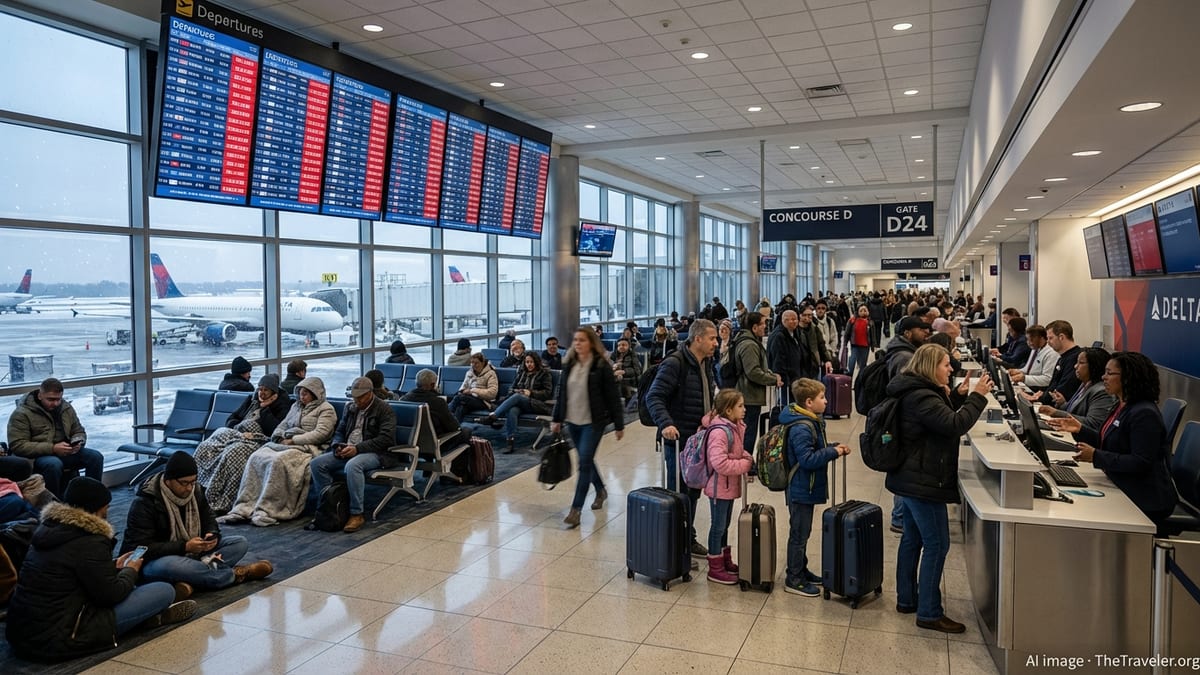
Refund rights when a storm cancels your flight
Under U.S. Department of Transportation rules, the key protection for travelers caught in Tropical Storm Bertha’s path is the right to a refund when an airline cancels a flight or makes a significant schedule change and the passenger decides not to travel. The obligation to return money applies regardless of the reason for the cancellation, including severe weather, as long as the traveler declines any alternative itinerary, voucher or travel credit.
DOT guidance on refunds explains that if a carrier cancels a flight and does not rebook a passenger, or offers a new itinerary that the passenger chooses not to accept, the airline must return the unused portion of the fare in cash or to the original form of payment. This applies to tickets for flights to, from or within the United States, including nonrefundable fares that would normally carry change penalties.
Travelers affected by Bertha who accept a rebooking give up that specific refund right for the original segment, because DOT rules focus on situations where the customer decides not to travel. Consumer advocates often suggest that passengers who can no longer make their trips because of storm-related cancellations should carefully weigh whether to accept vouchers or miles in place of cash, particularly if their future plans are uncertain.
Fees paid for services that cannot be used because the flight was canceled, such as seat selection or checked baggage on that itinerary, are generally refundable under DOT policy when the associated service is not provided. That can matter for families and groups whose ancillary charges add up quickly during peak travel periods.
What airlines owe for weather delays versus airline-caused disruptions
While cancellation refunds are relatively clear, U.S. rules treat weather delays differently from disruptions that are within an airline’s control. For delays caused by tropical storms, thunderstorms and other adverse conditions, federal regulations do not require carriers to provide meal vouchers, hotel rooms or ground transportation, even when passengers are stranded for many hours.
DOT’s Airline Cancellation and Delay Dashboard highlights this distinction by separating commitments carriers make for controllable delays from what they offer when weather is to blame. Airlines have pledged a wide range of amenities, including meal vouchers and overnight hotel accommodations, when disruptions are linked to mechanical problems or staffing issues, but many policies explicitly exclude severe weather events like Bertha.
For Bertha-related disruptions, airlines typically commit only to rebooking travelers on the next available flight in the same cabin at no additional cost, subject to seat availability. Some carriers may go further as a goodwill gesture, but that is a matter of each airline’s customer service plan rather than a legal requirement. Passengers hoping for hotel vouchers or compensation during a weather delay often discover at the airport that such benefits are limited or unavailable.
By contrast, if a delay initially linked to weather is compounded by issues within the airline’s control, such as crew misplacement or aircraft maintenance after the storm has passed, passengers may have stronger arguments for additional assistance under carrier policies. Sorting out the official cause of delay can be challenging in real time, but it largely determines whether travelers see extra support or not.
Travel waivers and fee flexibility around Tropical Storm Bertha
As Bertha approaches or moves inland, major U.S. carriers commonly publish flexible travel waivers for airports expected to see high winds, heavy rain and flooding. These waivers, described in publicly available customer advisories, allow passengers to change flights in advance of severe weather without paying standard change fees or fare differences, provided they rebook within specific dates and fare classes.
Such waivers do not usually create new rights to cash refunds, but they can help travelers avoid the worst of Bertha’s disruption by moving trips earlier or later. The terms vary by airline and are tied to booking and travel windows, affected cities and cabin types. For instance, a waiver might let a passenger scheduled to fly into New Orleans or Houston during the storm shift to a nearby date with no penalty, as long as the new routing remains similar.
Passengers who decide they no longer wish to travel at all, even with waiver flexibility, generally fall back on standard refund rules. If the airline is still operating their flight and has not significantly changed the schedule, a cash refund is unlikely. In those cases, carriers more often allow future travel credits, particularly for nonrefundable tickets.
Waivers can also extend to basic economy fares, which are normally the most restrictive. When that happens, travelers who booked low-cost tickets to or from the Gulf Coast may gain a rare opportunity to adjust their plans around the storm without losing the full value of their ticket.
International routes, foreign rules and extra protections
For international trips affected by Tropical Storm Bertha, passenger rights can depend on where the journey begins, where it ends and which airline operates the flight. On routes touching the European Union or certain other jurisdictions, travelers may benefit from local compensation rules that are more generous than U.S. standards, though many of those regimes treat severe weather as an “extraordinary circumstance” that limits cash payouts.
European regulations, for example, allow compensation for long delays and cancellations when they are within an airline’s control, but they typically exclude extreme weather events and air traffic management restrictions. Travelers flying between the United States and Europe on an EU-based carrier might still qualify for reimbursement of out-of-pocket expenses in some situations, yet the presence of a named storm often narrows those options.
On transborder and long-haul routes operated by non-U.S. airlines, carriers must still comply with DOT refund rules for flights touching U.S. airports, including the requirement to return fares when cancellations occur and passengers choose not to travel. At the same time, those airlines operate under their home countries’ consumer protection frameworks, which can shape how they handle hotels, meals and rebooking during storms.
Passengers on complex itineraries, especially those involving code-share arrangements, may need to pay close attention to which airline is actually operating each segment. That operating carrier’s policies and the governing law for the departure country typically drive what assistance, if any, is provided beyond the baseline refund.
How travelers can press their case when storm chaos hits
When Bertha disrupts operations across multiple hubs, crowded gate areas and long call center queues can complicate efforts to secure refunds or rebooking. Consumer resources from DOT’s Aviation Consumer Protection office recommend that travelers document all communications, keep boarding passes and confirmation numbers, and retain receipts for any out-of-pocket costs related to delays, such as meals or lodging.
If a passenger believes an airline has not honored refund obligations after a weather cancellation, they can escalate through the carrier’s customer relations channels and, if needed, file a complaint with the Department of Transportation. DOT uses these complaints to monitor patterns and may take enforcement action in cases where systemic noncompliance is found, although individual disputes often resolve directly between passengers and airlines.
Experts in consumer law note that travel insurance or credit card trip-interruption benefits can fill some of the gaps left by U.S. airline rules, particularly for hotel stays and missed connections during storms. Policies vary widely and often exclude trips booked after a storm is named, but for travelers already en route when Bertha hits, those products may provide an additional safety net.
For now, the practical reality for most travelers is that weather remains one of the weakest areas of formal protection. Refunds are available when flights are canceled and trips abandoned, but compensation beyond getting money back for unused tickets largely depends on individual airline policies and any separate coverage a traveler has arranged.