


More news on this day
Flight restrictions at Konarak Airport serving the southeastern Iranian port of Chabahar have been lifted after months of wartime disruption, clearing the way for the gradual return of commercial services to a key transport hub near the Gulf of Oman.
Get the latest news straight to your inbox!
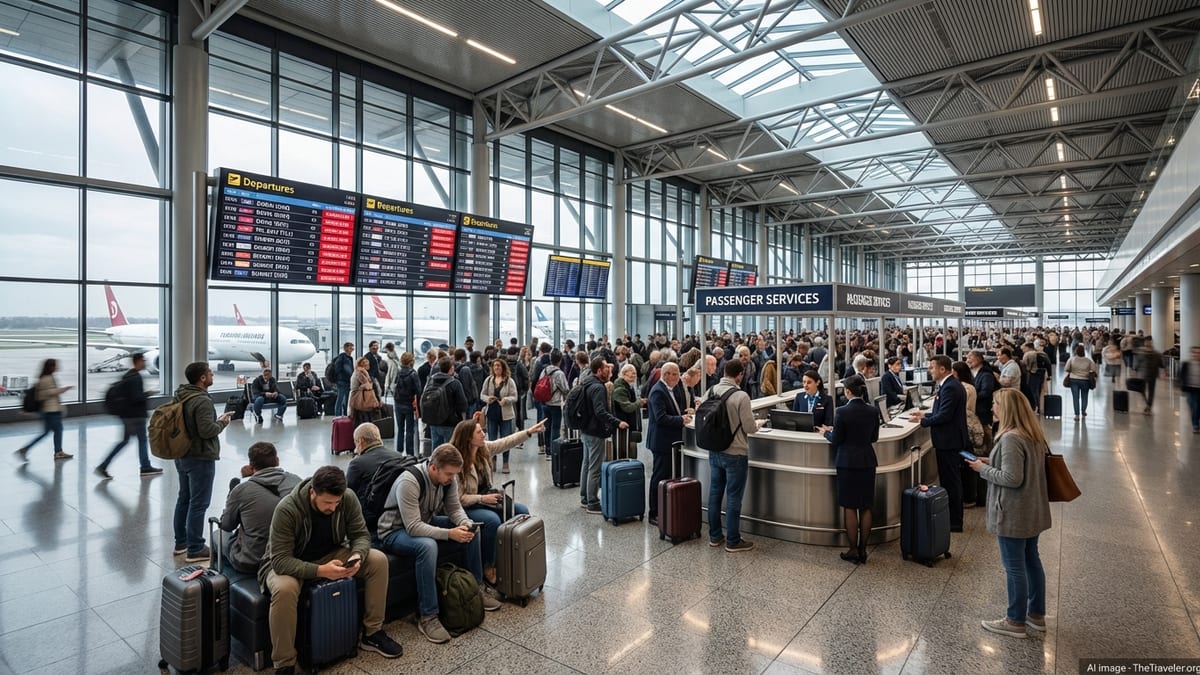
Konarak Flights Resume After Military Tensions Ease
Recent reports from provincial and national outlets in Iran indicate that flight limitations at Konarak Airport, which also serves the city of Chabahar, were formally removed on Sunday, 15 Shahrivar 1405 (6 September 2026). Regional officials described the move as the outcome of a sustained push to restore normal aviation links in Sistan and Baluchestan Province following months of conflict-related disruption centered on Iran’s confrontation with Israel and the United States.
Konarak Airport, located west of Chabahar on the coast of the Gulf of Oman, had operated under tight restrictions as military activity intensified in the surrounding area. The airport, which has both civilian and military roles, saw commercial traffic heavily curtailed as part of broader nationwide limitations imposed during the recent war, when parts of Iran’s airspace were temporarily closed or constrained for civilian flights.
National aviation statements earlier in the summer signaled that Iranian airspace as a whole was returning to normal conditions after a halt in large-scale hostilities. According to publicly available information, notices to air missions were updated to reopen routes across the country once risk assessments were revised and coordination with security institutions was completed. Konarak, however, remained subject to additional controls while authorities assessed damage and operational safety in the conflict-affected southeast.
The lifting of the local restrictions now aligns Konarak with the broader normalization of air traffic across Iran that has unfolded since June, when international coverage reported the removal of emergency airspace curbs after a declared end to active military operations with Israel. The restoration of civilian flight programs at key hubs such as Tehran’s Imam Khomeini International Airport set an early precedent for the phased reopening that has now reached Chabahar.
Reopening Caps Weeks of Repair and Infrastructure Work
The return of flights to Konarak follows several weeks of intensive repair and refurbishment at the airport. Coverage in Iranian economic and regional media describes investment packages directed through the Chabahar Free Trade Zone organization, which committed tens of billions of rials to runway works, terminal upgrades and fuel infrastructure to prepare the facility for renewed commercial operations.
Local reporting suggests that the free zone authority funded resurfacing and safety improvements on the main runway and made changes inside the passenger terminal to handle a recovery in traffic volumes. Additional resources were earmarked to repair and replace fuel storage and supply systems, which are considered essential for restoring reliable scheduled services and attracting more airlines back to the route network.
The effort at Konarak is part of a wider infrastructure push in the region, including road, rail and port projects designed to reinforce Chabahar’s role as Iran’s only deep-water ocean port. Prior to the recent conflict, Chabahar and Konarak handled regular flights to Tehran and several other domestic destinations, supporting both local residents and workers linked to the port and nearby industrial zones.
Even as wartime damage assessments continued along the coast earlier this year, Iranian media pointed to a strategy of accelerating reconstruction at transport nodes in the southeast to limit long-term economic disruption. The decision to prioritize Konarak’s reopening reflects that approach and underscores the airport’s importance in regional connectivity plans.
Strategic Role for Trade, Tourism and Regional Links
Konarak Airport serves as the main air gateway for Chabahar, a city that has become a central element of Iran’s long-term strategy to shift trade flows toward the Gulf of Oman and the Indian Ocean. Publicly available background information shows that the airport connects the remote province to Tehran and to other major Iranian cities, integrating maritime, road and air corridors in an area that has long been considered under-served by transport infrastructure.
The resumption of flights is expected to support cargo and passenger movements tied to Chabahar Port, which is being developed with international participation as an outlet toward Afghanistan and Central Asia. Analysts in regional media have frequently characterized the port and its airport as complementary assets, with reliable air links seen as crucial for attracting investors, technicians and government delegations to the free trade and industrial zones that ring the bay.
Tourism is another sector likely to benefit. Domestic travel coverage has highlighted the coastline around Chabahar as an emerging destination for nature tourism and winter escapes, though access has been constrained in recent months by the combination of security conditions and reduced flight options. Restored services at Konarak are expected to shorten travel times from Iran’s largest cities and could encourage tour operators to revive suspended itineraries once schedules stabilize.
For local residents, the lifting of restrictions also restores a vital lifeline to the rest of the country. With distances to other major airports in the southeast measured in many hours by road, direct flights from Konarak to Tehran and provincial centers are widely viewed as an essential service, especially for medical travel, education and administrative needs.
From Nationwide Restrictions to Gradual Normalization
The reopening at Konarak follows a sequence of steps that have seen Iran’s aviation sector transition from wartime emergency measures toward a more regular operating environment. During the height of hostilities earlier this year, national and international aviation notices documented temporary closures or partial shutdowns at several airports, as well as broader routing bans across sections of Iranian airspace.
In April and May, published coverage by major international outlets reported that commercial flights had resumed at Tehran’s main international gateway after a prolonged suspension linked to missile exchanges and concerns over further escalation. Subsequent reporting in June indicated that Iran’s civil aviation authorities declared the country’s airspace to have returned to standard conditions, with flight restrictions gradually withdrawn as security risks were reassessed.
Despite that nationwide easing, Konarak and other facilities in Sistan and Baluchestan remained subject to localized controls because of their proximity to contested maritime and military sites. The lifting of those specific constraints suggests that risk calculations in the southeastern corridor have shifted, even as some neighboring countries continue to maintain their own restrictions on overflights involving Iranian airspace.
Aviation analysts note that the full normalization process typically involves several stages, from the withdrawal of emergency notices to the restoration of airline schedules and ground handling capacity. In the case of Konarak, operators are now working on timetables for routes to Tehran and other domestic destinations, while additional services may be introduced as demand and operational confidence grow.
Regional and International Implications for Air Travel
The removal of flight restrictions at Konarak carries implications that extend beyond southeastern Iran. The airport sits on a corridor that links Middle Eastern airspace with the Arabian Sea and onward to South Asia and East Africa, a route that commercial carriers have adjusted repeatedly during the recent conflict in response to safety assessments and regulatory guidance.
International regulators, including the United States Federal Aviation Administration, continue to list specific routing cautions and prohibitions related to operations in or near Iranian airspace, particularly for operators under their jurisdiction. These advisories shape how airlines plan long-haul routes across the region and are updated as security conditions evolve. The normalization of domestic operations at Konarak does not automatically alter those international restrictions, but it contributes to a broader picture of improving stability in parts of Iran’s skies.
For neighboring states and partners engaged in projects at Chabahar Port, the reopening of Konarak also provides a measure of reassurance about continuity of access. Regional media in South and West Asia have tracked damage assessments at the port and surrounding infrastructure since US strikes targeted military facilities in the area, raising questions about the pace of recovery and future investment risk. The confirmation that airport operations are returning adds weight to signals that reconstruction is advancing on multiple fronts.
Airlines will now weigh whether and when to increase capacity to Konarak as infrastructure upgrades bed in and passenger demand recovers. Industry observers expect that domestic carriers are likely to move first, with any international services dependent on a combination of commercial interest, regulatory approvals and the trajectory of regional security. For travelers, the key short-term change is the renewed possibility of booking flights into and out of Chabahar after an extended period in which one of Iran’s most strategic coastal regions was largely cut off from the national flight network.
https://www.tasnimnews.com/fa/news/1405/06/15/3690090
https://khabarfarsi.com/u/256762114
https://www.aljazeera.com/news/2026/4/25/iran-resumes-commercial-flights-from-tehran-airport