


More news on this day
Red Line riders across Greater Boston are enduring another difficult morning commute as a planned 10 day shutdown between Alewife and Park Street enters its second day, with slow shuttle buses, shifting traffic patterns and crowded platforms fueling frustration among regular passengers.
Get the latest news straight to your inbox!
Planned Closure Brings Real-World Delays
The shutdown, which began on July 21 and is scheduled to continue through July 30, has halted subway service through all Cambridge stations while crews carry out what transit officials describe as critical infrastructure repairs. Trains are terminating on either side of the work zone, leaving thousands of daily commuters to navigate a patchwork of shuttle buses and alternate rail and bus routes.
Publicly available notices from local governments in communities such as Cambridge and Belmont had warned riders to expect substantial disruption throughout the closure period. Those advisories highlighted lane restrictions, temporary bus-only zones and changes to pick up locations around key Red Line stops, all intended to keep buses moving but also adding complexity for drivers, cyclists and pedestrians.
Despite that advance messaging, early service patterns indicate that actual delays have frequently exceeded the added travel time suggested in planning materials. Riders report that trips that once took 20 minutes are stretching well beyond an hour in the busiest periods, particularly for those attempting to reach job centers in Kendall Square and downtown Boston.
The suspension is part of a broader effort to address speed restrictions, track conditions and signal problems that have plagued the Red Line in recent years. While long term improvements are the stated goal, the near term effects are playing out most acutely during the morning and evening rush.
Shuttle Operations Struggle With Demand
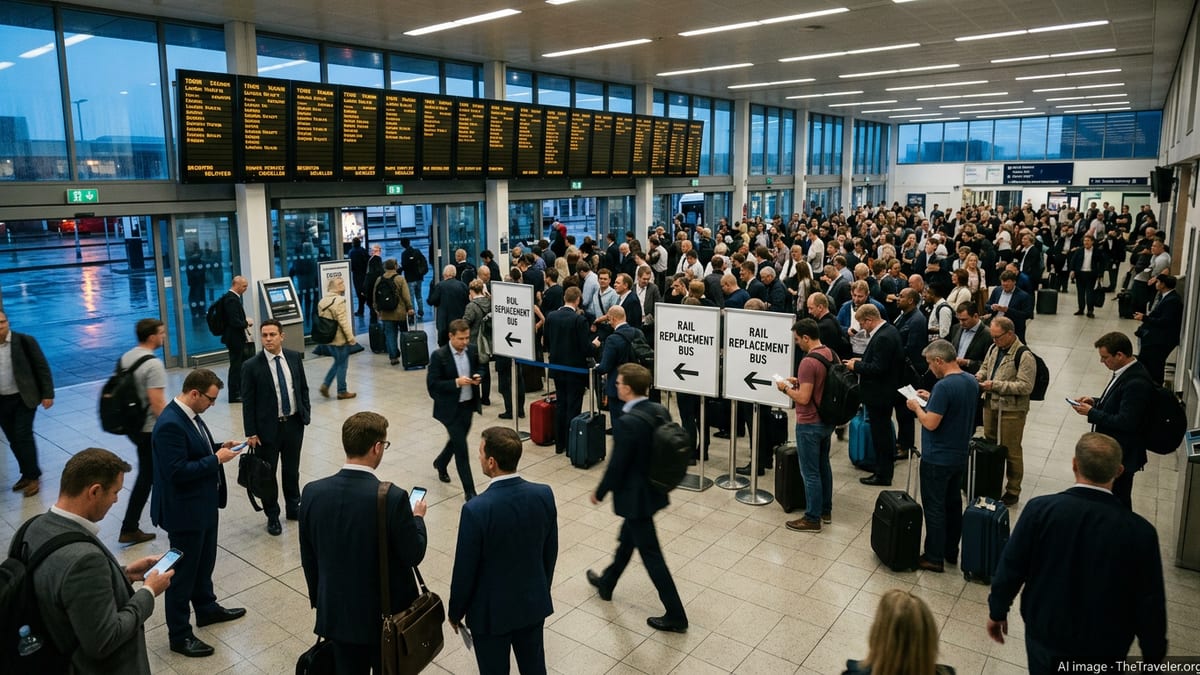
Replacement shuttle buses are currently linking Alewife, Davis, Porter, Harvard, Central and Kendall as well as Park Street, forming the main lifeline for those who normally rely on the subway through Cambridge. Early weekday operations show those shuttles operating at or beyond capacity during peak hours, with queues forming well before 8 a.m. at several stations.
Reports indicate that buses are frequently bunching in mixed traffic, leaving some stops with long gaps followed by several vehicles arriving at once. That pattern increases uncertainty for riders, many of whom say they are building significant extra time into their routines yet still arriving late to work and appointments when congestion intensifies on local streets leading into Cambridge.
Coverage from regional outlets has documented riders waiting through multiple full buses before finding space, especially at Alewife and Kendall where demand is strongest. Social media posts and commuter forums describe scenes of riders lining up along sidewalks and station plazas, with some deciding to walk or bike between nearby stops rather than wait for the next available shuttle.
Transit agencies and municipal transportation departments have promoted limited bus priority measures, including temporary dedicated lanes and adjusted traffic signal timing in some corridors. Early observations from the field, however, suggest that even modest delays at key intersections can ripple quickly through the system and add up to significant lost time for passengers.
Ripple Effects Across the Region
The shutdown is also reverberating beyond the immediate Red Line corridor, as travelers seek out alternatives on commuter rail, local buses, bicycles and ride hailing services. According to published coverage, commuter rail trains into Boston have seen upticks in ridership at stations that offer onward connections by bus to Kendall Square or downtown, while some riders are shifting their schedules earlier to avoid the most crowded trips.
Regional road networks have felt the strain as well, with heavier volumes reported on key routes feeding into Cambridge and downtown Boston during the morning peak. Drivers navigating temporary bus lanes and new loading zones near Red Line stations are experiencing unfamiliar alignments, contributing to localized backups as they adjust to changed conditions.
Cyclists are reporting a mixed experience in the early days of the closure. Community notices highlighted organized group bike rides and encouragement for more people to travel by bike, but some riders say shuttle staging areas and cones are narrowing popular bike routes near stations, reducing comfort and increasing conflict points with buses and cars.
Ride share companies and taxis appear to be filling some of the gap for people with flexible budgets, but higher demand and slower traffic are leading to longer waits and higher fares in parts of Cambridge and Somerville. For many workers on fixed schedules or hourly wages, those options are limited, leaving them dependent on whatever level of service the temporary shuttle network can provide.
Riders Adapt With Workarounds
As the shutdown continues, commuters are rapidly testing and refining their own workarounds. Online discussion threads are filling with tips on time saving transfers, such as using certain bus routes to connect with the Orange Line or taking commuter rail to South Station and switching to surface buses rather than attempting to pass through the busiest shuttle hubs.
Some riders are rearranging their workdays to travel outside of the traditional peak windows or requesting additional flexibility to work remotely during the shutdown period. Others are pairing modes, such as driving or biking to a station on the unaffected portion of the Red Line or another subway line, then completing the journey by rail.
Publicly available comments from local employers and universities suggest a growing awareness of the disruption. Several institutions in the Cambridge area have shared reminders about telework policies and encouraged staff and students to anticipate delays when commuting in person, signaling a broader recognition that the shutdown is affecting productivity and attendance.
Despite the frustration, some riders note that advance notice and the finite 10 day timeline have made the disruption slightly easier to manage compared with unexpected breakdowns or indefinite slow zones. For others, however, the cumulative effect of repeated service changes is feeding skepticism about when the Red Line will feel reliably improved.
Looking Ahead to the Remainder of the Closure
With more than a week of work still ahead, attention is now turning to whether shuttle performance and traffic management can improve as operators and riders adjust. Past large scale transit shutdowns in other cities have sometimes shown gains over time as agencies tweak stop locations, traffic controls and schedules in response to early bottlenecks.
Regional news coverage notes that local transportation departments and the transit agency are monitoring conditions in real time and remain prepared to refine their playbook if certain choke points persist. That could include additional wayfinding staff at major transfer points, expanded bus priority measures on selected corridors or minor timetable changes to better match observed demand.
For now, riders are watching for any signs of smoother service while keeping one eye on the calendar approaching July 30. When trains resume between Alewife and Park Street, attention is likely to shift quickly to whether the promised safety and reliability gains are noticeable in everyday commutes, and whether the short term hardship of this shutdown translates into a more stable Red Line experience in the months ahead.