

As cruising surges back to popularity, a growing number of travelers are discovering that not all big-ship brands feel the same. Among the giants of the industry, MSC Cruises occupies a distinct niche: a privately owned, strongly European line that mixes glamorous design and sharp pricing with ambitious sustainability goals. For travelers choosing between MSC and familiar American names such as Royal Caribbean, Carnival or Norwegian, understanding what makes MSC different can help you pick the right ship for your style and budget.
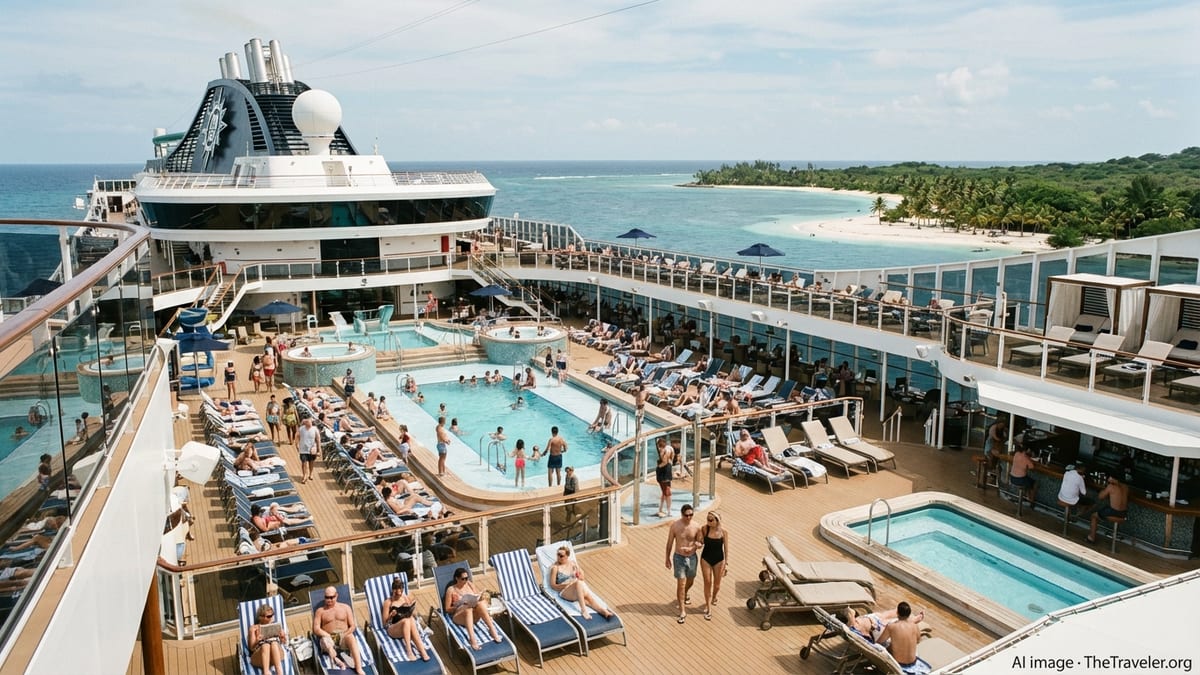
Privately Owned, European at Heart
One of the most significant differences between MSC Cruises and many of its competitors is ownership and culture. While cruise industry headlines are dominated by publicly traded conglomerates based in the United States, MSC Cruises is part of the Swiss-based MSC Group, a family-controlled maritime company with roots in cargo shipping. That private structure shapes everything from design decisions to long-term investment priorities, and it helps explain why the line leans so heavily into a European sensibility rather than chasing every short-term trend.
Step on board an MSC ship and you quickly feel the influence of this European heritage. Announcements are often made in several languages, guest demographics are notably international on many itineraries, and the atmosphere draws on Mediterranean notions of glamour: gleaming atriums, Swarovski crystal staircases on certain ships, and late-night socializing that can stretch long after midnight. Compared with some North American-focused brands, MSC itineraries in Europe still tend to attract a mix of Italian, French, German, Spanish and British guests alongside North Americans, which can make the onboard experience feel more like a floating pan-European resort than a typical Caribbean mega-ship.
That cultural difference extends to daily rhythms. Dining on MSC ships typically skews later, especially in Europe, and entertainment programming often reflects international tastes, relying more on music, dance and visual spectacle than English-language comedy. Travelers looking for a cruise where they rarely hear another language or where everything is geared exclusively to American preferences may find other lines more familiar. Those who enjoy the buzz of a multilingual crowd and a slightly cosmopolitan edge tend to see MSC’s European character as a major draw.
Because MSC operates such a large network of ship deployments across Europe, South America, the Gulf region and South Africa, it is also able to offer itineraries in regions where some competitors are less visible. As a result, repeat cruisers who want to branch out from the standard Caribbean loops often turn to MSC to reach ports in the Mediterranean, Canary Islands, Emirates or South America while staying with one brand they already understand.
Value Pricing and a Distinct Approach to What Is “Included”
MSC Cruises is frequently positioned as a strong value option in the mainstream segment. Fares on many sailings are competitive, and the company is known for aggressive promotions in North America and Europe, particularly outside peak school holiday dates. Travelers often find that base prices for comparable itineraries undercut those of some larger rival brands, especially on older but well-maintained ships in the fleet.
That value, however, is tied to MSC’s particular approach to what is and is not included in the fare. The line generally prices its cruises with a core set of inclusions and then layers on paid extras, from drinks packages to Wi-Fi and specialty dining. In practice, this is similar to other big-ship lines, but newcomers sometimes notice that certain experiences they assumed were included, such as room service outside limited hours or specific entertainment options, may carry fees depending on ship and itinerary. Understanding this structure in advance helps travelers compare like-for-like rather than simply looking at the lowest advertised fare.
Where MSC stands out is in its frequent family promotions and bundled offers. The company is well known for campaigns in which children sharing a cabin with two adults sail at a reduced rate or, on selected departures, at no cruise fare aside from taxes and fees. While terms vary and the offer is not universal, this focus on making multi-generational travel more affordable has helped cement MSC’s reputation as a family-friendly value choice, particularly in the Mediterranean and Caribbean.
MSC also offers multiple “experience” tiers, such as Bella, Fantastica and Aurea on many sailings. Rather than simply selling cabins by category, these bundled experiences combine cabin types with different levels of service, flexibility and perks. For instance, higher tiers may include priority boarding, more flexible dining or access to specific spa benefits. This tiered approach allows guests to tailor how much service and convenience they want to pay for, which can make MSC feel more customizable than some lines where similar perks are only available through loyalty status or separate add-ons.
MSC Yacht Club: A Ship-Within-a-Ship Concept
Perhaps the single most distinctive feature of MSC Cruises compared with many mainstream rivals is the MSC Yacht Club, its signature “ship-within-a-ship” enclave on select vessels. While other lines have experimented with private suite areas, MSC has invested heavily in creating a clearly defined, all-inclusive haven at the top of the ship, complete with its own suites, dedicated restaurant, lounge, pool deck and butler service. Access is controlled, and non-Yacht Club guests are not permitted to use the exclusive facilities.
For travelers who like the energy, entertainment and pricing of a mega-ship but prefer a quieter environment to retreat to, the Yacht Club can be a compelling compromise. Guests staying in these suites typically enjoy priority embarkation and disembarkation, a dedicated concierge, and a more intimate dining room and sun deck that contrast with the busy main pool areas. At the same time, they retain full access to the rest of the ship, including theaters, water parks and promenades. This hybrid model effectively blends many aspects of a luxury cruise with the amenities of a large contemporary vessel.
The Yacht Club concept also appeals to multi-generational groups where not everyone has the same budget or preferences. Grandparents, for example, might book Yacht Club suites to enjoy quieter spaces and more personalized service, while other family members stay in standard cabins elsewhere on the ship at a lower fare. Everyone can meet up in the public areas when they wish, yet each group has a tailored onboard environment that suits its needs. That flexibility is one reason the concept has been expanded across more of MSC’s newer ships.
Compared with luxury lines that operate smaller, all-suite vessels, the Yacht Club experience is typically priced lower while preserving some of the same features: higher staff-to-guest ratios within the enclave, enhanced cabin amenities and an emphasis on privacy. It is not designed to replicate a true ultra-luxury cruise, but for many travelers it offers an accessible step up in comfort and exclusivity without sacrificing big-ship entertainment and facilities.
Family Focus, Entertainment and International Atmosphere
MSC Cruises places a strong emphasis on family travel, which shapes both its onboard facilities and its programming. Newer ships in the fleet feature large children’s zones created in partnership with well-known toy and entertainment brands, with separate spaces for different age groups and extended operating hours on sea days. Teen clubs, family time in pools and waterparks, and game-focused lounges help keep younger guests engaged on itineraries that might otherwise feel long at sea.
The line’s ships are also known for visually striking entertainment, from production shows that rely heavily on music and acrobatics to futuristic lounges where technology and performance blend. On some vessels, MSC has experimented with purpose-built venues for immersive shows and interactive experiences. While not every offering resonates with every traveler, the overarching style tends to be more international and less reliant on English-language stand-up comedy or trivia compared with certain North American-centric brands.
The multinational passenger mix contributes to a very specific onboard energy. Depending on the season and region, you may hear announcements repeated in several languages and see menus and daily programs presented with a broad audience in mind. For some guests, especially first-time cruisers expecting an entirely English-speaking environment, this can be an adjustment. For others, it adds to the sense of adventure and makes the ship feel like a microcosm of the destinations visited.
Compared with luxury or premium lines that skew towards quieter evenings and more formal dress codes, MSC ships generally embrace a lively, resort-like style. There are still dress-up nights, particularly on longer itineraries, but the overall mood leans toward vibrant public spaces, bustling bars and lounges, and late-night music. Travelers who enjoy a busy, sociable environment often find MSC’s approach well suited to groups, celebrations and extended family gatherings.
Rapid Growth and Innovative New Flagships
Another factor that sets MSC Cruises apart is the speed and scale of its recent growth. The company has expanded its fleet rapidly over the past decade, investing in multiple ship classes that range from modestly sized vessels to some of the largest cruise ships sailing today. For guests, this means a wide choice of hardware, from more traditional ships with a classic layout to cutting-edge flagships filled with indoor promenades, water slides and expansive family suites.
The newest generations of MSC ships, including the company’s World Class and Meraviglia-plus designs, showcase this ambition. These vessels introduce features such as soaring interior promenades with digital sky domes, sprawling waterparks, roller-coaster-style slides and extensive themed dining. Onboard neighborhoods can feel almost like self-contained districts, with quiet lounges, bustling atriums, specialty restaurants and open-air spaces that encourage guests to explore different moods and settings over the course of a voyage.
At the same time, MSC has sought to balance this innovation with a recognizable brand identity. Even as designs evolve, the hallmarks of the line’s style remain: glossy finishes, statement lighting, large-scale art and an emphasis on dramatic public spaces that photograph well and create a sense of occasion. Travelers who value the latest onboard attractions but do not want to switch brands every time a new class of ship debuts may find MSC’s pipeline of vessels particularly appealing.
Because the fleet spans such a broad age range, from newer flagships to older, smaller vessels that have been refurbished, it is worth paying attention to the specific ship you book rather than judging MSC solely by reputation. A sailing on a recently launched mega-ship can feel meaningfully different from one on a mid-sized vessel originally built years earlier, even though both share the same brand. That diversity gives frequent cruisers fresh options while still benefiting from loyalty recognition and familiar onboard procedures.
Sustainability Ambitions and New Technologies at Sea
Environmental performance has become a key talking point for many cruise lines, and MSC has positioned itself as an early adopter of several technologies aimed at reducing its environmental footprint. The company has invested in vessels fueled by liquefied natural gas, which can significantly cut certain air pollutants compared with traditional marine fuels. On its newest LNG-powered ships, MSC has integrated advanced systems such as selective catalytic reduction to reduce nitrogen oxide emissions, shore power connectivity so ships can turn off engines in ports that offer it, and sophisticated wastewater treatment that meets or exceeds some of the strictest international standards.
MSC has also tested fuel cell technology on board a next-generation flagship, using a pilot installation as a real-world laboratory for future low- or zero-carbon propulsion solutions. The line’s public sustainability reporting highlights a long-term goal of achieving net-zero greenhouse gas emissions from its operations, and recent voyages using bio-LNG blends have been promoted as steps toward that target. While such initiatives represent a work in progress rather than a completed transition, they underline MSC’s desire to signal leadership in maritime environmental innovation.
Beyond fuels and engines, MSC ships are designed with a suite of efficiency measures: optimized hull shapes to reduce drag, smart heating and cooling systems that adjust based on sensor data, and comprehensive energy monitoring platforms that track performance in real time. These behind-the-scenes systems are not always visible to passengers, but they influence everything from how cool public spaces feel to how often engines need to run at higher loads.
It is important to recognize that the cruise industry as a whole still faces significant sustainability challenges, and no large ship can be described as impact-free. Environmental advocates continue to scrutinize the sector, including MSC, on issues such as overall emissions, waste handling and the effects of tourism on port communities. For travelers who care deeply about these topics, MSC’s investments in newer, more efficient ships and participation in pilot projects may be encouraging, but they sit within a broader conversation about how mass-market cruising evolves in an era of climate awareness.
Global Itineraries and Private Destinations
MSC’s deployment strategy is another area where it stands out from some competitors, particularly for travelers based in Europe and South America. The line maintains a strong year-round presence in the Mediterranean, with numerous embarkation ports that allow guests to start and end cruises closer to home rather than flying to a single hub. This model echoes the way many Europeans see cruising: less as a rare, once-in-a-decade trip and more as a recurring holiday option that can be easily slotted into school vacations or long weekends.
Beyond the Mediterranean, MSC has built up significant capacity in South America, South Africa, the Gulf region and the Canary Islands, often serving markets where other major international brands have a limited footprint. This gives the company a broad geographic spread and allows it to redeploy ships seasonally to meet regional demand. For travelers, it can translate into a greater choice of itineraries in shoulder and off-peak seasons, including repositioning voyages and longer voyages that link continents.
In the Caribbean and North America, MSC has been expanding more recently, including developing its own private island destination in the Bahamas. On their private island, the company has emphasized natural landscaping, beaches and family-oriented amenities, with an infrastructure designed to handle the large passenger numbers of modern ships. While private islands are now standard among big cruise brands, MSC entered this space later than some rivals, allowing it to incorporate more recent thinking on layout, sustainability features and guest flow.
As with any cruise line, the overall experience can vary by region. Mediterranean sailings tend to feel more intensely European, with higher numbers of local passengers and port calls stacked closely together. Caribbean itineraries sailing from North American ports often attract more international visitors and offer a different blend of sea days and beach stops. The common thread across regions is MSC’s preference for busy, resort-style onboard life paired with itineraries that appeal to families, multi-generational groups and international travelers.
The Takeaway
Choosing between MSC Cruises and other major cruise lines comes down to matching your expectations with the company’s particular strengths. MSC offers a distinctly European atmosphere on many sailings, competitive fares supported by frequent family promotions, and a range of hardware that spans intimate older ships to headline-grabbing flagships. Its signature Yacht Club enclaves appeal to guests who want an elevated experience without leaving the big-ship environment, while its rapid fleet growth and deployment strategy provide abundant itinerary choices across several continents.
At the same time, MSC’s approach to inclusions, language mix and onboard style may feel unfamiliar to travelers expecting a fully North American-centric cruise. Entertainment can be more visual than verbal, announcements are often multilingual, and late-night energy is part of the brand’s character. For some, these traits are exactly what make MSC compelling; for others, they point toward different cruise lines that more closely mirror a resort at home.
For travelers willing to embrace an international crowd, explore large and visually dramatic ships, and potentially access an upscale enclave such as the Yacht Club, MSC Cruises can provide strong value and a distinct alternative to more familiar names. By understanding what sets the line apart before you book, you can decide whether its blend of European flair, family focus and sustainability ambition aligns with the way you want to experience the sea.
FAQ
Q1. Is MSC Cruises considered a budget, mainstream or luxury cruise line?
MSC Cruises is generally categorized as a mainstream cruise line with value-oriented pricing, but its MSC Yacht Club suites offer a more premium, ship-within-a-ship experience.
Q2. How is the onboard atmosphere on MSC different from American cruise brands?
The onboard atmosphere often feels more European and international, with multilingual announcements, late-night socializing, and entertainment that relies heavily on music, dance and visual spectacle.
Q3. What makes MSC’s Yacht Club different from regular cabins?
MSC Yacht Club offers suite accommodations within a private enclave that has its own lounge, restaurant, pool deck, concierge and butler-style service, plus priority boarding and disembarkation.
Q4. Are MSC cruises a good choice for families with children?
Yes, MSC targets families with large kids’ clubs, waterparks on many newer ships and frequent promotions where children sharing a cabin with adults may sail at a reduced fare or pay only taxes and fees.
Q5. Will I feel out of place if I only speak English on an MSC cruise?
Most crew members working with guests speak English, and key information is available in English, but you should expect a multilingual environment with fellow passengers from many countries.
Q6. How does MSC compare on sustainability with other big cruise lines?
MSC has invested in newer, more efficient ships, including LNG-powered vessels, advanced wastewater treatment and shore power connectivity, though like all major lines it is still on a long-term path toward lower emissions.
Q7. Is dining on MSC more formal than on other cruise lines?
MSC maintains dress-up evenings on many itineraries, but overall the dining experience blends classic multi-course menus with a relaxed, resort-style atmosphere and a range of casual venues.
Q8. Are drinks and Wi-Fi included in the standard MSC fare?
On most itineraries, drinks and Wi-Fi are not included in the base fare and are purchased as optional packages, although occasional promotions may bundle them into specific offers.
Q9. Which regions does MSC Cruises focus on most?
MSC has a particularly strong presence in the Mediterranean and South America, while also operating in the Caribbean, Northern Europe, the Gulf region and South Africa, among others.
Q10. Who is MSC Cruises best suited for compared with other lines?
MSC tends to suit travelers who enjoy a lively, international resort atmosphere, value-focused pricing, and the option to upgrade to more exclusive spaces like the Yacht Club without leaving a big ship.