


More news on this day
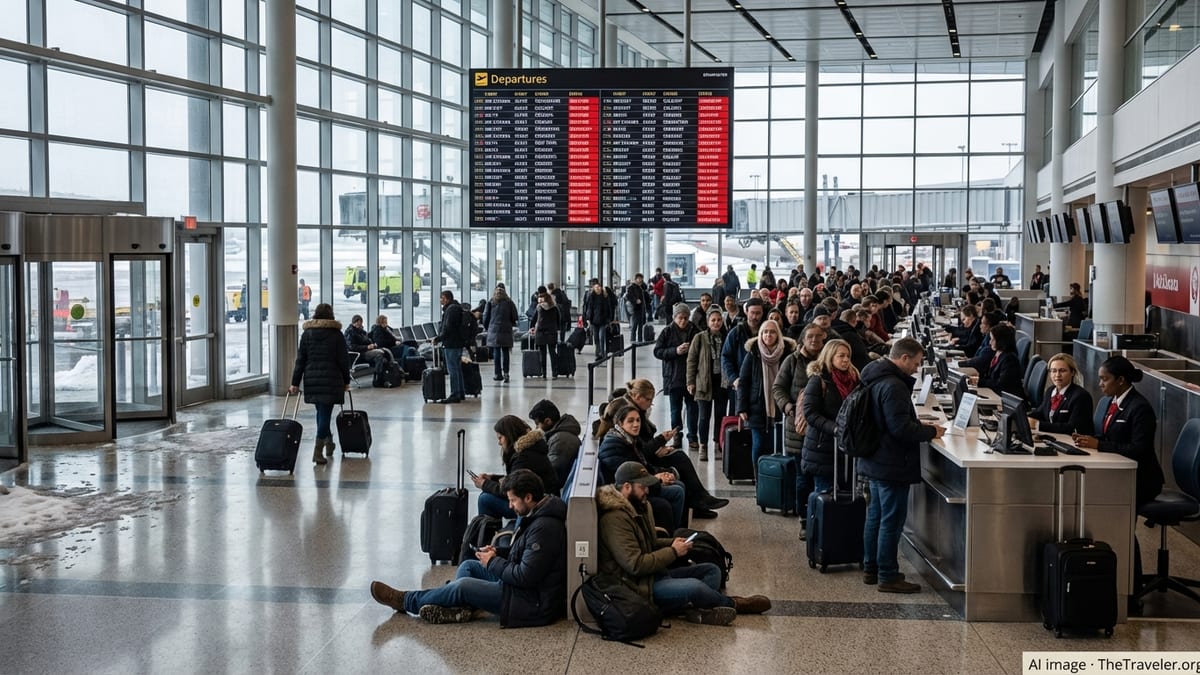
With WestJet cabin crew walking off the job at the start of a peak summer long weekend, thousands of passengers across Canada and abroad are stranded and attention is quickly shifting from the airline and the union to Ottawa’s toolbox for resolving the dispute.
Get the latest news straight to your inbox!
Context: A Strike Collides With Peak Travel
The work stoppage by WestJet flight attendants began just as one of Canada’s busiest travel periods was getting underway, prompting widespread cancellations across the carrier’s network. Reports indicate that WestJet began suspending mainline 737 and 787 flights as the strike took hold, focusing remaining resources on essential operations and on rebooking affected passengers.
Publicly available information shows that the dispute centres on wages, scheduling rules and working conditions, with the union pointing to recent gains by flight attendants at other Canadian carriers as a benchmark. WestJet has promoted what it calls a transformational offer, but union leadership has argued that it does not close the gap with competitors or adequately address fatigue and unpaid time.
The Canadian federal government has repeatedly stated in past disputes that negotiated settlements are preferable. However, with a major national carrier’s operations curtailed at the height of the holiday season, pressure is mounting on Ottawa to clarify how far it is prepared to go to protect both the travelling public and the integrity of collective bargaining.
Staying at the Table: Mediation and Conciliation
The first and least intrusive option for the federal government is to keep the parties at the bargaining table using the mediation and conciliation tools already built into the Canada Labour Code. In practice, this can include appointing federal mediators, extending conciliation periods or encouraging intensive round-the-clock bargaining in neutral venues.
According to published coverage of previous airline labour disputes, federal mediators have played a central role in keeping talks alive while strikes or lockouts loomed. During the 2025 Air Canada flight attendant strike, for example, the government appointed a mediator who helped the parties reach a tentative agreement after a short but disruptive walkout. That pattern underscores Ottawa’s preference to use technical support and shuttle diplomacy rather than immediate legal intervention.
In the current WestJet dispute, reports indicate that mediators are already involved and that talks have continued even as flights are cancelled. The government can intensify this approach by broadening the mediation team, extending deadlines and quietly signalling that more forceful options remain on the table if negotiations stall.
Binding Arbitration and References to the CIRB
Another significant option is to push or order the parties into binding arbitration. In this model, the union and employer submit their positions to a neutral arbitrator or arbitration panel, which issues a final award covering wages and working conditions. The award typically replaces a negotiated contract and is enforceable under federal labour law.
Recent experience in the aviation sector illustrates how this can work. During the 2024 strike threat involving WestJet’s aircraft mechanics, the federal government issued a ministerial order for binding arbitration under the Canada Labour Code. Although the union proceeded with a short strike, the process contributed to a rapid end to the dispute and a new tentative agreement. That precedent is now being closely watched as cabin crew walk picket lines.
The government also has the option of referring specific questions or aspects of the dispute to the Canada Industrial Relations Board. Such references can address issues like the legality of strike actions, the interpretation of essential services, or obligations around maintaining certain safety-related operations. While more limited than full arbitration, CIRB referrals can narrow the scope of conflict and create pressure for a settlement by clarifying legal boundaries.
Back-to-Work Legislation and Its Political Risks
The most sweeping and controversial option for Ottawa is back-to-work legislation. Parliament has, in past decades, adopted special laws requiring employees in federally regulated sectors to end strikes and return to their jobs, often combined with a requirement that outstanding issues go to binding arbitration. This tool effectively suspends the right to strike for the duration of the dispute.
Labour law commentators note that such legislation has been used in Canada to end work stoppages in rail, postal and airline services, including in earlier interventions involving Air Canada flight attendants. Critics argue that frequent use of back-to-work laws undermines collective bargaining by encouraging employers to hold out for government intervention, while supporters contend that they are necessary to protect the economy and public safety when talks break down.
Since taking office, the current federal government has signalled more caution in deploying this power. In recent high-profile labour disputes, including nationwide public sector job actions, Ottawa has tended to rely on mediation, arbitration and political pressure before considering legislation. Applying a similar standard to the WestJet strike would likely mean that back-to-work legislation remains a last resort, reserved for a scenario where prolonged disruption threatens broader economic stability or critical connectivity for remote communities.
Informal Pressure, Market Remedies and Travel Alternatives
Beyond formal legal powers, the federal government can influence the trajectory of the strike through informal pressure and policy signals. Cabinet members can publicly urge the parties to reach an agreement, emphasize the importance of uninterrupted air service and remind both sides that public opinion may harden if travellers continue to face days of disruption.
Regulators and transport officials can also encourage temporary cooperation between carriers to ease the impact on passengers. During previous airline disruptions, published reports indicate that rival airlines have been asked to honour each other’s tickets or expand capacity on key domestic and transborder routes. In the current situation, similar arrangements, combined with relaxed rules for schedule changes and refunds, could help stranded passengers reach their destinations even while the strike continues.
At the same time, consumer protection rules under the Air Passenger Protection Regulations remain in focus. Advocacy groups are highlighting that, where flights are cancelled because of a labour dispute, passengers may have a right to rebooking or refunds, even if additional compensation is limited. While these rules do not resolve the strike, enforcing them consistently can reduce the immediate hardship facing travellers and may, indirectly, encourage a quicker settlement by increasing the costs of prolonged disruption for the carrier.
What Travellers Can Expect Next
For now, the most probable near-term scenario is that negotiations continue in parallel with a rolling or full work stoppage, under close supervision from federal mediators. If the strike quickly escalates into multi-day, systemwide cancellations, political pressure on Ottawa to escalate its response is likely to rise sharply.
Observers of recent Canadian labour disputes suggest a potential progression: intensified mediation and conciliation efforts, followed by consideration of binding arbitration or targeted references to the Canada Industrial Relations Board, with back-to-work legislation held in reserve. Which path the government ultimately chooses will depend on how long the disruption lasts, how severe its impact becomes, and whether both WestJet and the union show renewed willingness to compromise.
Until there is a clear breakthrough, travellers are being advised in public forums and news reports to monitor airline communications closely, confirm the status of their flights before heading to the airport and consider alternative routes or carriers where possible. The federal government’s decisions in the coming days will determine whether the WestJet strike becomes a brief flashpoint in Canada’s busy summer travel season or a longer test of how the country balances workers’ rights, consumer protection and the smooth functioning of its air transport system.