


More news on this day
When a flight is delayed or cancelled, what travelers are owed can range from a simple refund to hundreds of dollars in compensation, hotel rooms and meals, but the rules vary sharply by region and by the cause of the disruption.
Get the latest news straight to your inbox!
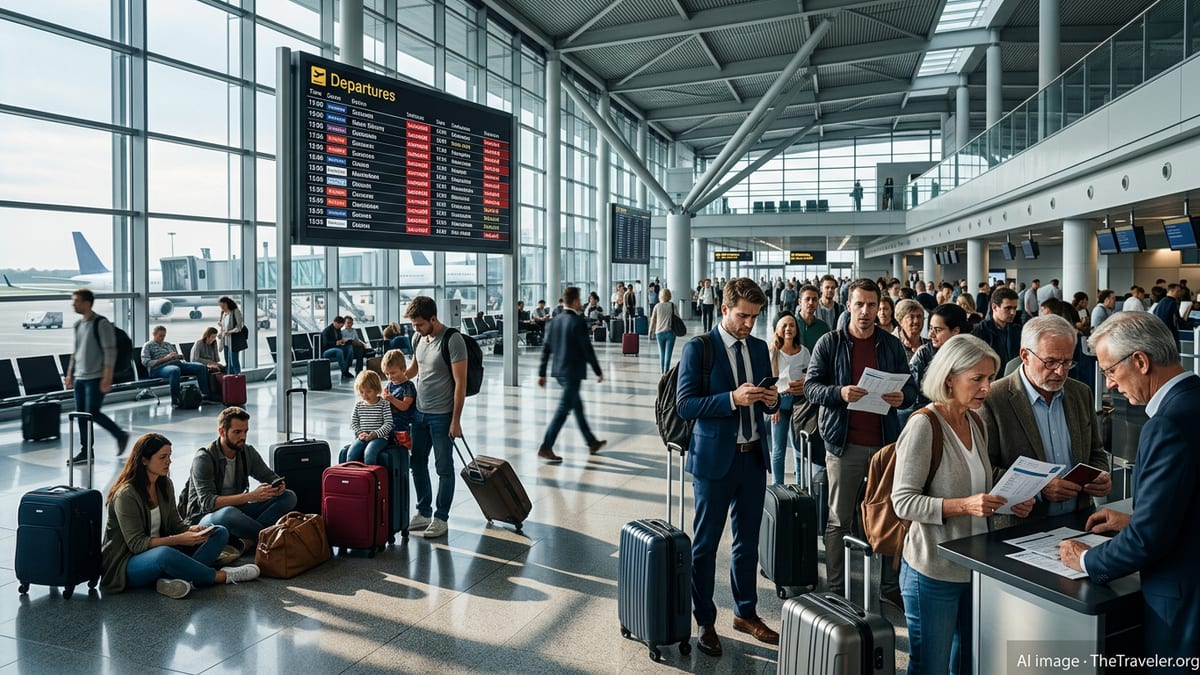
United States: Strong Refund Rules, Limited Cash Compensation
In the United States, federal rules focus primarily on refunds, not automatic cash compensation, when flights are cancelled or significantly changed. Publicly available guidance from the U.S. Department of Transportation (DOT) states that if an airline cancels a flight or makes a significant schedule change and a passenger chooses not to travel, the traveler is entitled to a cash refund, even for nonrefundable tickets, if they decline rebooking or vouchers.
That refund right applies to the unused portion of the ticket and to ancillary fees, such as seat selection or checked baggage, when the associated service was not provided because of the cancellation or significant change. Reports indicate that airlines must provide the refund to the original form of payment and cannot require passengers to accept a credit, voucher or frequent-flyer miles instead, unless the traveler chooses that option.
By contrast, there is no nationwide U.S. requirement that airlines pay fixed cash compensation simply because a flight is delayed or cancelled. Airlines set their own policies in their contracts of carriage, and those policies often distinguish between disruptions within the carrier’s control, such as crew or maintenance issues, and events outside the airline’s control, such as severe weather or air-traffic restrictions. DOT maintains an online dashboard comparing what individual U.S. airlines voluntarily promise in terms of meals, hotel accommodation and rebooking assistance when delays or cancellations are under the airline’s control.
Separately, the U.S. tarmac delay rule limits how long passengers can be kept on a plane on the ground. For domestic flights, airlines generally may not keep passengers on the tarmac for more than three hours without giving them the option to deplane; for international flights, the limit is four hours, subject to specific safety and air-traffic exceptions. The rule also requires basic services such as access to restrooms and adequate food and water after two hours of tarmac delay.
European Union: Fixed Compensation and Care Under EU261
Within the European Union, passenger protections are significantly broader. Regulation (EC) No 261/2004, often referred to as EU261, sets common rules across EU member states for compensation and assistance when flights are cancelled, significantly delayed or overbooked. The regulation applies to all flights departing from an EU airport, and to flights to the EU operated by an EU carrier, even when departing from a non-EU country.
Under EU261, when a flight is cancelled or arrives at its final destination three hours or more late and the cause is within the airline’s control and not due to “extraordinary circumstances,” passengers may be entitled to a fixed cash compensation amount that depends on flight distance. Public summaries of the regulation indicate that compensation typically ranges from 250 to 600 euros per passenger, with higher amounts for long-haul flights. Court decisions in the EU have clarified that long delays of three hours or more can be treated similarly to cancellations for compensation purposes.
Regardless of whether compensation is owed, airlines covered by EU261 must provide “right to care” assistance once delays become significant. That can include meals and refreshments proportional to the waiting time, two free phone calls or other communication, and hotel accommodation and transport between the airport and hotel if an overnight stay becomes necessary. These care obligations apply even when the underlying cause is outside the airline’s control, such as extreme weather.
Passengers are also entitled under EU rules to choose between a refund and re-routing when a flight is cancelled or significantly disrupted. A refund is due within a reasonable period if the traveler no longer wishes to travel, while re-routing must occur as soon as reasonably practicable under comparable transport conditions. Travelers who accept re-routing may still qualify for compensation if arrival is sufficiently delayed and no extraordinary circumstances apply.
United Kingdom: UK261 Mirrors EU Rules With Local Nuances
Since the UK’s departure from the European Union, the country has retained a version of EU261 in domestic law, often referred to as UK261. According to information from the UK Civil Aviation Authority (CAA), these protections apply to flights departing from UK airports on any airline and to flights arriving in the UK on UK or EU carriers. The structure of rights largely mirrors the EU framework, including fixed compensation levels based on flight distance and delay, care obligations and choices between refund and re-routing.
As in the EU, compensation in the UK depends on the cause of the disruption. Public guidance from the CAA explains that passengers are generally not entitled to compensation where a delay or cancellation is caused by “extraordinary circumstances” that could not have been avoided even if all reasonable measures had been taken. Examples can include severe weather, certain security risks or air-traffic control strikes that affect multiple airlines. Routine technical problems with the aircraft, however, have been treated in UK case law as part of normal airline operations rather than extraordinary circumstances.
Beyond compensation, UK261 requires airlines to provide assistance when flights are heavily delayed, including meals, refreshments and hotel accommodation with transport between the airport and hotel when necessary. These care obligations apply regardless of airline fault once specified delay thresholds are reached. If a flight is cancelled or delayed long enough that travel is no longer useful to the passenger, travelers may request a refund instead of re-routing.
When disputes arise, UK-based passengers may escalate complaints to an alternative dispute resolution body approved by the CAA or to the CAA’s own passenger advice and complaints service if the airline is not part of an approved scheme. Publicly available information indicates that travelers are generally expected to seek redress first directly from the airline before regulators or courts consider claims.
Canada: APPR Sets Tiered Duties for Airlines
In Canada, the Air Passenger Protection Regulations (APPR) set national minimum standards for how airlines must treat passengers during delays and cancellations involving flights to, from or within the country, including connecting itineraries. The rules differentiate between “large” and “small” carriers and between disruptions within the airline’s control, within its control but required for safety, and outside the airline’s control altogether.
When a flight is delayed or cancelled for reasons within an airline’s control and not related to safety, published regulatory material indicates that passengers may be eligible for cash compensation if they arrive at their final destination three or more hours late and the disruption occurs within 14 days of departure. The amount depends on the size of the airline and the length of delay, with minimum compensation increasing for longer delays. Passengers typically have one year from the date of the disruption to file a claim with the airline.
Regardless of the cause, airlines in Canada must provide certain standards of treatment during long delays, such as food and drink in reasonable quantities, access to communication, and hotel accommodation with ground transportation for overnight delays, subject to regulatory conditions. After certain thresholds are reached, carriers must offer rebooking on their own flights or those of partner airlines, and in some situations must provide passengers with a refund instead of or in addition to rebooking.
Recent Canadian regulatory updates have focused on strengthening refund obligations even in situations outside an airline’s control, such as major weather events, when carriers cannot ensure completion of an itinerary within a reasonable time. Public documents from the Canadian Transportation Agency note that airlines must now provide either rebooking or a refund at the passenger’s choice when such disruptions prevent completion of travel within the timeframe set out in the rules.
How Travelers Can Use These Rights in Practice
For travelers, the first step in asserting rights after a delay or cancellation is to identify which legal framework applies. This often depends on where the trip begins and ends and which airline operates the flight. A U.S. traveler on a domestic route will usually rely on DOT refund rules and the airline’s contract of carriage, while the same passenger flying from Paris to New York on an EU airline may be protected by EU261 in addition to any local laws.
Passengers are widely advised to keep documentation, including booking confirmations, boarding passes, written notices of delay or cancellation, and receipts for any additional expenses such as meals, hotels or alternate transportation. Many regulators and consumer organizations recommend that travelers first submit a written claim directly to the airline, clearly citing the relevant regulations where possible and attaching documentation in support.
If a carrier denies a claim or fails to respond, options vary by jurisdiction. In the United States, consumers may file complaints with the DOT’s Aviation Consumer Protection office, which can investigate patterns of noncompliance. In the EU, UK and Canada, national regulators oversee enforcement of passenger-rights rules, and some countries offer structured complaint processes, mediation or access to approved dispute resolution bodies.
Because policies and enforcement practices continue to evolve, especially following sustained travel disruptions in recent years, travelers are encouraged to consult up-to-date guidance from regulators or official consumer portals before or after a disruption. The specific compensation amounts, time limits and procedures can change, but the core principle now embedded in law across many major markets is that passengers should not bear the full financial risk when their flights are significantly delayed or cancelled.
US Department of Transportation: Refunds and Flight Changes
European Union Regulation (EC) No 261/2004
UK Civil Aviation Authority: Flight Delays and Cancellations
Canadian Transportation Agency: Air Passenger Protection Regulations