


More news on this day
Passengers flying through Manchester Airport on 9 September are facing another day of disruption, with live data indicating 19 flights cancelled and widespread delays following a major UK air traffic control fault.
Get the latest news straight to your inbox!
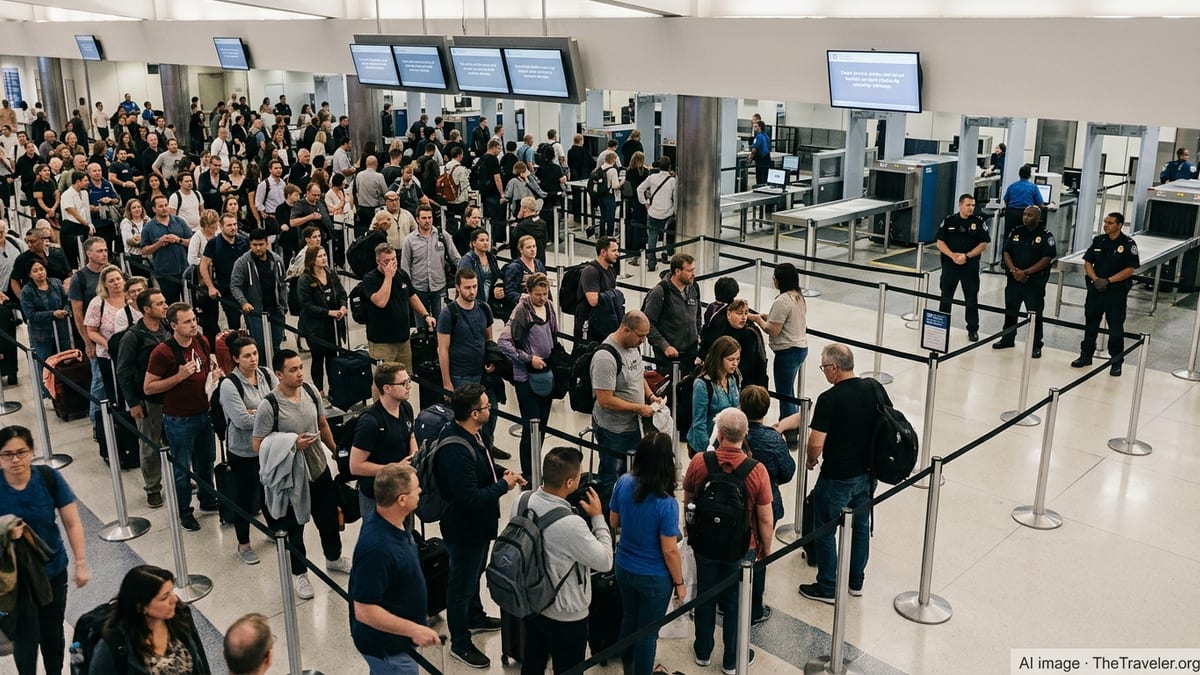
Live data shows 19 cancellations and lengthy delays
Tracking data in the early hours of Wednesday 9 September shows Manchester Airport operating with severe disruption, with around 63% of monitored arrivals cancelled. Publicly available delay statistics indicate that, across 30 flights tracked so far today, 19 have been cancelled and arrivals are running around 172 minutes behind schedule on average.
The figures point to a much more difficult morning than on a typical day at Manchester, which usually handles around 375 flights and has a single-digit cancellation rate. Recent performance data shows that the airport recorded 56 cancelled departures on 8 September alone, far above its normal daily average, underlining how heavily operations have been hit since the air traffic control issue emerged.
While the headline number of 19 cancellations so far today is lower than Tuesday’s total, it comes on top of earlier disruption and continuing schedule changes as airlines attempt to recover aircraft and crews that are out of position.
Updates from independent tracking services stress that the situation is fluid and subject to change throughout the day as additional flights are added to the boards or removed from the schedule.
Air traffic control failure triggers nationwide disruption
The problems at Manchester are part of a wider crisis across the UK aviation network that began on Tuesday 8 September, when a technical fault in the National Air Traffic Services (NATS) flight-processing system forced restrictions on movements in UK airspace. Reports indicate that more than 1,000 flights were cancelled nationwide on Tuesday, with hundreds more delayed, affecting many of the country’s busiest hubs.
Coverage from national and regional outlets describes how departures and arrivals at major airports including Heathrow, Gatwick, Stansted and Manchester were heavily disrupted after the failure, with aircraft held on the ground and some flights diverted to alternative airports. NATS has stated publicly that the underlying technical issue has been resolved, but airlines and airports have warned that recovery will take time as they work through the backlog.
Independent reporting notes that by early Wednesday, airlines were still cancelling flights as they rebuilt schedules and repositioned aircraft. Travel industry commentators have described the second day of disruption as a knock-on effect of the initial failure, rather than a fresh technical incident, but passengers are being advised that further changes remain likely.
Manchester among UK airports hardest hit on 8 and 9 September
Manchester Airport has emerged as one of the UK airports facing significant fallout from the incident. Specialist aviation sites tracking Manchester’s performance show a marked spike in cancellations and delays over the past week, with 56 flights cancelled on 8 September alone, compared with low single-digit cancellations on more typical days earlier in the month.
Local and regional coverage reports that more than 100 departing flights from Manchester were delayed on Tuesday, with more than a dozen cancelled outright as the air traffic control failure unfolded. That disruption has now spilled into Wednesday’s schedule, with the latest count of 19 cancelled flights forming part of a wider pattern of delays as airlines attempt to clear the backlog.
Passengers have described scenes of long queues, crowded terminals and late-night schedule changes as aircraft and crews ended up at different airports than planned. Accounts shared via public forums point to some travellers being boarded onto buses and then returned to baggage reclaim after last-minute cancellations, reflecting how quickly operating decisions changed during the height of Tuesday’s disruption.
Manchester Airport Group, which operates Manchester as well as Stansted and East Midlands, has previously acknowledged that technical issues originating in air traffic control can have significant knock-on effects at its airports, with recovery often extending into subsequent operating days.
What today’s disruption means for passengers
For travellers scheduled to fly from or to Manchester today, the combination of 19 cancellations and extended delays means plans may change at short notice. Public advisories circulating this morning consistently urge passengers not to travel to the airport until their flight is confirmed as operating, and to keep monitoring airline communications for gate changes, rebookings or overnight arrangements.
Consumer guidance shared by travel rights organisations notes that, under UK261 rules, travellers whose flights are cancelled or significantly delayed may be entitled to care, re-routing or compensation, depending on the cause of the disruption and the notice given. However, where delays are attributed to external air traffic control restrictions, compensation rules can be complex, and passengers are advised to retain documentation, boarding passes and any written explanations from airlines to support potential claims.
Industry analysts also warn that even once today’s immediate disruption eases, some knock-on effects could persist into later departures and arrivals. Early morning cancellations can ripple through the day as aircraft fail to arrive in time for afternoon rotations, and connecting passengers miss onward services, forcing airlines to juggle limited spare capacity.
Travellers with flexible plans are being encouraged by publicly available guidance to consider rebooking for later in the week where possible, particularly on leisure routes, to ease pressure on constrained flights and improve their chances of a smoother journey.
How Manchester’s disruption compares with wider UK impact
While Manchester is experiencing a challenging day with 19 cancelled flights and heavy arrival delays, data suggests that the impact is being felt across the UK network. Flight-tracking services cited in national coverage estimate that more than 1,700 flights were cancelled nationwide on Tuesday, with hundreds more affected on Wednesday morning as the system continues to recover.
At London Heathrow, early-morning figures on 9 September pointed to more than 200 cancellations by 6 am, while Gatwick was reported to have several dozen flights cancelled. Regional airports including Stansted and Edinburgh have also reported disruption, although the scale varies by location and airline.
Historical data from recent years highlights that Manchester has previously ranked among the UK’s more delay-prone airports, but the current episode stands out even against that backdrop. The spike to 56 cancellations on 8 September, followed by at least 19 more on 9 September alongside multi-hour delays, represents an acute disruption event driven by a system-wide air traffic control failure rather than local weather or airport-specific technical issues.
With NATS and the UK government both under pressure to explain the circumstances of the latest failure, passengers and airlines alike are watching closely for updates on the resilience of the air traffic control system and any steps being proposed to prevent a repeat of this week’s chaos.
Manchester Airport live delays and cancellations data
WhichTerminal Manchester cancellations coverage