


More news on this day
Passengers travelling through Manchester Airport are facing significant disruption after a nationwide air traffic control outage triggered widespread flight delays and cancellations across the UK on 8 September 2026.
Get the latest news straight to your inbox!
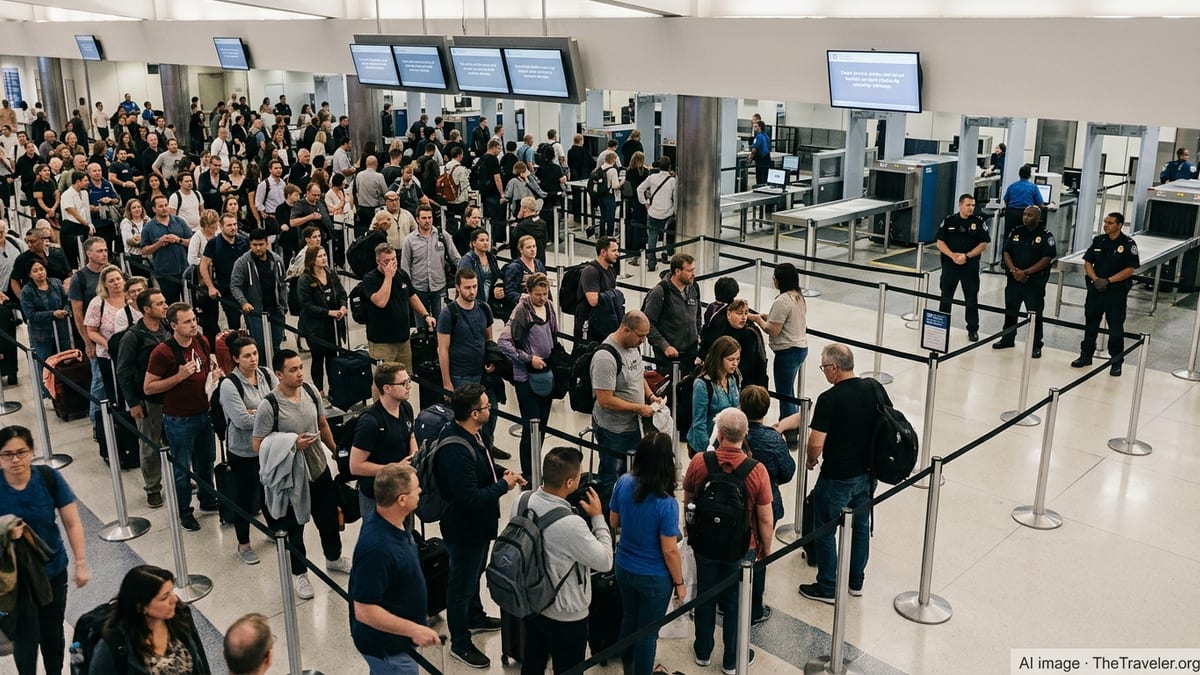
Nationwide air traffic glitch hits Manchester schedules
According to published coverage, a technical failure in the UK’s air traffic control system on 8 September led to restrictions on departing flights across multiple major airports, including Manchester, Heathrow, Gatwick and Stansted. The problem was linked to flight processing systems used by National Air Traffic Services (NATS), which temporarily limited the flow of departures while arrivals were largely able to continue.
Data compiled by flight-tracking services and reported in UK and international media indicates that more than 1,000 flights were cancelled nationwide as a result of the outage, with hundreds more delayed, leaving aircraft and crews out of position across airline networks. Manchester, as the North of England’s primary long-haul hub, experienced a wave of knock-on delays and cancellations that extended into the evening.
Reports from local media in Greater Manchester describe “hundreds” of cancellations at the airport on Tuesday, alongside protracted waits at departure gates as passengers attempted to rebook. Airport advisories highlighted that while the technical issue originated in the national air traffic system rather than at Manchester itself, the impact for travellers departing or connecting through the airport was immediate and substantial.
By Wednesday morning, departures had largely resumed but schedules remained fragile, with residual delays and some further cancellations reported as airlines worked to realign aircraft rotations and crew duty times following the previous day’s disruption.
Airlines warn of continued knock-on disruption
Airlines operating from Manchester, including low-cost and full-service carriers, have been reshaping timetables as they attempt to recover from the outage. Publicly available information from carriers shows that some short-haul services are being consolidated or retimed, while certain later departures have been cancelled outright to allow aircraft and crews to return to their planned positions.
Coverage from UK travel trade outlets notes that NATS implemented a fix for the underlying fault on Tuesday afternoon, allowing more normal departure flows to resume. However, analysts cited in international reporting emphasise that even a relatively brief shutdown of a core air traffic system can generate disruption that lasts for at least 24 hours, as aircraft miss onward connections and cabin and cockpit crews reach their legal duty-time limits.
Industry commentary suggests that domestic and near‑European routes are bearing the brunt of the recovery phase. These services typically operate on tight turnarounds, meaning that any prolonged ground hold quickly cascades through multiple rotations. Manchester’s heavy short‑haul schedule to European city and holiday destinations has therefore seen particular pressure, even as long‑haul operations show signs of stabilising.
Some airlines have issued online advisories urging customers not to travel to the airport before checking their flight status, and to expect busy customer service lines as rebooking requests surge. Travellers with flexible tickets are being encouraged to shift to later dates where possible to free up capacity for those with urgent travel needs.
Passengers advised to check status before heading to the airport
Consumer guidance shared by UK aviation and travel organisations recommends that anyone due to fly from Manchester today should verify their flight status directly with their airline’s app or website before setting out. While departures are operating, timetables remain subject to late changes as operators juggle aircraft availability, crew scheduling and airport slot constraints.
Passengers already at the airport are being directed towards airline desks and digital self‑service tools to explore rebooking options. According to publicly accessible advice from the UK Civil Aviation Authority on disruption scenarios, travellers whose flights are significantly delayed or cancelled may be entitled to care such as meals, refreshments and accommodation, although compensation rules can vary depending on the cause of the disruption and the operating carrier.
Travel advocates note that passengers connecting through other UK hubs after departing Manchester should pay particular attention to minimum connection times, as a modest delay on the first leg can now easily translate into a missed onward flight. Those with separate tickets on different airlines are at higher risk and may need to purchase new onward travel if they fail to make their connection.
Rail links to and from Manchester Airport are operating normally, and some passengers are reportedly switching to domestic train services where practical, particularly for journeys to London, Birmingham and Scotland that might otherwise involve short‑haul flights still affected by knock‑on disruption.
Renewed scrutiny of UK air traffic resilience
The latest outage has prompted renewed scrutiny of the resilience of the UK’s air traffic infrastructure. This week’s disruption follows other recent technical incidents affecting British aviation, including a power cut at Manchester Airport in June 2024 that led to large numbers of cancellations from Terminals 1 and 2 and required subsequent guidance from the Civil Aviation Authority to airlines and airports.
Public documents and previous correspondence published by the CAA show that the regulator has been engaging with industry on issues of air traffic resilience, including the potential impact of system failures on flight arrivals and departures at major regional hubs such as Manchester. The recurrence of large‑scale disruption linked to technical faults is likely to intensify discussions about redundancy, system upgrades and contingency planning.
National media reports highlight that the current air traffic issue originated in a specific element of the flight processing system used to manage departures across multiple UK airports, rather than in radar or power supply. While the technical fault has been resolved, aviation analysts suggest that detailed investigations will focus on why existing safeguards did not prevent a system‑wide slowdown and what changes may be required to reduce the risk of similar incidents.
For Manchester and other large regional airports, attention is likely to centre on how quickly operations can recover from such nationwide outages, particularly at peak travel times. The September incident has unfolded as the busy late‑summer travel period continues, affecting holidaymakers and business travellers alike and raising questions about how future peaks will be managed if comparable failures occur.
What Manchester-bound travellers should do next
For travellers with imminent flights to or from Manchester, the consistent message across airline, airport and travel advisory channels is to stay informed and build in extra time. Checking flight status repeatedly in the hours before departure, monitoring airline notifications, and confirming any rebooked itineraries are all being recommended as practical steps.
Those whose flights have been cancelled are generally being offered rebooking on the next available services, although seat availability is constrained on some popular routes. Passengers who no longer wish to travel may be able to request refunds or vouchers, depending on the fare rules, and many carriers are temporarily waiving change fees in response to the disruption.
Travel planners suggest that anyone with non‑refundable hotel or ground transport bookings at their destination should contact providers as soon as possible to explain the situation, as some are offering flexibility in light of the widely reported outage. Travel insurance policies may also provide limited cover for additional expenses, but coverage terms differ, and travellers are advised to check policy details carefully.
Looking ahead, observers note that while the immediate disruption is expected to ease over the next 24 to 48 hours, the incident will likely remain a reference point in debates about digital resilience across the UK aviation sector. For now, passengers passing through Manchester Airport are being urged to remain patient, plan conservatively, and rely on verified, official channels for the latest operational information.
Travel Weekly: NATS tech fault disrupts UK departures
The Manc: Manchester Airport update after hundreds of cancellations
The Independent: Flight delays caused by air traffic control issue
AP News: Travel chaos at UK airports after air traffic control problem