


For many frequent travelers, the biggest connectivity decision is no longer whether to roam with their home carrier, but whether to rely on travel eSIMs like GigSky or keep buying local SIM cards in each country. Local SIMs can still be the absolute cheapest option, yet there are plenty of situations where GigSky’s eSIM plans are not just more convenient but genuinely the better value once you factor in time, hassle, and real-world coverage. This article looks at concrete scenarios, current pricing patterns, and traveler experiences to show when GigSky makes more sense than juggling local SIMs.
Get the latest updates straight to your inbox!
Understanding What GigSky Actually Offers Today
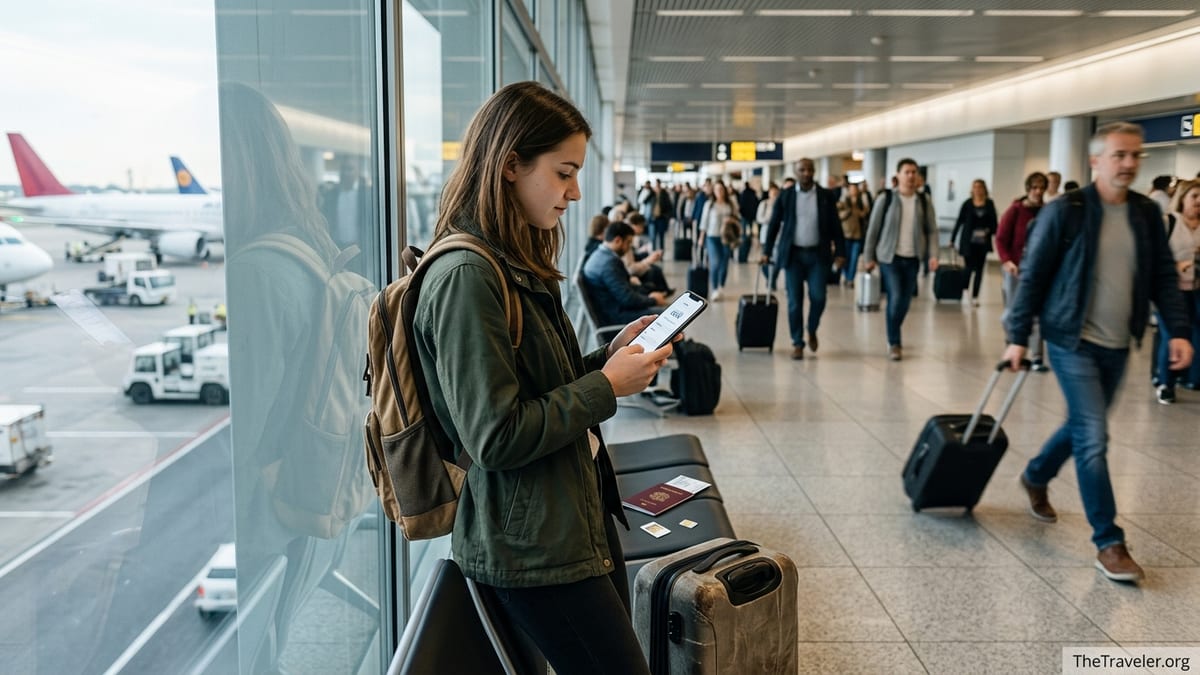
GigSky is a travel-focused data provider that sells short term and subscription eSIM plans in more than 170 countries, aimed at people who do not want to swap physical SIMs or sign up with local carriers in every destination. You install the GigSky eSIM once via its app or a QR code and then purchase regional or country plans that activate as soon as your phone connects to an eligible network. In practice, that means you can land at an airport, switch your phone’s active data line, and be online within minutes without visiting a kiosk or store.
As of mid 2026, GigSky’s catalog includes regional packages such as Europe, Asia Pacific and North America, plus country specific plans and even cruise and inflight options. For example, third party comparison sites list a 10 GB for 30 days Europe plan around the 35 to 45 US dollar range, with smaller starter plans beginning under 10 dollars in many regions. GigSky also offers “GigSky One” subscription style plans that provide a monthly pool of high speed data in selected regions, then throttle speeds once you exceed the allotment rather than cutting you off completely.
It is important to remember that GigSky focuses on data only. You keep your regular number for calls and SMS over Wi Fi apps like WhatsApp or FaceTime Audio, or you rely on your home carrier for voice and texts if needed. For many travelers who live inside messaging apps, the lack of traditional voice is not a real drawback and is often offset by the simplicity of activating data with a couple of taps in the app.
Compared with local SIM offers, GigSky can look expensive on a pure price per gigabyte basis. Local carriers in countries such as Italy or Thailand might sell 50 to 100 GB tourist packages for 20 to 30 dollars. Where GigSky becomes competitive is when you are crossing borders frequently, staying for only a few days in each place, or when your arrival time and logistics make visiting a local carrier store awkward or risky.
Multi Country Trips Where a Single Plan Wins
One of the clearest situations where GigSky shines over local SIM cards is a fast paced multi country itinerary. Imagine a two week trip starting in Paris, then moving by train through Belgium and the Netherlands before flying to Denmark and Sweden. Buying a local SIM in each country would mean at least three or four separate purchases, each with its own registration process, identity check, and time spent finding the right shop during business hours.
With GigSky’s Europe regional eSIM, a traveler can purchase a 10 GB or 20 GB plan before departure, scan the QR code at home, and arrive in Paris with data already working. When the train crosses into Belgium and later the Netherlands, the phone simply connects to a different partner network without requiring any change from the user. In real terms, that can save several hours of cumulative hassle, especially when border crossings happen late in the evening or early morning when retail stores are closed.
Another common use case is a business traveler doing a North American or Asia Pacific roadshow. Consider someone flying from Los Angeles to Toronto, then on to Mexico City in a single week. GigSky’s North America coverage or a broader Americas or World plan can cover all three countries with one purchase, while each local SIM would involve different carriers, languages and top up rules. For a consultant or salesperson who bills hundreds of dollars per hour, the value of time easily outweighs the few extra dollars per gigabyte that a GigSky plan might cost.
Even within a single region, the regional nature of GigSky plans reduces the risk of leftover data trapped on a local SIM when you leave. A 10 GB local plan in France is wasted once you cross into Switzerland if there is no roaming, whereas a similar sized GigSky Europe plan simply keeps working across borders until the data or validity period runs out.
Short Stays, Strange Arrival Times and Tight Schedules
Local SIM cards are often cheapest when you have time to shop around, but short trips and awkward arrival times can make them impractical. Picture a traveler landing in Athens at 1 a.m. on a Sunday, with a ferry departing to the islands at 7 a.m. The airport SIM kiosks may be closed or selling expensive packages with aggressive upselling, and there may be no time to find a better deal in town before the ferry.
In this scenario, activating a preinstalled GigSky plan on arrival provides immediate access to maps, ride hailing and ferry confirmations without any detours. Even if the plan costs a few dollars more than a local SIM purchased later, it can bridge the critical first 24 to 48 hours. Some travelers will then choose to add a local SIM once they are settled, but many find that the initial GigSky plan is adequate for the entire short stay.
GigSky can also make sense for long weekend city breaks or quick work trips where data needs are modest. For example, a three day weekend in Montreal might be easily covered by a small North America plan purchased through GigSky, avoiding the paperwork and identification that some Canadian carriers require from tourists. When you are only using maps, messaging and occasional browsing, a 1 to 3 GB GigSky plan is often enough, and the extra cost relative to a deeply discounted local offer is minor compared with hotel and flight expenses.
Travelers connecting through multiple airports in a single day can also benefit. Someone flying from San Francisco to Istanbul via Frankfurt may need reliable connectivity during both layovers to handle work emails and coordinate ground transportation. Having a GigSky regional or world plan active throughout means they do not depend on airport Wi Fi, which is often congested, time limited or requires constant re authentication.
When Local SIMs Are Hard to Get or Confusing
In some destinations, regulatory rules, language barriers or simply inconsistent retail setups make local SIM cards harder to obtain than guidebooks suggest. Certain countries require a local tax identification number, hotel registration document or passport photocopies to activate a SIM. Others limit sales to official carrier stores rather than convenient airport kiosks, which can be a challenge if you arrive during holidays or outside business hours.
For example, travelers in parts of the Middle East or Asia have reported needing to queue at official carrier branches, fill out forms in the local language, and wait for manual activation before they could use mobile data. In such places, using an international eSIM like GigSky allows visitors to be online immediately for essentials like translation apps, navigation and ride hailing. Local SIMs can still be purchased later if the stay is long enough to justify the effort, but GigSky removes the stress from the first crucial day.
Even in well traveled markets, the array of local options can be overwhelming. In large European or Latin American airports, arriving passengers are often approached by multiple resellers offering “tourist SIMs” at widely varying prices and quality levels. Some resellers bundle unnecessary voice and SMS features, upsell oversized data bundles, or lock SIMs to specific devices. With GigSky, pricing is transparent in the app and plans are explicitly data only, which makes comparisons simpler and reduces the risk of misunderstandings.
There is also the matter of device compatibility. Many high end phones now support multiple eSIMs but have only one physical SIM slot or none at all. For owners of eSIM only devices like recent iPhone models in the United States, buying a physical local SIM is not always an option. GigSky and similar providers backfill that gap by offering digital only connectivity that can be installed even before you leave home.
Subscriptions, Perks and Cruise or Inflight Connectivity
Another area where GigSky can outperform patchwork local SIMs is for travelers who move in and out of the same regions repeatedly. The company’s GigSky One subscription plans, for instance, allow customers to pay monthly for a fixed pool of high speed data in selected regions like North America, Europe or Asia Pacific. After the high speed allowance is used, data continues at reduced speeds rather than cutting off. For a digital nomad shuttling monthly between Berlin and Lisbon, or a consultant alternating between New York and Toronto, a subscription simplifies budgeting and avoids constant SIM shopping.
Credit card partnerships add another dimension. In 2026, several Visa branded premium cards began including GigSky data eSIMs as a built in travel perk, with some Canadian Visa Infinite products offering around 10 GB of global data valid for about 15 days a few times per year. Travelers with these cards can land in Europe or Asia, open the GigSky app, and redeem a free or discounted regional plan instead of paying out of pocket or searching for a kiosk. Depending on the specific perk structure, this can make GigSky drastically cheaper than any local solution for occasional travelers.
GigSky has also expanded into cruise and inflight connectivity, offering special “Sea & Air” style plans and cruise packages that use maritime and satellite networks where available. While performance and coverage at sea can vary and do not yet match land based networks, these plans are often significantly less expensive than buying Wi Fi directly from a cruise line or airline, particularly if purchased before boarding. For someone doing a repositioning cruise that touches several countries, a combined cruise plus regional plan can provide continuity that a stack of local SIM cards simply cannot match.
Of course, these benefits depend on personal travel patterns. Someone who takes one beach vacation per year may not need a subscription or credit card perk, while a consultant who lives on planes can extract substantial value. The key is to look at how frequently you cross borders or board ships and flights where standard local SIM cards are unavailable or painful to use.
Real World Pricing: When Convenience Outweighs Savings
On paper, local SIM cards often win the price war. In practice, the gap narrows when you look at actual usage patterns and all the small inefficiencies of hopping between carriers. Consider a two week Europe trip visiting four countries. A local SIM strategy might involve paying the equivalent of 10 to 15 dollars in each country for small data packs, plus losing leftover data when moving on. Total spend could end up around 40 to 60 dollars, with part of that unused.
A similar trip using GigSky could rely on a single 10 to 15 GB regional plan priced around 35 to 50 dollars, depending on current promotions. The raw price per gigabyte may be higher, but every gigabyte is usable anywhere in the covered region, with no leftovers trapped on inactive SIMs. The traveler also avoids the cost, both financial and emotional, of time spent searching for stores, negotiating in unfamiliar languages and dealing with activation glitches.
Shorter trips show an even stronger case for GigSky. For a four day conference in Tokyo, a local SIM might cost about 15 to 30 dollars for a generous allowance you will not fully use. GigSky’s Asia Pacific or Japan specific plan could be slightly more per gigabyte, yet you might only need the smallest tier, which could still fall under or around 20 dollars. If that saves an hour of wandering Shinjuku Station looking for a carrier shop after a long flight, many business travelers will gladly pay the difference.
Travelers also need to factor in opportunity cost. If you are on a work trip where billing rates are high, or on a cruise where missed logistics can be expensive, losing even one meeting or transfer because you lacked data at the right moment could dwarf the modest savings from local SIM hunting. GigSky’s always ready eSIM model offers a form of insurance against those failures.
Limitations and When a Local SIM Still Wins
Despite its advantages, GigSky is not always the right answer. Heavy data users planning long stays in a single country often do better with a local carrier. A remote worker spending three months in Vietnam or Spain, streaming video daily and participating in frequent video calls, will likely exhaust GigSky data allowances quickly, leading to higher overall costs than a generous local plan or even a home fiber connection plus local prepaid SIM as backup.
Certain countries also have excellent, easy to purchase tourist SIM packages that are hard for any travel eSIM to beat. In parts of Europe and Southeast Asia, it is common to find airport kiosks selling multi week, high data bundles that include domestic calls and texts for prices that are very competitive. If your itinerary is limited to one country and you are comfortable navigating local shops, a straightforward tourist SIM from a major carrier often remains the best deal.
Network performance can vary as well. GigSky depends on its agreements with local operators, typically connecting you to one or more major carriers in each country. In dense urban areas this usually means solid 4G or 5G speeds, but in rural or mountainous regions a local SIM from a carrier with the best rural coverage can outperform an aggregated travel eSIM that defaults to a different network. Travelers planning route heavy trips through remote national parks or off the beaten path islands should research local coverage maps and may want a local SIM as their primary option.
Finally, while eSIM adoption has grown quickly, not every device supports it, and dual SIM management can be confusing for some users. People with older phones or less comfort with mobile settings may prefer the tangible simplicity of swapping in a local physical SIM, especially for longer stays where the local carrier can provide in person support if issues arise.
The Takeaway
GigSky is not a universal replacement for local SIM cards, but for many modern itineraries it is the better tool for the job. It excels on multi country trips where border hopping is frequent, on short city breaks and business travel with tight schedules, in destinations where local SIMs are inconvenient or confusing to buy, and in situations where cruise or inflight connectivity is important. Subscriptions and credit card partnerships further tilt the balance when you travel often through the same regions.
Local SIMs still dominate on price for long, single country stays and for travelers who are willing to spend time shopping for the best deals. The smartest approach is not to be dogmatic, but to match the solution to the trip. Many experienced travelers now keep a GigSky eSIM installed as a reliable base layer for instant connectivity on arrival, then add local SIMs opportunistically when a clear bargain appears.
If you value your time, hate queuing at kiosks after overnight flights, or juggle complex multi stop itineraries, GigSky can absolutely make more sense than relying solely on local SIM cards. Used thoughtfully, it becomes less of a luxury and more of a pragmatic travel tool that keeps your phone working the way it should, wherever your passport takes you.
FAQ
Q1. Is GigSky cheaper than buying local SIM cards everywhere I go?
In many cases GigSky is slightly more expensive per gigabyte than local SIMs, but the total cost difference can be small once you include wasted leftover data and the time spent hunting for shops in each country.
Q2. How much data do I really need for a short trip using GigSky?
For a three to five day city break, many travelers find that 1 to 3 GB is enough for maps, messaging and light browsing if they avoid heavy video streaming and large downloads.
Q3. Can I make regular phone calls with a GigSky eSIM?
GigSky provides data only, so traditional voice calls and SMS are not included. Most users handle calls and messages through apps like WhatsApp, Signal, FaceTime or Zoom while keeping their home number active on another SIM if needed.
Q4. What happens if I run out of data on my GigSky plan mid trip?
You can buy an additional plan in the GigSky app, often in small increments, and it usually activates within minutes. Alternatively, you can fall back to a local SIM if you have one or use Wi Fi where available.
Q5. Will GigSky work on my eSIM only phone from the United States?
Most recent eSIM only phones from major brands work well with GigSky as long as they are unlocked. Installation is handled through a QR code or directly via the GigSky app following on screen instructions.
Q6. Is GigSky a good option for digital nomads staying months in one country?
For long single country stays, local carrier plans are usually cheaper and often offer larger data allowances. Many digital nomads use GigSky as a backup or for regional trips rather than as a full time primary connection.
Q7. How does GigSky perform on cruise ships and planes compared to onboard Wi Fi?
GigSky’s cruise and inflight options can be cheaper than buying Wi Fi directly from cruise lines or airlines, but speeds and coverage vary and may not match land based networks, so expectations should be modest.
Q8. Do I still need to turn on data roaming with a GigSky eSIM?
Yes, you generally need to enable data roaming for the GigSky eSIM profile, since it operates across multiple partner networks in different countries, even though billing is handled by GigSky itself.
Q9. Can I use GigSky and a local SIM at the same time?
On most dual SIM phones you can keep both a GigSky eSIM and a local SIM active, then select which one handles mobile data while the other remains available for calls or messages.
Q10. When should I definitely choose a local SIM instead of GigSky?
If you are staying several weeks or months in a single country, expect to use a lot of data every day, or find an easy, well reviewed tourist SIM with generous allowances, a local SIM will almost always be the better value.