


I thought I understood international roaming. After a decade of lugging local SIM cards around the world, memorizing carrier day-pass fine print and nursing my data like a rare vintage, I was skeptical that any travel eSIM could be much more than a shinier way to pay the same old fees. Then I road-tested GigSky on a multi-stop trip and a cruise. The experience did not just work. It solved the roaming problem in more ways than I expected.
Get the latest updates straight to your inbox!
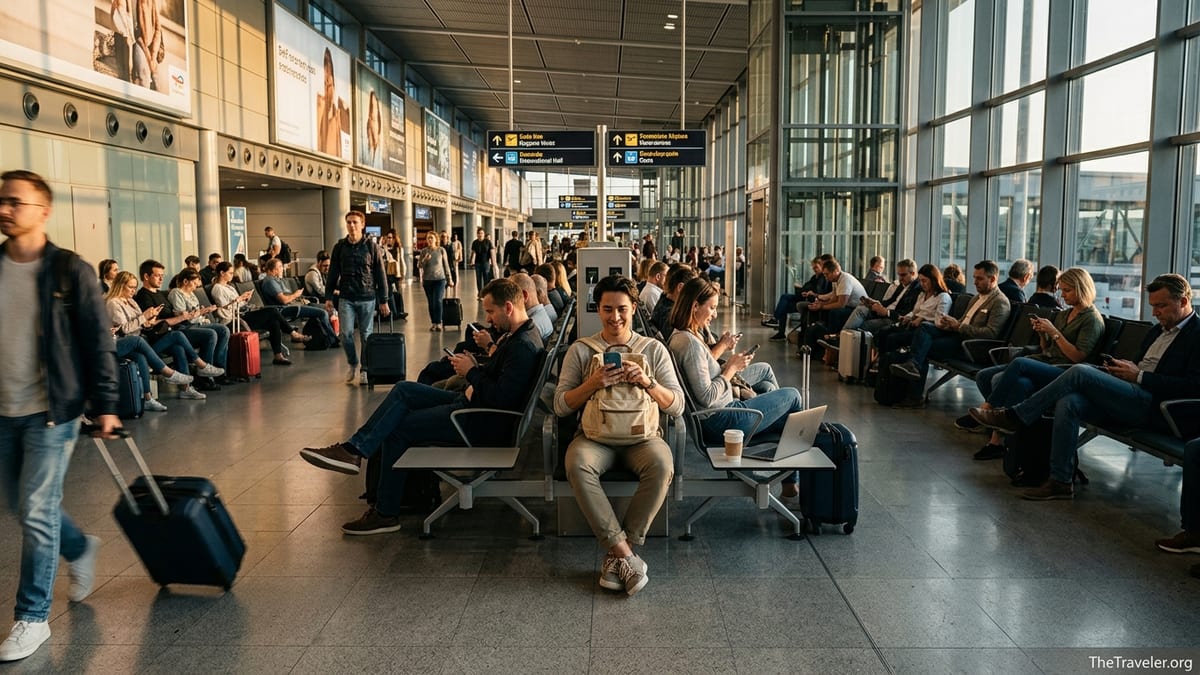
The Real Roaming Problem Travelers Face
International roaming is not just about paying a bit more for data. For many travelers, the real problem is uncertainty. You leave home with no clear idea what your final bill will be, whether your apps will work the same way, or if that cruise line Wi‑Fi package is going to be fast enough for a single video call. The result is a kind of digital anxiety that hangs over every notification you open abroad.
Ask any frequent flyer and you will hear the same pattern. A US traveler on a major carrier like Verizon or AT&T often pays around 10 dollars per day for an international day pass in popular destinations. Use your phone for a three-week trip through Italy and Greece, and you are easily looking at 200 to 300 dollars just for staying connected. If you happen to step into a country that is not on your carrier’s preferred list, pay-per-megabyte charges can climb into the hundreds before you even realize what happened.
This is why the term "bill shock" exists in telecom. Travelers come home to find an extra 500 dollars on their statement because they streamed maps and Instagram Stories in a country that fell outside their plan. Even those who know the risks are often forced into awkward compromises: turning mobile data off entirely, hunting for café Wi‑Fi, or rationing maps and ride-hailing apps as if they were emergency supplies.
Until recently, the workaround was to buy a local SIM card on arrival. That can work well if you are staying in one country for a week or more, and if you are comfortable finding a shop, queuing, showing your passport and swapping SIM trays in the arrivals hall. It breaks down when you have multiple countries in a single trip, tight connections, or an eSIM-only phone with no physical SIM slot. The modern traveler needs something more flexible than that.
How GigSky Changes the Equation
GigSky pitches itself as a premium travel eSIM with coverage in more than 190 countries and territories, plus dedicated plans for cruise ships and inflight connectivity. Independent reviews published in 2026 point to its broad coverage footprint and the fact that it behaves like a full mobile virtual network operator rather than a simple reseller, which allows it to route traffic for more stable connections in many regions.
What surprised me first was how simple the experience felt compared with traditional roaming. Before a trip from New York to Lisbon, then onward to Barcelona and Rome, I opened the GigSky app, selected a Europe regional plan and installed the eSIM over Wi‑Fi at home. When I landed in Portugal, I toggled my primary US line to calls-and-texts-only and set GigSky as my data line. Within about a minute, my iPhone latched onto a local 5G network in Lisbon and everything just worked: maps, email, banking apps, Uber and even tethering to my laptop.
The numbers were different too. In early 2026, typical single-country or regional GigSky plans in popular destinations often sit in the range of roughly 5 to 40 dollars depending on data allowance and validity. For example, a short city break in Tokyo might be covered by a low‑gigabyte, 7‑day plan, while a heavier user bouncing around Europe for two weeks can step up to a higher‑data option. The important part is that you see the total cost upfront in the app before you buy. There is no meter quietly ticking away in the background the way carrier pay‑per‑use roaming often does.
For someone used to mentally calculating "days times 10 dollars" every time I left the United States, it was a mental reset. I started judging plans the way I judge a museum ticket or a rail pass: a fixed, known cost I can budget for, not a mysterious line item that may explode after I get home.
From Airport Arrivals to Multi‑Country Hops
The second problem GigSky quietly fixes is the friction at the start of a trip. Every traveler knows the feeling of stepping off a long‑haul flight into an unfamiliar airport with no local currency, no ride-hailing access and no functioning maps because your phone is still searching for a signal or demanding a roaming decision.
On a recent itinerary from Chicago to Istanbul with a tight 90‑minute connection onward to Tbilisi, I did not have the luxury of hunting down a SIM shop between terminals. With GigSky, I had installed a regional plan covering both Turkey and Georgia before I left home. As soon as I disabled airplane mode in Istanbul, my phone connected to a local LTE network. I ordered a coffee in the transfer area, checked the gate change notification and confirmed my guesthouse pickup in Tbilisi without scrambling for Wi‑Fi or decoding signage in a new language.
This multi‑country continuity becomes even more valuable on classic overland or rail routes. Consider a traveler doing the Interrail circuit from Paris to Amsterdam, Berlin, Prague and Vienna over 12 days. With a typical carrier day‑pass, every border crossing resets the clock and adds another daily charge. With GigSky’s regional approach, a single European plan can cover the entire loop, so long as the countries are listed in the app when you purchase. You activate once, travel freely and top up through the app if you start to run low, without installing a new eSIM or visiting a shop.
It is worth noting that GigSky is not always the rock-bottom cheapest option in every market. A traveler who is comfortable negotiating a prepaid SIM in Bangkok or Mexico City can sometimes find very low local prices by going directly to a domestic carrier. What GigSky optimizes instead is predictability and convenience across borders: no language barrier at the kiosk, no passport photocopies, no new SIM tray tools and no need to keep dozens of tiny plastic cards in your wallet.
Solving the Cruise and Inflight Connectivity Headache
Nowhere is the roaming problem more extreme than at sea and in the air. Cruise lines routinely charge well over 20 dollars per day for Wi‑Fi packages, and those are often limited to one device and modest speeds. Airlines sell inflight Wi‑Fi passes on a per-flight basis that can add tens of dollars to a long-haul ticket. For digital nomads and remote workers, this is not just annoying, it can be a serious budget item.
GigSky has leaned into this niche by offering dedicated cruise ship and inflight data plans. The cruise eSIMs are designed to connect to maritime networks while you are on the ship, independent of the ship’s own Wi‑Fi subscription packages. Real-world pricing snapshots in 2026 show that a GigSky cruise plan with a modest amount of data for a week‑long sailing typically comes in significantly below the cost of buying the cruise line’s highest-tier Wi‑Fi for the same period, especially if you only need reliable messaging, email and occasional browsing.
On a Caribbean itinerary out of Miami, I tested a GigSky cruise plan on a mainstream line that normally charges around 25 dollars per day for its faster Wi‑Fi option. Instead of paying close to 175 dollars for the week on one device, I installed a GigSky maritime eSIM before boarding. The signal connected at LTE‑class speeds when the ship’s network was active. It was not fiber‑optic fast, but it was more than adequate for messaging, cloud document sync and voice calls over Wi‑Fi. Most importantly, the cost was a fixed up‑front figure I had already accounted for when I booked the cruise.
Inflight, the benefit is more subtle but still meaningful. GigSky’s inflight connectivity coverage is available on a subset of airlines and routes, and you need to confirm availability in the app before counting on it for mission-critical work. When it works, you can keep your phone’s data connection alive as the aircraft reaches cruising altitude, using a dedicated satellite-supported data link without purchasing a separate Wi‑Fi pass from the airline. For travelers who fly frequently on compatible carriers, this can strip yet another layer of complexity (and surprise charges) from the journey.
Network Quality, 5G and the Fine Print
Of course, none of this would matter if the experience on the ground were poor. Roaming solutions live or die on the quality of the underlying networks they attach to. GigSky partners with major local carriers in each country and, in many places, can access multiple networks for redundancy. Recent coverage maps and reviews describe access to hundreds of networks worldwide, including 4G LTE and 5G in many urban centers.
In practice, that means a traveler landing in Seoul or Singapore with a GigSky eSIM often sees full‑strength 5G bars and speeds comparable to local postpaid users when the network is not congested. In Western Europe, I have routinely seen my GigSky data line latch onto familiar names like Vodafone, Orange or Deutsche Telekom. When 5G is available, the experience is essentially indistinguishable from local service for typical travel use cases like maps, streaming music, messaging and tethering a laptop for email.
There are caveats. Not every GigSky plan guarantees 5G, and real‑world performance always depends on local infrastructure. Travelers in rural areas of South America or remote islands in Southeast Asia will still hit the same coverage gaps that local users face, regardless of the eSIM provider. Some user reports also note that while GigSky advertises 5G in certain countries, they only ever saw LTE on specific devices or networks, especially shortly after landing when the phone was still negotiating with local towers.
The good news is that even when 5G is not present, a solid 4G LTE connection is usually plenty for maps, ride-hailing, messaging, social media and light video. The more important factor for most travelers is reliability and the absence of unpleasant surprises. On that front, GigSky’s model of prepaid, data-only plans with clear allowances and validity periods is far easier to manage than opaque roaming agreements buried deep in a carrier’s website.
Managing Data, Tethering and Multiple Trips
Another roaming pain point GigSky addresses better than I expected is how you manage your data over time. Traditional roaming treats each trip as an isolated event, and many carrier passes are structured around daily fees regardless of how much or how little data you use. GigSky’s app gives you a running view of your remaining data, expiration dates and the option to add more data on the same eSIM while you are on the road.
On a recent two‑week swing through Mexico and Guatemala, I deliberately chose a mid‑sized regional plan to see what would happen when I ran close to the limit. As my remaining data dipped under a gigabyte, the app notified me before I hit zero. I added a small top‑up data pack from a café in Antigua using the venue’s Wi‑Fi. Within minutes the extra allowance appeared, and my phone carried on using the same GigSky eSIM without any reinstallation or QR codes.
Tethering support is another subtle but important advantage. Not all travel eSIM providers allow hotspot use on every plan, and some restrict or throttle it. GigSky’s current positioning emphasizes that tethering is allowed, making it much easier to treat your phone as a pocket router for a laptop or tablet. That was crucial for me in a Lisbon coworking space where the house Wi‑Fi became unusably slow in the afternoons; I simply flipped on my iPhone’s hotspot and worked off the GigSky connection until closing time.
What impressed me over multiple trips is that once a GigSky eSIM profile is installed on a phone, it can often be reused for future plans, assuming your device and account setup allow it. Instead of juggling a new QR code for every journey, you return to the app, pick your next destination, purchase a plan and watch the existing eSIM light up again when you land. For long-term travelers, digital nomads or frequent business flyers, that reduces one more layer of logistical friction.
Where GigSky Fits Among Other eSIM Options
The travel eSIM market has become crowded. Names like Airalo, Nomad, Yesim, Roamless and others all promise some mix of affordable data, broad coverage and easy app-based activation. Choosing among them can feel as confusing as the roaming plans they are designed to replace. Understanding where GigSky actually fits is part of understanding how it solves the roaming problem.
Independent comparisons published in late 2025 and 2026 tend to describe GigSky as sitting in the upper-middle range on price, with particularly strong offerings for global coverage, cruise connectivity and reliable hotspot support. Some competitors may undercut GigSky on raw price for specific countries, especially if you only need a tiny amount of data for a short city break. Others focus on unlimited plans with speed caps that appeal to heavy streamers who do not mind some throttling.
What differentiates GigSky in practice is the combination of breadth and polish. The app is straightforward, plans are clearly labeled by country or region, and coverage extends across the major tourism and business hubs on every continent. A traveler who wants a single, dependable provider for a year of mixed trips to Europe, Asia and Latin America may find that paying a slight premium in some destinations is worth it to avoid constantly switching providers or re-learning a new app interface.
At the same time, GigSky is not a perfect fit for every traveler. Budget backpackers who are happy to buy local SIMs in each country and who travel slowly may squeeze more value out of direct carrier deals. Tech-savvy users who enjoy hunting down flash sales from niche eSIM providers might also undercut GigSky’s prices in specific scenarios. The sweet spot for GigSky is the traveler who values predictability, hates bill shock and wants connectivity to feel as seamless as tapping a boarding pass on their phone.
The Takeaway
When I first installed GigSky, I expected a modest improvement over my carrier’s international day pass: a bit more control, slightly better pricing in certain regions and the novelty of managing everything from an app. What I found instead was a genuine change in how I travel. Roaming stopped feeling like a financial risk and started feeling like any other prepaid travel expense I could plan for in advance.
The biggest surprise was not raw speed or the number of countries on the coverage list, impressive though both are. It was the way GigSky smoothed out the rough edges of modern travel: stepping off a plane already online, crossing land borders without losing maps, boarding a cruise without arguing over Wi‑Fi packages, and working from my phone’s hotspot when café networks failed. The service did not remove every connectivity hiccup, but it consistently turned potential crises into minor inconveniences.
No single eSIM provider will be perfect for everyone or every itinerary. Before each trip, it is still wise to check GigSky’s current coverage and pricing for your destinations and compare them with at least one or two alternatives, as well as with your home carrier’s latest roaming offers. But if your primary goal is to avoid bill shock, stay in control of your costs and make roaming feel boringly reliable, GigSky solves the problem better than I expected.
FAQ
Q1. What exactly is GigSky and how does it work for travelers?
GigSky is a travel-focused eSIM provider that sells prepaid data plans for use in over 190 countries and on selected cruise ships and flights. You install its eSIM profile on a compatible phone, buy a plan in the app and then use local 4G or 5G networks abroad without swapping physical SIM cards.
Q2. How does GigSky save money compared with traditional roaming?
Most GigSky plans are sold as fixed-price, prepaid data bundles, so you know the cost upfront instead of paying per day or per megabyte. For multi-week trips, that can be significantly cheaper than a 10‑dollar-per-day international pass from a major carrier, especially if you visit multiple countries.
Q3. Do I still need my home SIM card if I use GigSky?
You usually keep your home SIM or eSIM active for calls and texts while using GigSky for data. Many travelers set GigSky as their data line and leave their primary line for receiving calls or two-factor authentication messages from banks and services.
Q4. Does GigSky support 5G and hotspot tethering?
GigSky can connect to 5G networks in many countries where 5G is available and supported by your device, although coverage varies by location. Hotspot tethering is generally allowed, so you can share your GigSky connection with a laptop or tablet when local Wi‑Fi is slow or unavailable.
Q5. How do GigSky’s cruise plans compare to ship Wi‑Fi?
Cruise lines often charge high daily rates for Wi‑Fi that may still feel limited. GigSky’s cruise eSIM plans typically offer a fixed amount of data for the duration of your sailing at a total price that can be lower than the ship’s premium packages, while still being sufficient for messaging, email and light browsing.
Q6. Can I use one GigSky plan across multiple countries?
Yes, if you buy a regional or global plan rather than a single-country plan. For example, a European regional plan can cover several countries on a rail trip, while a North America plan might include both the United States and Canada. Always check the list of covered countries in the app before purchasing.
Q7. What happens if I run out of data while traveling?
When your remaining data drops toward zero, you can open the GigSky app and purchase a top‑up or a new plan. The additional data is usually applied to the same eSIM within minutes, so you can keep using your phone without reinstalling anything or visiting a store.
Q8. Are there any hidden fees or surprise charges with GigSky?
GigSky’s model is built around prepaid plans with clear data limits and validity periods, so you pay the amount shown in the app and use that allowance until it expires. Because plans are not tied to your home carrier bill, there are typically no extra roaming surcharges on top of what you agree to when you buy the plan.
Q9. Is GigSky the cheapest eSIM option in every country?
Not always. In some destinations, a local prepaid SIM or a lower-cost eSIM provider might offer cheaper gigabyte pricing, especially for very light or very heavy use. GigSky tends to stand out for broad coverage, cruise and inflight options and ease of use rather than rock-bottom prices in every single market.
Q10. How do I know if my phone is compatible with GigSky eSIMs?
You need an eSIM-capable, unlocked smartphone, which includes most recent iPhone models and many modern Android devices. Before purchasing, check your device settings for an eSIM or digital SIM menu and confirm in the GigSky app or on its documentation that your model is supported.