

Niagara Falls is one of North America’s classic sights, an easy road trip from major cities and a bucket list stop for many travelers. Yet its popularity comes with crowds, neon-lit streets, and a highly commercial atmosphere that does not appeal to everyone. If you love the idea of dramatic water and sculpted gorges but want a different kind of trip, there are plenty of alternatives that trade bright lights for wild jungles, vast African skies, or quieter canyon trails.
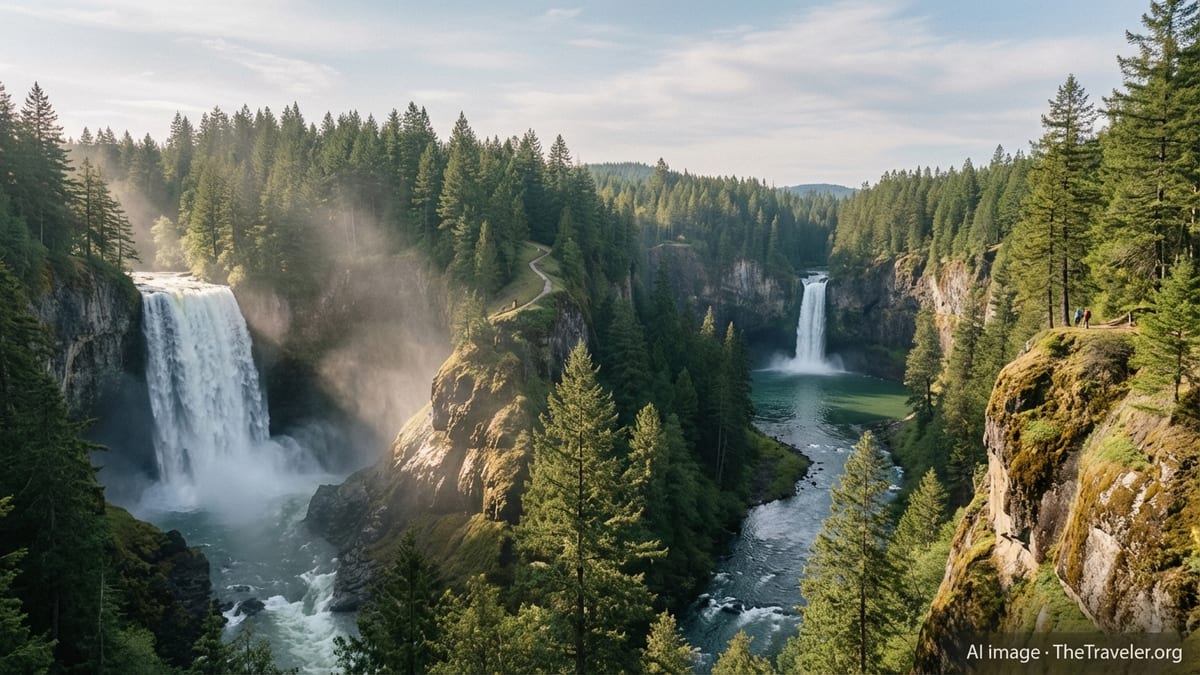
Iguazu Falls: Jungle Immersion Instead of City Neon
If the power of falling water is what draws you to Niagara but you would rather swap casinos for toucans, Iguazu Falls on the border of Argentina and Brazil offers a striking contrast. Instead of a built-up promenade, Iguazu is wrapped in subtropical rainforest alive with butterflies, coatis, and the hum of insects. Trails thread through the forest to overlooks where hundreds of individual cataracts crash into a horseshoe-shaped gorge, with spray rising high above the canopy.
The scale here is very different from Niagara. Rather than one main curtain, Iguazu is a complex system of roughly 275 separate falls spread across nearly 3 kilometers. The most famous section, known as the Devil’s Throat, is a narrow chasm where a torrent of brown-green water drops into mist so thick that railings and visitors vanish in seconds. Walkways on both the Argentine and Brazilian sides bring you close enough to feel continuous vibration underfoot and see rainbows form in the spray.
For travelers, the experience is more about nature than nightlife. Park infrastructure is well developed, with boardwalks, small trains on the Argentine side, and boat trips that nose into the base of certain cascades, but once you step away from the main viewpoints you quickly find quieter paths where howler monkeys and bird calls replace traffic noise. This makes Iguazu a strong choice for visitors who were intrigued by the drama of Niagara but want to spend their days in a national park rather than a built-up resort town.
Reaching Iguazu is more involved than driving to the US–Canada border, and that is part of its appeal. Most itineraries include flights via Buenos Aires or São Paulo, followed by a short hop to Puerto Iguazú or Foz do Iguaçu. This extra effort helps keep the area feeling like a destination rather than a roadside stop, and it pairs naturally with a broader South America trip that might include wine regions, coastal cities, or the Brazilian Pantanal.
Victoria Falls: Big Skies and African Adventure
Travelers who are drawn to Niagara for its sheer power often find Victoria Falls in southern Africa even more compelling. Here the Zambezi River plunges into a narrow chasm between Zambia and Zimbabwe, creating what is frequently described as the largest curtain of falling water in the world. In peak flow months around April, spray can rise hundreds of meters into the air and drift far across the surrounding landscape, giving rise to the local name “The Smoke That Thunders.”
The atmosphere could not be more different from the busy streets near Niagara. Instead of high-rise hotels lining the rim, you approach Victoria Falls through a belt of protected rainforest filled with birds, vervet monkeys, and the constant roar of water. The small nearby hubs of Victoria Falls town in Zimbabwe and Livingstone in Zambia feel like compact adventure bases rather than big resort cities, with lodges tucked along the river and outfitters offering everything from sunset cruises to whitewater rafting.
One of the most appealing differences is how the falls change with the seasons. During the wet months from roughly November to April the Zambezi swells and visibility near some viewpoints can be reduced to a white wall of mist, soaking visitors in minutes. By contrast, dry-season conditions from about June to October reveal sculpted basalt cliffs and individual streams of water that are normally hidden behind spray. In the lowest water weeks certain high-adrenaline activities, such as guided swims near the lip at natural rock pools, may be possible, while game viewing in nearby parks improves as animals concentrate along the river.
As an alternative to Niagara, Victoria Falls is less about quick snapshots and more about layering experiences. You might pair a morning walk along the knife-edge trails with an evening river cruise where hippos surface in the shallows, or follow a few days at the falls with a safari in national parks such as Hwange or Chobe. The overall pace feels slower and more expansive, rewarding travelers who want dramatic water but also crave dark, star-filled skies and the sound of distant lions rather than traffic at night.
Plitvice Lakes National Park: Calm Cascades and Forest Trails
Not everyone who skips Niagara is looking for something bigger. Some travelers would prefer to trade thundering cataracts and boat horns for a quieter landscape of turquoise pools and mossy steps of water. Plitvice Lakes National Park in central Croatia offers that gentler style of water-focused escape. Instead of a single massive drop, the park is famous for its chain of terraced lakes connected by dozens of small cascades and veil-like falls.
Wooden boardwalks wind just above the surface of the water, and in many places you can watch fish gliding below while a curtain of white water slides over travertine ledges beside you. The surrounding beech and fir forests add a strong seasonal element: fresh green in spring, deep shade in summer, and fiery colors in autumn. The sounds are soft and constant rather than explosive, a continuous murmur that creates a very different emotional register from Niagara’s roar.
For visitors who associate Niagara with tour buses and short visits, Plitvice encourages longer, more contemplative days. Routes through the park are marked by color and length, and even the shorter loops have plenty of quiet corners where you can linger to photograph reflections or simply listen to the water. Motorized noise is limited; small electric boats and park shuttles help connect trailheads, but much of the experience is on foot, often without seeing infrastructure beyond the paths themselves.
The park has become popular in recent years, and timed entry systems and daily caps are increasingly used to protect the fragile environment, so advance planning is important. Even with those controls, Plitvice maintains a softer, more natural feel than Niagara’s urban edge. It is particularly appealing for travelers linking it with other European stops, as it lies within driving distance of the Adriatic coast, medieval towns, and wine regions, allowing waterfall walks to be one element of a broader cultural trip.
Norway’s Fjord Waterfalls: Water, Cliffs, and Quiet Villages
If your idea of a perfect water-focused trip includes long views, crisp air, and small villages rather than big attractions, the waterfalls of Norway’s fjords provide a compelling alternative. Instead of standing at railings peering into a gorge, you glide between near-vertical rock walls carved by glaciers, watching countless ribbons of water tumble from high ledges into dark, mirror-like inlets.
Iconic sites such as Geirangerfjord and Nærøyfjord are often described as natural amphitheaters of rock and water. Here waterfalls like Seven Sisters or Suitor appear and disappear in the mist as boats trace a calm path between cliffs. The falls themselves are not always as voluminous as Niagara, especially in late summer, but their setting is spectacular. Snowfields and high plateaus feed seasonal torrents in spring and early summer, while lingering patches of snow and cool evenings give even midyear trips a crisp, almost alpine feeling.
The human environment around these fjords also contrasts sharply with Niagara’s entertainment district. Small ports and villages offer modest clusters of wooden houses, simple cafes, and trailheads that climb quickly into the surrounding hills. Instead of neon lights, evenings revolve around long twilight, reflections on the water, and the slow arrival of low clouds curling over ridges. Ferries and local boats double as both transportation and sightseeing platforms, and many travelers choose to combine day cruises with short hikes to balcony-like viewpoints high above the fjords.
Norway’s fjord country works especially well for visitors who value landscape over attractions. Journeys here often include scenic rail segments, road trips along serpentine passes, and stays in traditional guesthouses that emphasize closeness to nature. For someone who considered Niagara primarily as a tick-box sight, the fjords offer a chance to build an entire itinerary around the interplay of waterfalls, mountains, and sea, with fewer crowds once you step away from the most photographed viewpoints.
Columbia River Gorge: Road-Trip Friendly and Less Commercial
For North American travelers who like the accessibility of Niagara but want an atmosphere that feels less like a resort strip, the Columbia River Gorge on the border of Oregon and Washington is a compelling alternative. This deep canyon carved by the Columbia River is lined with dozens of waterfalls that drop from forested cliffs, many within a short drive of Portland. The best-known, Multnomah Falls, plunges in two stages beside a stone bridge and lodge, but the gorge is filled with other cascades often reached by short, shaded hikes.
The character of the area is notably different from Niagara’s concentrated development. While there are popular viewpoints and parking lots do fill at peak times, the gorge spreads activity out along a long stretch of river. Once you leave the interstate or historic highway and set out on trails, you quickly move into mossy forests where the main sounds are wind and water instead of traffic. Routes range from easy strolls to more demanding climbs that bring you above the falls for views across the river to volcanic peaks in the distance.
As a road-trip destination, the gorge has strong advantages. It is straightforward to combine waterfall hikes with wine tasting in nearby valleys, fruit-picking in small farming communities, or time in Portland’s neighborhoods. The overall feel is more independent and outdoors-focused than Niagara’s cluster of attractions. Instead of a single boat tour as the signature experience, you might build a trip around a mix of scenic drives, picnics by smaller falls, and side excursions to high viewpoints or kite-surfing beaches.
Weather in the gorge changes quickly, and conditions can vary from misty forests on the western end to sun-drenched grasslands further east on the same day. This variety adds interest but also calls for flexible packing. Even so, for travelers who want big canyon views and a string of waterfalls without the carnival atmosphere some associate with Niagara, the Columbia River Gorge delivers a fresher, more open-ended experience.
Iceland’s South Coast: Elemental Landscapes at the Edge of the Atlantic
Those who seek a destination that feels truly different from Niagara in almost every respect often find it on Iceland’s south coast. Instead of a temperate river gorge bordered by highways and high-rises, you are driving across open lava fields, black sand plains, and farm-dotted valleys with waterfalls tumbling from vertical sea cliffs and ancient volcanic escarpments.
Well-known falls such as Seljalandsfoss and Skógafoss have become icons of Icelandic tourism. At Seljalandsfoss, a narrow ribbon of water drops into a shallow pool and a path curls behind the cascade, offering a view framed entirely by a moving curtain of spray. At Skógafoss, a thick block of water plunges from a green-topped cliff into a gravel basin frequented by sea birds and photographers. Both are easily reached from the main Ring Road, creating a waterfall experience that is accessible but still feels far removed from urban life.
What differentiates Iceland from Niagara even more, however, is the broader setting. Beyond these headline falls, the south coast features glacier tongues, iceberg-filled lagoons, offshore sea stacks, and black sand beaches scoured by Atlantic waves. The same storms that feed the rivers also shape the coastline, and changing light creates dramatically different moods within a single day. Travelers comfortable with variable weather can see waterfalls sparkling in sun one morning and shrouded in low cloud the next, each version offering its own atmosphere.
Infrastructure along the south coast has been expanding, with new accommodations and services in many small towns, but the landscape still dominates. Even in peak season it is usually possible to step away from crowded parking areas and find quieter corners, especially if you are willing to walk a little farther from the road or explore at off-peak hours. For those who found Niagara too busy or too polished, Iceland’s raw, weather-shaped scenery offers a refreshing reset.
The Takeaway
Niagara Falls has anchored North American travel dreams for generations, and for many visitors it still delivers a memorable rush of mist and light. Yet the world is full of waterfalls, gorges, and water-shaped landscapes that offer very different moods. Some, like Iguazu and Victoria Falls, match or exceed Niagara’s drama while surrounding visitors with jungle or savanna instead of streets and towers. Others, from Croatia’s terraced lakes to Norway’s fjord streams, trade spectacle for serenity and extended time on the trail.
Choosing an alternative to Niagara is ultimately about deciding what kind of experience you want around the water itself. If you prefer immersion in national parks, look toward Iguazu or Plitvice. If the idea of combining a major waterfall with wildlife and big skies appeals, Victoria Falls stands out. Those who want a road-trip style journey laced with many smaller falls might gravitate to the Columbia River Gorge or Iceland’s varied south coast. In each case, the water is only the beginning of a wider story that includes local culture, climate, scenery, and pace of travel.
Looking beyond Niagara can also be a practical decision. Spreading your visit across park trails, quiet villages, or long stretches of coast often leads to fewer crowds, more varied activities, and a greater sense of connection with the place you are visiting. Whatever alternative you choose, approaching it with curiosity rather than comparison allows the destination to define itself on its own terms, turning a search for “something different from Niagara” into a journey that feels wholly original.
FAQ
Q1. Are these alternatives to Niagara Falls suitable for first-time international travelers?
Yes, most of these destinations are well set up for visitors, but comfort levels vary. Iguazu and Plitvice have clear park infrastructure and frequent tours, while Victoria Falls and Iceland’s south coast require more independent planning and comfort with longer travel days.
Q2. Which alternative offers the most nature and the least commercialization?
Travelers usually find Plitvice Lakes, Norway’s fjords, and parts of Iceland’s south coast the least commercial, especially outside peak summer. These areas focus on trails and scenery rather than built-up entertainment districts.
Q3. Is Iguazu Falls more crowded than Niagara Falls?
Iguazu can be busy in high season and on holidays, but its trail network and multiple viewpoints help disperse people. Compared with Niagara’s compact viewing area and urban edge, Iguazu generally feels more like a national park than a city attraction.
Q4. When is the best time to visit Victoria Falls for a strong flow without completely obscured views?
Transitional months around May and June often balance high water levels with improving visibility. Conditions vary by year, so checking recent reports before booking is important.
Q5. Can I visit Plitvice Lakes on a day trip from the Croatian coast?
Yes, many visitors come on organized day trips from coastal cities, but staying at least one night nearby allows you to experience the park at quieter early morning or late afternoon hours.
Q6. Do I need a car to explore the Columbia River Gorge?
Having a car or joining small-group tours makes exploring the gorge’s many trailheads and viewpoints much easier. Limited transit exists, but it does not reach all waterfall hikes.
Q7. How challenging are hikes around Norway’s fjord waterfalls?
Difficulty ranges widely. Some viewpoints are a short walk from ferry docks, while others involve steep climbs on rocky trails. Visitors can choose options that match their fitness and comfort with uneven terrain.
Q8. Is Iceland’s south coast safe to drive in winter?
Winter driving is possible but demanding. Roads can be icy, winds strong, and daylight short. Those without experience in such conditions often prefer guided tours or travel in late spring and summer.
Q9. Which destination is best for combining waterfalls with wildlife watching?
Victoria Falls pairs naturally with safaris in nearby national parks rich in elephants and other big game. Iguazu also offers good birdlife and rainforest species, though large mammals are more elusive.
Q10. How should I choose between these alternatives if I have limited time?
Start with your priorities. For maximum drama, consider Iguazu or Victoria Falls. For quieter walks and easy pairing with European cities, look at Plitvice or Norway. For road-trip variety and striking landscapes, the Columbia River Gorge or Iceland’s south coast are strong choices.