

Staying in Mouraria places you in one of Lisbon’s most atmospheric quarters, a district of steep alleyways, tiled facades, migrant-run eateries and Fado taverns just below São Jorge Castle. It is more lived-in and less polished than neighboring Baixa and Alfama, which is precisely what draws many travelers here.
Choosing the right corner of Mouraria, and the right type of accommodation, can mean the difference between an immersive, memorable stay and a frustrating one, especially as the area rapidly evolves. This guide breaks down the best micro-areas within and around Mouraria, the character of each, and the local hotels, guesthouses and apartments that work well for different types of visitors.
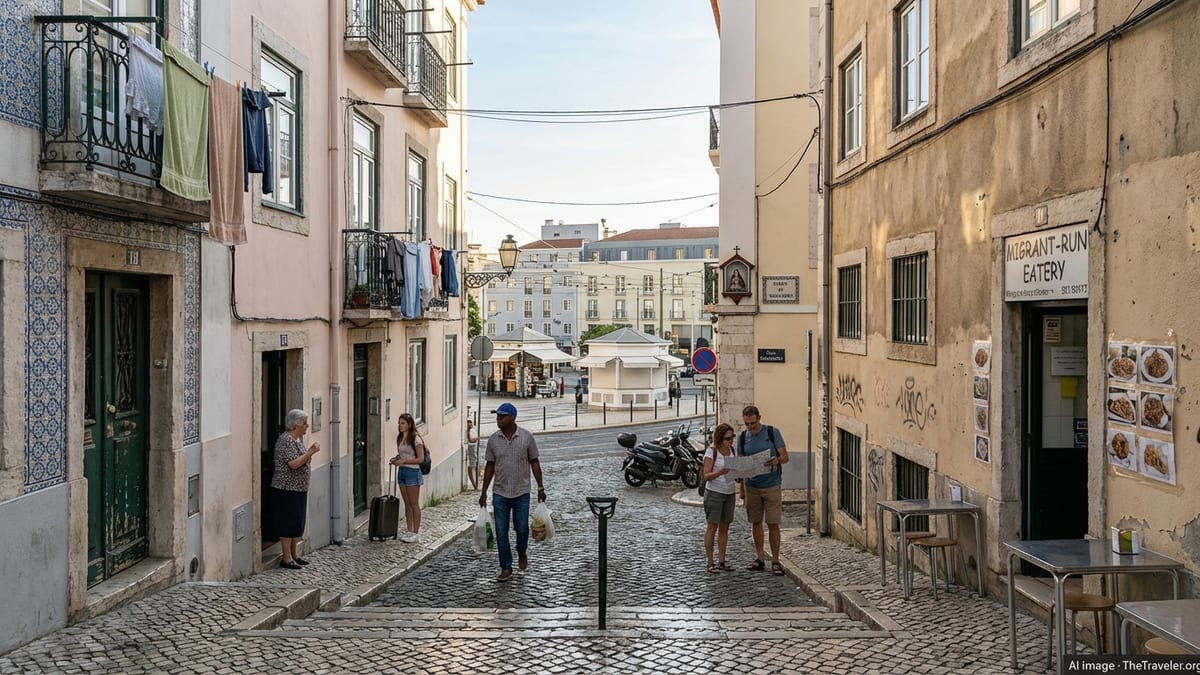
Understanding Mouraria’s Character and Layout
Mouraria sits just north of Lisbon’s central Baixa district, anchored by the broad square of Martim Moniz at its lower edge and rising sharply toward the castle. Historically the neighborhood of Lisbon’s Moorish community, it has long been associated with working-class life, immigration and cultural mixing. Today, you will hear Cape Verdean Creole, Bengali and Brazilian Portuguese alongside European Portuguese as you navigate its lanes. This diversity is reflected in its food scene, with tiny places serving curries, African stews and late-night grills next to traditional tabernas.
The terrain is important to understand before you book. Streets such as Rua do Capelão, Rua dos Lagares and the staircases climbing toward the castle are steep and often cobbled. If you have heavy luggage, mobility issues or simply dislike hills, you will want to base yourself closer to Martim Moniz or just outside Mouraria’s upper ridges, where streets broaden and level out slightly. Within the inner lanes, some taxis refuse to drive right up to the door, which can be charmingly old world or inconvenient, depending on your expectations.
Mouraria’s atmosphere changes markedly from day to night. Daytime sees local markets, elderly residents chatting on doorsteps and families going about errands. As evening falls, narrow alleys become quieter, and while many travelers enjoy the sense of urban grit, others find the lack of lighting and the occasional group hanging around doorways unsettling. Reports from long-term residents and digital nomads suggest that while the area is not uniformly dangerous, there are pockets that feel rough, especially late at night, and you will want to choose accommodation on busier streets or squares rather than deep in back alleys.
Finally, Mouraria does not have the polished inventory of big-name hotels that you find along Avenida da Liberdade or down in Baixa. Accommodation leans toward boutique hotels in renovated townhouses, small serviced apartment buildings and independent guesthouses. This is ideal if you prefer character and local flavor, less so if you want a high-rise with multiple elevators, conference facilities and a full-service spa. Being honest about your comfort level with an urban, lived-in environment is crucial before you decide that Mouraria is the neighborhood for you.
Martim Moniz and Lower Mouraria: Best for First-Timers
The area around Praça do Martim Moniz works well for travelers visiting Lisbon for the first time who want easy transport connections but still crave a sense of local life. The large square marks Mouraria’s southern edge, just a few minutes’ walk from Baixa, with tram and metro links that make airport transfers and day trips straightforward. It is a busy, often chaotic space lined with casual eateries and informal stalls, and it provides one of the most convenient bases for exploring both Mouraria and the city center on foot.
Accommodation here ranges from contemporary hotels on or near the square to compact apartments tucked into side streets. Properties close to the main plaza benefit from better lighting and foot traffic at night than the steeper streets further up the hill. This makes them a safer bet for solo travelers or anyone arriving late in the evening. Rooms facing inward courtyards can also shield you from the sometimes relentless noise of traffic and weekend events on the square.
Travelers who value straightforward navigation will appreciate that from Martim Moniz you can walk downhill to downtown or uphill into the more intimate parts of Mouraria without depending heavily on taxis. If you want to explore late-night bars in Bairro Alto or Cais do Sodré, the metro and tram lines linking Martim Moniz to Rossio and beyond are another major advantage. It is a good compromise between authenticity and practicality, especially if you are in Lisbon for only a few days and do not want to battle with confusing street layouts every time you step outside.
This lower section of Mouraria is also well placed for sightseeing. You can be at Rossio Square in under ten minutes, at the cathedral and Alfama viewpoints within twenty, and at the castle either on foot via the lanes or by catching a tuk-tuk or taxi from Baixa. For travelers who want to pack a lot into a short stay, this saves time and energy. If you choose a modern hotel near Martim Moniz, expect efficient but fairly compact rooms and a vibe that leans more functional than atmospheric, which some guests find a fair trade for convenience.
Upper Lanes and Castle Slopes: For Immersive Old-Lisbon Atmosphere
Climbing up from Martim Moniz into the heart of Mouraria, you enter a denser, more intimate world of staircases, shrines to Fado singers and laundry fluttering from wrought-iron balconies. This upper zone, edging toward the castle walls, is where you will find some of the neighborhood’s most atmospheric short-term rentals and small-scale guesthouses. Staying here can feel like inhabiting a film set of Old Lisbon, with quiet mornings broken only by church bells and the occasional scooter echoing off the tiles.
However, this part of Mouraria is not for everyone. Steep gradients are unavoidable, and many streets are pedestrian only. Older buildings may lack elevators, meaning you could be carrying luggage up several flights of narrow stairs. Soundproofing varies widely. Nighttime can be surprisingly noisy, with conversations drifting up from alleys and the odd impromptu gathering under your window. Light sleepers and those with limited mobility should weigh these factors carefully when choosing an upper Mouraria stay.
Security perceptions in these lanes are mixed. Some travelers describe an authentic, neighborly feel and encounter nothing more troubling than lively street life. Others, particularly solo visitors returning home after midnight, report feeling uncomfortable in dimly lit areas where foot traffic is sparse. The best strategy is to opt for a property on a staircase or lane that connects two busier streets rather than one that dead-ends in a remote courtyard. Reading recent guest feedback can help you gauge how guests have experienced the surroundings at night.
For travelers who prioritize atmosphere and photography over hotel-style services, upper Mouraria can be very rewarding. The views across the tiled roofs toward the river are superb from many upper-floor terraces. Small guesthouses often serve homemade breakfasts and can point you toward local Fado venues that draw more Lisboetas than tourists. This is the zone to choose if you want to feel embedded in the city’s daily rhythms and are comfortable trading some convenience and polish for character.
Intendente and Anjos: Trendy Fringe for Design Hotels and Apartments
While technically sitting just beyond traditional Mouraria, the neighboring areas of Intendente and Anjos have become a popular choice for travelers who want to be within walking distance of Mouraria’s alleys without staying right in the thick of them. Centered on Largo do Intendente and stretching along Avenida Almirante Reis, this district mixes historic buildings with a youthful, slightly bohemian edge. Street art, creative bars and multicultural eateries have turned formerly neglected corners into some of Lisbon’s most talked-about meeting points.
Accommodation in Intendente and Anjos skews toward stylish apartments and boutique hotels carved out of 19th century buildings. Renovations here often add modern lifts, improved insulation and air conditioning, details that are not guaranteed in the older heart of Mouraria. Some buildings are split between long-term residents and short-term stays, which creates a more balanced feel than streets composed entirely of tourist rentals. If you enjoy feeling part of a residential neighborhood while still having access to cafes and natural wine bars at your doorstep, this area is compelling.
The transport advantage around Intendente is significant. The Intendente metro station on the Green Line places you a few stops from Baixa and Cais do Sodré, while bus routes run along Almirante Reis toward the riverfront and Parque das Nações. This makes it easy to explore widely without relying on ride-hailing services. Walking from Intendente downhill into Mouraria takes around ten to fifteen minutes, depending on your exact starting point, and offers a fascinating cross-section of daily Lisbon life along the way.
Intendente and Anjos suit travelers who may be wary of the narrowest lanes but still want grit and creativity rather than the polished feel of the central shopping avenues. You can return at night along a well-lit arterial road, with plenty of people on the sidewalks, which many solo travelers find reassuring. At the same time, it remains a mixed area, with social housing blocks and nightlife noise in certain pockets. As with Mouraria itself, picking the right micro-location and building matters more than chasing a specific street name.
Safety, Noise and Practical Considerations
Assessing safety in Mouraria and its fringes requires nuance. It is an inner-city district with its share of petty crime, visible street-level drug dealing and occasional confrontations, particularly around certain plazas and in poorly lit corners late at night. Long-term residents and recent expats often remark that crime statistics alone do not capture the feeling of insecurity some visitors experience, especially if they are unfamiliar with dense urban environments. That said, thousands of travelers stay in and around Mouraria each year without serious incident, especially those who stick to busier streets and basic urban common sense.
The key considerations are arrival times, your comfort after dark and the composition of your travel group. If you expect to arrive with luggage after 22:00, choosing a property close to Martim Moniz, Intendente, or another main thoroughfare is a wise move. Families with children, older travelers and those who simply prefer not to navigate dim backstreets may be happier in the fringe zones around Mouraria, using daylight hours to explore its heart. Solo travelers confident in cities may feel perfectly at ease in more tucked-away streets but should still plan routes that avoid isolated staircases at very late hours.
Noise is the other practical challenge. Mouraria’s beauty lies in its density and lived-in character, but that means sounds carry. You may hear neighbors talking, televisions through thin walls and early-morning deliveries on cobbles. In certain hotspots, late-night music and gatherings can continue into the small hours. If you are sensitive to noise, prioritize accommodation with double-glazed windows and interior-facing rooms, and be prepared to use earplugs. In contrast, more modern structures in Intendente or along main avenues are better insulated, though they may trade some charm for peace and quiet.
Finally, think about stairs and luggage. Lisbon’s historic quarters are rarely friendly to oversized suitcases. In Mouraria, narrow stairwells and a lack of elevators are common. If you have mobility concerns or simply want to avoid wrestling bags up multiple flights, seek out properties that explicitly mention elevator access or are located on lower floors. You should also verify check-in procedures, as many smaller guesthouses and apartments rely on key codes or self-check-in systems rather than 24-hour staffed receptions, which can affect how secure and supported you feel when you arrive.
Choosing the Right Type of Accommodation
Mouraria and its surroundings offer three main types of stays: boutique hotels, traditional guesthouses and serviced apartments. Each aligns with different travel styles and expectations. Boutique hotels, often in townhouses near Martim Moniz or on the fringe with Intendente, cater to travelers seeking a blend of design, comfort and light services, such as breakfast rooms and daily housekeeping. Rooms in these properties tend to be compact but well thought out, with modern bathrooms and often a nod to Lisbon’s tiled heritage in the decor.
Traditional guesthouses, sometimes family-run, offer a more personal touch. You may be greeted by the owner, share breakfast in a small dining room and receive tailored recommendations for local Fado shows and family restaurants. These properties are common deeper inside Mouraria’s lanes. They can be charming, but facilities vary widely. Some have been carefully renovated with solid Wi-Fi and good soundproofing, while others feel more rustic. Travelers who appreciate character and do not mind smaller rooms or older furniture often enjoy this style of stay.
Serviced apartments and short-term rentals are increasingly prevalent in the area, particularly in Intendente and Anjos, but also on the edges of Mouraria itself. These suits longer stays or travelers who prefer self-catering, extra space and the ability to do laundry. Apartments are especially popular among digital nomads and families. However, they typically come with lighter services, such as weekly cleaning instead of daily, and you will be more responsible for managing small issues yourself. Reading recent reviews helps ensure that advertised amenities like air conditioning, heating and kitchen equipment meet your expectations.
When deciding which type of accommodation to book, consider your daily rhythm. If you plan to be out exploring from morning until late and only need a comfortable, reasonably quiet place to sleep, a simple but well-located boutique hotel near Martim Moniz might be ideal. If you imagine slow mornings on a balcony and evenings cooking local produce, a serviced apartment on the fringe of Mouraria or in Intendente could be a better fit. Those who seek deeper local interaction and do not require hotel-grade polish may gravitate naturally toward the traditional guesthouse model within the upper lanes.
The Takeaway
Staying in or around Mouraria can deliver one of the most memorable Lisbon experiences, but it is not a one-size-fits-all choice. This is a neighborhood in flux, where historic alleys, migrant-run businesses and creative newcomers intermingle. The same qualities that make it fascinating also bring challenges, from uneven safety perceptions at night to noise and steep staircases. Your enjoyment here depends less on a single famous street and more on matching your comfort levels with the specific micro-area and building you choose.
If you are a first-time visitor seeking convenience, Martim Moniz and lower Mouraria offer the best compromise between transport, walkability and atmosphere. For travelers who prize authenticity and do not mind hills or the occasional nocturnal soundtrack, the upper lanes near the castle provide a powerful sense of place. Those who prefer slightly wider streets, design-forward stays and easy metro access might be happiest in Intendente or Anjos, using daylight hours to dive into Mouraria’s historic heart.
Before booking, be realistic about your priorities. Think about how you feel in dense urban districts after dark, how deeply you value quiet versus street life and whether you are ready to handle stairs and cobbles with luggage. Take time to study recent guest impressions of specific properties and their immediate surroundings rather than relying solely on neighborhood labels. With the right combination of location and accommodation style, Mouraria can be an inspiring base that connects you both to Lisbon’s Moorish past and to its vibrant, multicultural present.
Ultimately, choosing where to stay in Mouraria is about embracing the city as it is, not as a postcard. If you come prepared for its textures and tempo, you will discover a quarter that rewards curiosity, invites lingering conversations over late suppers and offers vantage points across the city that feel earned with every step climbed.
FAQ
Q1. Is Mouraria a good area to stay in for first-time visitors to Lisbon?
Mouraria can be an excellent base for first-time visitors who want an authentic, multicultural neighborhood within walking distance of Baixa and the main sights. However, it is steeper, noisier and rougher around the edges than more polished central districts. First-timers who value convenience and are comfortable in lively urban environments tend to enjoy it, especially near Martim Moniz. Those seeking a quieter, more conventional city-break setting may prefer staying just outside Mouraria, for example in Baixa or along Avenida da Liberdade, and exploring Mouraria by day.
Q2. How safe is Mouraria at night?
Mouraria is a dense inner-city area where perceptions of safety vary. During the day, most visitors feel comfortable in the main streets and squares. At night, some laneways can feel poorly lit and deserted, and there are pockets with visible street-level drug activity or groups lingering, which some travelers find intimidating. Violent incidents involving tourists are not common, but petty theft can occur. If you stay here, choose accommodation on or near well-trafficked streets, plan your routes for returning after dark and take standard big-city precautions, such as avoiding isolated shortcuts very late at night.
Q3. Is Mouraria suitable for families with children?
Mouraria can be challenging for families due to steep hills, cobblestones, narrow sidewalks and noise, particularly in the upper lanes. That said, families who are experienced city travelers and choose a well-located property on the neighborhood’s edges, such as near Martim Moniz or in nearby Intendente, often manage well and appreciate the easy access to public transport and central sights. Families with strollers, very young children or mobility concerns may be more comfortable in flatter, more open districts like Baixa or Parque das Nações, using tram or metro to visit Mouraria for shorter excursions.
Q4. What is the best area of Mouraria for solo travelers?
Solo travelers who enjoy urban energy generally feel most at ease staying near Martim Moniz or on the fringe around Intendente and Anjos. These areas have brighter lighting, more people on the streets and better access to metro stations, making late returns simpler. The quieter upper lanes closer to the castle are wonderfully atmospheric but can feel isolated at night, especially if you are returning alone. Regardless of where you stay, it is wise to arrive in daylight on your first day, familiarize yourself with main routes and choose a property with consistently positive, recent feedback from solo guests.
Q5. Are there many hotel options in Mouraria itself?
Mouraria has fewer conventional hotels than Lisbon’s main avenues or riverfront zones. Accommodation leans toward small boutique hotels, guesthouses and serviced apartments rather than large chains. You will find more choice in the blocks around Martim Moniz and on the edges of Mouraria, as well as in the neighboring areas of Intendente and Anjos. Travelers looking specifically for international-brand hotels with extensive facilities may need to stay slightly further away and visit Mouraria during the day, while those open to independent properties will find a growing number of characterful options within walking distance.
Q6. How convenient is Mouraria for public transport and airport access?
Mouraria is well connected by public transport, especially near its southern and eastern edges. Martim Moniz and Intendente both sit on the Green Line of the metro, providing quick links to Baixa, Cais do Sodré and connections to the airport via transfer at Alameda or other interchange stations. Several bus routes run through the area, and iconic trams pass nearby. From central Mouraria addresses deeper in the lanes, you may need to walk ten minutes or so to reach the nearest metro stop, which is manageable for most visitors but worth factoring in if you are carrying luggage or traveling with children.
Q7. What should I expect regarding noise levels in Mouraria accommodations?
Noise is a realistic consideration in Mouraria. Sounds of everyday life, such as conversations in stairwells, televisions, scooters and deliveries on cobblestones, carry easily through the dense building fabric. In certain streets, especially those with bars or informal gatherings, noise can last late into the night. Modern accommodations with double glazing and interior-facing rooms mitigate this, while older guesthouses may be more exposed. Light sleepers should prioritize recent reviews mentioning quiet rooms, consider bringing earplugs and, if possible, request an upper-floor room facing a courtyard rather than a busy alley.
Q8. Are the hills and streets of Mouraria difficult to manage with luggage?
Yes, the topography can be demanding. Many streets in Mouraria are steep, narrow and paved with small, slippery cobblestones. Some buildings are accessible only via staircases or pedestrian alleys, and elevators are not guaranteed in older houses. If you travel with heavy luggage or have mobility issues, consider staying closer to Martim Moniz, along main roads or in the neighboring districts of Intendente and Anjos, where access is generally easier. When booking, pay attention to whether the property mentions elevator access and avoid listings that explicitly highlight challenging climbs if that is a concern.
Q9. Is Mouraria a good base for exploring other parts of Lisbon?
Mouraria is centrally located and works well as a base for exploring much of Lisbon on foot and by public transport. You can reach Baixa, Rossio and the cathedral in a short walk, and the metro from Martim Moniz or Intendente takes you quickly to other districts, including Cais do Sodré for riverfront nightlife and connections to Belém. However, for some outlying areas, such as the modern waterfront of Parque das Nações, you will still face a longer metro ride or bus journey. For most visitors planning a classic Lisbon itinerary, Mouraria’s location is highly convenient.
Q10. How far in advance should I book accommodation in Mouraria?
Lisbon remains a popular city-break destination throughout much of the year, with particular peaks in spring, early summer and autumn. In and around Mouraria, where the accommodation stock is smaller and more fragmented than in some other districts, it is advisable to book several months ahead for stays in April, May, June, September and October. For winter visits, there is usually more flexibility, though booking early still secures better rates and room selection. Last-minute deals do appear, but if you have specific needs, such as elevator access or a quiet room, planning ahead is strongly recommended.