


Auto Europe has been in the car rental game since the 1950s, evolving from a niche provider for Americans in Europe into a global broker working with major brands like Avis, Budget, Europcar, Hertz and many regional suppliers in more than 180 countries. Today it functions less as a rental company and more as a powerful intermediary: you search and pay Auto Europe, then pick up your car from a partner rental desk. That setup is not automatically the best choice for every trip, but for some travelers it can unlock very real savings, flexibility and support that are hard to match when you book direct. This guide looks at who actually gets the most value from booking through Auto Europe, with concrete examples of how and when it pays off.
Get the latest updates straight to your inbox!
How Auto Europe Works Behind the Scenes
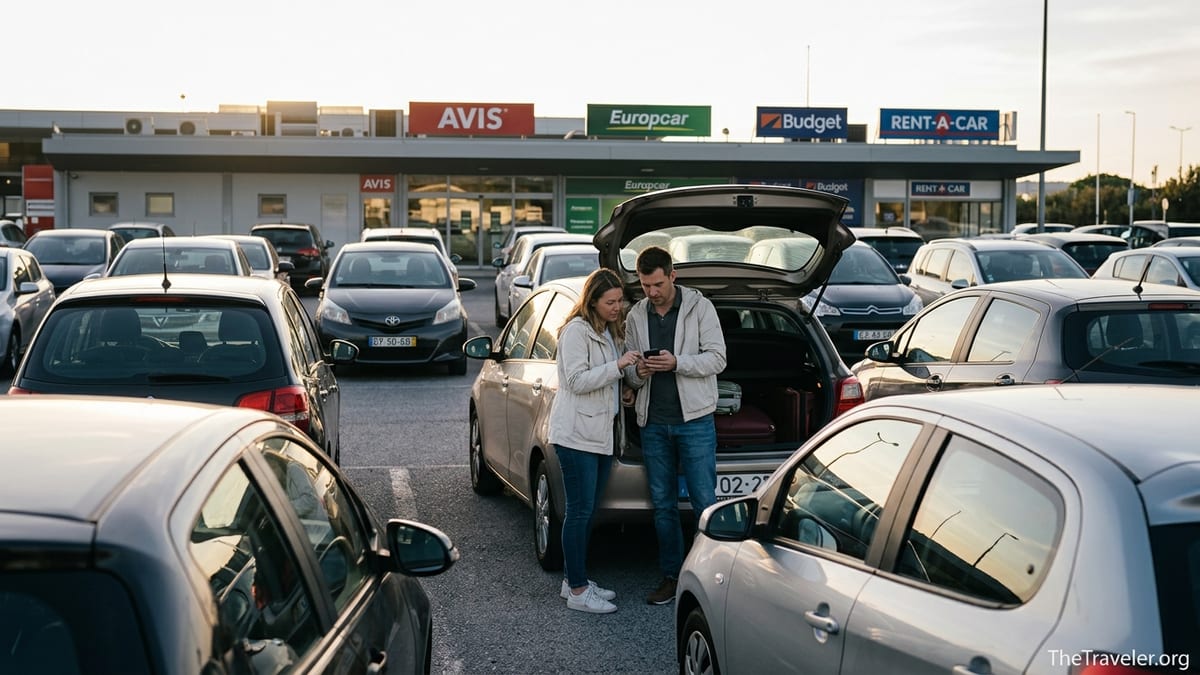
Auto Europe is a broker, not a rental agency. When you search for a car for your Lisbon to Porto road trip, for example, Auto Europe’s system compares live rates from partners like Europcar, Avis, Hertz, Sixt and smaller local firms for those dates and locations. You pay Auto Europe for the rental at the rate you select, receive a voucher, and then sign the final rental agreement with the actual supplier at the counter. Your credit card deposit, fuel policy and inspection all happen with that local partner, while Auto Europe sits in the middle as the pricing platform and customer service backstop.
This broker model gives Auto Europe leverage that most individual travelers do not have. Because it sends a high volume of bookings into big brands and local agencies, it negotiates wholesale rates that are often lower than what you see if you walk up to the same rental desk or search direct on a single brand’s website. In practice, this can mean that a compact car quoted at around 400 euros for a week directly from a global brand in Italy might appear at roughly 280 to 320 euros for a comparable vehicle and insurance package when viewed through Auto Europe, depending on season and demand.
The company also layers on its own policies and support. Many of its rates are cancellable up to a relatively short time before pickup, and Auto Europe promotes a best rate or best price guarantee on numerous country sites. In simple terms, if you find an equivalent offer elsewhere at a lower prepaid price before you pick up the car, you can usually ask them to match it or review your booking. The value of that guarantee depends on how diligently you compare options, but for price-sensitive travelers, it increases the chance that the rate they lock in will be competitive when the trip actually begins.
Crucially, when something goes wrong between you and the local supplier, Auto Europe can act as an intermediary. Travelers have reported instances where incorrect charges or confusion over insurance were disputed through Auto Europe’s support team rather than fighting alone with a foreign branch office. That does not remove all risk, and it does not guarantee a favorable outcome in every dispute, but it adds an extra layer of advocacy that you do not have when you book directly with a single rental brand abroad.
Budget-Conscious Travelers Chasing Lower Daily Rates
The clearest winners with Auto Europe are travelers for whom price is the deciding factor, especially in markets where rental costs vary wildly by channel. In recent months, travelers planning multi-day trips in Italy, France and Spain have reported differences of several hundred euros between direct bookings with major brands and quotes surfaced through brokers like Auto Europe. It is not unusual to see an economy car for a week around 200 to 250 euros on Auto Europe while the same brand’s own site, for identical dates and pickup times, shows closer to 350 to 450 euros once taxes and mandatory fees are added.
Consider a couple planning a nine-day drive from Munich through Austria in late spring. Searching directly with a premium brand’s German website, they might find an automatic compact SUV at about 95 euros per day, totaling around 855 euros before fuel and tolls. Running the same dates and locations through Auto Europe could reveal the same or equivalent class with a partner supplier closer to 65 to 70 euros per day, or roughly 600 to 630 euros for the same period. Even allowing for minor differences in included insurance, that is potentially more than 200 euros saved, enough to cover several nights of midrange accommodation.
Budget-focused travelers also benefit from how Auto Europe displays its offers. Instead of bouncing among multiple brand sites to check inclusions like collision damage waiver, theft protection, and local airport surcharges, you can compare several packages side by side. For example, a solo traveler flying into Lisbon in August might see a bare-bones offer at around 25 euros per day with a high deductible, a mid-tier offer at roughly 35 euros per day with reduced excess, and a more inclusive package at about 45 euros per day. By viewing all three in one place and reading the coverage descriptions in a single format, it is easier to calculate whether the cheaper daily rate is worth the added financial risk.
Where Auto Europe becomes less valuable to extreme bargain hunters is when rock-bottom headline prices are paired with restrictive policies. A deeply discounted offer may be non-refundable or may exclude key protections that the same traveler would otherwise add at the counter for a higher price. Very low rates can also involve small local agencies whose service standards or claims record are less familiar to you. For strictly budget-conscious travelers, the platform is still useful, but the best value comes from balancing total trip cost with a realistic assessment of risk rather than just chasing the lowest number on the screen.
Complex Itineraries and One-Way Trips Across Borders
Another group that tends to gain outsized value from Auto Europe is travelers stitching together complex road trips, especially one-way or cross-border routes. One of the trickiest aspects of renting in Europe is the one-way drop fee: the surcharge for returning your car in a different city or country. That fee can be modest for a Paris to Nice route, but grow steeply for something like Barcelona to Rome or Berlin to Zagreb. Auto Europe’s search results often make these fees clearer by listing them in total price breakdowns or noting when they are payable locally at pickup, which helps you compare routing choices before you commit.
Imagine a family planning a two-week summer drive from Milan through the Dolomites into Austria and finishing in Munich. Booking direct with one brand’s Italian site might show a mid-size wagon at approximately 1,100 euros plus a one-way fee of several hundred euros, a figure sometimes only revealed in the fine print. Searching the same route through Auto Europe, they might uncover an alternate supplier quoting about 900 euros with a smaller one-way charge, or a reshaped itinerary where picking up in Verona instead of Milan reduces both local airport fees and the drop surcharge. In practical terms, simply toggling pickup and drop-off cities within Auto Europe’s interface can reveal combinations that shave hundreds of euros off a complicated trip.
Crossing borders is another area where a broker’s overview is helpful. Restrictions on taking a car from Western into Eastern Europe still exist with many suppliers, or involve extra insurance. Rather than reading every brand’s terms individually, a traveler planning to drive from Prague into Croatia could use Auto Europe to filter for suppliers that explicitly allow that route. The results might show that certain small agencies in Prague are cheaper but forbid entering non-EU Balkan states, while a major brand, priced slightly higher, permits the whole circuit. In that scenario, the real value for the traveler is not just the daily rate, but the reduction in risk of being turned back at a border or facing punitive fees for breaking territorial rules buried in fine print.
Even for simpler one-way itineraries, such as picking up in Porto and dropping in Lisbon, Auto Europe can visually compare the total cost of doing the trip north to south versus south to north. Because one-way fees are not symmetrical, you might find that starting the rental in Porto and dropping in Lisbon yields a combined price 60 or 80 euros lower than reversing the direction with the same supplier. Having this laid out on a single platform makes it easier to adjust flights and hotel bookings early, when changes are still cheap.
Travelers Who Value Flexible Cancellation and Support
Frequent travelers who book months in advance often say they use Auto Europe primarily for its flexibility. Many of its offers, especially the standard rather than ultra-discounted rates, can be cancelled without penalty up to a certain timeframe before pickup. For a traveler planning a multi-country trip whose flights or dates might still shift, this can be safer than locking in a non-refundable bargain directly with a single supplier.
Take a couple organizing a three-week October loop through Portugal and Spain. In February they spot an attractive rate of about 28 euros per day for an economy car, including basic theft and collision coverage, on Auto Europe. They book it with free cancellation. Months later, a flight schedule change forces them to adjust their arrival airport and push the trip by three days. With a flexible Auto Europe booking, they can cancel the original voucher and rebook new dates and pickup locations, often at still-competitive rates, without worrying about losing hundreds of euros to non-refundable direct offers that no longer match the new itinerary.
Support is another area where Auto Europe can create value, particularly for travelers unfamiliar with local language or consumer rules. If a rental desk in a small Italian airport insists on additional insurance that you do not believe is required, having a broker’s voucher and a customer service line you can call from the counter can shift that dynamic. Some travelers report successfully contacting Auto Europe from pickup desks when faced with surprise fees or attempts to upsell and having agents clarify what is or is not mandatory based on the booked rate and country rules. While this does not remove the need to read your voucher and rental contract carefully, the sense of having a third party on your side can be reassuring, especially late at night after a long flight.
Post-trip, Auto Europe’s value shows up in billing disputes. If you return your car in Lyon only to see a later charge for alleged damage you do not recognize, you can request that Auto Europe obtain documentation from the supplier and review whether the charges align with the rental contract and local practices. Outcomes vary and some travelers still find these processes slow or frustrating, but at least there is an established channel and a company with ongoing commercial leverage over the rental brand advocating in your case. Without a broker, you are often dealing directly with a single branch or regional office that has little incentive to spend time re-examining your complaint.
Drivers With Special Situations: Young, Urban and Long-Term Renters
Certain types of renters with special circumstances often find Auto Europe particularly useful. Young drivers, typically under 25, face steep surcharges from many European rental agencies. Through Auto Europe, they can quickly see which suppliers permit younger renters, at what minimum age, and what daily young driver fees apply in each country. A 23-year-old planning a July road trip in Croatia, for example, may discover that one international brand is willing to rent to them with a daily surcharge of roughly 8 to 12 euros, while another requires drivers to be at least 25 and will not rent at all under that age. Having this information surfaced in a clear comparison saves wasted time starting bookings that would later be refused.
Urban travelers who do not own a car at home also gain value when they need short but repeated rentals. Someone based in New York who visits Europe for work several times a year might habitually book cars at airports like Frankfurt, Amsterdam or Madrid through Auto Europe because it becomes a single point of contact across brands and countries. Over time, they learn which suppliers handle fuel policies consistently, which ones accept debit cards with additional checks, and which airport desks involve the fastest pickup procedures, all while continuing to access brokered pricing rather than juggling different loyalty programs for each brand.
For longer-term rentals, such as month-long stays or extended remote-work trips, Auto Europe sometimes displays rates that are more competitive than booking four separate one-week rentals directly. A digital nomad spending six weeks in southern France might find that a 30-day compact rental on Auto Europe works out to around 18 to 22 euros per day in the shoulder season, compared with short weekly rentals pricing closer to 28 to 35 euros per day when booked individually. While terms like mileage caps and insurance excess must be checked carefully, this kind of overview enables travelers to see whether one long booking or several shorter ones will yield better value.
Travelers with specific needs, such as automatic transmission, child seats, or permission to enter particular countries, also benefit from Auto Europe’s filters. For instance, a family planning to drive from Zurich into northern Italy in winter can not only search for an automatic SUV, but also scan the terms to confirm that snow chains or winter tires are standard for the dates and regions concerned. In some Alpine areas, booking through a broker that highlights mandatory equipment rules can help you avoid on-the-spot purchases or fines that may arise if you arrive unprepared.
When Booking Direct Might Still Beat Auto Europe
Auto Europe is powerful, but it is not a magic key for every scenario. There are times when booking directly with a rental brand, or using another kind of provider entirely, is the smarter move. One case is when you have elite status with a particular chain that consistently delivers upgrades, priority service or fee waivers. For a traveler who rents frequently with one global brand and enjoys executive-level perks, the extra 10 or 15 percent they might pay compared to a brokered rate could be offset by guaranteed automatic vehicles, fast-track counters and generous upgrade policies that a third-party booking would not honor.
Another situation is last-minute rentals where availability is tight. If you are standing in an airport in high season, needing a car within the hour, rental desks occasionally offer walk-up deals that are not reflected quickly on broker systems. Conversely, some desks might have cars remaining that do not show online at all. In these edge cases, a quick comparison on Auto Europe is still wise, but you may find that walking to two or three counters in person yields either similar prices or greater flexibility on the exact vehicles available.
Specialty vehicles can also be a reason to book direct. While Auto Europe lists many categories, including luxury and sports cars, motorhomes and long-term leases on certain brands in Europe, the most unique or rare models are often managed directly by local agencies or manufacturer-backed programs. If you are set on renting a specific high-performance car in Germany or an unusual campervan configuration in Iceland, booking straight with a dedicated provider may give you more precise control over the vehicle and its included equipment than going through a broad broker.
Finally, some travelers prioritise having a single contract only with the rental company they will physically meet and pay. For them, eliminating the broker layer reduces perceived complexity if something goes wrong. If you fall into this group, Auto Europe can still be helpful as a research tool: you might use it to understand market pricing and available classes for your route, then choose to book a similar rate directly with your preferred supplier, accepting that you may pay a modest premium in exchange for that simplicity.
The Takeaway
The travelers who get the most value from booking through Auto Europe are those who either need clear, comparative visibility on complex rentals or who want to squeeze as much savings as possible from straightforward trips without sacrificing flexibility. Budget-minded couples driving from Italy into Austria, families planning long one-way journeys across several countries, and younger renters navigating patchy age rules all routinely find that Auto Europe surfaces combinations of suppliers, fees and inclusions that would take hours to assemble manually.
At the same time, the platform’s best price guarantees, flexible cancellation options on many rates and added customer support layer can meaningfully shift the balance of risk on foreign rentals, particularly when you are dealing in another language or under unfamiliar road and consumer laws. It is not a perfect solution and it does not remove the need to read every voucher and rental contract carefully, but it gives you an advocate and a clearer view of the true cost of your trip before you step up to the counter.
If you are a frequent renter with strong loyalty benefits at a single brand, a last-minute traveler willing to negotiate in person, or someone chasing very specific vehicle types, booking direct can still be your best bet. For everyone else, especially those planning Europe-focused road trips from North America, using Auto Europe as a starting point, and often as the final booking channel, is likely to deliver tangible financial and practical benefits that outweigh the small extra layer of complexity involved.
FAQ
Q1. Is Auto Europe a rental car company or just a broker?
Auto Europe is a broker. You search and pay through Auto Europe, but the actual rental contract, vehicle, deposit and inspection are handled by a partner company such as Avis, Europcar, Hertz or a vetted local agency at pickup.
Q2. When does booking through Auto Europe usually save the most money?
Travelers typically see the biggest savings on multi-day or weekly rentals in Europe, particularly in high-demand destinations like Italy, Portugal and Spain, and on itineraries that involve one-way drop-offs where fees vary widely between suppliers.
Q3. Does Auto Europe always include the one-way drop fee in the price?
Not always. In many cases the one-way fee is included in the total shown, but some offers specify that the surcharge must be paid locally at the counter. The voucher and rate details will indicate which applies, so it is important to read them before confirming.
Q4. Can I cancel an Auto Europe booking for free?
Many, but not all, Auto Europe rates can be cancelled without penalty up to a certain time before pickup, while deeply discounted or special offers may be partially or fully non-refundable. The cancellation conditions for your exact offer are listed during booking and on your confirmation.
Q5. Is Auto Europe a good option for young drivers under 25?
Often yes. Auto Europe makes it easier for younger renters to see which suppliers will rent to them, what surcharges apply, and whether extra conditions exist. This can save time and prevent starting bookings with companies that would later refuse the rental at the counter.
Q6. What happens if there is a problem with the rental car or charges?
Your direct contract is with the local rental company, but Auto Europe’s customer service can help mediate disputes, request documentation, and clarify what was included in your booked rate. While it cannot guarantee outcomes, it adds an extra layer of support compared with booking alone.
Q7. Are Auto Europe’s prices always better than booking directly?
No. Auto Europe often has very competitive or lower prices thanks to wholesale agreements, but there are situations, such as when you have strong loyalty status with a brand or during certain promotions, where booking directly can match or beat brokered rates.
Q8. Is it safe to rely on smaller local suppliers shown on Auto Europe?
Many local partners provide solid value and service, but standards vary. Before booking, read recent customer reviews, check what insurance is included, and weigh whether the savings justify any extra risk compared with a familiar global brand.
Q9. Can I use Auto Europe for cross-border trips in Europe?
Yes, but you must verify each supplier’s rules. Some allow cars to cross borders freely within the Schengen area, while others restrict entry to certain countries or require additional insurance. Auto Europe’s rate details and filters help you identify which offers match your planned route.
Q10. Who should probably book direct instead of through Auto Europe?
Travelers who consistently rent with one brand and rely on elite benefits, those needing rare specialty vehicles, and some last-minute renters who can negotiate in person at airport desks may find more value booking direct, while still using Auto Europe for initial price research.