


More news on this day
Disney Cruise Line is accelerating its global expansion as new deployments in Singapore and an emerging Japan-based operation position the brand on a fast track toward a 13-ship fleet within the next decade.
Get the latest news straight to your inbox!
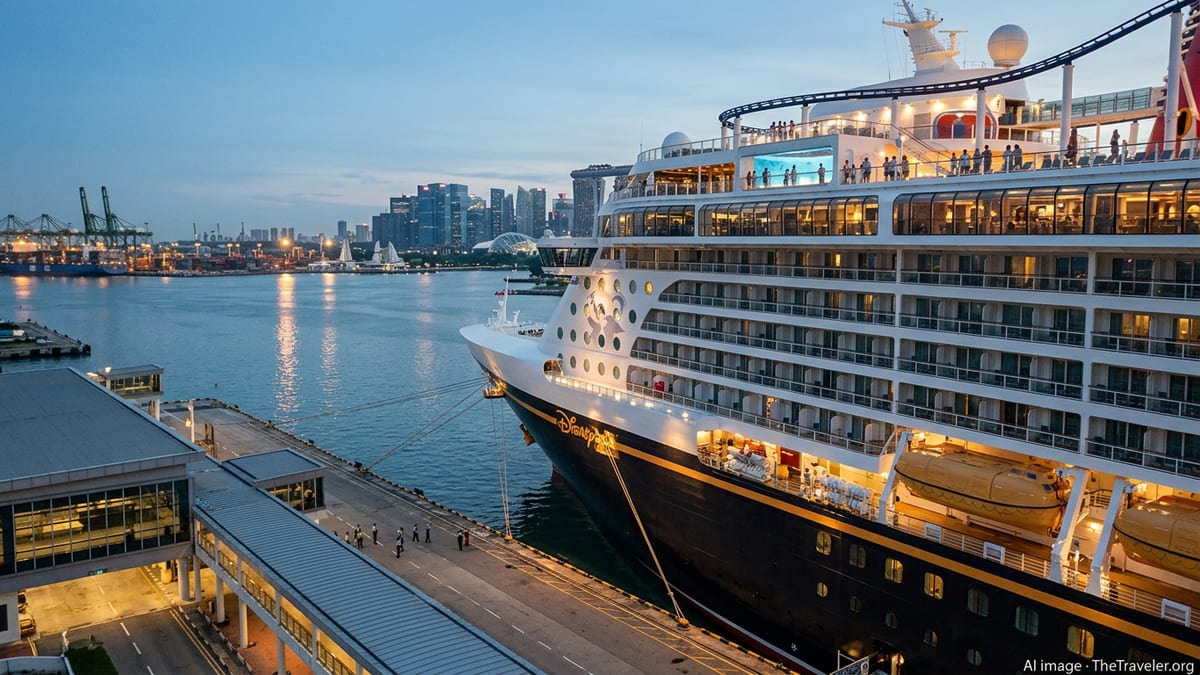
Singapore’s Disney Adventure Marks First Permanent Asian Homeport
The centerpiece of Disney’s current expansion in Asia is the Disney Adventure, the company’s first ship to be homeported year-round on the continent. Publicly available information from Disney indicates that the vessel will sail from Singapore for at least five years, signaling a long-term commitment to the city-state as a strategic hub for Southeast Asian itineraries.
The Disney Adventure is based on the unfinished Global Dream, acquired and extensively reimagined for Disney by the Meyer Group. Shipyard disclosures indicate that Meyer Wismar was established to complete and convert the vessel, incorporating updated environmental technologies and new family-focused entertainment spaces tailored to Disney branding.
Reports highlight Singapore’s Marina Bay Cruise Centre as the ship’s base, with regional routes expected to focus on short-break cruises attractive to both local travelers and international visitors combining sailings with theme park stays in Hong Kong or Shanghai. Analysts note that this model allows Disney to tap rapidly growing cruise demand across Asia while introducing the brand to new first-time cruisers.
Industry commentary also points to the strategic timing of the deployment. After a prolonged regional pause in cruising, Singapore has emerged as a preferred homeport for major lines, and Disney’s presence is seen as reinforcing the city’s role as a gateway to destinations across Malaysia, Thailand, and Indonesia.
Japan Partnership Deepens Through Oriental Land Cruise Initiative
While Singapore delivers an immediate presence at sea in Asia, Japan is emerging as Disney’s next major growth pillar. Documents from Oriental Land Co., the operator of Tokyo Disney Resort, describe a dedicated subsidiary, Oriental Land Cruise Co., established to develop and operate Japan-based Disney cruises under a long-term licensing arrangement.
Management materials from Oriental Land outline plans for a Disney-branded cruise ship to be registered in Japan and designed around the successful Disney Wish platform. The new vessel is expected to feature Disney storytelling and entertainment concepts adapted specifically for the Japanese market, while still aligning with the broader Disney Cruise Line brand.
Investor communications indicate that Oriental Land holds rights to operate the Japan-based cruises and will pay royalties to Disney tied to net sales over a contract period that can extend for several decades. The ship is projected to become the largest cruise vessel ever registered in Japan, signaling a substantial investment in the country’s outbound and domestic cruise market.
Reports suggest that a Japan-focused ship will enable itineraries from ports such as Tokyo Bay, opening access to destinations around Japan and potentially regional routes that complement Disney’s existing theme park presence in Tokyo, Shanghai, and Hong Kong.
Newbuild Orders Drive Toward a 13-Ship Global Fleet
Beyond the headline-making moves in Singapore and Japan, Disney Cruise Line is quietly assembling one of the most ambitious order books in the contemporary cruise sector. Coverage of Disney’s fleet plans notes that the company has committed to a series of newbuilds with Meyer Werft in Germany, including a fourth Wish-class ship and a trio of slightly smaller vessels built on a new platform.
Industry reporting indicates that these ships, combined with the large Disney Adventure and the Japan-based Wish-class vessel operated by Oriental Land, will bring the extended Disney cruise fleet to 13 ships by around 2031. This represents a significant scale-up from Disney’s origins as a niche, four-ship family brand focused primarily on the Caribbean and select European routes.
Shipyard disclosures describe a phased delivery schedule starting in the latter part of this decade, with the fourth Wish-class ship followed by the new smaller-class vessels through 2031. The design of the smaller ships is expected to prioritize fuel efficiency and flexibility, enabling Disney to access ports and regions that are not practical for its larger tonnage.
Observers note that the resulting fleet mix will give Disney a more balanced footprint across North America, Europe, and Asia, with the capacity to adjust homeports and itineraries in response to regional demand while maintaining the company’s emphasis on family-oriented cruising.
Strategic Focus on Asia’s Growing Family Cruise Market
Market analysis of the wider cruise industry suggests that Asia, and particularly markets like Singapore and Japan, offers strong long-term growth potential for family and multigenerational vacations at sea. Rising middle-class incomes, expanding air connectivity, and increasing familiarity with cruise products are all cited as drivers behind the region’s appeal.
In this context, Disney’s expansion is widely interpreted as a bid to secure an early advantage in a market that remains less saturated than North America or Western Europe. A dedicated ship in Singapore gives the brand a platform to introduce shorter, more accessible itineraries tailored to regional travel patterns, while the planned Japan-based ship aims to capture local demand with culturally attuned onboard experiences.
Publicly available commentary from cruise analysts indicates that Disney’s strong intellectual property library and family entertainment positioning provide a distinct edge as Asian consumers seek differentiated vacation options. At the same time, partnerships with established local players such as Oriental Land reduce execution risk by leveraging existing knowledge of regional guest expectations.
The strategic emphasis on Asia also dovetails with Disney’s broader experiences portfolio, where theme parks, resorts, and cruises are increasingly integrated. Bundled offerings that combine time at sea with visits to Disney parks in Tokyo, Hong Kong, or Shanghai are expected to become a key pillar of future product development once the full fleet expansion is realized.
Environmental and Design Trends Shape the Next Generation of Ships
Alongside geographic expansion, Disney’s new ships are being framed within broader industry efforts to improve environmental performance. Meyer Werft and Meyer Wismar materials describe the incorporation of advanced energy-efficient systems and cleaner propulsion technologies on upcoming Disney vessels, in line with tightening international regulations and rising consumer expectations.
The Disney Adventure conversion, in particular, has drawn attention for the scale of its transformation from the original Global Dream hull into a fully fledged Disney-branded ship. Reports indicate that substantial redesign work has been dedicated to reconfiguring guest spaces, adding themed neighborhoods, and updating technical systems to meet Disney Cruise Line’s operational standards.
Future ships, including the fourth Wish-class vessel and the planned smaller-class trio, are expected to build on lessons learned from recent deliveries such as Disney Wish and Disney Treasure. Industry coverage points to evolving design priorities, with more flexible family accommodations, expanded kids’ and teens’ areas, and immersive entertainment venues that can be adapted for different markets, including Asia.
As Disney Cruise Line progresses toward a 13-ship fleet, the combination of regional partnerships, newbuild investments, and updated ship designs suggests a brand preparing for a more globally distributed future. With Singapore sailings underway and preparations in Japan advancing, the company’s next decade at sea is set to look markedly different from its first.