


More news on this day
Record-breaking rainfall in Chiba Prefecture has severely disrupted access to Tokyo’s Narita International Airport, leaving thousands of travelers stranded overnight as rail lines, highways and local roads were inundated or shut down due to severe flooding.
Get the latest news straight to your inbox!
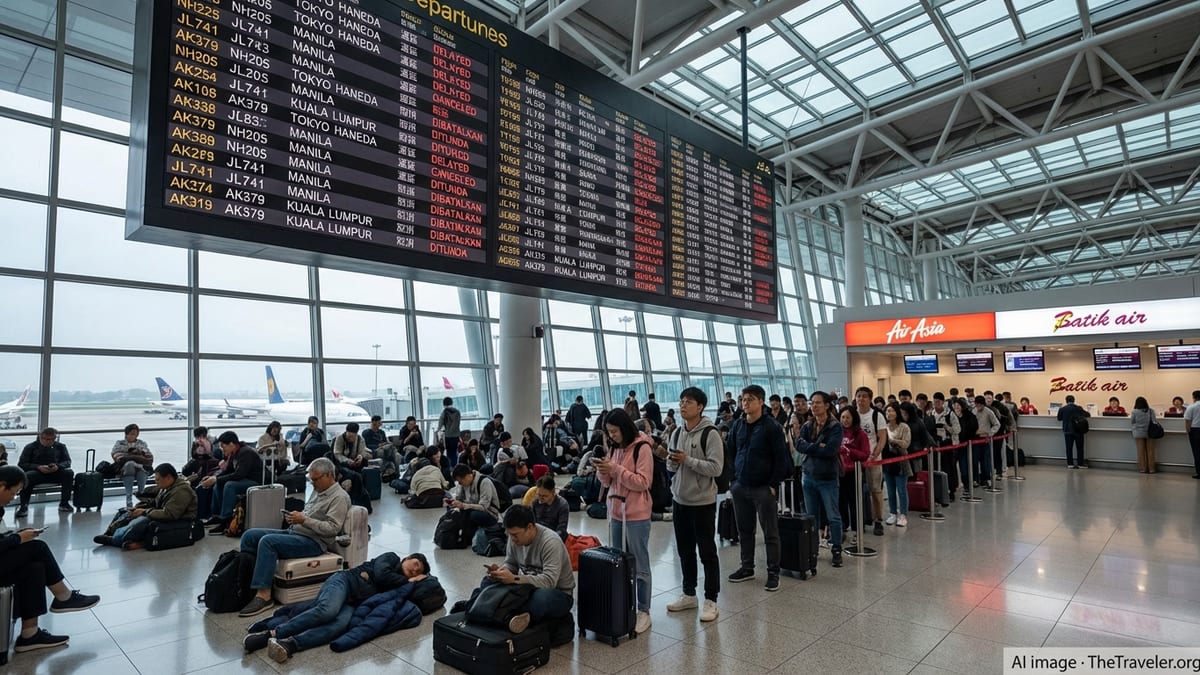
Record Rains Trigger Transport Breakdown Around Narita
Publicly available information from Japanese media and international wire services indicates that eastern Japan was hit on Thursday and Friday by what meteorologists described as record or near record rainfall, centered on Chiba Prefecture, where Narita International Airport is located. Hourly precipitation totals in some districts reportedly matched or exceeded typical monthly averages for August, overwhelming drainage systems and low lying infrastructure.
Floodwater quickly spread across parts of the regional road network, with images and video circulating on social media platforms showing submerged vehicles, waterlogged intersections and emergency crews navigating streets that had turned into rivers. At the same time, rail operators serving the greater Tokyo area implemented emergency suspensions and partial shutdowns on multiple lines because of flooded tracks and the risk of landslides.
Although Narita’s runways and core airport facilities remained largely operational for arriving and departing aircraft, the surrounding transport grid faltered. The result was a growing mismatch between flights still landing at the airport and the sharply reduced options for passengers to leave or reach the terminals, a pattern that has been seen at Narita during past extreme-weather episodes.
Reports from Chiba authorities and national outlets state that at least several deaths and numerous injuries have been linked to the wider flooding and landslides across the prefecture, underlining the severity of the event that is now being described as historic in intensity.
Rail and Highway Closures Leave Thousands Stranded
The most immediate cause of the stranding crisis at Narita has been the collapse of normal surface access. Narita Airport is heavily dependent on high frequency rail links and expressways connecting it to central Tokyo and neighboring prefectures. On Thursday evening and into early Friday, major rail services including sections of the JR Narita Line and the Narita Express experienced prolonged suspensions, while private operators reported sharply reduced or irregular timetables due to track flooding and signaling disruptions.
Passenger accounts posted on travel and local community forums describe trains stopping short of the airport, crowds forming on platforms and in station concourses, and announcements of widespread delays or cancellations. Some travelers reported being advised to seek shelter in stations until weather conditions improved, contributing to large numbers of people stuck not only at Narita’s terminals but also at key interchange hubs across Chiba.
Highway access to the airport was also severely affected. Information shared by road operators and local media indicates that key stretches of expressway leading toward Narita were temporarily closed because of deep standing water, stranded vehicles and safety inspections. In some areas, drivers reportedly abandoned cars in rising floodwaters, complicating recovery efforts and slowing any resumption of traffic.
With both rail and highways disrupted, buses and taxis were quickly overwhelmed. Travelers reported long queues for limited bus departures, rerouted journeys that took double the usual time, and extreme difficulty securing taxis or private-hire vehicles as demand far exceeded the number of vehicles able to navigate partially flooded roads.
Airport Operations Continue but Passenger Flows Snarl
Even as access routes failed, Narita’s basic aviation infrastructure continued to function for much of the episode, according to flight-tracking data and airline statements monitored by Japanese and international media. Many airlines opted to keep services operating, although with increasing delays and a rising number of cancellations and diversions as the disruption to passenger movements became clearer.
Inside the terminals, social media posts and travel forum reports describe scenes of crowded departure halls, makeshift queues stretching into concourse areas and passengers resting on floors or benches after missing flights or being unable to depart the airport. Some airlines reportedly allowed relatively flexible rebooking in response to the extraordinary conditions, while airport retailers and food outlets saw surging demand.
In previous disaster planning documents, Narita’s operator has identified the risk of large numbers of stranded passengers when surface access collapses due to heavy rain or storms. The current episode appears to reflect those scenarios, with thousands of people temporarily unable to leave the airport despite aircraft continuing to arrive and depart. Local coverage indicates that emergency measures, including the provision of basic supplies and extended terminal operating hours, were employed to manage the overnight crowds.
Observers note that while the airport’s runways and air traffic systems demonstrated resilience in the face of intense rainfall, the vulnerability of the wider access network has again emerged as a critical weak point for one of Asia’s key international gateways.
Human Impact on Travelers and Local Communities
Beyond the operational statistics, the flooding around Narita and across Chiba has had a sharp human impact. Families and solo travelers described long, uncertain waits for information, repeated changes to departure times and the stress of watching connecting flights and hotel reservations unravel. Some recounted attempting multiple routes out of the airport only to return when trains or buses were canceled mid journey.
Local communities have also been hit hard. Residential neighborhoods in parts of Chiba experienced significant inundation, with residents relocating to public shelters as water levels rose. Power companies reported tens of thousands of outages at the height of the storm, affecting traffic signals, homes and small businesses. For many people living near key transport corridors serving Narita, the sight of halted trains and motionless expressways has underscored how quickly everyday life can be disrupted by extreme rainfall.
Visitors unfamiliar with Japanese language and disaster protocols faced additional challenges. Online posts highlighted confusion over announcements, limited multilingual signage in some locations and the difficulty of quickly interpreting changing warnings and service alerts. Travel advisers are now emphasizing the importance of monitoring multiple information sources in English and Japanese, and of building extra time into airport journeys during the summer and autumn rainy seasons.
Despite the hardship, reports from public broadcasters and local newspapers have also noted instances of travelers sharing food, charging devices for one another and helping with translation, adding small measures of solidarity to an otherwise chaotic situation.
Climate Change, Preparedness and Future Travel to Japan
Meteorologists and climate researchers cited in recent coverage point to the Narita stranding crisis as part of a broader pattern of intensifying rainfall events in Japan. A warming atmosphere is capable of holding more moisture, which can translate into shorter but more extreme downpours. Japan’s national climate assessments have already recorded an increase in the frequency of heavy rain incidents over past decades, and projections suggest further growth in coming years.
For Narita and other major transport hubs, this trend raises pressing questions about resilience. The airport’s operator has, in recent years, launched adaptation initiatives that include strengthening drainage, revising emergency plans for stranded passengers and coordinating more closely with rail and road operators. The current disruption is likely to become a new test case for those measures and may prompt additional investment in flood resistant access routes and real time passenger information systems.
For international travelers planning trips to Japan, the event serves as a reminder that extreme weather can quickly upend carefully laid itineraries. Travel analysts are advising visitors to build flexible buffers into arrival and departure days, consider alternative airports such as Haneda where appropriate, and maintain contingency funds in case of unexpected overnight stays or rerouting costs.
As operations around Narita gradually normalize, attention is turning to recovery in the hardest hit neighborhoods of Chiba and to policy debates over how Japan’s transport infrastructure can keep pace with a climate that is delivering more frequent and more intense rainfall than in the past.