


Airport lounges have gone mainstream. What used to be a quiet perk for road‑warrior executives is now splashed across credit card ads and travel blogs, often headlined by one familiar name: Priority Pass. With more than a thousand lounges and airport restaurants in its network worldwide, it promises free food, drinks and calmer spaces before your flight. Yet for many travelers, it ends up as a little-used extra that quietly renews on their credit card statement. Deciding whether Priority Pass is worth it depends heavily on how, where and how often you fly. This guide breaks down who should embrace it and who should skip it, using real numbers and real-world scenarios from today’s airport landscape.
Get the latest updates straight to your inbox!
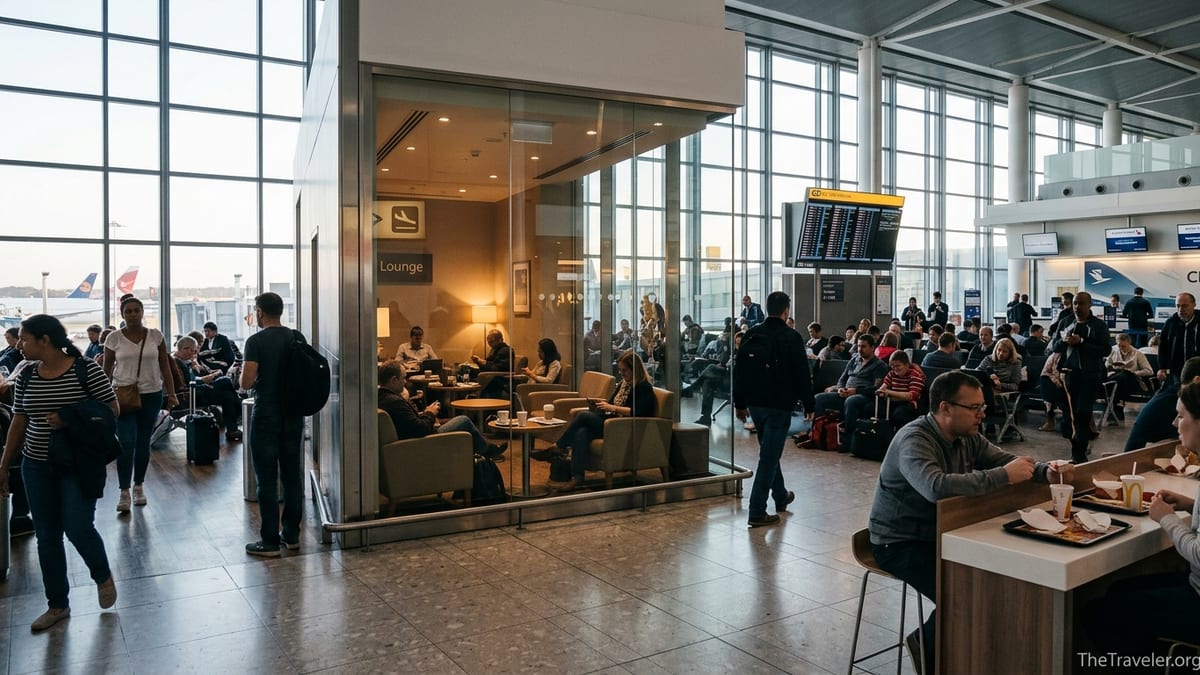
What Priority Pass Actually Offers in 2026
Priority Pass is an independent airport lounge membership program owned by the Collinson Group. As of 2025, it markets access to more than 1,800 lounges and “experiences” in over 700 airports worldwide, from flagship hubs like London Heathrow and Singapore Changi to smaller regional airports in Europe and Asia. In practice, that means everything from classic contract lounges with self-serve buffets to partnered airport restaurants that apply a spending credit to your bill.
When you buy membership directly, there are three main tiers in US dollars. Standard costs about 99 dollars per year and then roughly 35 dollars every time you actually enter a lounge. Standard Plus is about 329 dollars per year and includes 10 free visits, then around 35 dollars per visit after that. Prestige is about 469 dollars per year and includes unlimited self-visits, with guests typically charged around 35 dollars per person. Regional promotions often discount these list prices, such as US campaigns advertising Standard Plus around 260 dollars.
Many US travelers never pay those fees out of pocket because Priority Pass is bundled as a “Select” membership on premium credit cards. A Chase Sapphire Reserve, for example, currently includes unlimited Priority Pass visits for the cardholder plus two guests at most locations, while an American Express Platinum offers Priority Pass access but notably excludes most partner restaurants. Capital One’s Venture X has also offered Priority Pass, though recent changes are curbing guest access and, on some versions, lounge eligibility for authorized users. The result is a patchwork of slightly different Priority Pass benefits depending on which bank issued your card.
Day to day, using Priority Pass is simple. At an airport like Bangkok Suvarnabhumi, you might find upward of ten participating lounges across different concourses. In smaller US airports, access might mean just one contract lounge or even a single restaurant that offers a per-person credit around 28 to 35 dollars off your meal. How valuable that feels hinges on whether the lounges align with your routes, how crowded they are when you arrive, and how much you would otherwise spend on food and drinks in the terminal.
Who Gets the Most Value: Frequent International Economy Flyers
The classic winner with Priority Pass is the traveler who flies often in economy but not often enough to justify business-class fares or to earn top-tier elite status with one airline. Think of a consultant based in Chicago who takes 15 to 20 international trips a year to Europe and Asia on the cheapest available tickets. She passes through hubs like London Heathrow, Istanbul, Doha and Hong Kong, sometimes with three- or four-hour layovers. Without lounge access, she might easily spend 25 to 40 dollars on each layover just for a simple meal, bottled water and coffee.
For someone at that travel frequency, a Prestige membership in the 469‑dollar range can quickly pay for itself. If she uses a lounge 25 times in a year, the effective cost is under 19 dollars per visit. In exchange she typically gets a seat, Wi‑Fi, a simple hot meal, soft drinks and basic alcohol. On a long connection in Istanbul, that might mean hours in a contract lounge instead of searching for an empty seat at a crowded gate. Add a couple of visits where she uses a Priority Pass restaurant credit worth around 28 to 35 dollars per person at airports like Sydney or Portland, and the savings compared with eating in the main concourse can be even more obvious.
This profile becomes even more compelling when lounge access comes from a card she would hold anyway. A road warrior who already gets strong value from a Chase Sapphire Reserve for its travel protections and flexible points can use its bundled Priority Pass effectively “for free.” If she takes 15 lounge visits annually at airports like LAX, JFK and Frankfurt, it is quite realistic for her to extract several hundred dollars of comfort and food value from a benefit that is essentially an add‑on to a card she needed for other reasons.
Priority Pass also helps regular economy flyers smooth out irregular operations. On a winter day in Denver when snow delays push a connection from two hours to five, stepping into a lounge with power outlets and hot food can dramatically change the tone of the trip. Business travelers who need a quiet table to review a presentation or jump on a quick video call often find that value hard to quantify but very real.
Occasional Travelers: When a Few Visits Still Make Sense
At the other end of the spectrum are occasional travelers who take perhaps two or three trips a year. For them, a full-price Prestige membership almost never makes sense, but that does not automatically mean they should ignore Priority Pass. The middle Standard Plus tier can work for someone expecting between six and ten lounge visits in a year, especially if those visits happen at expensive airports. A family of four traveling once annually on a long-haul journey with two layovers in each direction could hit that number just on one big vacation.
Consider a New York family flying economy to Hawaii via Los Angeles. On the outbound and return, they face two- to three-hour waits at JFK and LAX. Without lounge access, they might easily spend 80 to 120 dollars each time on sandwiches, snacks, drinks and perhaps a couple of glasses of wine. If they instead buy a discounted Standard Plus membership for around 260 to 330 dollars and use Priority Pass lounges four times as a family, each entry quickly offsets what they would have spent in the terminal, even after paying guest fees. The experience is also calmer for kids, which many parents find more valuable than the snacks.
Meanwhile, credit cards that include a limited number of lounge visits can suit infrequent flyers who still want an occasional break from the main concourse. Mid-tier products like the US Bank Altitude Connect commonly offer around four free Priority Pass visits per year, sometimes including partner restaurants. A couple doing one big international trip could use those four visits to cover departures and returns at both ends of the journey, essentially turning the card’s fee into prepaid airport meals.
There is also a niche group of travelers who anchor their decision around specific airports rich in Priority Pass perks. Someone living in Portland, Oregon, who flies domestically a few times per year might extract significant value from a Priority Pass restaurant that offers roughly 28 dollars per person in credit. Two people could effectively turn every pre-flight stop into a no‑cost sit‑down meal. In such cases, even a modest membership or a card with a limited visit allowance can be worth keeping for the guaranteed food and drink alone.
When Priority Pass Disappoints: Crowds, Coverage Gaps and Fine Print
For all its promise, Priority Pass is not magic. Lounge crowding has become a recurring complaint, especially at peak times in US hubs where capacity has not kept pace with the surge in premium credit card holders. At certain contract lounges at airports like Miami or Seattle, it is common for Priority Pass members to see a sign asking them to return in 30 or 60 minutes due to capacity limits. On a rushed connection, those waits can render the benefit useless.
Coverage is another weak spot for some travelers. Priority Pass is strong across many European and Asian airports, with multiple lounges at places like Bangkok Suvarnabhumi and Singapore Changi, but it can feel thin in North America. At Chicago O’Hare, for instance, a traveler on a domestic itinerary in Terminal 1 or 3 may find that the only participating facility is in a different terminal that is not practically accessible without re‑clearing security. In other US airports, the only Priority Pass option may be a single small lounge that closes early or a restaurant located in a terminal you never use.
The details of your membership source also matter. Holders of American Express Platinum cards, for instance, now find that their Priority Pass access generally excludes partner restaurants, which can be one of the most valuable parts of the network in the United States and Australia. Capital One Venture X cardholders have been notified of upcoming restrictions on free guest access at Capital One Lounges and changes to how authorized users can use Priority Pass. These kinds of quiet adjustments can materially affect how much real-world value you receive.
Finally, there is the risk of overpaying for unused benefits. An occasional traveler who buys a 99‑dollar Standard membership directly and then forgets to use it may still face 35‑dollar charges the single time they remember to visit a lounge. If they end up using Priority Pass only once or twice, they may find they paid well over 50 dollars per lounge visit, which could easily exceed the cost of simply buying food in the terminal or, in some airports, purchasing a one-time day pass directly from the lounge.
Who Should Skip Priority Pass Entirely
Certain traveler profiles rarely get full value from Priority Pass. The first group is those who already enjoy strong lounge access via airline status or premium cabins. A United 1K frequent flyer who commonly travels in Polaris business class out of Newark can use United Clubs and Polaris Lounges on most itineraries. Adding a paid Priority Pass membership in that scenario yields diminishing returns because many contract lounges overlap with spaces the traveler can already enter using their boarding pass alone.
Another group that should think twice is the ultra‑infrequent leisure traveler. If you fly once a year for a long weekend, perhaps from Dallas to Cancun, and your airport has limited Priority Pass presence, it is hard to justify an annual fee. In this case, you might be better off buying a one-time day pass directly at the lounge for around 40 to 65 dollars, if offered, or simply putting that money toward a better seat, a checked bag or faster security screening. Unless you are already getting Priority Pass as a fully covered side benefit of a card you would keep anyway, buying it outright for a single trip is rarely a good deal.
Travelers who primarily fly from secondary airports with poor Priority Pass coverage should also tread carefully. Someone based in a smaller US city that only has a single contract lounge open limited hours will not see the same value as a traveler shuttling between Hong Kong, Dubai and Frankfurt. A quick search of the Priority Pass app for your home airport, your most common connection points and your preferred airlines often reveals whether the network overlaps with your real travel life.
Finally, some passengers simply dislike lingering at the airport. If you tend to arrive just before boarding, do not drink alcohol and are happy grabbing a quick snack from a newsstand, the promise of free buffets and bar drinks may not resonate. In that case, it can be more logical to invest in benefits that shorten time at the airport, such as a TSA PreCheck or CLEAR Plus membership, instead of paying for nicer places to wait.
How to Evaluate Priority Pass for Your Own Travel
Before committing to any Priority Pass membership, run a simple back‑of‑the‑envelope calculation. Start with how many one‑way flights you realistically take each year and how many of those involve layovers of more than 90 minutes. If you fly eight times a year with one layover in each direction, you might have roughly 16 opportunities to use a lounge. Now factor in which of those airports actually have Priority Pass facilities in your airline’s terminal at the times you travel. That number usually drops, perhaps to 8 or 10 meaningful chances to visit.
Next, estimate what you typically spend during a layover. If it is 20 dollars for coffee and a sandwich, plus another 10 dollars for a drink, you are at around 30 dollars per stop. Multiply that by your realistic number of lounge opportunities and compare the total to the cost of different Priority Pass tiers. If your potential annual terminal spend is only 150 dollars, a 329 to 469‑dollar membership is unlikely to be good value unless you place a very high premium on comfort and quiet. On the other hand, if your spend would be closer to 400 dollars and you can reliably access lounges, the economics start to tip in Priority Pass’s favor.
Also consider what you already pay for premium credit cards and what those cards offer beyond lounges. A traveler who holds a 550‑ to 695‑dollar annual fee card like Chase Sapphire Reserve or Amex Platinum should first decide if that fee is justified by points earnings, travel credits and insurance protections. If it is, then the included Priority Pass benefit becomes a welcome extra. If not, it may be cheaper to drop down to a mid-tier card that includes a handful of lounge visits or none at all, and then pay for the occasional day pass when truly needed.
Finally, align expectations about the experience itself. Priority Pass lounges range from basic to surprisingly upscale, but most are not five-star hotel lounges. At a busy contract lounge in Los Angeles, you might find crowded seating and limited hot dishes, while at a newer lounge in a hub like Doha you could encounter showers, quiet zones and a richer buffet. Reading a few recent lounge reviews for the airports you actually use is an easy way to avoid disappointment.
The Takeaway
Priority Pass can be a powerful tool for the right traveler: the frequent economy flyer navigating crowded hubs, the family connecting through expensive airports, or the consultant who spends half their year in international terminals. When it lines up with your routes and you obtain it via a card you already value, it can offer meaningful comfort without extra out-of-pocket cost. In those scenarios, lounge visits can feel like free meals, quiet workspaces and a small buffer against the unpredictability of air travel.
Yet it is far from a universal must‑have. If you already fly in premium cabins, have strong airline status or use airports with thin Priority Pass coverage, the membership often duplicates access you already enjoy or goes unused. Likewise, buying a high-tier membership for one or two trips a year almost always overpays for the benefits you receive. The nuances of restaurant exclusions, guest fees and credit card fine print only amplify the risk of disappointment for casual users.
The smartest way to approach Priority Pass is with clear eyes and real numbers. Map your typical routes, count your likely lounge opportunities, tally what you would otherwise spend on airport food and then compare that to membership costs and credit card fees. If the math and your preferences align, Priority Pass can turn anonymous concourses into reliable pockets of calm. If not, you are better off focusing on other upgrades that match how you actually travel.
FAQ
Q1. Is it better to buy Priority Pass directly or get it through a credit card?
For most US-based travelers, getting Priority Pass bundled with a premium credit card is better value than paying the full standalone fee, provided you already use the card’s other benefits enough to justify its annual fee.
Q2. How many lounge visits do I need each year to make Priority Pass worth it?
Value typically starts around eight to ten meaningful visits per year, assuming you would otherwise spend 25 to 35 dollars at the airport each time and can access lounges at the airports you actually use.
Q3. Do Priority Pass memberships always include restaurant credits?
No. Some bank-issued Priority Pass memberships exclude partner restaurants, particularly on certain American Express products, so you should check the terms in your card’s benefit guide before counting on credits.
Q4. Can my family use my Priority Pass when we travel together?
Usually yes, but guest rules vary. Direct memberships often charge around 35 dollars per guest, while some premium cards allow a limited number of free guests per visit and others charge from the first guest.
Q5. What if my home airport does not have a Priority Pass lounge?
If your home airport lacks Priority Pass coverage in the terminal you use most, membership is harder to justify unless you routinely connect through hubs where the network is strong enough to offset the cost.
Q6. Are Priority Pass lounges as good as airline lounges for business-class passengers?
Quality varies. Some Priority Pass lounges rival airline-operated spaces, but many are simpler contract lounges. If you often fly business class with access to flagship airline lounges, Priority Pass may add limited extra value.
Q7. Can I use Priority Pass on arrival instead of departure?
Sometimes. A number of lounges allow arrivals access, but policies differ by airport and operator, so you need to check the individual lounge rules in the Priority Pass app before planning to use it after landing.
Q8. Does Priority Pass guarantee lounge entry when I show my card?
No. Entry is always subject to space, and popular lounges can restrict access during busy periods, so there is no absolute guarantee you will be admitted at a specific time.
Q9. What happens if I forget my physical Priority Pass card?
Most modern Priority Pass memberships include a digital card in the app that lounges can scan, but a few locations still insist on the physical card, so it is wise to carry it on important trips.
Q10. Is Priority Pass a good idea if I mainly care about cutting time in lines?
Not really. Priority Pass focuses on comfort once you are past security. If saving time is your top priority, programs like TSA PreCheck, Global Entry or CLEAR Plus usually provide more direct benefits.