


More news on this day
American Airlines is moving aggressively to premiumize its domestic network, with new plans indicating that premium seating across its narrowbody fleet will climb from roughly one quarter to about 40 percent of total capacity, a shift that would represent a 60 percent jump in the share of higher-yield seats.
Get the latest news straight to your inbox!
Strategic Pivot Toward High-Yield Cabins
The latest outlook on American’s fleet strategy points to a sustained emphasis on premium revenue, with the carrier planning to grow its stock of upgraded seats significantly faster than overall capacity. Investor materials and recent earnings commentary describe premium seat growth running at roughly double the pace of main cabin expansion, reinforcing that higher-yield customers are central to the airline’s long-term economics.
Publicly available presentations indicate that by the end of the decade, premium seats across American’s system are expected to rise far more rapidly than standard economy, particularly on jets serving domestic and short-haul international routes. As that mix shifts, analysts estimate that the narrowbody fleet could see premium seating increase from around 25 percent of total seats today to about 40 percent once current retrofit programs and new deliveries are fully in place.
The move fits a wider industry pattern in North America, where business travelers, frequent flyers and leisure passengers willing to pay for extra space are driving outsized revenue growth. American’s disclosures show that premium customers already generate a disproportionately large share of ticket revenue, giving the carrier a clear incentive to devote more cabin real estate to first class, extra-legroom economy and, on select routes, premium economy products.
For travelers, the practical effect will be more opportunities to book or upgrade into forward-cabin or extra-legroom seats on everyday domestic flights, rather than just on high-profile transcontinental and international services. For American, the strategy aims to stabilize margins in a market where basic economy fares remain highly competitive.
Fleet Orders, Retrofits And The 40 Percent Target
American’s path to lifting narrowbody premium share to about 40 percent combines large aircraft orders with extensive cabin retrofits. A major order announced in 2024 added hundreds of new single-aisle jets from multiple manufacturers, paired with a plan to refresh the interiors of much of the existing narrowbody fleet. Company filings describe this as a continuation of what the carrier has called one of the largest reconfiguration programs in commercial aviation.
According to fleet documentation and public slide decks, American is using forthcoming deliveries of larger narrowbody models, including high-capacity variants of the Boeing 737 and Airbus A321 families, to support a more premium-heavy configuration on domestic and short-haul routes. At the same time, nearly all in-service narrowbody aircraft are slated for updated cabins that carve out additional rows for first class and extra-legroom seating without substantially shrinking the overall number of seats.
Older Airbus A319 and A320 jets are among the first to be reworked, with domestic first class cabins increasing to 12 and 16 seats respectively, up from eight and 12 in prior layouts. On newer A321neo and 737 MAX aircraft, cabin plans described in industry reports point to even larger premium sections, with more first class rows and an expanded Main Cabin Extra zone.
When taken across the full narrowbody portfolio, these changes collectively push the premium proportion of seats into the 40 percent range. That figure aggregates traditional first class with extra-legroom economy, both of which command higher average fares or upgrade fees than standard main cabin seating.
Balancing Comfort, Density And Revenue
American’s premium expansion is not simply about adding more spacious seats; it is also about optimizing how those seats are distributed across the cabin. In recent years, the carrier, like several peers, has faced scrutiny over tight pitch and high-density configurations in some sections of its fleet. The new plan attempts to reconcile those concerns with the financial imperatives of a large network airline.
Cabin diagrams and retrofit summaries show that American is adjusting layouts to protect or enhance legroom in premium areas while making more modest changes in standard economy. In many cases, one or two rows of regular seats are being converted to premium categories, yet the total seat count remains broadly similar because of galley and lavatory relocations and revised seat geometries.
Airline financial data suggest this tradeoff can be lucrative. Premium cabins tend to deliver higher revenue per available seat mile than the main cabin, and yields on first class, premium economy and extra-legroom products often remain resilient even when basic fares come under pressure. By raising the share of premium seats from about one in four to roughly two in five, American is positioning itself to capture more of that robust demand.
From a passenger perspective, the shift could mean greater availability of upgrades for loyalty program members, along with more chances for corporate travelers to secure forward-cabin seating on routes that previously offered only limited premium capacity. However, travelers focused purely on the lowest fares may encounter fewer rows with traditional economy legroom as more space is reserved for higher-priced options.
Implications For Domestic And Short-Haul Networks
The premium push is expected to be most visible on American’s domestic and short-haul international network, particularly at the carrier’s large hubs such as Dallas Fort Worth, Charlotte, Miami, Phoenix and Washington National. Network planning materials show that these airports handle a substantial share of connecting business travel and high-frequency flyers, making them natural candidates for more premium-heavy aircraft.
Industry coverage points out that American intends to use larger, premium-rich narrowbodies on key trunk routes between major metropolitan areas, as well as on higher-demand leisure markets where customers have shown a willingness to pay for added comfort. This includes transcontinental flights, high-frequency business corridors and select services into the Caribbean and Latin America.
Regional partners will also be affected by the change in cabin mix. With mainline narrowbodies carrying a higher proportion of premium seating, some flying that was previously handled by regional jets may migrate to larger aircraft to better align with demand for first class and extra-legroom options. Scope-clause limits in pilot contracts mean that growth at the regional level is constrained, reinforcing the case for upgauging to mainline jets with more differentiated cabins.
Over time, the result is likely to be a domestic network where more of American’s departures feature a prominent premium footprint, supporting both corporate contracts and revenue from frequent travelers using loyalty currency for upgrades. That, in turn, could influence competitors to respond with their own cabin reconfigurations to defend share in key markets.
What Travelers Can Expect Onboard
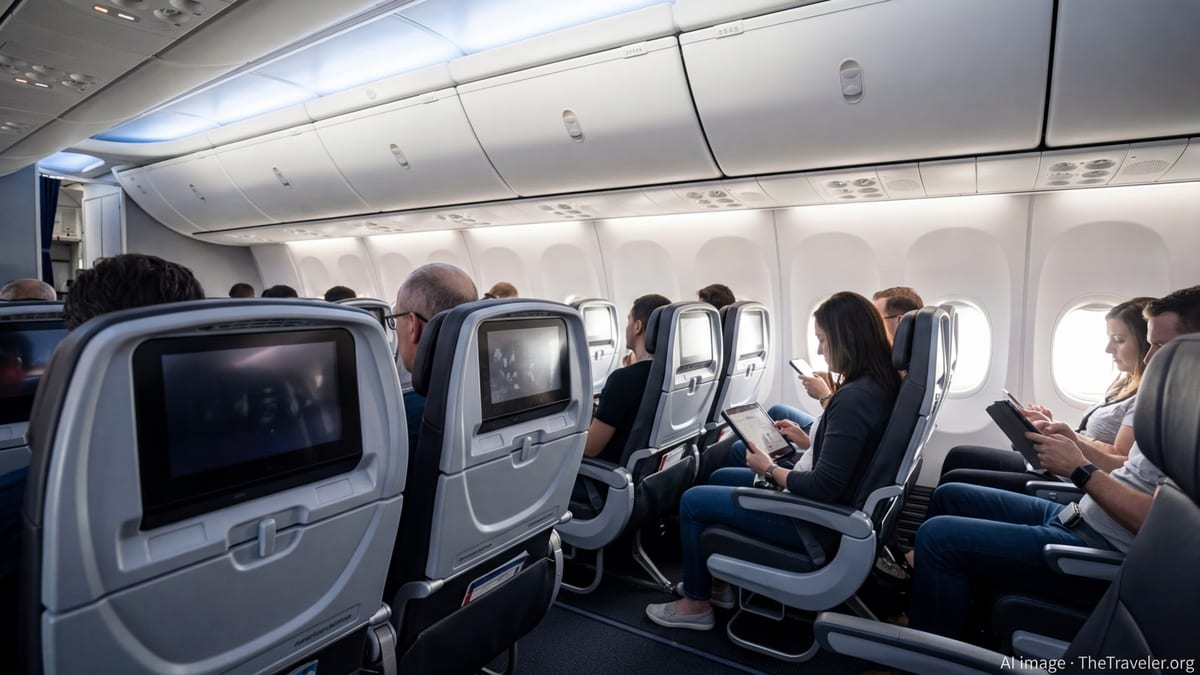
Beyond sheer seat counts, American is tying its narrowbody premium build-up to a broader refresh of the onboard experience. Recent announcements highlight new onboard amenities, upgraded soft products in premium cabins and updated seat designs throughout the aircraft. The airline has also outlined plans for high-resolution seatback entertainment screens, in-seat power at every seat and improved cabin lighting across much of the single-aisle fleet.
In premium cabins, travelers can expect refreshed seating with improved privacy features on select aircraft, expanded storage and updated materials that align more closely with the airline’s long-haul Flagship products. On many narrowbody jets, the first few rows will be complemented by a larger Main Cabin Extra section, offering additional legroom and priority boarding at a price point below traditional first class.
Main cabin customers will continue to see a mix of configurations during the transition period, as retrofitted aircraft cycle into service alongside older layouts. However, as more reconfigured jets enter the schedule, the typical domestic flight on American is set to offer a broader range of seating options, from standard economy through multiple tiers of extra space to first class.
For travelers planning ahead, the key difference in the coming years will be the frequency with which premium seats are available, not just on flagship routes but across a much wider swath of American’s network. As the share of narrowbody premium seating climbs from around 25 percent to roughly 40 percent, competition for those seats may remain strong, but the absolute number of options on any given day is poised to increase substantially.