


More news on this day
One of Alaska’s most storied glacier routes is largely disappearing from big-ship cruise maps in 2026, as major lines quietly trade Tracy Arm Fjord for nearby Endicott Arm and its Dawes Glacier scenery.
Get the latest news straight to your inbox!
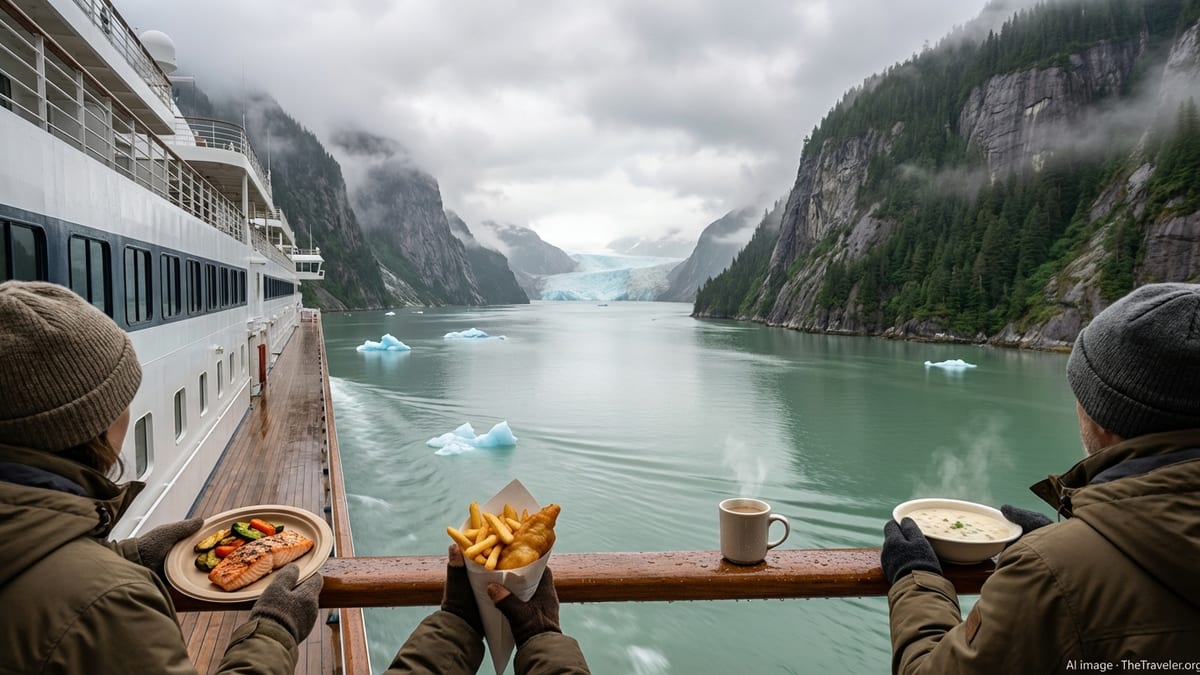
A Sudden Shift in Alaska’s Glacier Cruise Map
For years, Tracy Arm Fjord south of Juneau has been marketed as a signature “fjord and glacier day” on Alaska sailings, with ships threading through narrow, ice-cluttered waters toward the twin Sawyer glaciers. In 2026, publicly available schedules and line announcements show a marked change, with many large ships instead listing Endicott Arm or Dawes Glacier on the same sail dates once tied to Tracy Arm.
Itinerary notices compiled by cruise news outlets and cruise forums indicate that the rerouting accelerated after an August 2025 landslide near South Sawyer Glacier generated a powerful, localized tsunami inside Tracy Arm. While no cruise ships were in the fjord at the time, reports describe a wave that ran hundreds of meters up the opposite valley wall, underscoring how quickly conditions in such a steep, confined waterway can change.
By spring 2026, coverage from travel trade publications and cruise-specialist sites showed Carnival Cruise Line, Royal Caribbean and other major brands systematically removing Tracy Arm from their summer Alaska brochures. Many of those sailings now highlight “Endicott Arm and Dawes Glacier” instead, preserving a glacier-viewing day while avoiding the most constrained section of Tracy Arm where the landslide occurred.
Industry commentary characterizes the move as a precaution rather than a retreat from glacier cruising in southeast Alaska. The core product remains a scenic day among icebergs and tidewater glaciers, but the route delivering that experience is changing in response to evolving geologic information.
Why Tracy Arm Is Increasingly Deemed Too Risky
Tracy Arm’s beauty has always been inseparable from its hazards. The fjord is long, narrow and framed by steep, fractured slopes that feed both active glaciers and frequent smaller landslides. Cruise guides note that the final miles toward North and South Sawyer glaciers often clog with brash ice and larger bergs, forcing larger vessels to turn around well short of the glacier face in some seasons.
Publicly available information from geological agencies and academic researchers identifies steep, overhanging valley walls, rapidly thinning ice and a history of slope failures as key risk factors in Tracy Arm. The 2025 event, which combined rockfall with ice collapse, illustrated how these elements can align to produce a sudden displacement wave capable of damaging or capsizing vessels in confined waters.
Cruise coverage in early 2026 describes cruise lines citing “unstable ice and geological conditions” and “waterway conditions not suitable for cruise ship navigation” as reasons for dropping Tracy Arm from itineraries. That language reflects a growing focus on compound hazards, where glacial retreat, permafrost thaw and heavy precipitation can weaken slopes above narrow fjords.
Older navigation guidance for southeast Alaska has long urged caution in both Tracy and Endicott arms when ice or weather conditions deteriorate. The difference now is that the most current evaluations of Tracy Arm highlight a specific, recently destabilized zone near South Sawyer Glacier, making risk harder to manage for large cruise ships operating on fixed schedules and carrying thousands of passengers.
Endicott Arm and Dawes Glacier Step Into the Spotlight
Endicott Arm, a parallel fjord just south of Tracy Arm, has quietly shared the same national monument landscape for decades. In 2026, cruise scheduling data and port agency manifests show it emerging as the primary glacier-viewing alternative for big-ship operators that once relied on Tracy Arm.
The fjord terminates at Dawes Glacier, a dramatic tidewater glacier that calves blue ice into turquoise waters. Travel features and cruise line marketing materials describe scenery broadly similar to Tracy Arm: steep granite walls, waterfalls, floating ice and regular wildlife sightings that can include harbor seals, mountain goats and occasionally bears along shore.
One reason Endicott Arm is viewed as a safer large-ship option in the current climate is its slightly wider navigational channel and the placement of its steepest, most failure-prone slopes relative to where ships typically maneuver. Cruise analyses note that Endicott Arm has not experienced a recent landslide-tsunami event comparable to Tracy Arm’s 2025 incident, although all glacier fjords carry inherent risks.
Port and vessel schedules for summer 2026 show a dense pattern of calls labeled “Endicott Arm” or “Dawes Glacier” for brands ranging from expedition-style operators to mainstream lines. That clustering suggests that Endicott Arm is now central to maintaining the promise of glacier viewing on standard seven-night Alaska itineraries sailing roundtrip from Seattle or Vancouver.
How Major Cruise Lines Are Rewriting 2026 Itineraries
Published coverage of 2026 deployment changes indicates that Carnival Cruise Line has removed Tracy Arm from all of its Alaska sailings for the season, replacing those days with Endicott Arm scenic cruising. Cruise-focused news sites report that guests originally booked on Tracy Arm routes received notifications describing Tracy Arm as “not suitable for cruise ship navigation” and outlining the new Endicott Arm plan.
Royal Caribbean has likewise adjusted dozens of voyages, according to cruise industry reporting, substituting Endicott Arm on ships that previously spotlighted Tracy Arm as a marquee highlight. Similar shifts are visible in schedules for other large operators, with some lines generalizing their marketing language to “scenic glacier cruising” while port timetables still specify Endicott Arm as the intended waterway.
Industry observers note that smaller vessels, including day-cruise boats and expedition ships, have more flexibility to adjust on short notice if Tracy Arm conditions improve, and some may resume limited operations closer to the glacier faces under updated safety guidelines. For the largest ships, however, 2026 is shaping up as a season in which Tracy Arm is largely absent from mainstream brochures.
The pattern aligns with a broader cruise-industry tendency to standardize around proven alternatives once a risk threshold is crossed. In this case, Endicott Arm offers a comparable scenic experience without requiring ships to thread into a fjord sector that recently produced a destructive wave.
What Glacier-Loving Travelers Should Expect in 2026
For travelers, the most immediate impact of the Tracy Arm shift is a change in name, not necessarily a loss in spectacle. Those holding 2026 bookings marketed with Tracy Arm are increasingly finding updated documentation that lists Endicott Arm or Dawes Glacier instead, often on the same day of the itinerary and with similar early-morning scenic cruising schedules.
Cruise commentators and Alaska specialists advise guests to look closely at the fine print on revised itineraries. Some lines specify Endicott Arm and Dawes Glacier, while others simply promise a day of “fjord and glacier viewing,” preserving flexibility to adjust routing if conditions warrant. In practice, schedules and port bulletins for the 2026 season suggest that Endicott Arm will be the default choice for most large ships.
Travel planning resources recommend that those who are particularly attached to seeing Tracy Arm monitor developments through official advisories and independent operator updates. A handful of smaller-ship or specialty tours may continue to assess access on a case-by-case basis as geologic assessments evolve, although the broader trend among major brands clearly favors Endicott Arm for now.
More broadly, the rerouting illustrates how rapidly glacier cruise experiences can change as climate, geology and safety assessments intersect. For many passengers in 2026, Endicott Arm will serve not only as a scenic stand-in for Tracy Arm, but also as a visible reminder that Alaska’s dramatic ice-carved landscapes are themselves in motion.