


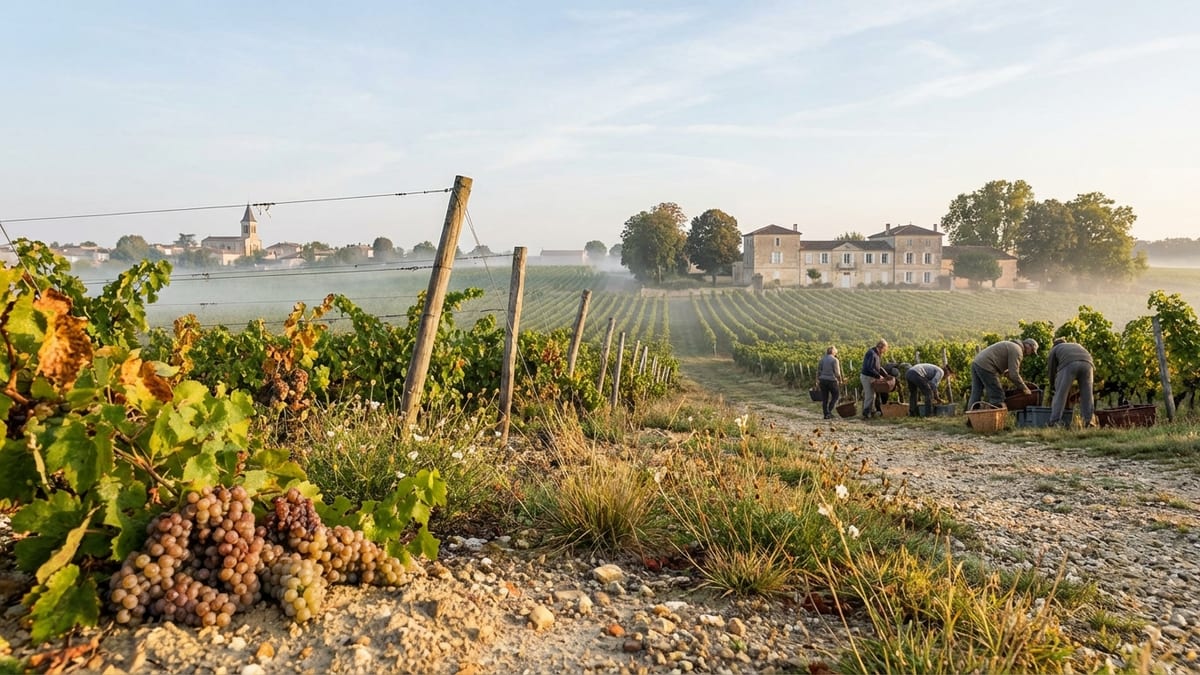
Sauternes has long been one of the most evocative names in French wine, and within this golden corner of Bordeaux, Château Guiraud holds a particularly intriguing place. Classified as a Premier Cru Classé in the historic 1855 ranking, it shares the top tier of sweet wine estates with neighbors like Château d’Yquem and Suduiraut.
Yet Guiraud has forged its own identity, pairing centuries of tradition with a bold commitment to biodiversity and organic viticulture. For travelers and wine lovers seeking to understand what makes a great Sauternes, a closer look at Château Guiraud offers a revealing window into the past, present, and future of this fabled style.
The 1855 Classification and Guiraud’s Place in Sauternes
To understand why Château Guiraud is considered a Premier Cru Classé, you first need to appreciate the context of the 1855 Bordeaux Classification. Commissioned for the Exposition Universelle in Paris, this ranking was intended as a snapshot of Bordeaux’s finest estates, ordered by reputation and market price. For the sweet wines of Sauternes and neighboring Barsac, one estate was named Premier Cru Supérieur at the very top, and a select group beneath it were named Premier Crus Classés, the first growths of Sauternes.
Château Guiraud was among these elite properties, recognized in 1855 as a Premier Grand Cru Classé. This was not an accident of politics or marketing. By the mid-19th century, the estate’s wines had already earned a reputation for quality, commanding high prices in export markets and regularly appearing on the tables of the European bourgeoisie. The classification effectively codified what merchants and collectors already knew: Guiraud consistently produced one of the most distinguished sweet wines of Sauternes.
Today, that 1855 ranking still carries considerable weight. While some critics debate its rigidity, for travelers planning a trip through Bordeaux’s vineyards, it provides a useful map of historic excellence. Within Sauternes, Premier Cru Classé status signifies a particular combination of terroir, grape selection, and cellar craft. Château Guiraud has spent the past century and a half proving that its place in that hierarchy is not just a matter of history but of ongoing performance in the glass.
History of an Estate Between Church Bell and Yquem
Château Guiraud’s story begins in the 18th century, when Bordeaux’s sweet wines were just starting to attract serious international attention. In 1766, a Bordeaux wine merchant named Pierre Guiraud purchased a modest property in Sauternes and began expanding both its vineyards and its reputation. Over the next eighty years, through subsequent generations, the estate grew in size and stature, culminating in its recognition as a Premier Cru Classé in 1855.
The late 19th and early 20th centuries saw significant development at Guiraud. Ownership passed through the Bernard and Maxwell families, a period marked by modernization of the cellars and the construction of the château that visitors see today. Like many Bordeaux properties, Guiraud weathered economic downturns, phylloxera, and the upheavals of two world wars, yet it continued to produce wines that upheld its first-growth standing.
A new era began in 1981 when the Narby family acquired the estate and launched a program of vineyard renewal and technical improvement. In 1988, they appointed Xavier Planty as estate manager, a pivotal move for Guiraud’s modern identity. Under this regime, the estate began a long-term experiment in biodiversity and organic farming that would set it apart from many of its neighbors.
The 21st century has brought another chapter of change and investment. In 2006, a group led by industrialist Robert Peugeot, alongside respected Bordeaux winemakers Olivier Bernard and Stephan von Neipperg, took over the estate. In 2022, entrepreneur Matthieu Gufflet became the majority shareholder and brought in Sandrine Garbay, long-time cellar master at Château d’Yquem, to oversee the property. For travelers visiting today, Guiraud feels like a house with deep roots and a distinctly forward-looking spirit, shaped by a succession of ambitious owners and technical leaders.
Terroir of Sauternes: Fog, Gravel and the Gift of Noble Rot
Premier Cru status in Sauternes is not just about history or architecture. It begins in the vines, and here Château Guiraud enjoys an enviable location. The estate lies on the left bank of the Garonne River, in the heart of the Sauternes appellation, famously described by Guiraud as being positioned between the church bell of the village and the first vines of Château d’Yquem. This is prime noble-rot country, where a specific combination of climate and soil shapes the style of the wines.
Sauternes’ signature phenomenon is noble rot, or botrytis cinerea, a fungus that under the right conditions gently pierces grape skins and concentrates their sugars, acids, and aromas. Morning mists rise from the confluence of the Garonne and the cooler Ciron River in autumn, shrouding the vineyards in fog that allows botrytis to develop. Warm, sunny afternoons then dry the grapes, preventing grey rot and building layers of complexity. At Château Guiraud, this pattern is central to every vintage, and the estate’s vineyard work is geared to encourage healthy botrytis while preserving freshness in the fruit.
Guiraud’s soils add another crucial dimension. The vineyards rest primarily on sandy gravel (about 80 percent) with pockets of clayey gravel (about 20 percent) over subsoils rich in sand. These well-drained, heat-retentive gravels help ripen grapes fully, while the clay components retain enough water to sustain vines through dry spells. Vine age, averaging around 35 to 40 years, further deepens root systems and enhances the vines’ ability to extract nuance from this mosaic of soil types.
For visitors walking the property, this terroir is tangible. Gravel crunches underfoot, low rolling slopes open to gentle breezes, and surrounding woodland helps create a microclimate where mists linger just long enough each fall. Everything about the landscape feels tuned to the slow, risky, and ultimately rewarding process of making great Sauternes.
Grape Varieties, Vineyard Work and the Art of Selection
While Sauternes is a relatively small appellation, its great estates often express themselves through subtle variations in grape variety and vineyard practice. Château Guiraud is notable for its distinctive blend: about 65 percent Sémillon and 35 percent Sauvignon Blanc. The high proportion of Sauvignon is particularly striking. Many neighboring properties rely more heavily on Sémillon, often with only around 10 to 20 percent Sauvignon in the mix.
Sémillon brings richness, waxy texture, and the capacity to age for decades. Sauvignon Blanc contributes brightness, aromatic lift, and tension. At Guiraud, the elevated share of Sauvignon creates a house style that is both sumptuous and refreshingly vibrant. In youth, the wines show notes of citrus, exotic fruits, and white flowers over a backbone of honeyed sweetness. With time, they develop layers of saffron, beeswax, truffle, and dried fruits, while the Sauvignon component keeps the palate from feeling heavy.
Viticulture here is intensely laborious but essential to the Premier Cru profile. Yields are deliberately low, on the order of about 12 hectoliters per hectare for the grand vin. Harvest is conducted entirely by hand and in multiple tries, or passes, through the vineyard, sometimes as many as six separate pickings in a single vintage. Each pass targets bunches affected by noble rot at just the right degree of concentration, leaving less-advanced grapes on the vine for later selections.
Standing among the rows in autumn, pickers look for a particular visual and tactile cue: shriveled, amber-tinged berries that still retain tension and perfume. This microscopic level of selection is one of the underpinnings of Guiraud’s Premier Cru identity. It represents a willingness to sacrifice quantity for quality, trusting that the concentration and complexity of the final wine will justify the painstaking work and the relatively tiny volumes produced each year.
From Berry to Barrel: Winemaking at a Premier Cru Classé
Once the grapes reach the cellar, the transformation of must into Premier Cru Sauternes is guided by a technical philosophy that respects both tradition and precision. At Château Guiraud, fermentation takes place almost entirely in small oak barrels. Typically, around 90 percent of the barrels are new, with the remaining 10 percent being one-year-old. Fermentations may last two to three months, a slow, cool process that allows the layered aromas of botrytized fruit to emerge gradually.
The decision to favor such a high proportion of new oak is deliberate. Sweet botrytized wines are dense and intense, and the fine-grained French oak contributes structure, spice, and additional oxygenation, which helps the wine integrate its formidable sugar and acidity. After fermentation, the wine continues to age in barrel on its fine lees for 18 to 24 months, with periodic racking roughly every three months. During this élevage, the team tastes frequently, tracking the evolution of each lot and making subtle adjustments as needed.
Blending is another crucial point where Guiraud’s Premier Cru status is expressed. Not every barrel, or every plot, makes it into the grand vin. Some lots are set aside for the second wine, Petit Guiraud, which offers a more approachable, earlier-drinking expression of the estate’s style. Only the most complete, balanced, and emotionally compelling lots form the core of Château Guiraud itself. By the time a vintage is bottled, it represents the culmination of hundreds of micro-decisions made over two years, from vineyard to cellar.
The result in the glass is a Sauternes that combines lush sweetness with remarkable poise. In strong years, Château Guiraud can show luminous golden color, heady aromas of mango, pineapple, candied citrus, and acacia, and a palate that is rich yet never cloying. The finish often carries a saline or mineral streak that invites another sip, reminding you that this is not merely dessert wine but a serious, gastronomic companion to complex dishes.
Pioneering Organic and Biodiversity Practices in Sauternes
One of the most distinctive aspects of Château Guiraud’s modern identity, and a key reason it stands out among Premier Cru Classés, is its early and sustained embrace of organic viticulture and biodiversity. Long before sustainability became a Bordeaux buzzword, Guiraud began rethinking its relationship with the land. As early as 1996, the estate launched a broad program dedicated to promoting ecological balance in the vineyards.
This approach involved more than simply eliminating synthetic herbicides and pesticides. Guiraud planted hedgerows and trees, maintained cover crops between vine rows, and encouraged insect and bird life across the property. Over time, the estate became a small ecosystem rich in species diversity, with hundreds of identified insects and a tapestry of plant life that helps naturally regulate vine health. The goal was to create resilient vineyards where the vines develop deep roots and balanced growth without heavy chemical intervention.
In 2011, after years of preparation and practice, Château Guiraud became the first of the 1855 classified Sauternes estates to receive official organic certification. For a Premier Cru that lives on consistent quality and international reputation, this was a bold step. It signaled that environmental stewardship and top-flight winemaking were not only compatible but mutually reinforcing. By 2022, the estate’s work was further recognized through additional sustainability labels, underscoring its role as a model for green viticulture in the region.
For travelers, this commitment is visible in the landscape itself. Instead of the manicured, almost sterile vineyard rows sometimes associated with industrial farming, Guiraud’s parcels feel alive: butterflies in summer, grasses and wildflowers between vines, and birds flitting along stone walls and hedges. The philosophy is clear. A Premier Cru should not only honor history and craft but also safeguard the land that makes its wines possible.
Signature Wines, House Style and Food Pairings
Château Guiraud’s status as a Premier Cru Classé is ultimately experienced through its wines. The grand vin, simply labeled Château Guiraud, is the flagship Sauternes. It typically blends the estate’s Sémillon and Sauvignon in proportions close to 65/35, though precise ratios may shift by vintage. Youthful examples are exuberant, with notes of passionfruit, apricot, candied citrus peel, and acacia honey, layered over spice, vanilla, and a subtle toast from the oak.
Good vintages of Guiraud show remarkable aging capacity. Over a decade or more, the wine deepens in color from pale gold to amber, and its aromatic profile evolves toward saffron, beeswax, grilled nuts, and truffle, while retaining vibrant acidity. Mature bottles can be profoundly complex, making them exciting discoveries for travelers exploring older vintages in top Bordeaux restaurants or specialized wine bars.
Alongside the grand vin, the estate produces Petit Guiraud, a second Sauternes wine crafted from younger vines or lots that are more immediately approachable. This wine leans toward a lighter, fruit-forward expression with charming notes of fresh stone fruits and citrus. It offers a more accessible introduction to the Guiraud style, both in terms of price and drinking window.
Guiraud also helped pioneer dry white wines in Sauternes with its cuvée G de Guiraud, a certified organic Bordeaux Blanc Sec that showcases the same grape varieties in a non-botrytized, crisp and mineral-driven style. More recently, the estate has introduced a Grand Vin Blanc Sec bearing the Château Guiraud name, underscoring its ambition in dry whites. For food lovers, these wines open up a world of pairings: the sweet Sauternes with foie gras, blue cheese, roasted poultry, aromatic Asian dishes or citrus-based desserts, and the dry whites with oysters, grilled fish, and fresh cheeses.
Visiting Château Guiraud: A Traveler’s Perspective
For visitors to Bordeaux, a trip to Sauternes can be a welcome counterpoint to the grand red-wine châteaux of the Médoc and the Left Bank. Château Guiraud, with its combination of history, architectural charm, and ecological focus, is an especially rewarding stop. The estate’s location in the village of Sauternes makes it convenient to combine with neighboring properties, yet it offers a distinctive atmosphere shaped by its organic ethos.
On a typical visit, travelers might explore the vineyard blocks that supply the grand vin, noting the mix of gravel and clay underfoot and the hedgerows and cover crops that frame the rows. Depending on the season, you might see pruning crews at work in winter, flowering in spring, clusters shifting from green to gold in late summer, or the telltale shriveling of botrytized grapes in autumn. Guides often highlight the biodiversity initiatives, pointing out insect hotels, bird boxes, or plantings that support beneficial species.
In the cellars, rows of barrels rest in cool semi-darkness as the wines slowly ferment or age on lees. Tasting sessions frequently include both Château Guiraud and Petit Guiraud, and sometimes the dry white G de Guiraud or the newer dry grand vin. Such a lineup lets you compare the effect of sweetness, oak, and grape variety in real time. Even for seasoned wine travelers, the contrast between lush Sauternes and racy dry Bordeaux Blanc can be eye-opening.
Beyond the technical aspects, a visit to Guiraud offers an emotional connection to the idea of Premier Cru. Standing on the terrace overlooking the vineyards, with the village church behind you and the gentle slopes of Sauternes spreading away, it is easy to understand why this estate was singled out in 1855 and why its custodians today view themselves as guardians of something larger than a brand: a tradition of golden wines rooted in a living landscape.
The Takeaway
Château Guiraud’s standing as a Premier Cru Classé in Sauternes is the product of intertwined factors. Its inclusion in the 1855 classification recognized a history of excellence that stretches back to the 18th century. Its exceptional terroir, poised between church bell and neighboring Yquem, gives it the climatic and geological conditions necessary to coax nobly rotted grapes to rare intensity. In the vineyard, a distinctive varietal mix, extremely selective harvests, and low yields underpin the depth and balance of the wines. In the cellar, patient barrel fermentation and long élevage shape that raw material into age-worthy Sauternes of complexity and finesse.
What sets Guiraud apart among its peers is its early and sustained embrace of organic viticulture and biodiversity. Long before environmental credentials became fashionable, the estate bet its future on the idea that a healthy, diverse ecosystem would ultimately produce better, more expressive wines. That conviction has now been validated in both certifications and critical acclaim, and it offers a compelling narrative for travelers seeking wines that marry luxury with ecological responsibility.
For anyone exploring Bordeaux, tasting a glass of Château Guiraud is not simply a lesson in sweetness. It is an immersion into a particular corner of France where fog and sun, gravel and clay, history and innovation converge. Whether enjoyed young for its exuberant fruit or decades later for its haunting complexity, Guiraud’s Sauternes reminds you why the notion of Premier Cru still matters. It signifies not only rank but a commitment to making wines that can stand, without apology, among the world’s most memorable bottles.
FAQ
Q1. What does it mean that Château Guiraud is a Premier Cru Classé in Sauternes?
Being a Premier Cru Classé means that Château Guiraud was recognized in the 1855 Bordeaux Classification as one of the top-tier estates in the Sauternes region, based on its historical reputation, consistent quality, and market value. It is part of a small group of first-growth sweet wine producers whose wines are considered benchmarks for the style.
Q2. Where exactly is Château Guiraud located?
Château Guiraud is located in the commune of Sauternes in southwest France, on the left bank of the Garonne River. The estate sits in the heart of the Sauternes appellation, close to the village church and adjacent to the vineyards of the renowned Château d’Yquem.
Q3. Which grape varieties are used in Château Guiraud’s Sauternes?
The estate’s vineyards are planted primarily to Sémillon and Sauvignon Blanc, with roughly 65 percent Sémillon and 35 percent Sauvignon. This higher-than-average share of Sauvignon Blanc, compared with many neighboring estates, gives the wines extra freshness, aromatic lift, and tension alongside Sémillon’s richness and aging potential.
Q4. How does noble rot influence the character of Château Guiraud’s wines?
Noble rot, or botrytis cinerea, gently dehydrates the grapes, concentrating their sugars, acids, and aromas. At Château Guiraud, botrytized berries picked in multiple selective passes produce intensely flavored musts that ferment into complex, sweet wines. The result is a Sauternes with layers of fruit, honey, spice, and floral notes, supported by vibrant acidity and a long, nuanced finish.
Q5. Why is Château Guiraud considered a pioneer in organic viticulture?
Château Guiraud began focusing on biodiversity and organic methods in the mid-1990s, at a time when many Bordeaux estates still relied heavily on synthetic chemicals. After years of experimentation and adaptation, it became the first of the 1855 classified Sauternes properties to receive official organic certification in 2011, establishing itself as a leader in sustainable high-end viticulture.
Q6. What is the difference between Château Guiraud and Petit Guiraud?
Château Guiraud is the estate’s flagship Premier Cru Sauternes, made from the finest lots and oldest vines, and designed for long aging. Petit Guiraud is the second wine, typically sourced from younger vines or plots that yield a lighter, more approachable style. While both are sweet Sauternes, Petit Guiraud generally offers earlier drinking pleasure and a more accessible price point.
Q7. Does Château Guiraud produce any dry wines?
Yes. In addition to its sweet Sauternes, Château Guiraud produces dry white wines, most notably G de Guiraud, an organic Bordeaux Blanc Sec. More recently, the estate has also introduced a dry white Grand Vin under the Château Guiraud name. These wines highlight the same grape varieties in a non-sweet style, emphasizing citrus, floral notes, and minerality.
Q8. How long can a bottle of Château Guiraud Sauternes age?
Well-stored bottles of Château Guiraud from good vintages can age gracefully for decades. In their first 5 to 10 years, they show exuberant fruit and honeyed richness. With 15, 20, or more years of cellaring, they develop deeper notes of saffron, beeswax, dried fruits, and truffle, while maintaining enough acidity to stay vibrant and balanced.
Q9. What are some classic food pairings with Château Guiraud Sauternes?
Traditional pairings include foie gras, both terrine and pan-fried, as well as blue cheeses such as Roquefort. Sauternes from Château Guiraud also works beautifully with roasted poultry, spiced or aromatic Asian dishes, shellfish like scallops or langoustines, and desserts featuring citrus, stone fruits, or cream. The key is to balance the wine’s sweetness with either richness, saltiness, or gentle spice.
Q10. Can travelers visit Château Guiraud, and what should they expect?
Château Guiraud welcomes visitors by appointment, offering vineyard and cellar tours followed by tastings of its wines. Guests can expect to learn about the estate’s organic practices, see firsthand how noble rot and selective harvesting shape Sauternes production, and taste both sweet and dry wines. The experience combines classic Bordeaux château charm with a strong emphasis on ecology and terroir.