


More news on this day
When an Alaska cruise itinerary quietly swaps a famous fjord for a different glacier day, disappointment is often the first reaction. Yet as more ships redirect from Tracy Arm to Endicott Arm and Dawes Glacier, many travelers are discovering that the backup plan can be every bit as spectacular.
Get the latest news straight to your inbox!
A Season of Sudden Itinerary Changes in Alaska
For passengers booked on Alaska cruises in 2025 and 2026, finding a revised schedule in their inbox has become increasingly common. Instead of the heavily promoted sail through Tracy Arm Fjord, many travelers now see Endicott Arm, Dawes Glacier or a generic “glacier viewing” label on their updated plans.
Publicly available cruise documentation and trade coverage indicate that several major brands, including Holland America Line, Carnival Cruise Line, Royal Caribbean, MSC Cruises and Virgin Voyages, have removed Tracy Arm from their 2026 Alaska programs. In many cases, the rest of the itinerary remains intact, with only the scenic cruising segment swapped for Endicott Arm and its tidewater glacier, Dawes.
Reports from Alaska focused travel outlets link the shift to safety and reliability concerns in the narrow Tracy Arm waterway, particularly following an August 2025 landslide near South Sawyer Glacier that produced a localized tsunami inside the fjord. As operators reassessed the route, the pattern of substitutions toward neighboring Endicott Arm accelerated across lines and seasons.
The result for guests is a wave of last minute changes that can feel jarring, especially for those who selected a voyage specifically because “Tracy Arm Fjord” headlined the brochure. Yet accounts from recent sailings suggest many passengers step off the ship convinced they did not lose anything at all by heading to Dawes Glacier instead.
Why Cruise Lines Are Favoring Endicott Arm
Endicott Arm lies within the same broader wilderness system as Tracy Arm, southeast of Juneau. Navigational references describe it as a long, steep sided fjord carved by ice, with waterfalls, sheer granite walls and dense forest clinging to the slopes. At its head sits Dawes Glacier, a massive tidewater glacier that regularly calves into the sea, sending thunderous chunks of blue ice into the water.
Cruise analysts and itinerary planners point to a mix of practical factors behind the growing preference for Endicott Arm. The channel is generally considered more navigable for large vessels, with fewer tight turns and a wider approach that can be easier to manage when ice conditions fluctuate. That improves the odds that a ship can reach impressive glacier vistas without turning back early due to dense brash ice.
Travel trade reports also note that by standardizing on Endicott Arm, lines can offer a more predictable glacier viewing experience across multiple departures. While no Alaska glacier day is ever guaranteed, a fjord with more consistent access reduces the risk of last minute cancellations that can frustrate passengers and complicate operations.
At the same time, cruise marketing materials emphasize that Endicott Arm is not a consolation prize. Promotional descriptions highlight the close up views of Dawes Glacier, the possibility of spotting harbor seals on ice floes, and the extended periods of slow speed scenic cruising that let guests linger on open decks, balcony railings and observation lounges.
From Disappointment to Awe on Dawes Glacier Day
For an individual traveler, the emotional arc of an itinerary change often starts with frustration. Online forums and social posts show guests sharing notices that their cruise would “no longer operate Tracy Arm Fjord” and would conduct scenic cruising in Endicott Arm and Dawes Glacier instead. Many express concern that a key highlight of the voyage has been lost.
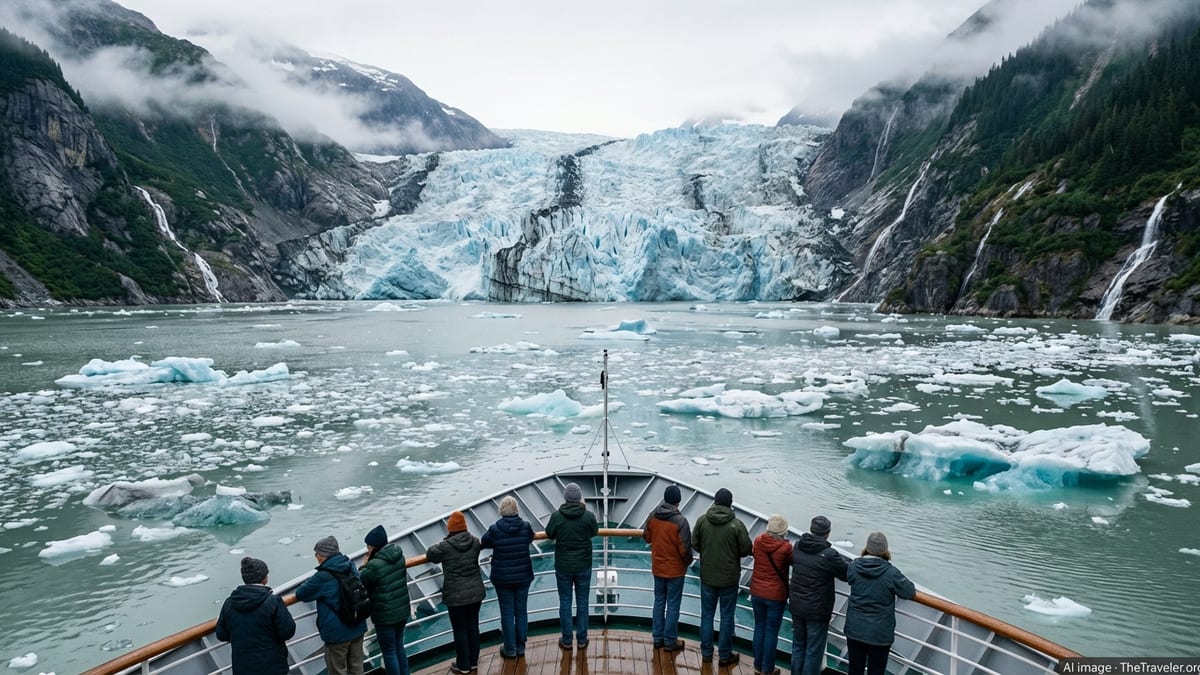
Once on board, however, the experience frequently unfolds differently from the worry. Scenic days to Dawes Glacier typically begin early, with ships easing into Endicott Arm at reduced speed so passengers can watch the landscape close in around them. Steep cliffs, waterfalls and hanging valleys provide a slow building backdrop as the vessel advances deeper into the fjord.
Closer to Dawes Glacier, many itineraries schedule commentary from the bridge or onboard experts, while crew encourage guests to move between viewing areas to catch different perspectives. As the ship nears the glacier face, the sheer scale becomes apparent: a towering wall of blue and white ice rising from the water, with another substantial mass hidden below the surface.
Travelers who have sailed both routes often report that Dawes Glacier delivers the kind of dramatic, calving glacier moments they imagined for Alaska. Even travelers who initially lamented the loss of Tracy Arm describe watching Dawes crack and shed icebergs into the fjord, hearing delayed echoes roll back off the surrounding cliffs, and realizing they have witnessed the glacier spectacle they came north to see.
What Travelers Should Know Before Sailing
For those with upcoming Alaska cruises, the current reshuffling of glacier days underscores a basic reality of high latitude travel: itineraries are always subject to change. Weather, ice, tides and, increasingly, geologic instability can all alter a ship’s path right up to the date of sailing.
Travel advisories and cruise documentation recommend that guests read their latest electronic itinerary carefully in the weeks leading up to departure. If a once advertised “Tracy Arm Fjord” call now appears as “Endicott Arm,” “Dawes Glacier” or simply “scenic cruising,” it generally signals a routing adjustment within Southeast Alaska rather than a loss of glacier viewing altogether.
Experts in Alaska trip planning also note that while Tracy Arm has long held a certain mystique, Endicott Arm offers many of the same defining features: towering fjord walls, floating ice, wildlife on icebergs and a terminus glacier actively meeting the sea. For passengers whose primary goal is to see dramatic glacial ice from the rail of a cruise ship, Dawes Glacier can fulfill that promise as effectively as South Sawyer Glacier in Tracy Arm.
Prospective travelers who feel strongly about a specific glacier day, such as Glacier Bay National Park, are advised to verify that destination on their chosen itinerary and to build flexibility into their expectations elsewhere. The broader trend in 2026 suggests that Endicott Arm and Dawes Glacier will remain a central feature of large ship Alaska cruising, even as conditions in other fjords continue to be evaluated.
Turning an Itinerary Curveball Into a Highlight
For many passengers, the story of “losing” a visit to a popular fjord and “ending up” at Dawes Glacier ultimately becomes one of the standout memories of their trip. Accounts from recent seasons describe travelers who boarded disappointed, then spent the day transfixed on deck as their ship glided past icebergs and drew close to a towering glacier face alive with cracks and rumbles.
That shift in perspective reflects a broader point about cruise travel in Alaska. While route names and marquee fjords can shape expectations, the region’s appeal lies in the cumulative experience of mountains, sea, ice and wildlife. Whether the navigational chart shows Tracy Arm or Endicott Arm, a well run glacier day can still deliver the sense of vastness and raw nature that draws visitors to the 49th state.
As more cruise lines formalize Dawes Glacier as the centerpiece of their scenic cruising, the destination is evolving from backup option to headline attraction. For travelers whose ships no longer thread into Tracy Arm, that change can be an invitation rather than a setback: a chance to discover that the revised route offers its own version of the Alaska they came hoping to see.