


In winter, Central Europe’s rivers look deceptively quiet. Ice fringes the banks, fog hangs over the water, and cruise ships thin out to a trickle. Yet beneath this still surface, waterways like the Danube, Rhine, Elbe, Oder, and Vistula continue to knit together a vast web of cities, villages, and seasonal markets. For centuries these rivers have shaped how people move, trade, and celebrate in the cold months, and today they remain the hidden infrastructure behind many of the region’s most beloved winter experiences, from Christmas markets in Vienna and Budapest to icebreakers plowing through frozen channels in Poland.
Get the latest updates straight to your inbox!
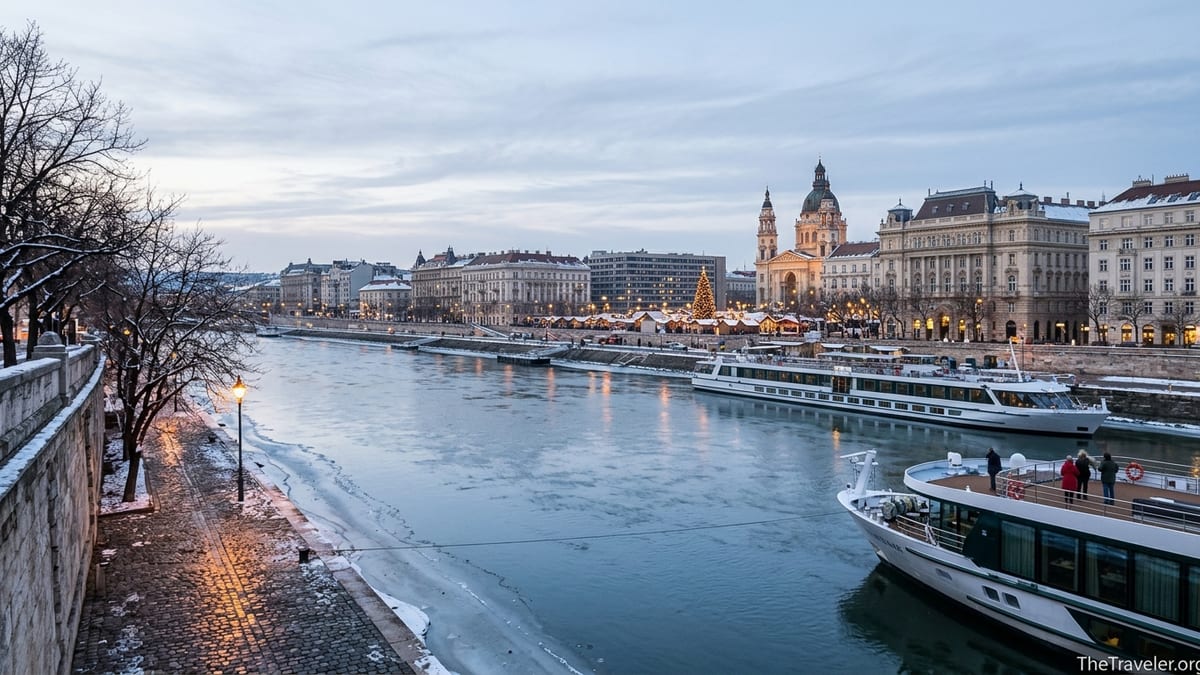
Rivers as the Winter Spine of Central Europe
Look at a winter map of Central Europe and you will notice that most of the major cities that draw travelers in December sit along rivers. Vienna and Budapest rest on the Danube, Cologne and Basel on the Rhine, Prague on the Vltava and Elbe system, Bratislava on the Danube, and Kraków within reach of the upper Vistula. Historically this was no accident. Before modern highways and rail, rivers were the only reliable long-distance routes that remained broadly usable through at least part of winter, when snow made overland transport slow and unpredictable.
Even today, river corridors still concentrate winter activity. Many of the best-known Christmas markets are set just a few minutes’ walk from the water. Vienna’s large markets cluster near the Danube Canal and Ringstrasse. Budapest’s main festive squares in the fifth district are only a short stroll from the river promenade, and Bratislava’s main Christmas market spreads over the old town piazzas just above the Danube embankment. Travelers who book December river cruises on the Danube or Rhine are directly tapping into this older geography of winter commerce, moving along the same cold-season highways that barges and timber rafts once followed.
For visitors, this alignment of river and city brings practical benefits. Short winter days and potentially icy roads make it convenient to stay in a compact historic core, and riverside districts usually offer dense clusters of hotels, trams, and markets. In Vienna, for instance, you can stay in the Leopoldstadt district near the Danube Canal and reach several markets by tram or on foot in under 20 minutes, without needing a rental car. The river is not just a view; it is the organizing line that still shapes how goods and people move in December and January.
From Medieval Fairs to Modern Christmas Markets
While today’s Christmas markets river cruise feel timeless, their modern form is surprisingly recent. City records in Vienna suggest that what we now recognize as a Christmas market only really took off in the nineteenth and twentieth centuries, even though the city hosted earlier winter fairs and special Advent sales. What did remain constant across the centuries was the role of waterways in feeding those markets with goods, especially bulky items that were difficult to haul over snowy mountain passes.
The Danube and Rhine were especially important for long-distance trade that supported winter fairs. Timber, wine barrels, grain, and salted meats would reach regional hubs like Regensburg, Vienna, Cologne, and Basel by boat in late autumn, sometimes just ahead of the first ice. From there, merchants distributed goods along connecting rivers and canals or moved them short distances overland into market squares. Today, the same cities market themselves as stops on multi-day Christmas market cruises, where ships might call at Nuremberg, Regensburg, Passau, Vienna, Bratislava, and Budapest on a single itinerary. Travelers see twinkling lights and mugs of mulled wine, but the geography behind their journey is the same river network that historically enabled seasonal trade.
In places like Bratislava, the modern Christmas market still occupies key crossroads close to the Danube embankment. Visitors can browse stalls for Slovak cheeses, honey, and handmade ornaments while knowing that much of the region’s heavy winter supply chain still travels close by on the river. Similarly, Vienna’s palace markets at Schönbrunn and Belvedere may feel removed from the Danube, but imported items like citrus, wine from further downstream, and specialty chocolates often arrive in the region via logistics routes that mirror older river-based commerce.
Winter Navigation, Ice, and the Work of Keeping Rivers Open
Rivers in Central Europe face a fundamental winter challenge: ice. In particularly cold seasons, sections of the Danube, Elbe, Oder, and Vistula can partially freeze, forming dangerous ice jams that threaten both navigation and riverside communities. In Poland, for example, authorities deploy fleets of specialized icebreakers on the Vistula and Oder each winter when conditions warrant. In recent seasons more than two dozen vessels, including new units like the lead icebreaker Puma and sister ships such as Narwal and Manat, have been tasked with breaking up river ice to reduce flood risk and maintain water flow.
These icebreakers matter to commerce in very practical ways. When ice locks a river, barge traffic stops, which disrupts deliveries of coal, construction materials, and heating fuel for riverfront industries. It can also hinder the operation of river ports that handle containers, bulk grain, or chemicals. For travelers, the impact is less obvious but still real. A visitor staying in winter in a port city such as Szczecin near the Oder or Gdańsk near the Vistula estuary might see icebreakers pushing through slabs of ice. Their work ensures that river levels and flows remain predictable enough to protect riverside roads, paths, and neighborhoods that tourists use to access viewpoints and winter festivals.
In Germany and the Czech Republic, winter navigation on the Elbe has long been an engineering and logistical puzzle. The river’s flow and depth fluctuate, and historically that made navigation unreliable in both drought and hard-freeze winters. Modern infrastructure, including locks and dredged channels, aims to extend the navigation season, but operators must still adjust schedules or ship sizes when ice or low water appears. Travelers on winter Elbe cruises between cities like Dresden and Magdeburg may find itineraries altered or shortened if conditions tighten. The underlying reality is that winter river travel, while increasingly comfortable for passengers, still depends on a complex choreography of water management, icebreaking where necessary, and constant monitoring.
Festive River Cruises and Seasonal Supply Chains
One of the most visible ways visitors experience winter river geography today is on dedicated Christmas market cruises. Companies run December sailings along the Danube between Nuremberg, Regensburg, Passau, Vienna, Bratislava, and Budapest, and along the Rhine between cities such as Cologne, Rüdesheim, Strasbourg, and Basel. A typical week-long itinerary might cost a mid-range traveler between the price of a simple independent rail trip and a full luxury tour, with cabins often starting in the lower to mid four-figure range for two people, including most meals and walking tours of the markets.
These cruises illustrate how rivers consolidate winter tourism. Ships serve as floating hotels that move at night between compact, walkable city centers. In the morning, passengers disembark a few hundred meters from the main festive square, often via a riverside promenade lined with seasonal food stalls and small ferris wheels. In Vienna, market visitors might walk from the mooring on the Danube Canal into the historic center, warming up with cups of punch or roasted chestnuts. In Budapest, landing stages near the Chain Bridge put travelers within easy reach of Vörösmarty Square and the Basilica market, both known for their elaborate light shows and craft stalls.
Behind the scenes, these same rivers support the supply chains that keep markets stocked. Artisans from up and down the river valleys bring products like wooden toys from alpine regions, smoked sausages from Hungarian or Bavarian producers, and mulled wine made from grapes grown along the Danube and Rhine slopes. While individual stallholders may arrive by van, the bulk ingredients, bottles, and materials still move through the river corridor in cargo barges and freight trains that follow riverbanks. Observant travelers on a frosty morning in the Wachau or Middle Rhine might see a line of container barges sliding past terraced vineyards, carrying goods that will end up on store shelves and winter market stalls across the region.
Icebreakers, Floods, and Winter Risk Along the Vistula and Oder
In the northeast of Central Europe, the winter story of rivers is as much about safety as it is about commerce. The Vistula in Poland, along with the Oder and its tributaries, is prone to ice jams during severe cold spells. When slabs of ice pile up and block the current, water levels can rise quickly behind the jam, threatening dikes, villages, and industrial areas. Historical winter floods along these rivers have underscored how fragile navigation becomes when ice is not properly managed.
To reduce these risks, Polish authorities coordinate annual icebreaking campaigns along critical stretches of the Vistula and Oder. In a recent winter season, operations began in mid-January on lower river sections, supported by a modernized fleet of icebreakers funded partly through European projects. During particularly harsh spells, crews may temporarily pause breaking work for safety reasons when air temperatures drop too low, then resume as soon as conditions stabilize. This stop-start pattern influences when barges can move and when river ports can receive or dispatch cargo.
Travelers occasionally see direct evidence of this work. In cities like Płock on the middle Vistula, winter visitors walking along the river embankment may notice heavy vessels grinding through ice sheets or hear local news updates about the start of the icebreaking season. For those touring river museums, historic vessels such as the old icebreaker Kuna, now preserved and used for educational cruises on the lower Vistula, tell the story of how year-round river navigation has long relied on specialized winter technology. These operations keep not only industry safer but also preserve riverside promenades, cycle paths, and low-lying historic quarters that attract visitors for winter photo walks.
Historic River Cities and Their Winter Economies
Some of Central Europe’s most atmospheric winter destinations grew rich because of their strategic positions on rivers. Hamburg, at the mouth of the Elbe, rose to prominence as part of the Hanseatic trading system linking inland waterways to the North and Baltic seas. Upstream, cities like Magdeburg and Dresden served as river ports and customs points, funnelling goods between Bohemia, Saxony, and the Low Countries. Winter traffic historically slowed but did not halt; cold months were often used to store, process, and redistribute goods that had arrived in warmer seasons.
Today, these cities translate their river heritage into winter tourism. Hamburg lights up its historic Speicherstadt warehouses and hosts several themed markets, some with maritime motifs along the harbor. Dresden holds the Striezelmarkt, considered one of the oldest Christmas markets, within easy reach of the Elbe embankment, where flood-control walls and terraces offer views over the river in its muted winter light. Travelers who visit in December can sense how closely the festive streetscape is tied to the waterway that once delivered flour, timber, and luxury goods to the same merchants who would have funded the early winter fairs.
Smaller river towns also leverage winter geography. On the Elbe, places like Litoměřice in the Czech Republic historically functioned as trade hubs for Bohemia, handling shipments of grain and wine traveling by boat. While today’s visitor might simply see a quiet old town hosting a modest Advent market, the local wine cellars, riverfront warehouses, and preserved customs houses hint at a time when barges crowded the quay before the onset of ice. In the Danube valley, communities in the Wachau region use the off-season to host smaller, more intimate Advent events that pair local white wines with seasonal food in candlelit courtyards overlooking the river.
Practical Tips for Winter Travelers Following the Rivers
For modern travelers wanting to understand how riverways shape winter commerce, it pays to plan with geography in mind. Choosing accommodation within walking distance of the main riverfront in cities like Vienna, Budapest, Bratislava, Cologne, or Dresden makes it easier to explore on foot even if snow or freezing rain arrives. Riverside tram lines or metro stations often provide reliable alternatives when hilltop neighborhoods or outer suburbs feel harder to reach in slippery conditions.
Transport passes can be especially valuable in winter. In Vienna, a 24 or 48 hour transit ticket still typically costs less than a couple of short taxi rides and gives flexible access to markets spread between the Ringstrasse, Schönbrunn, and the Prater area near the Danube Canal. In Budapest, a day pass covers trams that glide along the riverfront, offering sweeping views of the illuminated Parliament and Buda Castle in the early darkness of late afternoon. Travelers should also factor in slightly higher prices for river-view rooms in December, especially in cities that are popular with Christmas market cruises, and consider booking several months ahead.
Dressing for riverside conditions is another practical concern. Cold winds funnel down wide valleys like the Danube and Rhine and can make waterfront promenades feel several degrees colder than sheltered squares just a few streets inland. Layered clothing, waterproof footwear, and insulated gloves are essential if you plan to linger on open decks of riverboats or attend outdoor evening concerts on river stages. Many larger markets now offer heated tents or indoor sections in nearby museums and churches, so building in regular warm-up stops between river walks makes winter exploration more comfortable.
The Takeaway
Winter in Central Europe is often portrayed through images of snowy roofs, cathedral spires, and steaming mugs of mulled wine. Yet underneath this postcard surface, rivers provide the structural logic that keeps the season moving. From icebreaker fleets on the Vistula and Oder to Christmas market cruises on the Danube and Rhine, waterways coordinate where goods travel, where people gather, and how cities present themselves to visitors in the coldest months of the year.
For travelers, following the rivers in winter is not only convenient but revealing. Staying near the water in cities like Vienna, Budapest, Bratislava, Cologne, Hamburg, or Dresden offers an immediate sense of how closely festive life clings to the banks. Barges and cruise ships, frozen backwaters and foggy embankments, floodwalls and lit-up bridges all tell parts of a story that connects medieval grain depots to modern market stalls. To understand Central Europe’s winter geography, look first to the rivers and then step out along their edges, where commerce, culture, and celebration still meet.
FAQ
Q1. Can river cruises in Central Europe operate throughout the winter?
Many Danube and Rhine cruises run limited Christmas and New Year itineraries in December, but schedules thin out in January and February when ice and low demand make operations less predictable.
Q2. Are winter river conditions dangerous for tourists visiting Christmas markets?
In most major cities, riverside promenades and market areas are well managed, with flood defenses and ice monitoring. Travelers may notice high water or ice flows, but authorities typically restrict access to exposed sections if conditions become unsafe.
Q3. Do icebreakers affect sightseeing along rivers like the Vistula or Oder?
Icebreaking can be noisy and visually striking, but for visitors it is largely a background operation. Occasionally short stretches of embankment are closed for safety, yet many people find watching the icebreakers an interesting winter spectacle.
Q4. Is it better to explore winter markets by river cruise or by train?
River cruises offer convenience and the charm of arriving directly at city centers, while trains provide more flexibility and often lower overall costs. The best choice depends on budget, time, and whether you prefer an all-inclusive experience or independent travel.
Q5. How cold does it really feel along Central European rivers in December?
Daytime temperatures often hover a little above or below freezing, but windchill along open riverbanks can make it feel noticeably colder. Warm layers and windproof outerwear are important, especially for evening walks and open-deck viewing.
Q6. Which riverside cities are especially good for combining history with winter markets?
Vienna, Budapest, Bratislava, Cologne, Dresden, Hamburg, and smaller towns in the Wachau and Middle Rhine offer strong combinations of river scenery, historic architecture, and well-organized Advent markets.
Q7. Are there winter-specific foods linked to river regions?
Yes. Along the Danube and Rhine you will find regional sausages, river fish dishes, and pastries paired with local wines, while in Poland’s Vistula corridor smoked meats, pickled vegetables, and hearty soups are common winter specialties.
Q8. Can ice or floods disrupt my winter travel plans along rivers?
Serious disruptions are uncommon but possible in severe weather. Rail and road detours are usually available if a riverside route is temporarily closed, so allowing some flexibility in your itinerary is sensible.
Q9. Is winter a good time to visit river museums or harbor tours?
Winter can be ideal for indoor river and maritime museums, which are generally quieter. Some cities also operate short harbor or river tours year round, offering a different perspective on snowy quays and warehouses.
Q10. How far in advance should I book accommodation near riverside markets?
In popular cities with major Christmas markets, booking river-adjacent hotels three to six months in advance is prudent, especially for weekends in late November and December.