


More news on this day
Parts of western Scotland are braced for difficult conditions as Renfrewshire, Glasgow and much of Strathclyde come under a Met Office yellow warning, with torrential downpours and thunderstorms expected to sweep across the region.
Get the latest news straight to your inbox!
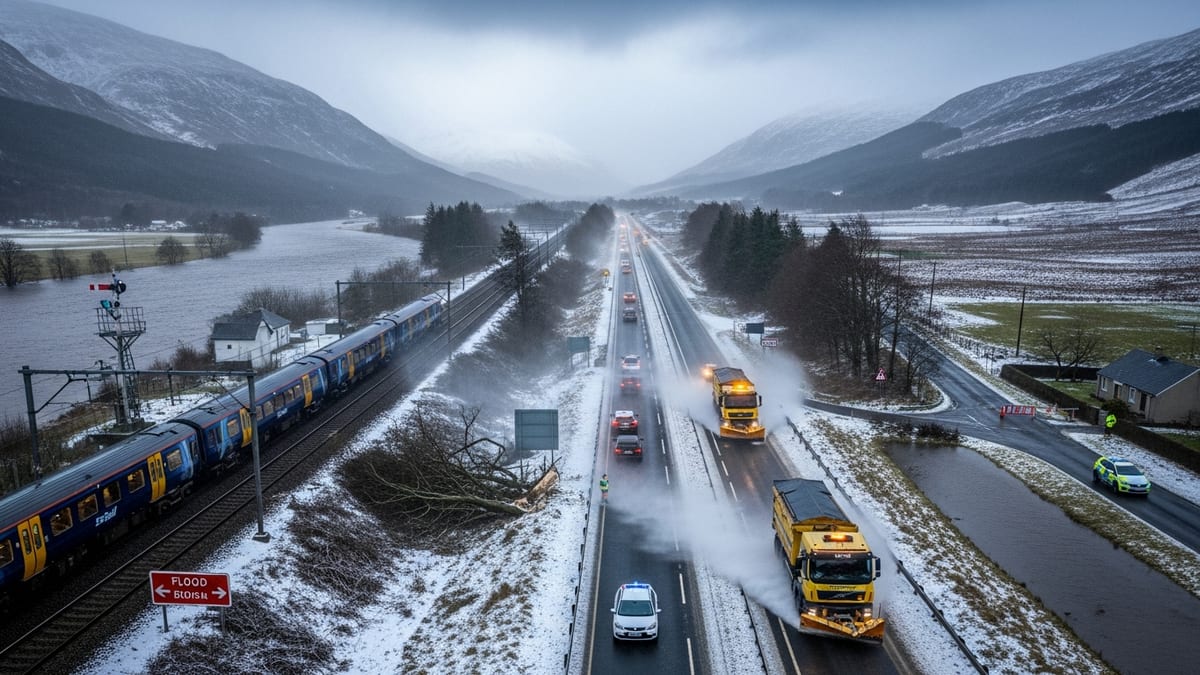
Warning Covers Renfrewshire, Glasgow and Wider Strathclyde
The latest Met Office yellow warning highlights Renfrewshire, the Glasgow city region and surrounding parts of Strathclyde among the areas most exposed to heavy rain and thunderstorms as an unstable weather system moves across Scotland. Publicly available forecast maps indicate that the risk zone stretches from the central belt into southern and western districts, with conditions expected to deteriorate through Friday and into the night.
The yellow warning level signals a possibility of travel disruption and localised flooding rather than widespread severe damage, but forecasters note that impacts could be significant where the heaviest downpours occur. Rainfall totals could build quickly in a short space of time, particularly where repeated showers track over the same locations.
Short-range Scottish and UK mountain forecasts also point to an elevated risk of thunderstorms giving locally torrential rain across southern parts of the Highlands and the central belt, reinforcing concerns that already saturated ground in some catchments may struggle to cope with further intense rainfall.
Torrential Downpours and Thunderstorms Expected
Forecast guidance for Friday in southern and western Scotland indicates bands of heavy rain punctuated by slow-moving thunderstorms, with some cells capable of producing intense rainfall rates. Meteorological outlooks describe a scenario in which humid air is forced to rise over relatively cooler air at the surface, triggering towering storm clouds and sudden downpours.
In the most intense storms, rainfall rates could be high enough to overwhelm drains and roadside gullies, leading to rapid surface water build-up on urban streets and major routes. Where showers repeatedly track over the same area, forecasters note that small streams and culverted burns are especially vulnerable to quick rises in water levels.
The risk of lightning, hail and gusty winds accompanies the heaviest showers, adding further hazards for those travelling or spending time outdoors. While not all communities within the warning area will experience the worst of the conditions, the Met Office assessment emphasises that relatively small differences in storm tracks can sharply change where impacts are most acute.
Flooding, Travel Disruption and Power Risks
Recent heavy rain events across the UK and Ireland have shown how quickly conditions can deteriorate when thunderstorms develop over built-up areas. Previous yellow thunderstorm alerts have brought localised flooding to roads, underpasses and low-lying properties, as well as difficult driving conditions and delays to public transport.
In Renfrewshire, Glasgow and their commuter belts, the combination of dense urban infrastructure and fast-response catchments raises particular concern for surface water flooding should torrential downpours materialise during busy travel periods. Standing water can form rapidly on motorways, dual carriageways and key junctions, increasing the risk of spray, reduced visibility and aquaplaning.
Experience from earlier yellow thunderstorm warnings in other parts of the UK indicates that isolated power interruptions are also possible if lightning affects overhead lines or if falling branches in strong gusts damage local networks. Publicly available resilience guidance stresses that these impacts are typically scattered rather than widespread but can still cause short-term disruption for affected households and businesses.
Public Safety Advice and Preparedness
Open guidance from weather and safety agencies across the UK highlights a consistent set of precautions when yellow thunderstorm or heavy rain warnings are in place. Road users are encouraged to allow extra time for journeys, slow down in heavy rain, and be prepared for sudden changes in visibility and road conditions, particularly near standing water or on rural routes prone to run-off from adjacent fields.
Residents and businesses in known surface water hotspots are advised in similar situations to check that gutters, drains and gullies are clear of debris where it is safe to do so, to move valuables off floors in flood-prone areas, and to keep an eye on small watercourses that have previously responded quickly to intense rain. Publicly available advice from flood and transport agencies also recommends avoiding driving through floodwater, as water depth and road conditions beneath the surface can be deceptive.
Those planning outdoor activities across the central belt and southern Highlands are being urged by various mountain and coastal safety bodies in recent days to monitor weather updates, have alternative plans and be prepared to alter routes or timings if thunderstorms develop. High ground is expected to see rapid changes in cloud, visibility and rainfall intensity, which can make navigation and river crossings more hazardous when storms pass through.
Part of a Wider Spell of Unsettled UK Weather
The latest warning for Renfrewshire, Glasgow and Strathclyde comes during a broader spell of volatile conditions across the British Isles, with contrasting extremes of heat and thunderstorms affecting different regions on successive days. In recent days, UK and Irish forecasters have simultaneously highlighted red and amber alerts for extreme heat in parts of England and Wales alongside yellow thunderstorm warnings for western and northern areas.
Meteorologists point to a pattern in which pulses of very warm, humid air are repeatedly destabilised by approaching low pressure systems, creating sharp temperature contrasts and strong lift in the atmosphere. This set-up has produced successive rounds of thunderstorms and intense rainfall bursts, some of which have already led to localised flooding and travel disruption in parts of Wales, Ireland and northern England.
Climatological analyses published in recent years suggest that Scotland, like the rest of the UK, is seeing shifts in the intensity and frequency of heavy rainfall events aligned with a warming climate. While individual storms cannot be attributed to a single cause, the combination of warmer air capable of holding more moisture and slow-moving weather patterns is viewed by researchers as a key driver behind more frequent episodes of torrential downpours.
For now, residents and travellers across Renfrewshire, Glasgow and the wider Strathclyde region are being urged through public forecasts and travel bulletins to stay alert to rapidly changing conditions as the yellow warning period unfolds, and to follow the latest updates from official weather and transport channels as the storm risk evolves.