


More news on this day
Travelers across Australia and New Zealand are facing fresh disruption as 437 flight delays ripple through major hubs in Sydney, Melbourne, Brisbane and Auckland, complicating winter travel plans and highlighting ongoing strain in the region’s aviation network.
Get the latest news straight to your inbox!
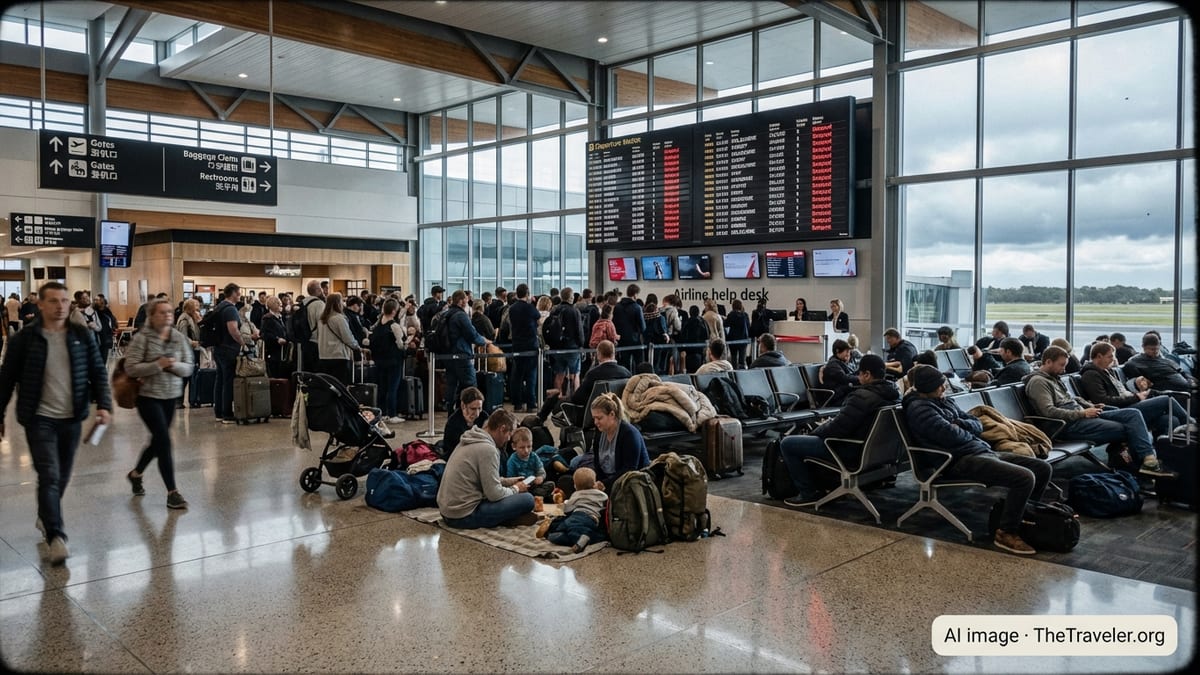
Network Pressure Hits Key Trans-Tasman Gateways
The latest disruption centers on four of the region’s busiest airports, where congested schedules and winter weather have combined to slow operations. Publicly available tracking data and recent coverage of airport performance show that Sydney, Melbourne, Brisbane and Auckland continue to absorb the bulk of flight delays in the Australia–New Zealand market, reflecting their role as primary domestic and trans-Tasman hubs.
Reports on recent disruption days indicate that a single weather system or operational bottleneck at one airport can quickly spread across the network, affecting departures and arrivals on both sides of the Tasman. When aircraft and crews are tightly scheduled, even short hold times on the ground can cascade into missed departure slots, late inbound services, and aircraft rotations that run behind schedule for the rest of the day.
Industry-focused analyses describe a pattern in which morning and late-afternoon peaks are most vulnerable. Flights linking Sydney and Melbourne with Brisbane and Auckland in particular tend to be scheduled in dense banks, which can amplify the impact of any slowdown and contribute to the kind of large, multi-airport disruption seen in the latest wave of 437 delays.
Recent case studies from late June and early July show similar numbers of delays spread across the same airports, underlining how frequently the system is operating near capacity. While exact daily totals vary, the concentration of disruption in these four hubs has become a recurring feature of aviation in the region.
Airlines and Routes Most Affected
According to recent operational summaries and passenger-rights analyses, the bulk of delayed flights involve major regional carriers such as Qantas, Jetstar, Virgin Australia and Air New Zealand, alongside a smaller number of international operators. These airlines dominate high-frequency domestic corridors between Sydney, Melbourne and Brisbane, as well as trunk trans-Tasman routes linking Australia with Auckland.
On busy disruption days, data compiled by travel and compensation platforms shows that services between Sydney and Melbourne, Sydney and Brisbane, and Melbourne and Auckland are among the hardest hit. These routes are typically operated multiple times per day, and aircraft often cycle through several of them in sequence, meaning an initial delay can propagate through a full day’s schedule.
Published incident breakdowns from earlier disruption events in 2026 suggest that regional and secondary city connections can also be affected indirectly. Flights feeding into Sydney, Melbourne and Brisbane from smaller Australian cities, or into Auckland from other New Zealand airports, may inherit delays from earlier segments or be rescheduled to accommodate late-running aircraft and crews.
While cancellations do occur, current reports around the 437-delay figure point to a day dominated by late departures and arrivals rather than wholesale grounding of services. For passengers, that often translates into long waits, missed connections and, in some cases, overnight stays when onward links cannot be met.
Weather, Staffing and Tight Schedules Drive Disruption
Recent coverage of Australian and New Zealand aviation performance points to a familiar combination of factors behind the latest disruption: winter weather, staffing constraints and compact scheduling. Thunderstorms, low cloud and strong winds have repeatedly affected the east coast of Australia and the upper North Island of New Zealand in recent weeks, forcing ground stops, extended separation between aircraft and occasional runway changes.
At the same time, industry analyses note that airlines across the region continue to operate with limited spare aircraft and crews, a legacy of post-pandemic rebuilding and cost-control measures. This leaves little margin to recover from an early delay, particularly on days when multiple hubs are affected by the same weather system or air-traffic-control restrictions.
Government on-time performance reports and airline punctuality data published over the past year show that, while average completion rates have improved since the height of the pandemic, reliability remains volatile on peak travel days. Routes between the four affected hubs are among the busiest in Australasia, which can magnify the impact of each delayed turn-around or maintenance check.
Observers of the sector also highlight operational practices such as “rolling delays,” where departure times are pushed back in increments as airlines await updated slot allocations, crew clearances or connecting passengers. This approach can keep flights technically active on departure boards but often extends passenger waiting times significantly when disruption spreads across multiple airports.
Passenger Impact and Travel Advice
Across Sydney, Melbourne, Brisbane and Auckland, the accumulation of 437 delays is translating into extended queues at check-in counters and rebooking desks, crowded departure halls and pressure on airport ground services. Travel media reports from recent disruption days describe passengers facing several hours of waiting at peak times, particularly where they hold separate tickets or have tight connections.
Consumer advocates and passenger-rights organizations advise travelers caught up in the latest disruptions to keep boarding passes, booking confirmations and any written notifications of delay or cancellation. This documentation can be helpful when seeking reimbursements for out-of-pocket expenses, or when using online tools that assess eligibility for compensation under applicable laws and airline policies.
Guidance from these groups stresses the importance of monitoring airline apps and departure boards closely, as gate changes and revised departure times can occur with little notice on days of widespread disruption. For those with critical onward connections, some travel experts recommend building additional buffer time into itineraries that route through Sydney, Melbourne, Brisbane or Auckland during the southern winter.
Published advice also encourages passengers to understand the distinction between weather-related disruption and delays caused by technical or staffing issues, as this can affect what support may be available. Even when financial compensation is limited, airlines typically provide rebooking assistance and, in some circumstances, meals or accommodation, especially when passengers are stranded away from home.
What the Disruptions Signal for Regional Aviation
The cluster of 437 delays across Sydney, Melbourne, Brisbane and Auckland underscores the fragility of aviation operations in a region that relies heavily on air travel for both domestic mobility and international links. Recent disruption events documented by travel and aviation outlets show that similar patterns can recur multiple times in a season, particularly when weather and staffing pressures coincide.
Analysts observing on-time performance trends suggest that, without additional buffer in schedules, extra staffing resilience or more flexible aircraft deployment, large-scale disruption days will remain a feature of the winter timetable. The dominance of a small number of carriers and hubs in the Australia–New Zealand market means that any issue affecting a major airline or airport can ripple quickly across the network.
For tourism operators and business travelers, repeated disruption carries broader economic implications. Delays on core domestic and trans-Tasman routes can affect everything from same-day corporate travel to onward long-haul connections, with missed flights sometimes leading to significant accommodation and rebooking costs.
In the longer term, the pattern of frequent delay clusters may feed into policy debates about airline consumer protections and transparency around disruption causes. For now, travelers navigating the latest wave of 437 delays are being urged, in publicly available guidance, to plan conservatively, stay informed on the day of travel and allow additional time when connecting through the region’s busiest hubs.