


More news on this day
Six cruise ship passengers have reportedly been arrested after gaining access to the vessel’s public-address system and broadcasting false announcements, an incident that has renewed questions about how easily guests can interfere with critical onboard communications.
Get the latest news straight to your inbox!
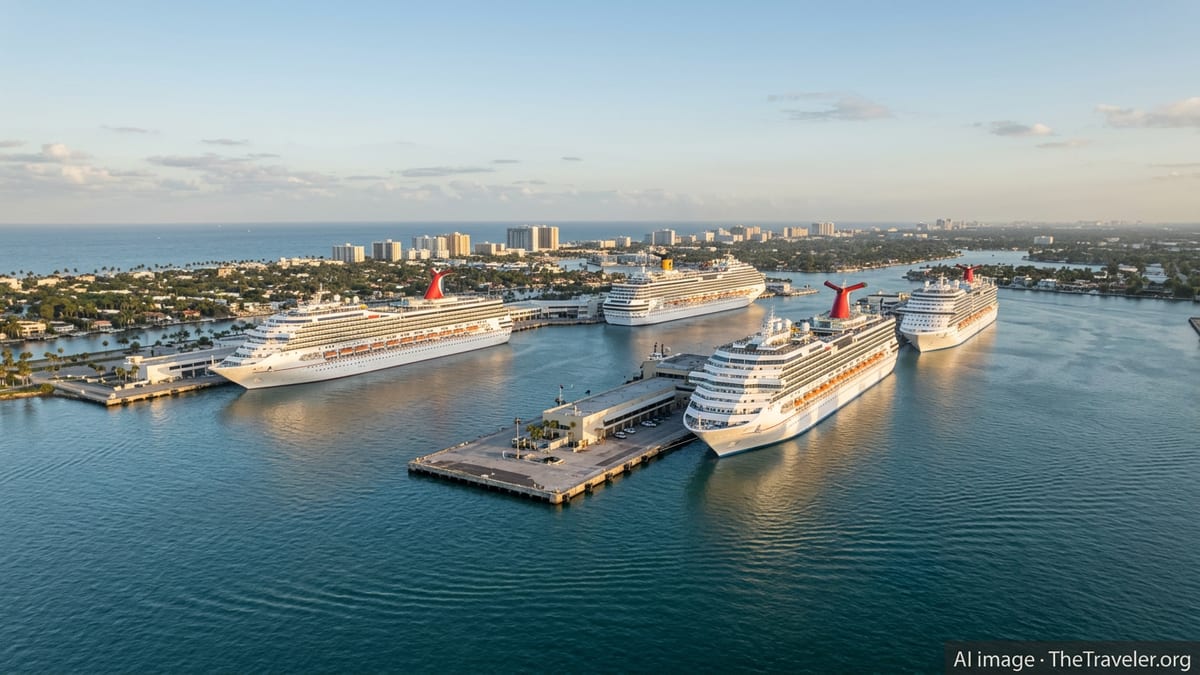
Unusual Incident Involving Ship’s Public-Address System
According to published coverage and social media discussion, the episode unfolded during a recent sailing when a small group of passengers allegedly accessed the ship’s internal communications and used the public-address system to make announcements that were later determined to be false. The messages were described in multiple reports as disruptive and misleading, although no serious injuries were reported.
Details such as the exact content of the false announcements, the length of the disturbance and the specific cruise brand involved have not been fully clarified in publicly available accounts. What is consistently described is that multiple areas of the ship were affected, with passengers initially unsure whether they were hearing legitimate crew instructions or a prank.
Publicly available information indicates that shipboard crew moved quickly to trace the source of the unauthorized announcements and secure the affected equipment. The situation reportedly led to heightened concern among guests, many of whom rely on the PA system for safety information, daily updates and emergency instructions while at sea.
In the aftermath, six passengers were detained and later arrested in port, according to media summaries of official statements released on shore. The individuals have not been publicly identified, and information about potential charges remains limited while local investigations continue.
Potential Legal Consequences for Disrupting Safety Systems
Interfering with a cruise ship’s communications and safety infrastructure can carry serious legal consequences. Maritime safety guidelines and criminal statutes in many jurisdictions treat false alarms and unauthorized use of emergency channels as significant offenses, particularly when they have the potential to trigger panic or divert crew attention from genuine safety needs.
Legal analysts often note that even if no one is physically harmed, disruptions involving safety or emergency systems may be prosecuted under laws covering public mischief, false reports or interference with transportation services. The fact that this case reportedly involved multiple passengers and repeated false announcements could influence how local prosecutors evaluate the seriousness of the conduct.
Depending on where a ship is registered and the ports it visits, incidents of this kind can involve overlapping legal frameworks, including the law of the flag state and the jurisdiction of the country where the vessel is docked when arrests occur. Publicly available information about previous cruise cases suggests that penalties can range from fines and probation to custodial sentences, particularly if prosecutors argue that an incident created a substantial risk to others.
In addition to any criminal process on shore, cruise guests who interfere with onboard equipment may face separate consequences from the cruise operator, including disembarkation at the next port, permanent bans from the brand and potential civil liability if their actions are linked to financial losses or injuries.
Cruise Lines Under Scrutiny Over Access to Critical Systems
The reported arrests have focused new attention on how cruise ships control access to their public-address networks and other safety-critical consoles. While specific security layouts differ by vessel and brand, the PA system is typically treated as a core part of a ship’s safety architecture, intended to be used only by trained crew members in strict accordance with company procedures.
Industry observers note that modern cruise vessels combine traditional loudspeaker announcements with digital signage, mobile app alerts and cabin television messaging. However, the PA system remains the most immediate and universal way to reach passengers, particularly during emergencies when guests may not have access to personal devices.
Publicly available commentary from maritime safety specialists often emphasizes the importance of limiting physical and digital access to such systems, including locked control rooms, key-card restrictions and multi-step authentication for certain functions. The latest incident is prompting questions about whether existing safeguards are sufficient, or if additional design measures are needed to prevent guests from approaching or manipulating consoles in public or semi-public spaces.
Reports of the case also intersect with a broader conversation about onboard behavior and the responsibilities of passengers. Recent seasons have seen multiple high-profile episodes involving disruptive conduct on ships and in port areas, leading to calls for stricter enforcement of codes of conduct and closer cooperation between cruise operators and local authorities.
Passenger Reactions and Onboard Experience
Accounts shared by travelers on cruise-focused forums indicate that many guests view the PA system as an integral part of their sense of security at sea. Routine announcements about weather, itinerary changes and safety reminders are generally welcomed when they come from recognizable voices such as the captain or cruise director.
When those announcements are disrupted or appear irregular, some passengers report feeling unsure whether to treat messages as entertainment, marketing or potential safety alerts. The latest incident, involving false statements broadcast over the same loudspeakers used for mandatory drills, has fueled online discussions about how easily trust in the system can be undermined by a single episode of unauthorized access.
Travelers commenting on the case have raised practical questions, including whether ships should introduce clearer audio cues that distinguish serious safety messages from lighter updates, or whether additional pre-cruise briefings should highlight the importance of not tampering with communications equipment. Others argue that the focus should remain on ensuring passengers never get close to the hardware in the first place.
Despite the concern, industry data compiled over recent years generally shows that serious interference with shipboard safety systems remains rare compared with the overall volume of cruise voyages. Many passengers responding to news of the arrests have emphasized that they still consider cruising a safe and highly regulated form of vacation, while expressing support for firm responses when incidents do occur.
Safety Practices and What Travelers Should Know
The episode serves as a reminder to cruise travelers of how central communication systems are to safety at sea. During mandatory muster drills, passengers are typically instructed to listen carefully to announcements and to treat any emergency code as requiring immediate attention, even if the message is not fully understood.
Maritime safety information available to the public underscores several consistent recommendations for guests. These include keeping cabin televisions or in-room speakers at an audible level when instructed, avoiding the use of headphones during key phases such as sail-away and arrival, and moving promptly to muster stations when directed. Interfering with alarms, loudspeakers or signage is widely discouraged and can trigger significant disciplinary measures.
For travelers, the latest reported case involving six arrested passengers is likely to reinforce the message that onboard communications are not a source of entertainment, but a critical tool designed to protect thousands of people in a confined, moving environment. As investigations continue, cruise watchers expect further discussion about technical upgrades and procedural changes that could make it even harder for guests to access PA systems without authorization.
With the cruise sector continuing to expand and new mega-ships entering service, the balance between open, welcoming public spaces and tightly secured operational areas is likely to remain a central theme in debates about safety at sea. Incidents like the one now under review highlight how quickly that balance can be tested when a small number of passengers treat safety systems as part of the holiday experience rather than as protected infrastructure.