


More news on this day
A newly publicized 30-day travel warning aimed at cruise passengers is drawing fresh attention to how much identification travelers really need, just as U.S. agencies weigh tighter passport rules for voyages that start in American ports and loop through nearby countries.
Get the latest news straight to your inbox!
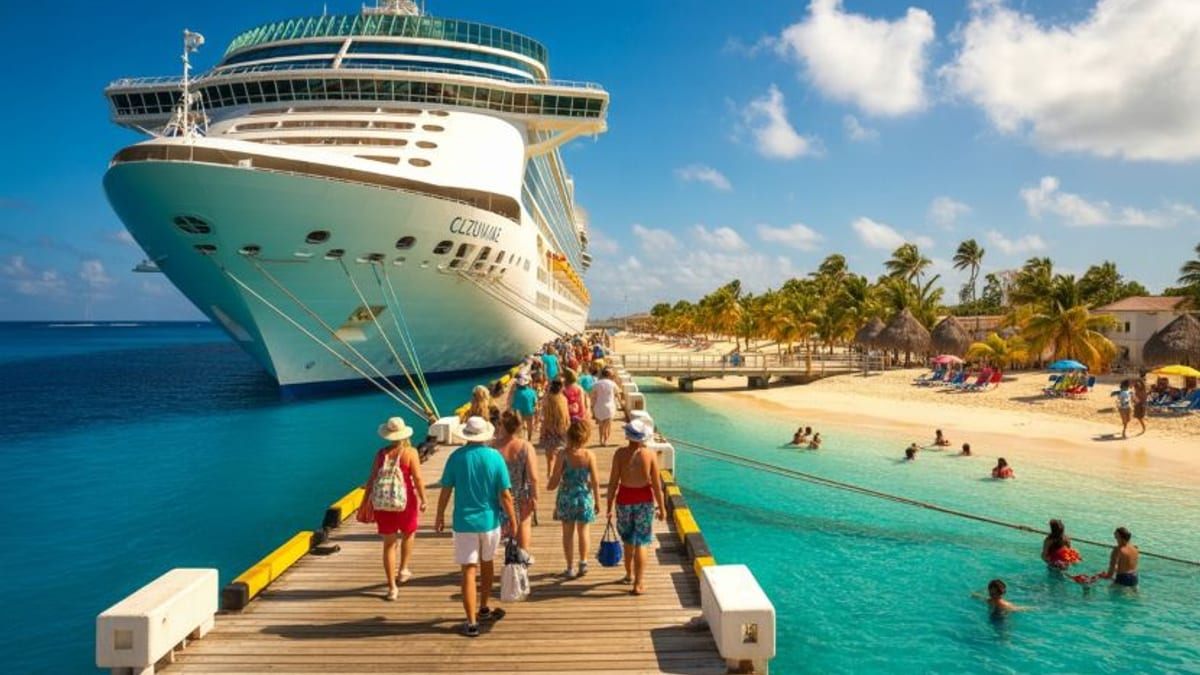
Warning Collides With Longstanding Cruise ID Loopholes
The 30-day advisory, circulated across cruise forums and traveler-facing outlets in early November 2026, highlights the heightened risk of being turned away at embarkation or stranded abroad if documents are not in strict order. The notice focuses on sailings from U.S. ports to nearby destinations over the next month, when holiday bookings spike and ships regularly sail full.
Publicly available information on current entry rules shows that many U.S. and Canadian travelers have long relied on a carve-out under the Western Hemisphere Travel Initiative that permits some cruise passengers to return to the United States without a passport. For so-called closed-loop itineraries, which depart from and return to the same U.S. port, a government-issued photo ID teamed with proof of citizenship, such as an original or certified birth certificate, has often been accepted.
The new warning does not itself change the law, but it is arriving at a moment when confidence in those exceptions is already being questioned. Reports from consumer travel sites and cruise-focused publications indicate that each cruise line is applying the rules with its own set of nuances, leading to confusion for travelers who booked assuming that a birth certificate and driver’s license would be enough.
At the same time, a joint rule in development by the Department of Homeland Security and Department of Justice would, if finalized, require passports for most cruise passengers in the Western Hemisphere. Regulatory filings outline an intent to narrow or remove existing exemptions that currently allow some travelers to sail on alternative documents, signaling that today’s flexibility may not last.
Closed-Loop Cruises Under Fresh Scrutiny
The spotlight now falls on closed-loop cruises, a popular choice for first-time passengers and families departing from ports such as Miami, Port Canaveral, Galveston, Los Angeles and Seattle. According to cruise line travel document hubs and planning guides, these voyages have been marketed as passport-optional for many U.S. citizens, provided the itinerary begins and ends at the same American port.
Guidance published by several major lines indicates that U.S. citizens on these routes are currently able to board with an original or certified U.S. birth certificate plus a government-issued photo ID, or with a U.S. passport book or passport card. However, detailed FAQs from operators also warn that guests who misjudge the rules or show up with hospital-issued birth notices, “no record of birth” letters or photocopies risk being denied boarding with no refund.
Consumer travel coverage notes that this flexibility only applies to certain patterns of travel. Open-loop itineraries, which start in one U.S. port and end in another, and voyages that include destinations with stricter documentation policies, usually require a valid passport book or another travel document that meets Western Hemisphere Travel Initiative standards.
With the 30-day warning coinciding with peak booking periods, travel advisors and experienced cruisers are steering attention to the fine print. The gap between what is technically allowed under border rules and what an individual cruise line is willing to accept at check-in has become a central point of concern for travelers hoping to sail without a passport.
REAL ID, Passport Cards and Enhanced Licenses Explained
Another factor adding to the confusion is the growing use of REAL ID-compliant driver’s licenses across the United States. Public information from airline and government resources makes clear that REAL ID, recognizable by a star on the license, is primarily designed for identity checks at airport security for domestic flights. It confirms identity but does not establish citizenship, which is a key requirement for crossing borders by sea or air.
Cruise travel guides and official documentation pages stress that, while a REAL ID driver’s license can often be used as the photo ID portion of the package for closed-loop sailings, it does not replace proof of citizenship and cannot be used in place of a passport book for international air travel. This distinction becomes critical if a passenger needs to fly home from a foreign port because of illness, family emergencies or a missed ship.
For passengers seeking a middle ground, passport cards and enhanced driver’s licenses are emerging as alternatives on some routes. Published cruise line materials describe the U.S. passport card as a wallet-sized document valid for land and sea travel between the United States, Canada, Mexico, Bermuda and much of the Caribbean, but not for international air travel. Enhanced driver’s licenses, available in a limited number of U.S. states and Canadian provinces, serve as both identity and citizenship documents at certain land and sea borders, though they are explicitly distinguished from standard REAL ID licenses.
The 30-day warning is prompting travelers to revisit these distinctions carefully. While some routes in the Caribbean or Mexico still accept a combination of birth certificate and photo ID, others list passport books or specific WHTI-compliant documents as mandatory. Relying on generalized advice rather than cruise- and port-specific rules is increasingly risky in the current environment.
Proposed Federal Rule Signals Potential Shift
Beyond the immediate 30-day window, attention is turning to what could be a more fundamental change in how cruise passengers are documented. A regulatory agenda entry filed with federal rule trackers in 2026 outlines a proposal from the Department of Homeland Security and Department of Justice to mandate passports for most cruise passengers, including those traveling only in the Western Hemisphere.
The summary indicates that the proposal would curtail existing exemptions that allow U.S. and Canadian citizens on certain sea routes to enter the United States using alternative documents. While key details, such as implementation timelines and the scope of any exceptions, remain undetermined, the filing underscores that the current mix of birth certificates, cards and licenses may give way to a simpler but stricter passport-first system.
Travel industry analyses suggest that such a rule would align sea travel more closely with air travel, where passports are consistently required for international itineraries. It would also likely reduce the last-minute uncertainty faced by cruisers who discover, sometimes days before sailing, that their documents do not meet the combination of cruise line policy and border requirements.
For now, no official implementation date has been announced, and the proposal remains in the rulemaking pipeline. However, its presence on the regulatory agenda is shaping how cruise lines frame their own recommendations, with many describing passports as strongly advised even on itineraries where they are not yet mandatory.
What Travelers Can Do Over the Next 30 Days
With the travel warning covering the next month of departures, the most immediate step for booked passengers is to verify requirements directly through their cruise line’s travel document pages or pre-cruise communications. Publicly available FAQs from major brands emphasize that guests who arrive at the pier without the required documents can be denied boarding without compensation, underscoring the stakes for those relying on older assumptions about ID rules.
Industry guidance points to a hierarchy of options. A valid passport book remains the most universally accepted document, enabling both cruise boarding and emergency international flights if needed. Where passport books are not yet in hand, travelers are reviewing whether their itineraries qualify as closed-loop sailings and confirming that original or certified birth certificates, passport cards or enhanced driver’s licenses are accepted for the specific ports of call.
The timing of the warning also intersects with broader changes to U.S. identification standards for air travel. From May 7, 2025, Department of Homeland Security rules will require REAL ID-compliant licenses or alternative acceptable documents, such as passports or certain enhanced IDs, for adults flying within the United States. For cruise passengers who must fly to or from their homeports, that layer of rules sits alongside, rather than replaces, the documentation requirements at the pier.
As the holiday and early 2027 booking seasons approach, the 30-day advisory is being interpreted less as a brief alert and more as a signal that the era of sailing comfortably without a passport may be nearing its end. Travelers who want to keep their future cruise options open are increasingly treating passport applications not as an optional extra but as a central part of cruise planning.