


More news on this day
The Villa Vie Odyssey residential cruise ship has departed the Cambodian port of Sihanoukville without any passengers on board, capping a dramatic collapse of a much-publicized “endless” voyage and leaving hundreds of would-be residents to piece together their futures on land.
Get the latest news straight to your inbox!
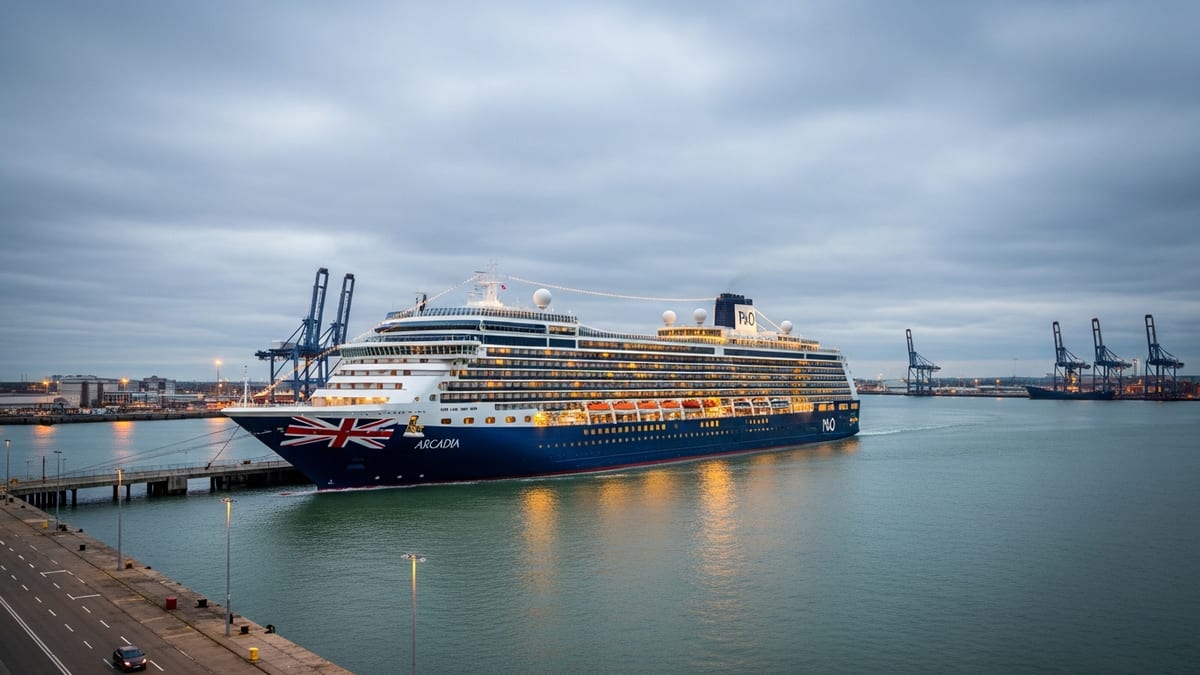
Residential "endless cruise" unravels in Sihanoukville
The Bahamas-flagged Villa Vie Odyssey, operated by Florida-based company Villa Vie Residences, sailed out of Sihanoukville Autonomous Port on 4 November 2026 with only crew on board after being laid up for days amid mounting financial pressures. Publicly available information indicates that around 200 passengers had previously been ordered to disembark in the Cambodian coastal city when the operator suspended its ambitious multi-year world journey.
The ship had been marketed as a long-term residential cruise offering a “never-ending” global itinerary in privately owned or long-leased cabins. Prospective residents were invited to sell or rent out their homes on land and instead live full time at sea while the vessel circled the globe. Coverage in international and regional outlets describes purchasers paying substantial upfront sums for multi-year or lifetime stays, with the ship’s relaunch drawing attention as an experiment in seagoing co-living.
That concept came to an abrupt halt in late October, when the Odyssey’s voyage was suspended during a scheduled call at Sihanoukville in southern Cambodia. Reports from news organizations and passenger accounts describe residents being told they had only hours to pack up their belongings and leave the ship, effectively ending the residential program in a single port call.
Images and video from Sihanoukville showed lines of passengers rolling large suitcases along the pier and loading personal effects into vans and taxis, underscoring how deeply some had committed to life aboard. The sight of a large cruise ship later departing the same harbor completely empty of guests has since come to symbolize the sudden reversal of fortunes for the venture.
Financial strain and transfer of control to lender
According to published coverage summarizing statements by the company and local authorities, the Villa Vie Odyssey’s troubles accelerated as fuel prices and operating costs eroded the financial assumptions behind the residential model. Passengers have described being asked repeatedly to contribute additional funds for fuel and port expenses, including an attempt to raise money specifically to allow the ship to sail away from Cambodia.
When additional financing failed to materialize, the operator suspended the voyage and the ship ultimately came under the control of its lender. Marine industry reports indicate that the lender arranged for the vessel to leave Cambodia without passengers, with the ship expected to reposition to another regional port such as Singapore for lay-up, inspection or potential sale. The precise crew headcount during departure has not been publicly clarified, though earlier reports referenced around 150 crew members on board while the ship was idle in Sihanoukville.
Public corporate statements before operations were halted emphasized that Villa Vie Residences was exploring strategic options and seeking new investment. Subsequent reporting indicates that the lender moved ahead with securing the asset, while questions remain about the company’s long-term viability and any possible restructuring. As of early November, there has been no announcement of a concrete rescue plan for the original residential cruise concept.
The episode highlights the financial complexity of running a large ocean-going vessel on a residential model that relies on long-term occupancy rather than traditional per-voyage ticket sales. Fixed costs such as fuel, staffing and maintenance can be difficult to adjust quickly when cash flow tightens, especially once a ship has embarked on a multi-year itinerary that crosses multiple regions and regulatory environments.
Hundreds of passengers stranded across Cambodia and beyond
While the ship itself has now left Sihanoukville, the human impact of the shutdown is still unfolding on shore. According to international and regional news outlets, more than 200 passengers from various countries disembarked in Cambodia after being told that the voyage would not continue. Some remained in Sihanoukville and Phnom Penh to arrange onward travel, while others quickly boarded flights to neighboring countries or back to their home nations.
Many of those affected had reorganized their lives around the expectation of years at sea, in some cases selling homes, terminating leases, or placing cherished possessions into storage. Publicly available accounts from passengers describe scrambling to find hotel rooms, purchase last-minute airline tickets and manage visa requirements, often at their own expense. Several reports note that travelers were left waiting for clarity on refunds for cabin purchases and prepaid services, with no firm timetable for any compensation.
Information shared by Cambodia’s Ministry of Tourism and port authorities indicates that local officials helped coordinate logistics during the disembarkation period, including transportation and processing of large volumes of luggage. However, travelers’ experiences appear to have varied significantly, with some reporting that they secured alternative arrangements quickly and others describing extended uncertainty about how they would continue their journeys.
As the ship moves away from Cambodian waters, the former residents have begun to organize informally through online groups to exchange information on legal options, potential claims and support resources. The situation remains fluid, as no comprehensive settlement structure has been detailed publicly and the relevant jurisdictions span several countries, including the vessel’s flag state, the operator’s home base and the ports visited.
What the Odyssey case signals for residential cruising
The Villa Vie Odyssey was part of a small but closely watched segment of the cruise and travel industry built around the idea of long-term or permanent residence at sea. Earlier ventures in this space have included shipboard condominiums and extended world cruises marketed to retirees and digital nomads. Industry analysts have pointed to rising interest in such concepts, particularly among travelers looking for predictable living costs and a curated global lifestyle.
The Odyssey’s financial collapse in Cambodia raises broader questions about how resilient such models are to volatile fuel prices, shifting travel demand and regulatory requirements across different regions. The ship’s departure from Sihanoukville without passengers illustrates the risk concentration when hundreds of individuals commit not just their vacation budgets but much of their personal wealth to a single operator and vessel.
Consumer advocates have long highlighted the importance of robust financial safeguards for cruise passengers, particularly in markets where operators are selling packages that resemble real estate or long-term leases rather than conventional tickets. In traditional cruising, certain jurisdictions require proof of financial responsibility or bonding to protect passengers if a voyage is canceled or a line becomes insolvent. How those protections apply to multi-year residential products, which may straddle categories between travel service and housing investment, is likely to face renewed scrutiny following the Odyssey case.
Prospective residents on similar concepts may now look more closely at the corporate structures, lender arrangements and contingency plans behind any future “live aboard” offerings. The Villa Vie Odyssey’s empty departure from Cambodia has quickly become a reference point in discussions about the balance between innovation in travel lifestyles and the practical safeguards needed when that innovation involves relocating one’s entire life to a ship at sea.
Implications for travelers considering long-term life at sea
For travelers and retirees drawn to the promise of life at sea, the events in Sihanoukville underscore the need for detailed due diligence before committing to long-term floating residences. Publicly available commentary from passengers affected by the Odyssey shutdown points to the importance of reviewing contract terms, refund policies and the financial transparency of operators that sell multi-year or lifetime stays.
Travel and legal experts commenting on the situation in news reports have stressed the practical value of maintaining contingency funds and backup housing options on land, even when a move to a ship feels permanent. The Odyssey’s swift pivot from marketed stability to abrupt closure demonstrates how quickly circumstances can change once a complex, capital-intensive travel project encounters funding gaps.
The Villa Vie Odyssey is now en route away from Cambodia under the control of its lender, while its former residents navigate a less predictable journey through insurance policies, contractual fine print and cross-border regulations. For the broader travel community, the image of a residential cruise ship sailing empty past the Cambodian coastline serves as both a cautionary tale and a catalyst for renewed debate about what it truly means to make the sea a full-time home.