


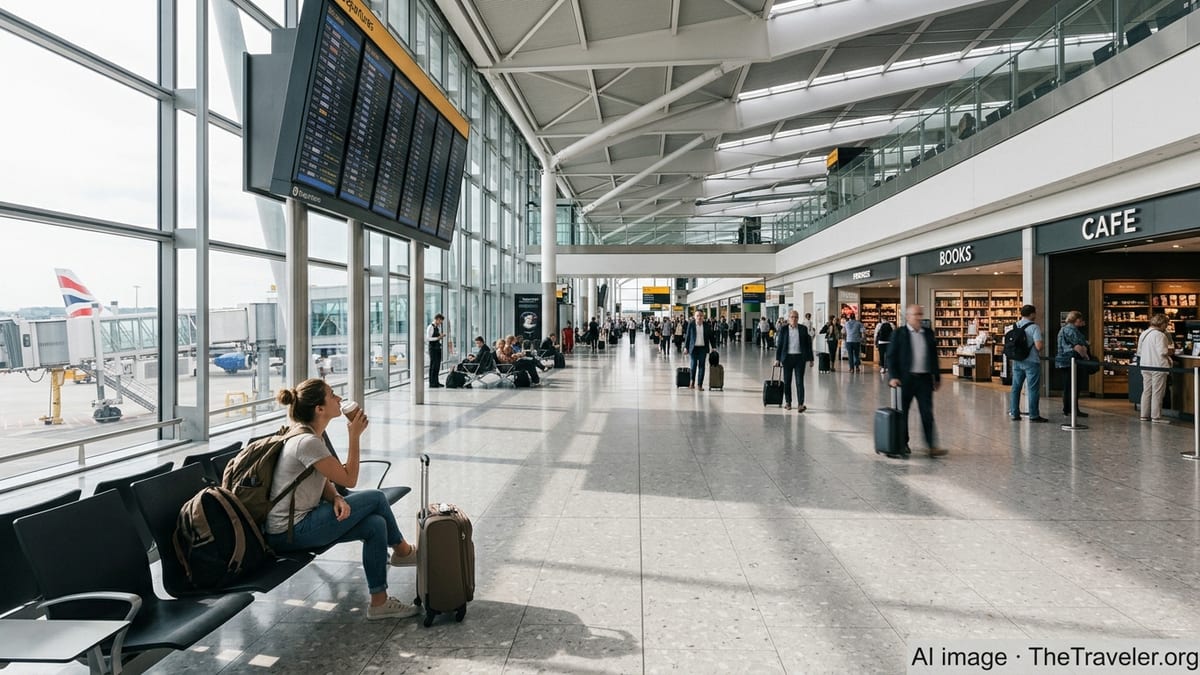
First Reality Check: Is 6 Hours Really Enough to Leave Heathrow?
Before you start dreaming of selfies at Buckingham Palace, you need to do a quick time audit. A 6-hour layover on your booking rarely equals 6 free hours. You lose time taxiing, deplaning, possibly clearing immigration, walking between terminal areas and passing security again. In busy periods such as summer holidays or December, simply getting from plane door to landside arrivals can easily take 45 to 90 minutes. The safe assumption is that you may only have 3 to 4 genuinely usable hours, and less if your first flight is delayed.
Check two things on your itinerary: whether your bags are checked through, and whether you remain airside or must clear UK immigration. If you are on a through ticket with a same-terminal connection and your luggage is checked to your final destination, you will probably stay airside and can focus on lounges, food and shopping. If you have separate tickets, are changing from a non-partner airline or need to collect and recheck bags, you will almost certainly need to exit through arrivals, retrieve luggage, and go through security again. That alone can eat two hours from a 6-hour layover.
As a rule of thumb, if you have less than 4.5 hours between scheduled arrival and departure, it is generally too risky for most travelers to leave the airport. Between 4.5 and 6 hours, you have a narrow margin that might allow a quick foray to somewhere nearby like Windsor or a hotel bar in one of the airport hotels, but central London is usually pushing it. Only when you have 7 hours or more, clear immigration quickly and have on-time flights does a short city visit begin to make sense.
Remember that airlines typically close boarding 20 to 40 minutes before departure, and security queues can stretch far longer than any official estimate. It is rarely worth saving an hour of boredom in exchange for the stress of watching the clock in a taxi back to Heathrow while your gate closing time creeps closer.
Navigating Terminals and Security Without Losing Your Nerve
Heathrow’s scale surprises many first-time visitors. There are four active passenger terminals (2, 3, 4 and 5), and not all connections are straightforward. Your exact options during a layover partly depend on where you land and where you depart. For example, a typical North America to Europe itinerary on British Airways might arrive and depart from Terminal 5, which is heavily oriented toward BA and its partners. Many long-haul services for airlines such as Virgin Atlantic operate from Terminal 3, while various European and international carriers use Terminals 2 and 4.
Connections within the same terminal are usually the least stressful. Staying inside Terminal 5 or Terminal 3 typically means following “Flight Connections” signs, passing through security and arriving in the departures area without entering the UK. That can still take 30 to 60 minutes in busy times, but you remain airside and never face passport control. Moving between some terminals, such as from Terminal 5 to Terminals 2 or 3, often involves a short shuttle or train transfer plus another round of security. You should factor in at least 75 to 90 minutes for an inter-terminal connection with modern crowd levels.
If your itinerary requires you to leave the secured zone, you will follow signs to “Arrivals” instead. Once you collect luggage, you become a normal arriving passenger and have to clear security again later. Left luggage offices in arrivals halls in each terminal allow you to store large bags so you are not dragging a suitcase through shops, lounges or the Heathrow Express platforms. Prices are typically charged per bag per 24-hour period or fraction; for short-term storage of a few hours for one bag, expect roughly the cost of a modest restaurant meal in central London rather than pocket change.
Because of this complexity, one of the best uses of the first 10 minutes of your layover is simply to confirm your onward gate area on the airport screens, note which concourse or satellite you depart from, and mentally map your route back. If you know you will depart from one of the satellite concourses at Terminal 5, for instance, you should plan to be on the shuttle train out to that satellite 45 to 60 minutes before boarding rather than lingering by the main shopping hall.
Staying Airside: Lounges, Sleep Pods and Showers
For many travelers with a 6-hour layover, the most relaxing option is to remain airside and lean into comfort. Heathrow’s terminals host a mix of airline lounges and pay-per-use lounges. In Terminal 5, British Airways operates multiple lounges for eligible passengers, and independent lounges such as Plaza Premium and Club Aspire can usually be accessed with a one-off entry fee or membership programs. In Terminals 2, 3 and 4, you will find similar pay-per-use options, often with showers, quiet zones and hot food buffets.
Entry prices vary, but a ballpark range is roughly the cost of a mid-range London lunch per person. For that, you typically receive up to three hours in a lounge with complimentary food, house drinks, Wi-Fi and a more peaceful environment than the main concourse. If you hold a premium credit card that partners with lounge networks, it is worth checking your card’s app on arrival; many travelers are pleasantly surprised to find they can walk into a Plaza Premium or similar lounge without paying extra at the door.
Travelers needing real rest can seek out nap-friendly options. In recent years, some Heathrow lounges have introduced dedicated sleep pods that allow short paid naps of around 20 to 60 minutes. You lie back in a reclining pod with privacy screens and use a timer to wake before boarding. These are not full hotel rooms, but for a jet-lagged passenger coming off a red-eye from New York or Dubai, even a 30-minute nap in a quiet pod can transform the second leg of the journey. Availability is limited, so ask at lounge reception as soon as you arrive rather than waiting until you feel drowsy.
Showers are another key benefit of lounges. After an overnight flight, being able to take a hot shower, change into fresh clothes and then sit down with coffee or breakfast dramatically improves your layover. A typical routine might be to shower first, then enjoy a proper meal, then spend the last hour catching up on emails or streaming something with the lounge Wi-Fi. If you plan this sequence, a 6-hour layover suddenly looks far less tedious and far more manageable.
Eating, Drinking and Shopping Inside the Terminals
Heathrow has evolved into a major shopping and dining destination, particularly in Terminals 3 and 5. This can work in your favor on a layover, especially if you treat the terminal as a self-contained mini city rather than an oversized waiting room. Once you pass security, you will see everything from high-street clothing and electronics stores to luxury boutiques. Even if you have no intention of buying, it can be an easy way to stretch your legs and stay awake.
Serious meals are also possible. Terminal 5, for example, hosts a Gordon Ramsay restaurant that serves sit-down dishes suitable for either brunch or an early dinner, as well as more casual spots for burgers, sushi, and grab-and-go salads. Terminal 3 offers a mix of international chains and pub-style venues where you can enjoy a classic full English breakfast, a curry or a vegetarian mezze plate. Most open early in the morning to serve overnight arrivals, and many remain open into the late evening, though truly 24-hour options are more limited.
Cash-free payment is standard, and card terminals accept most major international credit and debit cards. For a typical meal with a main course and a soft drink, expect to pay prices similar to a mid-range restaurant in central London. Many venues also offer “to-go” boxed meals designed for passengers to take onboard, which can be a smarter bet than relying on an uncertain in-flight catering experience on a low-cost carrier. Some restaurants allow you to pre-order via airport apps so your food is ready when you arrive at the gate area.
If you plan to shop, keep your time budget realistic. It is surprisingly easy to spend 45 minutes in a large electronics store comparing noise-cancelling headphones or portable chargers, only to realize you have left too little time to walk to a far-away gate. A good tactic is to identify one or two specific purchases before you browse, such as a UK plug adapter or a travel pillow, and then stop shopping altogether once you have them. This prevents your layover from turning into a frantic last-minute dash with heavy duty-free bags.
Can You Realistically Go into London on a 6-Hour Layover?
The fantasy version of a Heathrow layover includes a quick train into London, a photo by the Thames, maybe a pint near Paddington, and a calm ride back in time for boarding. The reality is more complicated. Nonstop rail services such as the Heathrow Express typically take around 15 minutes between the airport and Paddington Station once you are on board. The newer Elizabeth line offers a slightly slower but often cheaper ride into central stations such as Tottenham Court Road, usually in under 35 minutes.
The problem is not the train itself but everything around it. To leave the airport, you must clear immigration, which can be brisk or painfully slow depending on arrival time and staffing. You may need to detour to a left luggage office in arrivals to store any large bags, pay for storage, and then walk to the rail platforms. Even with no queues, reaching Paddington will often require at least 60 to 75 minutes from the moment the aircraft door opens. You then need to reverse the process on the way back, plus allow time for security and a walk to the gate.
If your layover is exactly 6 hours and your first flight arrives on time, that schedule might give you 2 to 2.5 hours in the city at best. That could be enough for a brisk walk along the canal at Paddington Basin and a meal at one of the restaurants there, but any delay on the first flight, immigration queues or train disruptions would eat into that margin. Transport networks in and around London are generally reliable but not immune to signal failures, temporary closures or industrial action.
A more conservative and often better option for a 6-hour layover is to focus on Heathrow’s own surroundings instead. For instance, nearby towns such as Windsor are theoretically reachable by taxi or a combination of train and bus in under an hour each way in light traffic, but again delays and cost add up quickly. If you are determined to see something beyond the terminal, treating yourself to a quiet hour in a nearby airport hotel lobby, spa or restaurant can deliver a change of scene with far less risk than a full city excursion.
Low-Stress Alternatives: Hotels, Walks and Nearby Breaks
If you crave fresh air and a change of environment without bolting all the way into central London, Heathrow’s immediate surroundings offer a few practical alternatives. Several hotels are directly connected to or very close to the terminals via covered walkways or short shuttle rides. These properties often have spacious lobbies, bars and cafes that can feel calmer than the terminal concourses. For example, walking from Terminal 4 across to an adjoining hotel for brunch or coffee can turn an anxious layover into a quiet mini-break.
Day rooms are sometimes available at airport hotels, either bookable in advance or via same-day apps, and can be a smart buy if you are coming off a long-haul overnight flight and still have another overnight sector ahead. Pricing varies widely depending on demand and brand, but if two or more people share the cost, a few hours in a real bed and a private shower might not be much more expensive than multiple lounge passes. This setup lets one traveler nap while another answers emails or enjoys a slow lunch.
Short walks outside are trickier at Heathrow than at some airports because of the road layout and security fencing, but some hotels and local areas have small green spaces or canal paths within a reasonable stroll. If you go this route, you must be realistic: by the time you leave the secure zone, collect any items you need, take a shuttle to a hotel, check in for a day room and settle, a 6-hour layover can shrink rapidly. It works best when you are highly schedule-conscious and set firm alarms to start moving back to the terminal.
Another underrated option is to build your own “wellness layover” with what the airport already offers. Many terminals include small spas, nail bars or massage chairs that charge by the minute. Combining a 20-minute back massage, a long shower, a proper meal and a quiet reading session might lack the bragging rights of a rushed dash into London, but you are far less likely to end up sprinting to your gate.
Smart Time Management: A Sample 6-Hour Layover Plan
To make all this more concrete, it helps to imagine how a realistic 6-hour layover might unfold for a typical traveler. Assume you are arriving on a mid-morning transatlantic flight into Terminal 3, with an onward evening flight to Europe from the same terminal, and your bags are checked through. The aircraft’s wheels touch down at 10:00. By the time you reach the gate, disembark, walk through the corridors, pass security at “Flight Connections,” and enter the departures area again, it might be around 11:00, possibly later in peak season.
From 11:00 to 12:00, you could head directly to a pay-per-use lounge, reserve a shower slot, and clean up. Fresh clothes and a coffee later, you feel human again. From 12:00 to 13:00, you settle into a quiet lounge corner chair to catch up on messages over a light lunch from the buffet. At 13:00, you take a short wander through the terminal’s main shopping zone, perhaps picking up a local SIM, a UK plug adapter or a snack pack for your next flight.
By around 14:00, with two hours to scheduled departure, you check the screens to confirm your gate. If a gate number is not yet posted, note the likely pier or zone and make your way closer to that area. This is a good time for a final coffee or to refill your water bottle at a fountain, as well as a quick stretching walk up and down the corridor to fight jet lag. When your gate appears, you should already be nearby, reducing the stress of long walks.
If you were connecting between terminals, the same 6-hour window would feel tighter. An arrival at 10:00 in Terminal 5 with a departure from Terminal 2 might mean you do not clear the second round of security until nearly noon, especially if transfer buses are crowded. In that scenario, you might choose to skip any hotel excursion or elaborate shopping and instead head straight for a lounge or sit-down restaurant in your departure terminal, using the remaining hours simply to eat, rest and recharge.
The Takeaway
With a 6-hour layover at Heathrow, the key is to be honest about what is feasible. Once you account for walking distances, formalities and the ever-present risk of delays, your truly free time often shrinks to three or four hours. For most travelers, the most rewarding and least stressful use of that time is to stay within the airport environment, aiming for a combination of rest, good food, light movement and simple comforts.
If you have clear evidence that immigration is likely to be quick, your flights are historically punctual and your risk tolerance is high, a quick trip into central London by rail might be possible. For the majority, however, it is a better bet to invest in a lounge pass, consider a short hotel break near the terminals, or string together a DIY spa-and-dining circuit inside Heathrow itself. You will land at your final destination cleaner, calmer and much less likely to have spent your supposed layover adventure trapped in a taxi on the M4 watching your departure time slip away.
FAQ
Q1. Is a 6-hour layover at Heathrow enough time to go into central London?
For most passengers it is not ideal. By the time you clear immigration, possibly store luggage, take a train into the city and return with enough margin for security and boarding, you may only get 1.5 to 2 hours in London. Any delays or queues can erase that entirely, so a 6-hour layover is usually better spent in or near the airport.
Q2. How much time should I allow to transfer between terminals at Heathrow?
Plan for 75 to 90 minutes between terminals, including following “Flight Connections” signs, taking transfer buses or trains and passing through security again. In quiet times it can take less, but at busy periods or if you are unfamiliar with the layout, this buffer helps avoid unnecessary stress.
Q3. Are there pay-per-use lounges at Heathrow if I am not flying business class?
Yes. All main terminals have independent lounges such as Plaza Premium or Club Aspire that you can access for a fee or via some lounge membership programs and premium credit cards. They typically provide Wi-Fi, food, drinks and sometimes showers, turning a 6-hour layover into a more comfortable break.
Q4. Can I store my luggage during a layover at Heathrow?
Yes. Each terminal has a left luggage office in the arrivals area where you can store bags for a few hours or longer, charged per item. Expect to pay an amount comparable to a mid-range restaurant meal in London for short-term storage of one bag, and remember that you generally need to leave the secure zone to access these facilities.
Q5. Is it worth booking a day room at an airport hotel for a 6-hour layover?
It can be, especially after a long overnight flight. A day room gives you a real bed and private shower, and if you are sharing the cost with a companion, the price per person can be similar to or slightly higher than multiple lounge passes. This option works best when your hotel is directly connected to the terminal or a short shuttle ride away.
Q6. What can I realistically do airside during a 6-hour layover?
Realistic options include taking a shower, enjoying a sit-down meal, using a pay-per-use lounge, browsing shops for travel essentials, booking a short spa treatment or massage, and walking the concourses to stretch your legs. Combining two or three of these activities usually fills a 6-hour window comfortably without risking your onward flight.
Q7. How early should I be at the gate for my connecting flight at Heathrow?
Airlines often begin boarding 40 to 50 minutes before departure and close the gate 20 to 30 minutes before. Aim to be in the general gate area at least 60 minutes before departure, especially if your flight leaves from a satellite concourse that requires a shuttle train ride from the main terminal building.
Q8. Are there showers at Heathrow that I can use without a lounge?
Shower access is most commonly provided through airline and pay-per-use lounges. In some terminals, you may find paid shower facilities attached to certain services, but availability changes, so the most straightforward option is usually to buy lounge access that includes shower use.
Q9. Is Heathrow easy to navigate for first-time visitors during a layover?
Signage is generally clear, and staff are used to helping connecting passengers, but the airport is large and can feel overwhelming. Following the color-coded “Flight Connections” signs, checking your terminal and gate regularly, and allowing generous time for walking and security will make navigation much easier.
Q10. What is the best way to make a 6-hour layover at Heathrow feel shorter?
Break it into phases. For example, spend the first hour dealing with formalities and getting oriented, the next two hours in a lounge or restaurant with a meal and shower, an hour walking and browsing, and the final hour near your gate. Having a simple plan and small “milestones” helps the time pass more quickly and reduces anxiety.