

Lake Michigan stretches more than 300 miles from north to south, its freshwater shoreline shifting from towering dunes to quiet harbors and rocky headlands. Along the way are lakeside communities, state and national parks, and protected wildlands that showcase the best of the Great Lakes. Whether you are road tripping the entire coast or choosing one region for a long weekend, these eight must see places along Lake Michigan’s scenic shoreline offer a balanced mix of nature, history, and classic Midwestern lake culture.
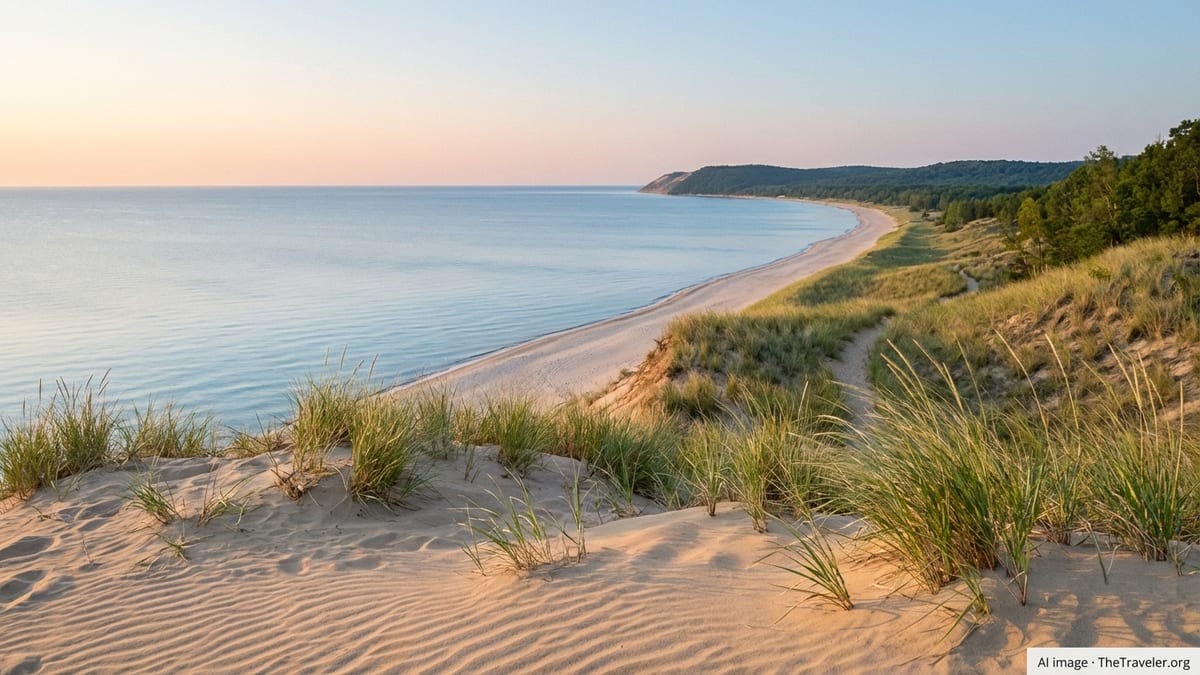
Sleeping Bear Dunes National Lakeshore, Michigan
On the northeast shore of Lake Michigan, Sleeping Bear Dunes National Lakeshore is often cited as one of the most beautiful stretches of freshwater coastline in the United States. A 35 mile ribbon of sandy beach, wind sculpted dunes, and forested bluffs, it offers dramatic viewpoints where steep sand slopes plunge hundreds of feet toward turquoise water. Visitors come for the iconic Dune Climb, the sweeping overlooks on Pierce Stocking Scenic Drive, and quieter sections of shoreline where you can hear only waves and wind.
Planning is essential here, especially in the busy summer season. The National Park Service requires an entrance pass for all vehicles, and campgrounds typically book out several months in advance between May and October. Rangers recommend visiting popular sites like the Dune Climb and Empire Bluff early in the morning or late in the afternoon to avoid congestion and to enjoy cooler temperatures. Trails range from short family friendly walks to more demanding sandy treks that feel far longer than they look on a map, so honest assessment of your fitness and plenty of water are important.
In recent years the park has put a strong emphasis on safety and stewardship. Seasonal programs and volunteer teams focus on preventive search and rescue, helping visitors understand the risks of heat, steep dunes, and changing lake conditions before they become emergencies. The park also uses seasonal closures and prescribed burns in select inland areas to reduce wildfire risk and support native ecosystems, which may temporarily affect trail or road access in spring and early summer. Checking current conditions with the park ahead of your trip can help you avoid surprises.
For a fuller experience, allow at least two days at Sleeping Bear. One day can be devoted to dunes and overlooks, and another to inland lakes, historic farmsteads, and the quieter Good Harbor Bay area. On clear nights, this relatively dark stretch of shoreline becomes a star filled amphitheater, with the Milky Way often visible and, on rare occasions, faint aurora shimmering above the lake.
Indiana Dunes National Park, Indiana
At the southern tip of Lake Michigan, less than an hour from downtown Chicago, Indiana Dunes National Park protects 15 miles of sandy shoreline and an unusually diverse patchwork of habitats. Here, beach and dune meet wetlands, oak savanna, and quiet backdune forest, creating a welcome escape from the surrounding industrial and urban landscape. It is one of the easiest sections of the lake for visitors to reach by car or regional train, which also makes it one of the busiest in warm weather.
Most people start with the beaches, which vary from wide open stretches of sand to more secluded coves backed by marram grass topped dunes. West Beach is a favorite for its large parking area and the Succession Trail, a boardwalk and stair route that climbs steeply to a high dune ridge. From the top, you can look back across rolling dunes and out over Lake Michigan to the distant Chicago skyline on a clear day. Elsewhere in the park, the Paul H. Douglas Trail in Miller Woods winds through oak savanna and wetlands before reaching a quieter section of shore, while the Great Marsh and Glenwood Dunes areas showcase the park’s inland landscapes.
With popularity comes the need for realistic expectations. Summer weekends often bring full parking lots by late morning, especially at the most accessible beaches. The National Park Service encourages visitors to explore lesser known trailheads, arrive early or later in the day, and remain flexible about which beach or trail they choose. While lifeguards may be present at a few designated swimming beaches in peak season, many stretches are unguarded and subject to strong currents and rapidly changing conditions. Checking local swim advisories, heeding posted warnings, and avoiding risky wave conditions are key parts of a safe visit.
If you have more than a day, consider pairing a classic beach afternoon with a morning hike on the inland trail system, or visiting in spring and autumn when bird migration and fall color bring a quieter, more contemplative feel to the dunes. Even in winter, portions of the park remain open, offering stark views of ice fringed shoreline when conditions allow for safe, distanced viewing from land.
Door County, Wisconsin’s Peninsula Parks
Jutting into Lake Michigan like an upraised thumb, Wisconsin’s Door Peninsula is framed by the big lake on one side and the protected waters of Green Bay on the other. Along this narrow stretch of land, orchards, fishing villages, and harbors alternate with a remarkable concentration of state and county parks. While not every bay, bluff, and island faces the open lake directly, the region as a whole belongs on any list of essential Lake Michigan destinations.
On the quiet eastern shore, Newport State Park preserves roughly 11 miles of largely undeveloped Lake Michigan coastline and is designated as wilderness within the Wisconsin state park system. Its rocky and cobbled beaches feel remote even on a busy summer weekend, and backpack camping sites along the shore allow visitors to fall asleep to the sound of waves. The park is open year round, with long, mostly level trails that attract hikers in summer and cross country skiers and snowshoers in winter.
Farther south, Whitefish Dunes State Park protects the most substantial dune formations on Wisconsin’s Lake Michigan coast. Boardwalks and signed trails thread through fragile dune ecosystems, while a broad sand beach offers classic lake swimming when conditions are calm. The park also contains archaeological sites representing thousands of years of Indigenous history, a reminder that these shores have been home and travel route long before they became recreational landscapes. Just to the north, the lakeside cliffs and caves of Cave Point County Park are reached by a shoreline path that connects directly into Whitefish Dunes, making it easy to experience dramatic wave carved rock formations along with the dunes on a single outing.
On the Green Bay side, Peninsula State Park offers different but complementary scenery, with tall limestone bluffs, a historic lighthouse, and sweeping views across island studded water. While this part of Door County faces the bay rather than the open lake, it remains part of the Lake Michigan watershed and offers some of the best elevated viewpoints in the region. For many travelers, a day driving the loop from Fish Creek to Sister Bay and out to the eastern shore parks provides a satisfying introduction to the peninsula’s mix of charming towns and protected shoreline.
Chicago’s Lakefront, Illinois
Chicago’s lakefront may be intensely urban, but it is still one of the most striking sections of Lake Michigan. For more than 20 miles, public parkland and beaches line the water’s edge, backed by the city’s skyline and a continuous multiuse path popular with cyclists, runners, and walkers. Here the lake becomes both backdrop and central character, shifting colors with the weather and offering broad horizons that make the city feel both expansive and intimate.
Visitors have a choice of experiences along this corridor. In the heart of downtown, stretches of shoreline blend beaches with museum campuses, gardens, and architectural landmarks. A little farther north and south, distinct neighborhood beaches each have their own character, from family focused swimming spots to areas known for volleyball leagues or quieter sunbathing. On hot summer days, sections of the lakefront can feel as busy as any city festival, while on a chilly autumn morning you might share a pier only with a few anglers and migrating birds.
Despite the density of development behind it, Chicago’s open shoreline reflects a long standing civic commitment to public access. Wide promenades, underpasses, and bike paths link the waterfront to adjacent neighborhoods, and lifeguards are typically present at designated swimming beaches during the official summer season. Lake conditions can change quickly with wind and storms, so even here awareness of currents and posted warnings remains important. Outside of swimming months, the lakefront becomes a favorite spot for residents to walk, watch waves, or photograph dramatic winter ice formations from a safe distance.
For travelers piecing together a longer Lake Michigan itinerary, Chicago functions as both gateway and destination. It is easy to combine a morning exploring the city’s museums or architecture with an afternoon stroll along the water, or to use the city as a starting point for a northbound or southbound coastal road trip. Even a short visit to the lakefront offers a vivid sense of how this inland sea shapes daily life in one of North America’s largest metropolitan areas.
Holland and the West Michigan Lakeshore
North of Indiana, the eastern shore of Lake Michigan becomes a chain of resort towns, harbor communities, and dune backed beaches that have drawn vacationers for generations. Holland, Michigan and its neighboring lakeshore communities offer a classic introduction to this stretch of coast, combining broad sandy beaches, a walkable downtown, and a distinctive cultural heritage rooted in Dutch immigration. In warm weather, the scent of sunscreen and beach grass mingles with the sound of bike bells and distant waves.
Holland State Park and nearby city beaches are the main focal points for lake access. Wide expanses of fine sand slope gently into the water, with views of the entrance channel and the red lighthouse that has become an unofficial symbol of the area. Summer weekends bring crowds, but early mornings and shoulder seasons often reveal a quieter side of the shoreline, with long, reflective walks possible along the water’s edge. Inland from the beach, dune trails and regional bike paths connect to forested high ground that offers views back over the lake and coastline.
The broader West Michigan shoreline between Holland and Muskegon is lined with similar beach communities and public parks, making it easy to tailor your visit to your preferred pace. Some travelers choose to base themselves in a single town and explore nearby parks and trails on day trips, while others follow a more fluid route, pairing short drives with stops at smaller lakeside access points. Regardless of style, it is worth checking local conditions and park updates, as high lake levels in recent years have periodically affected beach width, infrastructure, and access in certain areas.
Even outside peak swimming season, this section of coast has appeal. Autumn brings quieter beaches backed by colorful foliage on the inland bluffs, and winter storms can transform the lakeshore into a sculpted landscape of snow and ice, best viewed from designated overlooks and parking areas where you can enjoy the spectacle without venturing onto unstable ice or slippery drop offs.
Milwaukee’s Lakefront, Wisconsin
Farther north along the western shore, Milwaukee offers another urban window on Lake Michigan, with a shoreline that blends parks, marinas, beaches, and cultural institutions. From downtown northward, a ribbon of green separates city streets from the water, punctuated by bluffs that drop to sandy coves and promenades. The lake’s presence is constant and immediate, shaping the city’s climate, recreational life, and identity.
Bradford Beach, just north of downtown, is one of the most recognizable sections of Milwaukee’s lakeshore, a broad sandy arc backed by a multiuse path and parkland. In summer, volleyball games, picnics, and casual strolls create a sociable atmosphere, while the water provides a cool counterpoint to inland heat. To the south, stretches of shore near the city’s major museums combine modern architecture with lake views, with curated gardens and public art offering additional reasons to linger.
Milwaukee’s lakefront trail system makes it easy to experience the shoreline without a car. Cyclists, runners, and walkers share paved paths that climb and descend between bluff tops and water level, revealing changing perspectives on the lake and skyline. In winter, hardy locals continue to use the paths when conditions permit, bundling up to watch dramatic wave action and the gradual formation of nearshore ice. The city typically maintains at least some sections of the waterfront for year round access, though individual facilities and concessions are highly seasonal.
For visitors road tripping the western shore of Lake Michigan, Milwaukee serves as both a practical stop and a destination in its own right. Its central position makes it a natural link between the dunes of northern Indiana and the parks of Door County, and it offers an easy introduction to how larger Great Lakes cities integrate public recreation, industry, and cultural space along shared freshwater coasts.
Manitowoc and Two Rivers, Wisconsin
North of Milwaukee, the shoreline becomes quieter, with smaller cities and working harbors punctuating long rural stretches of coast. Manitowoc and neighboring Two Rivers are particularly rewarding for travelers seeking a blend of lake history, local character, and comparatively uncrowded beaches. The two communities sit along a gently curving section of shoreline that faces the open lake, where shifting conditions can bring anything from glassy calm to rolling surf.
Public parks and beaches provide direct access to the water, with long, sandy stretches used by both residents and visitors. Offshore, the lake deepens quickly, and the region’s maritime heritage is never far from view, whether in the form of passing freighters on the horizon or local stories tied to shipbuilding and commercial fishing. Trails and lakeside paths link many of the main access points, making it easy to explore on foot or by bike.
This part of the Wisconsin shoreline has seen gradual investment in waterfront revitalization, with efforts focused on maintaining working harbor functions while improving public access and amenities. Travelers arriving by road can often find lodging within walking distance of the lake, and seasonal events and festivals tend to incorporate the waterfront as a central gathering place. Weather, however, remains the real star. Fog, cloud banks, and sudden shifts in wind remind visitors that Lake Michigan is a large, living system rather than a static backdrop.
For those assembling a longer itinerary, Manitowoc and Two Rivers can serve as a slower paced bridge between southern urban stretches and the more heavily touristed Door Peninsula. They reward travelers who value harbors with a lived in feel and who are content to measure a day by the changing look of the water and sky.
The Takeaway
From the steep slopes of Sleeping Bear Dunes to the long city beaches of Chicago and Milwaukee, Lake Michigan’s shoreline contains an unusually rich cross section of North American freshwater landscapes. In a single journey you can move from wilderness designated state park to working harbor to downtown promenade, all while remaining close to the same vast body of water. Each of the eight destinations above offers its own mix of scenery, culture, and access, and together they suggest how varied a Lake Michigan trip can be.
Successful travel along this inland sea begins with flexibility and respect. Weather shifts quickly, water levels and currents change from season to season, and popular sites often rely on parking limits or temporary closures to protect fragile dunes and bluffs. Checking current conditions, traveling at less busy times of day, and following local guidance on where to swim, hike, or camp can make the difference between a rushed visit and a genuinely memorable one.
Equally important is a willingness to slow down. Some of the lake’s most lasting impressions come not from marquee viewpoints but from quieter moments: a calm morning on a nearly empty beach, a foggy harbor where distant horns echo across the water, or a night sky brightened by stars and framed by the dark silhouette of dunes or bluffs. However you choose to move along Lake Michigan’s shore, building in time for these unscripted experiences will help you see why so many people return to this freshwater coast year after year.
FAQ
Q1. When is the best time of year to explore Lake Michigan’s shoreline?
The most popular months are June through August, when water temperatures are warmest and seasonal services are fully available. May and September can offer fewer crowds and pleasant weather, while October is ideal for fall color in forested sections of the coast. Winter brings dramatic scenery but requires extra preparation, caution around ice, and comfort with cold conditions.
Q2. Is it safe to swim in Lake Michigan at these destinations?
Swimming can be enjoyable but conditions vary widely. Rip currents, cold water, and sudden weather changes are all real hazards. Whenever possible, choose designated swimming beaches, pay attention to local flag systems and posted warnings, and avoid entering the water during high waves or storms. If in doubt, enjoy the lake from the shore.
Q3. Do I need reservations to visit the parks mentioned in this article?
Day use visits usually do not require reservations, although entrance or parking fees may apply. Camping at national and state parks near Lake Michigan often requires advance reservations, especially between late spring and early autumn. It is wise to secure campsites several months ahead for peak periods or have backup lodging options nearby.
Q4. How much time should I budget for an Lake Michigan road trip that includes several of these places?
A long weekend is enough to explore one or two destinations in depth, such as Sleeping Bear Dunes and nearby towns or a combination of Chicago and Indiana Dunes. To link multiple regions, such as Door County, Milwaukee, and the West Michigan shoreline, many travelers find that 7 to 10 days allows for a more relaxed pace with time for hikes, beach days, and weather delays.
Q5. Are these areas suitable for families with children?
Yes. Most of the destinations described offer family friendly trails, beaches with gentle entry, picnic areas, and nearby services. The key is to match activities to your children’s ages and energy levels, bring sun protection and snacks, and be realistic about how far young hikers can comfortably walk on sand or hilly terrain. Many parks also offer ranger led programs that are geared toward younger visitors in summer.
Q6. Can I visit Lake Michigan’s shoreline without a car?
Access varies. Urban sections in Chicago and Milwaukee are well served by public transportation, rideshares, and bike share systems. Reaching more rural parks and smaller towns along the lake typically requires a car, organized tour, or a combination of intercity bus or ferry services with local taxis or shuttles. If you prefer not to drive, basing yourself in a city with good transit and joining day tours to outlying areas can be an effective strategy.
Q7. What should I pack for a trip along Lake Michigan?
Layers are essential, as temperatures near the lake can shift quickly with wind and cloud cover. Bring a light jacket even in summer, as well as sun protection, comfortable walking shoes, and a daypack for water and snacks on hikes. If you plan to swim, pack quick drying clothing and towels. In cooler months, waterproof outer layers, hats, and gloves will make time near the water more comfortable.
Q8. How can I help protect dunes, bluffs, and beaches while visiting?
Simple choices make a big difference. Stay on marked trails and boardwalks to avoid trampling vegetation that stabilizes dunes and bluffs. Use designated access paths to the beach instead of creating new routes, pack out all trash, and consider picking up litter you encounter. Respect seasonal closures and posted signs, and avoid climbing or sliding on fragile slopes outside of designated areas.
Q9. Are there opportunities for stargazing along Lake Michigan?
Yes. Sections of the shoreline away from major cities have relatively dark skies, especially in parts of northern Michigan and Wisconsin. On clear nights you may see the Milky Way and a dense field of stars, particularly when moonlight is minimal. Some parks occasionally host night sky programs; otherwise, you can simply seek out safe, open viewpoints away from bright artificial light.
Q10. How far in advance should I check for current conditions and closures?
It is wise to review conditions a few days before your trip and again on the day you travel. Water levels, trail work, prescribed burns, and temporary closures can all affect access. National and state park agencies typically update their websites or social channels with relevant alerts, and local visitor centers can provide up to date information when you arrive.