


Bunq has quietly become a favorite among frequent travelers, digital nomads and exchange students who want modern app features and low-friction payments abroad. Before you rely on it for a big trip, though, you need to understand how its cards work in the real world: the plans, fees, limits and a few quirks that can catch you out at a foreign ATM or hotel desk. Here is what to know before you pack your bunq card and board your next flight.
Get the latest updates straight to your inbox!
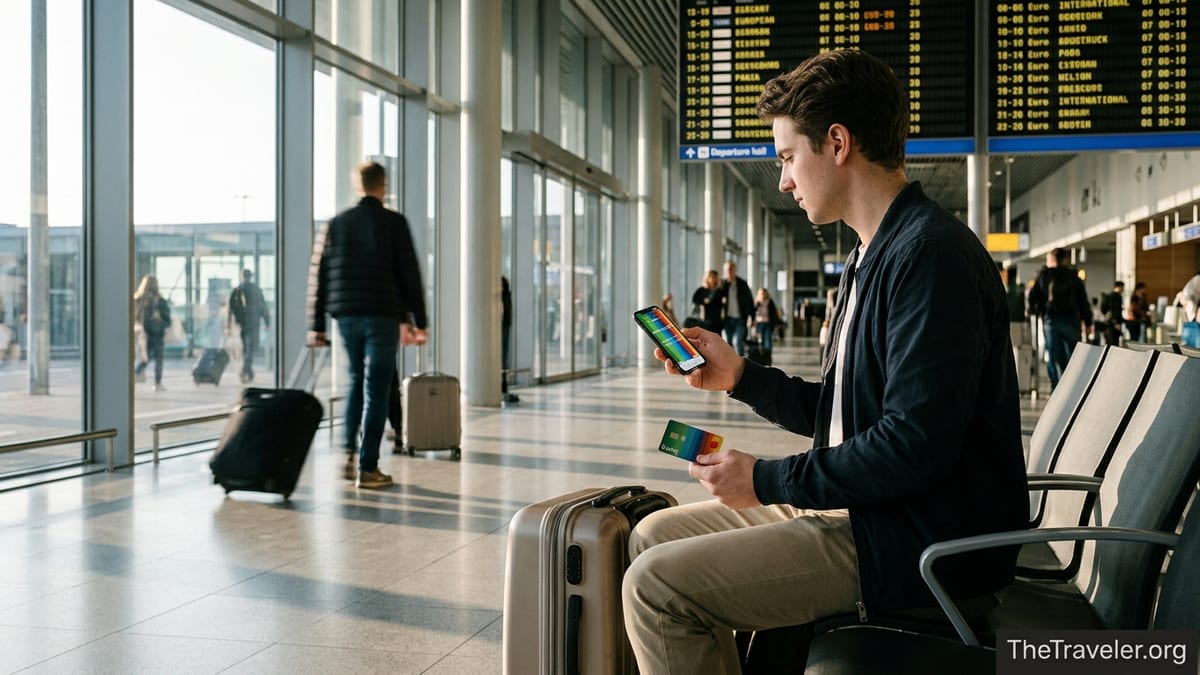
1. Understand bunq’s plans and which one actually suits travel
Bunq is not a single “travel card” any more, but a full banking platform with different tiers. The most relevant for leisure and long-term travelers are Easy Savings, Easy Bank, Easy Money and Easy Green, each with its own monthly fee and benefits. Entry-level paid plans such as bunq Core or Easy Bank typically start at around the price of a couple of coffees per month, while more feature-rich tiers like Easy Money and Easy Green cost more but include perks like multiple sub-accounts with individual IBANs, extra cards and priority support. When you are planning a trip, it is worth opening the pricing page in the app and checking exactly what your current plan allows, rather than assuming all bunq cards behave the same abroad.
For example, a traveler who mainly makes card payments in cities like Lisbon, Berlin or Vienna might be perfectly fine on a lower-cost plan, because contactless payments in euros are usually free and straightforward. On the other hand, a digital nomad who spends months at a time in places such as Bali, Mexico or Thailand may benefit from a plan that includes consumer-friendly foreign exchange treatment and several physical or virtual cards. That makes it easier to separate business purchases, daily spending and recurring subscriptions while keeping an eye on local-currency spending directly in the app.
It is also important to remember that bunq is a European bank. As of mid 2026 it officially serves customers in a growing list of European markets such as the Netherlands, Germany, France, Spain and Italy. If you are a traveler from the United States considering bunq purely as a travel card, you will need a European residence or registration that meets bunq’s onboarding requirements. Many long-term travelers solve this by base-lining themselves in a country like Portugal or Germany, opening a bunq account there, and then using it as their primary travel card worldwide.
Before a major trip, review which of your plan’s features are relevant for travel. Things like the number of physical cards you can order, whether you get priority support, and whether instant notifications and travel mode are included can make a bigger difference abroad than extra savings features that only matter at home.
2. How bunq handles foreign currency and the real exchange rate
One of bunq’s headline promises for travelers is that it uses the real Mastercard exchange rate on foreign-currency card payments through its ZeroFX system, instead of adding an extra percentage on top. In practice, this means that when you tap your bunq card to pay 5,000 THB at a supermarket in Bangkok, the charge is converted to euros using the same underlying rate that Mastercard applies to big international banks. There may still be very small scheme fees in the background, but bunq does not stack its own extra foreign transaction fee on top in the way that many traditional banks do.
The savings become visible when you compare to a typical legacy bank debit card that charges, for instance, a 2 percent foreign transaction fee plus a flat fee per payment. If you spend the equivalent of 1,000 euros in local currency on a trip to Japan, a conventional bank card might add 20 euros or more in hidden currency fees. With bunq, your yen transactions simply convert at Mastercard’s daily rate, which can save enough over a two-week trip to cover a nice dinner for two in Tokyo or a domestic flight in Southeast Asia.
Bunq’s app also helps you track spending in the local currency so you can see, for example, that yesterday you spent about 2,300,000 IDR in Bali on cafes, scooter rental and a co-working day pass. The app will display both the original amount and its euro value, which is useful when you are trying to stay within a budget of, say, 50 euros per day. Just be aware that the final settlement rate can move slightly between the moment of purchase and the time the transaction is posted, particularly in countries with more volatile currencies.
Even with a fair exchange rate on the bunq side, you still need to watch out for dynamic currency conversion when paying in shops, hotels or at ATMs. If a card terminal in New York or Istanbul offers to charge your bunq card in euros instead of dollars or lira, it is almost always better to decline and choose “pay in local currency.” The terminal’s conversion usually bakes in a steep markup, sometimes equivalent to a 4 to 6 percent fee. Combine that with local ATM fees or surcharges and you can easily undo the benefit of bunq’s ZeroFX policy.
3. Card, ATM and spending limits that matter on the road
Bunq lets you configure your own card limits in the app, which is excellent for security but can surprise you during travel if you set them too low. For everyday card payments, the default daily limit is around 1,000 euros per 24 hours, and it can be raised significantly for larger one-off purchases such as an expensive camera in Singapore or a long-distance rail pass in Europe. Cash withdrawals are more tightly controlled. Personal users with accounts that have been fully verified for more than a few months usually have a maximum cash withdrawal allowance of about 1,000 euros per calendar day, while new accounts start lower, around a few hundred euros until they build some history.
In practice, that means that if you are in a cash-heavy destination such as rural Vietnam, parts of South America or smaller Balkan towns, you should plan how much cash you realistically need per day and adjust your bunq ATM limit before leaving your accommodation’s Wi-Fi. Imagine you are staying in a guesthouse in northern Laos where card terminals are rare, and you know you will need the equivalent of 80 euros in cash for a day of trekking, meals and local transport. Setting your ATM withdrawal limit to 200 or 300 euros gives you enough room for one or two withdrawals in case the first ATM is out of cash or malfunctioning.
It is equally important to remember that ATM operators add their own limits on top of bunq’s. In some European countries, independent ATMs only allow withdrawals of 200 or 250 euros per transaction, and might charge a local fee of 3 or 4 euros each time. Travelers in the Netherlands have reported that certain yellow “geldmaat” ATMs treat bunq cards as foreign and display an extra withdrawal fee on the screen before you confirm. In tourist hotspots like Barcelona or Prague, private ATMs in busy areas often charge noticeably higher fees and push dynamic currency conversion. When you see a warning such as “This transaction will cost you 5 EUR,” it is worth canceling, walking a little farther and trying a bank-branded machine instead.
Finally, be aware that security rules can affect what you can do at once. If you suddenly try to withdraw the maximum amount of cash in a country that is very different from your usual location, the app may flag the behavior and ask you to confirm. It is a good habit to spread larger withdrawals over two days and, for big card purchases such as paying a semester’s rent to a landlord abroad, to notify bunq support via the in-app chat ahead of time.
4. Where bunq cards work well, and where they can be tricky
Bunq issues Mastercard-branded debit and credit-style cards that are widely accepted in most developed markets. In the eurozone, contactless payments with bunq usually work wherever you see the Mastercard logo, from metro ticket machines in Paris to supermarkets in Lisbon. Travelers consistently report smooth experiences using bunq in destinations like Japan for card payments at convenience stores, train kiosks and chain restaurants, which historically used to be challenging for some foreign cards. In popular long-stay hubs such as Lisbon, Valencia or Berlin, bunq feels almost indistinguishable from a domestic bank card.
That said, travel always exposes the edge cases. Some U.S. gas pumps and older unattended terminals in Canada, for instance, are designed around domestic card standards and may reject foreign debit cards or require a local ZIP code. In smaller guesthouses in Morocco or independent tour operators in Egypt, staff may only be comfortable accepting cash or are reluctant to take foreign cards from neobanks they do not recognize. When renting a car in the United States, Mexico or South Africa, some agencies insist on a traditional credit card with embossed numbers for the security deposit, and view app-based or debit-style cards with suspicion.
The practical takeaway for bunq travelers is to think of it as an excellent everyday spending card rather than the only card in your wallet. Pair it with at least one backup from another provider, ideally a Visa card and, where possible, a true credit card that rental agencies and hotels are used to handling. For example, a European digital nomad might travel with a bunq Easy Money card for daily use, a low-fee Visa issued by a domestic bank as a backup, and a separate credit card reserved solely for security deposits at car rentals or for any merchant that does not accept bunq. Carrying some local cash, especially when you first land in a new country, is equally important to cover taxis, street food and tips.
In more remote destinations, reception staff may not immediately recognize bunq on sight but will see the familiar Mastercard logo on the card. If you encounter hesitation, simply point to the logo and explain that it works like any other Mastercard debit. In many cases the payment will go through without issue, and the real test is whether the terminal has a live online connection, not which European bank issued your card.
5. Using bunq’s app features to stay safe and organized while abroad
What makes bunq stand out for travel is less the plastic card itself and more the app that sits behind it. You can create multiple sub-accounts with their own IBANs and assign each card to a specific pot. For a month-long trip across Italy, for example, you might open a “Summer in Puglia” account with a fixed budget of 1,500 euros and connect your physical card to that account. Every time you pay for a ferry in Bari, a wine tasting in Lecce or groceries in Naples, the money comes directly out of that travel pot, making it easy to see how much of your budget remains without spreadsheets.
The app also allows you to issue virtual cards on the fly. This is useful for booking flights with lesser-known local airlines or buying train tickets from regional operators. Instead of exposing your main card number to every website, you can create a new virtual card, use it for a single booking with a Vietnamese airline or a Greek ferry company, then freeze or delete it afterward. If one of those merchants suffers a data breach, your primary travel card remains untouched, and you can keep using bunq for in-person payments without disruption.
Security controls are particularly helpful on the road. From your phone, you can instantly freeze a card if you misplace your wallet in a hostel in Mexico City, then unfreeze it if it turns up under your bunk ten minutes later. You can disable magnetic stripe payments to reduce the risk of skimming at old ATMs in some countries, switch off online payments when you are not shopping, and set tight limits that make it impossible for a thief to drain your account even if they get temporary access to your card. These tools give you more confidence using your card at busy night markets, crowded tourist zones and transit hubs where pickpocketing is more common.
Bunq also incorporates travel-oriented features such as automatic categorization of transactions, real-time push notifications and, for some users, a travel mode that displays balances and spending in the local currency. When you land in New York, you might see your available balance presented in dollars alongside euros, which makes it easier to think in local prices and avoid unconscious overspending. Just keep in mind that these numbers are indicative and based on current rates; they are there for guidance rather than as fixed conversion guarantees.
6. Fees beyond FX: cash withdrawals, card orders and extras
Even though bunq is relatively friendly on foreign exchange, it is not entirely free to use. Most plans include a limited number of free ATM withdrawals per month, often around half a dozen, after which a small fee applies to each additional withdrawal. For instance, some current plans give you a set number of free cash withdrawals globally and then charge a modest euro-denominated fee per extra withdrawal, regardless of how much you take out. That pricing structure rewards taking out larger amounts of cash less frequently instead of making multiple small withdrawals of 20 or 30 euros.
Consider a practical example in Thailand. If your bunq plan charges a small fee after a certain number of free withdrawals and Thai ATMs commonly add their own fixed charge similar to what travelers report at many banks there, making three withdrawals of 1000 THB each may cost you significantly more in stacked ATM charges than a single 3000 THB withdrawal. In countries like Mexico, where individual ATM operators sometimes set higher fees, this difference becomes even more pronounced. Combining bunq’s fee structure with local ATM behavior, it is usually cheaper to withdraw enough for several days at once, store most of it in a hotel safe or money belt, and top up your wallet day by day.
There are other fees to keep in mind. Ordering an extra physical card might involve a one-off production cost, especially if you opt for a premium metal card, which is popular among frequent travelers for durability and aesthetics. Losing a card abroad and requesting an express replacement can incur shipping fees, and while bunq’s support can help you reroute a new card to a hotel or co-working space, you should factor in both time and cost. Some travelers carry two bunq cards linked to the same account precisely to avoid being stranded if one is swallowed by an ATM or stolen.
Account-level extras also come with their own economics. Higher-tier plans sometimes offer interest on balances, green or sustainability features, or premium support response times. If you hold several thousand euros in bunq while traveling as a remote worker, the interest and benefits may partly offset the monthly cost of a more expensive plan. If you only keep a few hundred euros on the card and move larger sums from a home bank whenever needed, a cheaper plan might be more sensible even if it includes fewer free withdrawals or sub-accounts.
Because bunq is a European bank under Dutch supervision, eligible customer deposits are protected by the standard European deposit guarantee up to a specified ceiling per person per bank. For most individual travelers, that means that holding your travel funds in bunq is broadly comparable in safety to holding them in a major European high street bank, although it is always wise not to park very large life savings in a single institution purely for travel convenience.
7. Practical tips for using bunq before, during and after your trip
To get the most out of bunq on the road, a little preparation goes a long way. Before you leave, check that your identity verification is complete and that your account has been active for more than a few months if you plan to rely heavily on cash withdrawals. Set reasonable daily card and ATM limits in the app and make sure your phone number and authentication methods work from abroad. It is also sensible to test the card with a few small foreign-currency purchases online, such as booking a low-cost bus ticket in another European currency, to confirm that everything processes correctly.
During your trip, use bunq as your everyday workhorse card for restaurants, public transport, groceries and online tickets. When an ATM asks which currency to charge in, always choose the local currency to take advantage of bunq’s fair exchange rate. If a machine shows a high fixed fee or an unfavorable conversion screen, cancel and try another bank-branded ATM a few streets away. Keep an eye on your push notifications; if you see an unfamiliar charge or a duplicated transaction from a merchant, freeze the card in the app and contact support while you still remember where and when you used it.
It is wise to pair bunq with a small amount of emergency cash and at least one backup card from another provider. Imagine you are on a weekend in Budapest and bunq experiences a temporary outage that delays card authorizations. If you have a second card in your money belt and 50 or 100 euros worth of local currency, you can still pay for a taxi back to your apartment and dinner while things recover. Just as airlines advise against putting all valuables in checked luggage, seasoned travelers avoid putting all payment capacity in a single neobank.
After your trip, take a few minutes to audit your bunq activity. Archive or rename sub-accounts used for that journey, review any pending card security features you enabled, and decide whether to downgrade or upgrade your plan depending on your upcoming travel calendar. Frequent travelers often keep bunq as their main day-to-day account between trips precisely because the same features that are handy abroad, like instant control and clear categorization, also make domestic budgeting easier.
The Takeaway
Bunq can be a powerful ally for modern travelers, combining a fair approach to exchange rates with an app that gives you granular control over your money. Used wisely, it helps you avoid the worst abuses of dynamic currency conversion, cut down on unnecessary ATM and bank fees, and keep your travel budget organized across countries and currencies. Its cards are widely accepted in most mainstream destinations, particularly where Mastercard is standard, and its multiple sub-accounts and virtual cards make it a flexible tool for everything from hostel bookings to long-stay apartment rentals.
At the same time, bunq is not magic. Cash and ATM limits still apply, independent ATM operators can charge their own steep fees, and there are occasional merchants or rental agencies that will prefer a traditional credit card. The key is to treat bunq as your primary day-to-day travel card, but not your only way to pay. Combine it with a backup card, some cash and a little planning around limits and fees, and you will enjoy the convenience of app-first banking without being caught off guard far from home.
If you are preparing for a big trip, spend an evening exploring bunq’s settings and pricing, run a few test transactions, and think about how its features map to your itinerary. With a bit of forethought, bunq can support everything from a weekend city break in Europe to a year of slow travel across multiple continents.
FAQ
Q1. Is bunq a good main bank account for long-term travel?
For many European travelers, yes. Bunq offers full current accounts with local IBANs, fair FX on card payments and good budgeting tools. If you earn or receive income in euros and spend a lot of time abroad, it can work as your main day-to-day account, provided you also have a backup card from another institution for redundancy.
Q2. Can I open a bunq account if I live outside Europe?
Bunq primarily serves residents of selected European countries. If you live permanently outside Europe, such as in the United States, you are unlikely to qualify unless you also have a legal residence or registration in a supported European market. Many long-term travelers solve this by establishing residence in a country like the Netherlands, Germany or Portugal before applying.
Q3. Does bunq charge foreign transaction fees when I pay in a different currency?
For card payments, bunq uses the underlying Mastercard exchange rate and does not usually add its own percentage-based foreign transaction fee on top. You still need to avoid dynamic currency conversion at terminals and ATMs, because those third parties can impose expensive markups that bunq cannot control.
Q4. How many free ATM withdrawals do I get with bunq?
The number of free ATM withdrawals depends on your plan and can change over time, but many current paid tiers include a small bundle of free withdrawals per month and then charge a flat fee for each additional one. It is best to check your tariff section in the app shortly before travel to see the exact allowance for your specific plan.
Q5. Will bunq work for car rentals and hotel deposits?
Often it will, but not always. Some car rental companies and a few hotels insist on traditional credit cards rather than debit or app-based cards for security deposits. While bunq cards carry the Mastercard logo, they may still be treated as debit products in some systems. For that reason, experienced travelers bring a separate credit card specifically for deposits while using bunq for the actual trip spending.
Q6. Can I withdraw large amounts of cash from bunq while abroad?
Up to a point. Bunq has daily limits on ATM withdrawals that you can configure in the app, and new or recently verified accounts may start with lower limits. ATM operators also enforce their own per-transaction caps and fees. If you need a lot of cash, for example to pay several months of rent in a country that prefers cash, plan ahead by raising your limit in the app and withdrawing over several days.
Q7. What happens if my bunq card is lost or stolen on a trip?
If your card goes missing, you can instantly freeze it in the bunq app to prevent further use, then contact support to arrange a replacement. Many travelers carry a spare bunq card stored separately in their luggage so they can switch to it immediately. While waiting for a replacement, you may still be able to use virtual cards in the app for online bookings.
Q8. Is my money safe with bunq while I am abroad?
Bunq is a licensed bank in the Netherlands, so eligible deposits are protected by the standard European deposit guarantee up to a defined ceiling per person per bank. Operationally, it is as safe as most mainstream European banks. The main risks while traveling are practical ones, such as card loss or ATM issues, which you can mitigate with security settings and backup payment methods.
Q9. Can I use bunq to receive freelance or remote work payments while traveling?
Yes. Bunq accounts come with local IBANs that clients in Europe can use to pay invoices by bank transfer. Many remote workers route their euro income to bunq, keep a portion in savings and use sub-accounts and cards to manage business and personal spending on the road. If you are dealing with clients outside Europe, you might still need a separate solution for incoming payments in other currencies.
Q10. Should I switch my existing bank to bunq before a big trip?
There is no need to switch entirely right away. A common approach is to open bunq as a secondary account, test it at home and on a shorter trip, and then gradually shift more travel spending to it if you like the experience. Keeping your original bank account active while you learn bunq’s quirks provides a safety net in case you encounter acceptance issues or app-related problems while far from home.