


More news on this day
Travelers flying through the UAE on Saturday, September 19, 2026 are seeing mostly routine operations but with scattered delays and a small number of cancellations showing on live flight-status boards at Dubai International (DXB), Zayed International Airport in Abu Dhabi (AUH), and Sharjah International Airport (SHJ). Because disruption patterns can shift hour by hour, passengers are being urged to rely on airport and airline flight lookups, allow extra time for airport processes, and verify gates and check-in cutoffs before heading to the terminal.
Get the latest news straight to your inbox!
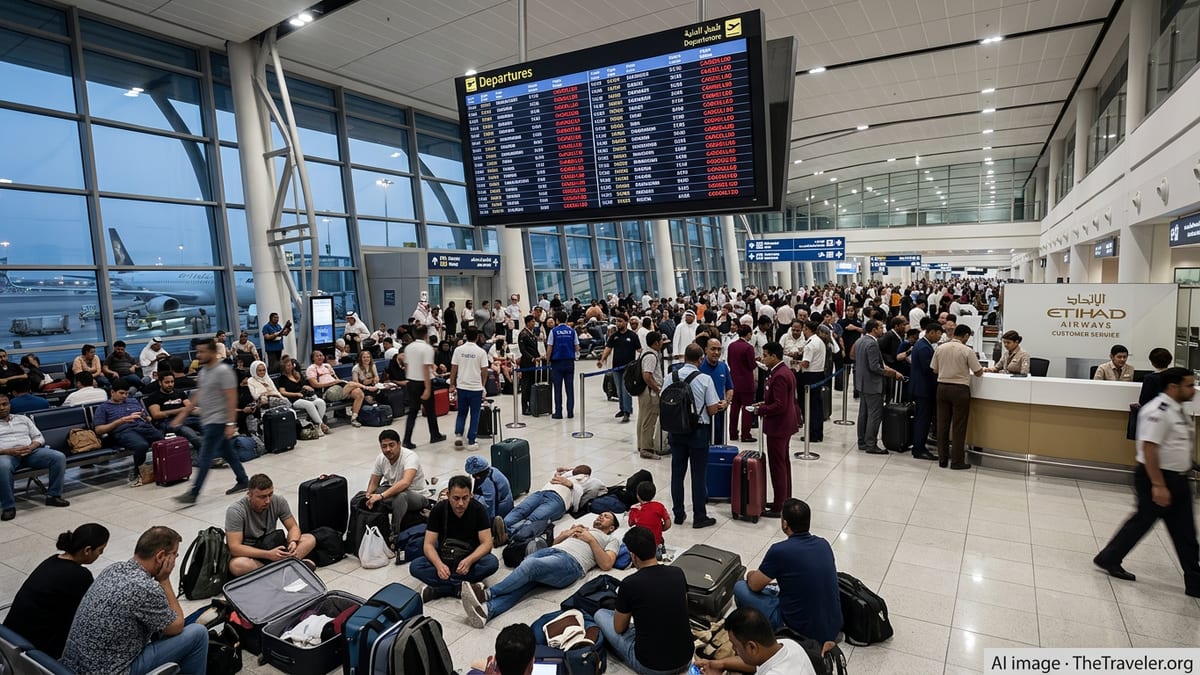
Dubai (DXB): Live status boards show a high-volume day with some cancellations
Public flight-status pages for Dubai International indicate a heavy schedule for September 19, with hundreds of departures planned across the day. In a high-throughput operation like DXB, even a small percentage of disruptions can translate into noticeable pockets of delays, gate changes, and a few cancellations spread across terminals.
Third-party flight boards tracking DXB departures today show examples of normal movements alongside exceptions, including at least one listed cancellation among late-evening departures. Travelers should treat individual flight status as the key datapoint: a flight can be on time even when other services to the same region are running late, and a flight can show as “departed” or “boarding” while its gate assignment changes.
DXB’s official flight-status page is designed to let travelers search by airline, city, or flight number, but publicly available access can occasionally be inconsistent when demand is high. When that happens, the most reliable real-time confirmations are typically the airline’s “Manage Booking” tools, airport terminal display screens, and push notifications in airline apps.
Abu Dhabi (AUH): Early-morning departures show rolling estimates
At Zayed International Airport in Abu Dhabi, live departure boards early today show multiple flights listed with “estimated” departure times rather than firm “on time” status. That pattern can reflect routine operational sequencing, late inbound aircraft, or air-traffic flow management, and it often changes as aircraft and crews cycle through.
Examples on publicly available boards include Etihad and partner or codeshare services showing estimated departure times in the early-morning bank, a common peak period for long-haul and regional connections. Travelers on these flights should re-check status repeatedly, since the first estimate can move earlier or later depending on aircraft readiness and slot availability.
Arrivals boards also show a mix of “landed” and “in air” statuses with some flights displaying minutes-late indicators, a reminder that minor inbound delays can cascade into later departure banks. Passengers connecting through AUH should confirm their onward gate and minimum connection time in the terminal, especially if an inbound flight is running behind schedule.
Sharjah (SHJ): A few cancellations appear alongside multiple delays
Sharjah International Airport’s live boards show a more visible cluster of delays and some cancellations today compared with a typical fully “on time” line-up. On publicly available departures listings, at least one Istanbul service is shown as cancelled, while several other early flights display updated estimated times.
On third-party status trackers for SHJ, some flights are marked “canceled” and others “delayed until” a later morning time, with several services still listed as scheduled or en route. Because SHJ is a key base for Air Arabia and a hub for regional point-to-point travel, a single aircraft rotation running late can affect multiple subsequent legs, particularly during early-morning waves.
For travelers departing SHJ today, the practical takeaway is to confirm both the flight status and the check-in deadline. A flight that is delayed may still have a check-in cutoff close to the original schedule, depending on the airline and airport processes, so passengers should not assume they can arrive later without rechecking airline guidance.
What’s driving changes: Rotations, air-traffic flow, and operational constraints
Today’s disruption signals across the three airports look consistent with routine airline and airport operations rather than a single system-wide shutdown: rolling delays tied to aircraft rotations, late inbound arrivals, and the normal variability that comes with dense schedules.
Beyond day-of operations, publicly available aviation publications also show that airports can be managing infrastructure and stand availability through temporary procedures. For example, aviation information publications in 2026 have included notices related to aircraft stand availability at Abu Dhabi’s Zayed International and updates tied to airport operations in the UAE. While those publications do not automatically mean passengers will see delays on any particular day, they help explain why stand assignments and turnaround timing can be tight during peak periods.
In practice, travelers are most likely to notice these constraints through last-minute gate changes, longer waits for remote stands or buses in some cases, or small pushbacks in departure times as aircraft queue for stands and departure slots.
What travelers should do right now: Verify status, plan extra time, and protect connections
For flights involving DXB, AUH, or SHJ today, the most useful action is to check the specific flight number using the airline’s own status tool, then cross-check against the airport’s flight finder or terminal displays once on site. When a flight is shown as “estimated,” it is especially important to re-check every 30 to 60 minutes leading up to departure.
Passengers with tight connections should consider proactive protection steps where possible, such as selecting earlier flights on the same day, confirming whether an onward segment is protected on the same ticket, and ensuring contact details are current for rebooking messages. Travelers carrying passports that require exit or entry formalities should build extra buffer time, since queues can spike when multiple delayed flights converge.
If a flight is canceled, the fastest path to options is typically the airline’s app or online booking management, followed by service desks in the terminal if digital channels are congested. Travelers should also keep receipts for eligible expenses and review their fare rules and travel insurance terms, since compensation and duty-of-care support depend on the carrier, route, and reason for disruption.