


For frequent travelers in Europe, traditional bank cards often mean a trail of unexpected fees: 2 to 3 percent currency markups, dynamic currency conversion traps, and ATM surcharges that quietly eat into every weekend away. App-based banks like bunq, Revolut, Wise, and N26 promise a cleaner, cheaper way to spend and withdraw money abroad. After comparing these leading European travel banking apps and digging into how they actually work on real trips, bunq emerges as a strong, if sometimes pricey, contender for travelers who value control, sustainability themes, and smart automation over rock-bottom foreign exchange fees alone.
Get the latest updates straight to your inbox!
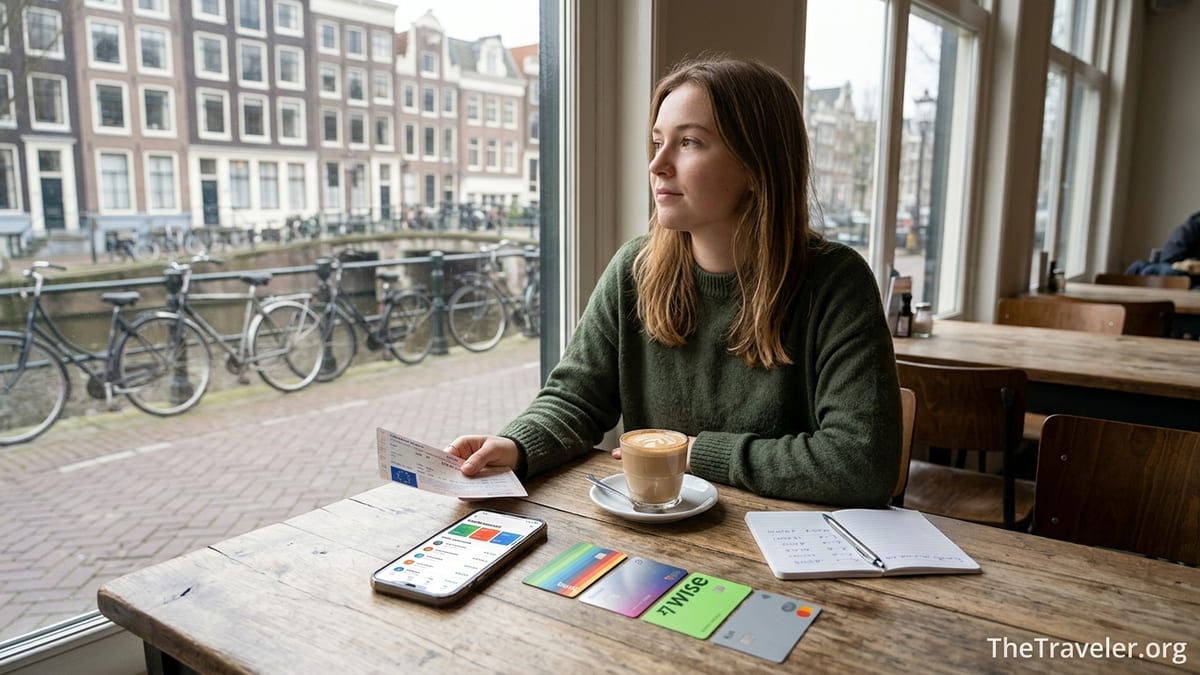
Where bunq Fits In The European Travel Banking Landscape
Bunq is a Dutch app-based bank that operates under a full banking license in the Netherlands, with deposits covered up to 100,000 euros under the European deposit guarantee scheme. That puts it in the same regulatory category as N26 and Revolut in the European Economic Area, and one step above Wise, which is an electronic money institution rather than a bank. For a traveler, that means money you park in bunq accounts is protected to the same level as in a mainstream European bank, which can be reassuring if you routinely hold a few thousand euros between trips.
Unlike Revolut, N26, and Wise, bunq does not offer a permanent free plan. The cheapest tier typically starts at a modest monthly fee, with higher tiers adding more cards, sub-accounts, and perks such as higher interest and sustainability bonuses. In practice this means bunq makes the most sense not as a throwaway extra card for a single city break, but as a main or secondary everyday account that you also use on the road, especially if you live in or frequently travel around the eurozone.
In our comparison with other travel-focused apps, bunq stands out for its intense focus on multi-account budgeting and automation. While Wise and Revolut emphasize ultra-low-cost currency exchange and international transfers, bunq leans into features like dozens of IBAN sub-accounts, card routing rules, and joint accounts that can be ideal for couples or small groups traveling together and splitting expenses across several trips a year.
For a typical traveler based in Germany, Spain, or Portugal who takes 5 or 6 trips a year across the Schengen Area plus a couple of long-haul journeys, bunq often works best when paired with at least one other app, most commonly Wise for large transfers or Revolut for occasional speculative currency exchange. Taken on its own, though, it can replace a traditional current account while still offering a solid toolkit for smooth, mostly fee-light spending abroad.
Pricing, Plans, And What You Actually Pay On The Road
Bunq’s pricing structure can feel complex at first glance, especially compared with the simple “free vs premium” divide at Revolut and N26. The core idea is straightforward: you pay a monthly subscription that determines how many accounts and cards you get, what kind of cashback or interest you earn, and how generous your travel-related allowances are. Lower tiers are pitched at everyday users who want a modern European bank with some travel benefits, while higher tiers layer on extras like stronger savings rates and green-focused perks.
To understand what this means in practice, imagine a Lisbon-based remote worker who signs up for a mid-tier bunq plan and spends about 60 euros a month on coffees, coworking day passes, and public transport at home, plus several hundred euros per month abroad. The monthly fee quickly becomes a smaller percentage of their total annual spend. If that plan includes features like 1 to 2 percent cashback on public transport or bars and restaurants in certain tiers, the net cost can narrow further, especially if they routinely use metro systems, trains, and ride-hailing services across Europe.
Where Wise often shines is in clearly itemized per-transaction pricing and no monthly fee. A Barcelona resident sending 1,000 euros to a US bank account to pay tuition might pay a small percentage fee with Wise and see the exact mid-market rate. Bunq can also handle international transfers but does not primarily market itself as the cheapest cross-border transfer option. Travelers whose main need is moving large sums between currencies will likely still prefer to keep a Wise account, even if bunq is their main day-to-day bank.
Revolut and N26, meanwhile, tempt travelers with free entry-level plans that still offer respectable foreign spending conditions. For light travelers who only leave the eurozone once a year, those free plans can be hard to beat on price. Bunq really comes into its own for heavier users: people who make multiple trips, appreciate neatly separated budgets for each journey, and are willing to pay a subscription in exchange for better organization, some cashback, and an overall banking experience that replaces their traditional current account.
FX, ZeroFX, And Real-World Spending In Multiple Currencies
One of bunq’s key travel selling points is its ZeroFX feature, which gives users the real Mastercard exchange rate on foreign currency spending, with a small percentage adjustment instead of the typical 2 to 3 percent hidden markup that legacy banks often add. In practice, this means that when you tap your bunq card in a London pub or a New York coffee shop, you usually get a rate very close to what you would see on a public currency converter, plus roughly half a percent to protect against market movements while transactions are being settled.
Consider a long weekend in London where a Dutch traveler spends 500 British pounds on hotels, meals, and transport using a typical Dutch high-street bank card that adds around 2.5 percent on every non-euro purchase. That extra cost alone would come to roughly 12 to 15 euros for the trip. With bunq’s ZeroFX, the markup might be closer to a few euros, so the cardholder can effectively “earn back” a noticeable chunk of their monthly subscription fee just from that one city break.
Where bunq slightly differs from Wise is in transparency of FX as a separate line item. Wise generally shows the exact mid-market rate and the explicit fee before the transaction, making it particularly attractive for large one-off exchanges, such as converting 2,000 euros to Thai baht before a month in Chiang Mai. With bunq, the focus is more on effortless in-the-moment spending. The app surfaces your travel history, maps transactions by country, and gives you contextual information such as the local tipping customs and live exchange rates so that you can feel more confident tapping your card in unfamiliar places without digging through fine print.
Revolut attempts to split the difference by offering mid-market FX on card payments up to a monthly limit on most plans, then adding a fee beyond that cap or on weekends. A heavy traveler who spends 2,000 euros equivalent in foreign currencies every month might find bunq’s consistent small markup more predictable than Revolut’s free allowance followed by higher charges. For someone who only travels occasionally and stays under Revolut’s limit, Revolut may remain slightly cheaper, but they will miss bunq’s deeper budgeting and automation tools.
ATM Withdrawals, Cash Use, And Hidden Travel Frictions
Cash use in Europe has dropped sharply, but in everyday travel you still run into cash-only bakeries in rural France, local markets in southern Italy, or small guesthouses in the Balkans that prefer notes to cards. This is where ATM withdrawal terms start to matter. Most European neobanks, bunq included, now offer a limited number of free or low-fee withdrawals each month, then charge a small fixed fee or a percentage after that, on top of any fees charged by the ATM operator.
Picture a two-week interrail trip that winds through Germany, Austria, and the Czech Republic. You withdraw cash three times from bunq-friendly ATMs inside the eurozone for small purchases and tips. Those withdrawals may fall within your plan’s free or discounted range, costing little or nothing beyond the occasional flat fee at the machine itself. On the same trip with a classic bank card that charges a percentage plus a minimum fee per withdrawal, you might pay several euros every time, turning 20 or 30 euro withdrawals into disproportionately expensive transactions.
Outside the eurozone, fees become more nuanced. In countries like Croatia or the United Kingdom, ATM operators may try to steer you into dynamic currency conversion by offering to bill your card in euros instead of the local currency. This is rarely a good deal. Bunq, like Wise and Revolut, works best when you always choose to be charged in the local currency, letting the card network handle conversion at a competitive rate. In a busy summer season in Split or Dubrovnik, saying no to the ATM’s “helpful” conversion suggestion can easily save a traveler 20 to 30 euros across a week-long stay.
Compared with Wise, which often caps free ATM withdrawals and then charges modest fixed fees after a threshold, bunq’s structure can be more dependent on your specific plan. Revolut’s free allowances for cash are usually more generous on premium tiers, but heavy cash users can still run into limits. If you know you will rely heavily on cash, such as when traveling in rural Albania or outside major tourist areas in Turkey, having both bunq and one additional card like Wise or a fee-light traditional bank debit card can help you balance limits and avoid surprise charges.
Budgeting, Sub-Accounts, And Shared Travel Expenses
Where bunq really distinguishes itself from its rivals is in how it handles multiple accounts and smart rules. Users can create numerous IBAN sub-accounts denominated in euros, each with its own name, color, and purpose. For travelers, that means it is easy to open a dedicated account called “Summer Balkans Road Trip,” move 1,500 euros into it ahead of departure, and attach a card that draws only from that balance. Every tap, transfer, and ATM withdrawal on the trip then comes out of that pot, keeping home expenses ring-fenced.
By comparison, Revolut offers “vaults” and Wise supports different currency balances, but bunq’s implementation feels closer to operating several mini current accounts at once. A couple traveling together can run a joint bunq account for rent and groceries, then spin up a short-term shared account for a week in Greece. Both partners get a card linked to that account and can watch, in real time, as restaurant bills, ferry tickets, and bar tabs hit the shared budget. When the trip ends, they close or repurpose the account and immediately see how much under or over budget they ran.
For digital nomads or long-term slow travelers, this kind of granular control can be particularly powerful. A freelancer based part-time in Berlin and part-time in Lisbon might maintain separate sub-accounts labeled “Portugal cost of living,” “Germany cost of living,” and “Travel buffer,” each with its own target balance. Card rules allow them to direct subscription payments like coworking space fees or cloud storage to specific accounts, so travel spending never quietly chews into rent money. While Revolut and N26 do have budgeting tools, bunq’s combination of multi-IBAN accounts and card routing is still one of the most flexible on the European market.
In day-to-day use, this translates to fewer nasty surprises mid-trip. When your “Amsterdam Weekend” sub-account reaches zero on a Sunday afternoon, your bunq card simply declines on that account instead of silently dipping into your main balance. That kind of hard boundary can be the difference between returning home with your regular bills fully funded versus scrambling to cover a direct debit because you overspent on craft beer and museum tickets.
Environmental, Lifestyle, And Insurance Extras
Bunq has long positioned itself as a bank for environmentally conscious users and lifestyle-focused travelers. Higher-end tiers often include tree-planting initiatives linked to card spend, green investment themes, and additional insurance options, sometimes including travel insurance coverage. For a frequent traveler who wants their spending to align with certain values, these features can be attractive, although they should be weighed against the additional subscription cost.
Compare this to Revolut, which tends to bundle travel insurance and airport lounge access into its premium and metal plans, and N26, whose higher tiers also include travel insurance and phone protection. Wise takes a different path and generally avoids lifestyle perks altogether, concentrating on low-cost money movement without subscription bundles. The result is that bunq sits somewhere between Revolut’s high-gloss “super app” marketing and Wise’s utilitarian focus, aiming at users who want both a modern primary bank and a feel-good narrative around their card use.
From a purely financial point of view, it is worth doing a simple back-of-the-envelope calculation before upgrading for perks alone. A family of four who fly from Paris to Athens twice a year and book one ski trip in the Alps might pay 150 to 250 euros annually for standalone multi-trip travel insurance. If a bunq plan costs less than that difference over a year and includes comparable coverage plus banking features you will actually use, it can be good value. If you rarely leave your home country and already have travel coverage through a premium credit card, paying extra at bunq for overlapping protection makes less sense.
On the ground, environmental branding will not change how your card works at a Budapest metro turnstile or a Valencia tapas bar. What it can change is your satisfaction with the overall product and your willingness to consolidate accounts. Travelers who are already juggling three or four financial apps may prefer to use one that matches their values so that everyday tasks like paying train tickets or topping up a transit card feel less like a purely transactional exercise.
Customer Support, Card Security, And Practical Reliability
Nothing tests a banking app like a lost card on day two of a trip or a sudden security block while trying to pay for a rental car deposit. Bunq, like its main competitors, offers instant card freezing and unfreezing in the app, virtual cards for safer online booking, and the ability to change PINs and spending limits on the fly. These tools matter far more to travelers than flashy app interfaces, because they directly affect whether a small mishap becomes a ruined weekend or just a brief inconvenience.
In user reports and community discussions, bunq often scores well for rapid card control and relatively fast in-app support, though response times can vary at busy periods. Revolut in particular has drawn criticism in some markets for slow or script-based chat support when accounts are flagged for compliance checks, while Wise and N26 generally aim for a more measured, bank-like approach. For a traveler waiting at a hotel front desk in Prague or a car rental counter in Malaga, the difference between a 10-minute and a 48-hour resolution can be significant.
One area where bunq’s multi-account design again proves helpful is risk compartmentalization. By keeping your main savings in one or more separate sub-accounts and only loading your travel account with what you need for the current trip, you reduce the impact if a card is skimmed or details are compromised. Freezing just that associated card stops further damage while you still have access to your other sub-accounts through the app, especially if you have additional cards at home or with a trusted travel companion.
As with all neobanks, connectivity is a soft dependency. Bunq’s app is built for a world where travelers can usually find Wi-Fi or mobile data. Before a long overland journey through areas with patchy coverage, such as bus routes in the Balkans or ferries between Greek islands early in the season, it is wise to ensure you have some cash, at least one backup card from another provider, and evidence of your account details stored offline. This advice applies equally to bunq, Wise, Revolut, and N26.
The Takeaway
After comparing bunq against major European travel banking apps like Revolut, Wise, and N26, a clear pattern emerges. Wise remains the specialist for cheap, transparent international transfers and currency exchange. Revolut offers an all-in-one “super app” with many extras, particularly appealing to tech-savvy travelers who like speculative features such as crypto and stocks. N26 provides a clean, relatively traditional banking experience with modern budgeting tools and a strong presence in core eurozone markets.
Bunq slots in as the bank for travelers who prize control and structure over headline-grabbing free tiers. Its strengths lie in multiple IBAN sub-accounts, flexible card routing, solid FX through ZeroFX, and lifestyle and sustainability features that give the product a distinctive identity. The trade-off is that you pay a subscription from day one, and for pure FX or ATM cost minimization there are scenarios where Wise or Revolut will come out slightly cheaper.
In real-world use, the sweet spot for bunq is a traveler or remote worker based in Europe who makes several trips a year, shares expenses with partners or friends, and prefers to keep tight, visual control over budgets. Paired with a second app like Wise for large transfers, bunq can form the backbone of a robust travel money setup that reduces surprises, keeps fees reasonable, and turns the banking part of your journey into something you rarely have to worry about. For many, that peace of mind is worth more than shaving off the last fraction of a percent on each exchange.
FAQ
Q1. Is bunq cheaper than Revolut or Wise for travel?
In many everyday scenarios bunq is competitive, especially versus traditional banks, but Wise and Revolut can be slightly cheaper for pure currency exchange or large international transfers. Bunq’s value comes more from its subscription features like multiple sub-accounts, budgeting tools, and lifestyle perks than from having the absolute lowest FX fee in every case.
Q2. Is bunq safe to use as my main travel bank?
Yes, bunq holds a full European banking license and customer deposits are protected up to 100,000 euros under the standard deposit guarantee scheme. That level of protection is comparable to N26 and Revolut’s European banking entities and higher than electronic money institutions, which safeguard rather than insure deposits.
Q3. How good is bunq’s exchange rate when I pay abroad?
Bunq uses Mastercard’s exchange rate with a small percentage adjustment through its ZeroFX feature. This is usually far cheaper than the 2 to 3 percent markup many traditional banks add to non-euro payments, although Wise may still edge it on transparency and raw FX cost for large conversions.
Q4. Does bunq charge for ATM withdrawals when traveling?
Most bunq plans include a limited number of withdrawals at low or no extra cost, after which small fees may apply, especially outside the eurozone. You still have to watch for fees charged directly by ATM operators, and as with other neobanks it is smartest to withdraw moderate amounts a few times instead of many tiny amounts every day.
Q5. Can I use bunq in non-European countries?
Yes, bunq cards work anywhere Mastercard is accepted, including destinations like the United States, Thailand, or Mexico. You pay in the local currency and bunq applies its FX rules. Just remember that local ATM or card terminal fees and dynamic currency conversion offers can still affect your overall cost, just as they would with Revolut, Wise, or N26.
Q6. How does bunq compare to a traditional bank card for city breaks?
For a typical long weekend in places like London, Prague, or Copenhagen, bunq often saves money versus a standard European bank card that adds 2 to 3 percent on foreign transactions and charges higher ATM fees. You also gain better budgeting tools and faster card controls through the app, which makes it easier to stay within your trip budget.
Q7. Is bunq a good option for digital nomads?
Bunq works well for digital nomads who split their time between several European bases and value multiple sub-accounts, joint accounts, and card routing rules. Many nomads still combine it with Wise, which remains extremely strong for getting paid in different currencies and making low-cost transfers to local bank accounts worldwide.
Q8. Does bunq include travel insurance?
Some higher-tier bunq plans include travel-related insurance benefits, similar to premium plans at Revolut or N26. Whether it is worth it depends on how often you travel and whether you already have coverage through a separate insurance policy or premium credit card. Frequent travelers who do not yet have annual coverage may find the bundled option cost-effective.
Q9. Can I share a bunq account with my partner for trips?
Yes, bunq supports joint accounts and makes it easy to create shared sub-accounts dedicated to a specific trip. Both partners can receive their own cards linked to that travel account, see every transaction in real time, and close or repurpose the account when the trip ends, making cost splitting far smoother than manually reconciling receipts later.
Q10. Should I use bunq alone or combine it with another app?
Most frequent travelers find that combining bunq with at least one other service works best. A common setup is to use bunq as the primary everyday and travel bank, and Wise for large international transfers or receiving money in multiple currencies. Revolut or N26 can also play a supporting role depending on your priorities, but bunq on its own is already strong enough to replace a traditional current account for many users.