


More news on this day
Travelers flying through the UAE on Saturday, September 19, 2026 are seeing a mixed operating picture across the country’s busiest gateways, with live flight boards showing pockets of delays and some cancellations at Dubai International (DXB), Zayed International Airport in Abu Dhabi (AUH), and Sharjah International Airport (SHJ).
Get the latest news straight to your inbox!
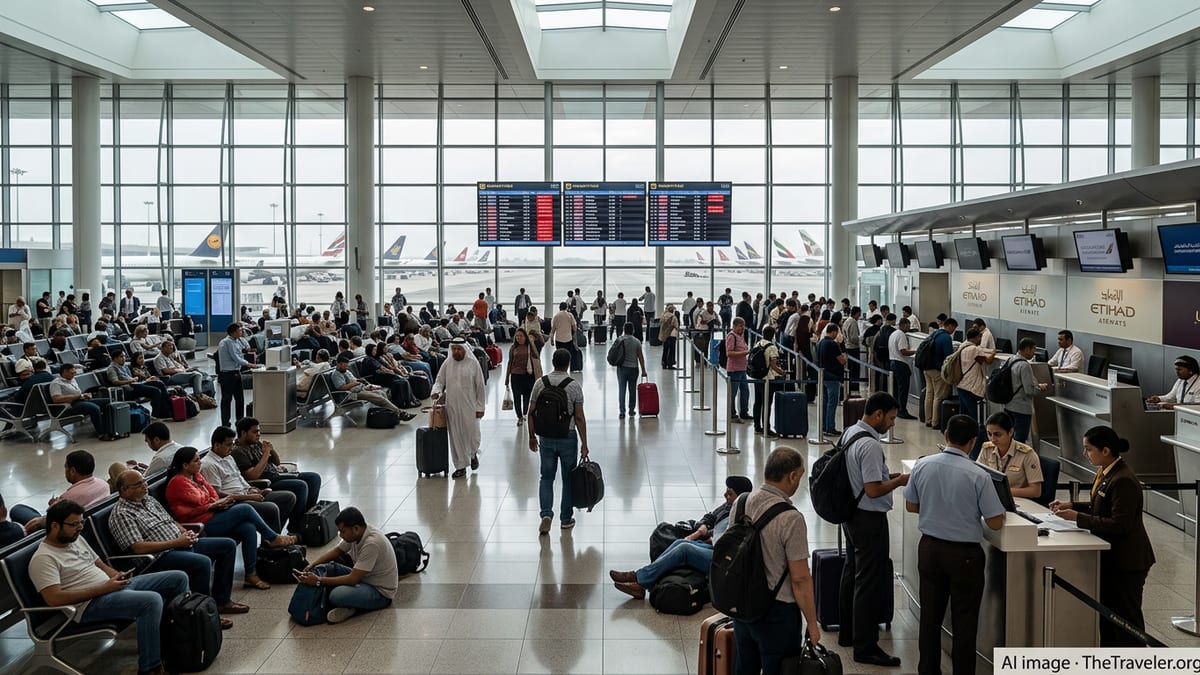
Dubai (DXB): High volume day with selective cancellations and late departures
Public flight schedule data indicates a heavy outbound schedule at Dubai International today, with 505 departures listed for September 19. With that volume, even small air traffic or operational slowdowns can ripple into gate changes, revised boarding times, and late pushbacks across multiple terminals.
Live departure listings early today show a mix of “estimated” and “departed” statuses, with some flights running behind their published times. Examples visible on live boards include EK203 from Dubai to New York (JFK), shown with an estimated departure shortly after its scheduled time, indicating a minor delay rather than a cancellation.
There are also cancellations reflected on public boards. One live listing for DXB shows a flydubai service to Bahrain (FZ23) marked cancelled, along with a codeshare listing for an Emirates-operated flight on the same city pairing shown cancelled as well, a pattern that can occur when a flight is cancelled and the associated marketing flight numbers update alongside it.
For travelers, the most practical step is to confirm status using the airport flight-status tool or the airline’s tracker before leaving for DXB, then recheck again closer to boarding. Airline flight-status pages also allow alerts for specific flight numbers, which can help passengers stay current if the posted estimate shifts multiple times.
Abu Dhabi (AUH): Live boards show revised timings on multiple overnight and early-morning departures
At Zayed International Airport, the official departures page updates in near real time, showing “last update” timestamps and a searchable view by flight, airline, or city. That format is useful on days when passengers need to confirm whether a flight is still operating as scheduled, or has moved to a new departure time.
Independent live departure boards around the early-morning bank show several flights marked “estimated,” including departures on Etihad and partner flight numbers to destinations such as Delhi, Kochi, Zurich, and Kathmandu. “Estimated” status typically indicates the flight is expected to operate but timing may have shifted from the original schedule, especially for flights dependent on late-arriving aircraft or airspace flow management.
Because AUH serves a combination of long-haul and regional connections, even a modest departure delay can affect onward travel. Passengers with self-connecting itineraries should account for additional buffer time and verify any terminal, gate, or check-in counter changes reflected in their airline app as well as the airport board.
Sharjah (SHJ): Cancellations and delays visible on public trackers for select routes
Sharjah International Airport’s public flight tracking feeds show a more disruption-heavy snapshot for a handful of flights today, including a combination of “delayed” and “canceled” entries among early-morning services. Two examples shown on today’s trackers include an Air Arabia service to Samara marked canceled and an Air Arabia service to Yekaterinburg also marked canceled.
Delays are also visible for some inbound services, with certain arrivals marked as delayed by more than an hour compared with their scheduled times. On a hub where many travelers connect to ground transport across the northern emirates, late arrivals can compress the time available for baggage reclaim and onward transfer.
For passengers flying Air Arabia and other carriers out of SHJ, it is especially important to validate the latest flight status directly with the airline on the day of travel, since the displayed status on third-party trackers can lag or differ during rapid schedule revisions.
Dubai World Central (DWC): Limited schedule but delays can be more noticeable
Dubai World Central’s official flight-status page shows a smaller set of movements than DXB, but that lower frequency can make disruptions more visible to passengers on specific services. On today’s official listing, at least one Moscow (Vnukovo) service is displayed as delayed, with the board showing a later time than scheduled.
DWC travelers should also watch for the “show previous” and “show next” flight toggles on the airport’s tracker, since some delayed departures can shift into the next time window and may not appear at the top of a default view.
What travelers can do right now: checks that reduce missed flights and wasted airport time
When the UAE’s main airports show mixed operations, the most useful habit is a two-step confirmation: check your airline’s flight-status tool by flight number, then confirm on the airport flight-status page for your departure airport. That double-check can help catch late-breaking changes like cancellations, updated departure times, or terminal allocations.
Airline travel-update pages also matter on disruption days. Emirates, for example, publishes travel updates and advises customers to check email notifications and flight status before traveling to the airport when disruptions affect parts of the network. Air Arabia similarly publishes travel alerts and outlines rebooking and refund options for passengers booked on canceled flights, alongside reminders to keep contact details up to date for notifications.
If a flight is delayed rather than cancelled, passengers should still verify check-in cutoffs, baggage acceptance windows, and boarding times, which may not shift in lockstep with a revised departure time. For travelers transiting the UAE or planning onward ground travel, building extra buffer time for immigration, baggage, and transfers can reduce the knock-on impact of a late arrival.