


More news on this day
Rep. Abe Hamadeh’s congressional office circulated a travel advisory for U.S. citizens connected to heightened regional tensions in the Middle East, pointing travelers to U.S. Department of State guidance that warns of sudden disruptions, airspace changes, and elevated security risks.
Get the latest news straight to your inbox!
What the press release says and why it is circulating now
The advisory distributed by Hamadeh’s office is framed as a practical, travel-focused notice drawn from publicly posted State Department guidance. It highlights a security environment described as complex and subject to rapid change, with risks that can include missile and drone attacks, abrupt border or airspace closures, and interruptions to commercial transportation.
The press release also underscores a message that appears repeatedly across State Department security communications this summer: travelers already in the region should practice heightened vigilance and be prepared for changes to flight schedules, while travelers outside the Middle East should reconsider travel to and through the region if their plans are discretionary.
Although the item is being discussed as a new advisory in some online recaps dated September 20, 2026, the underlying press release on Hamadeh’s official House website is dated March 1, 2026, with an update line dated March 2, 2026. For travelers, that timing detail matters because the actionable portions of the advisory are primarily pointers to the State Department’s current destination-specific notices and embassy alerts, which can change quickly.
State Department guidance travelers are being steered toward
The State Department’s Worldwide Caution notice, last updated July 22, 2026, advises Americans worldwide to exercise increased caution, citing heightened tensions in the Middle East and the potential for unforeseen escalation. It also flags practical travel impacts such as periodic airspace closures, flight cancellations, and route suspensions as airlines adjust schedules.
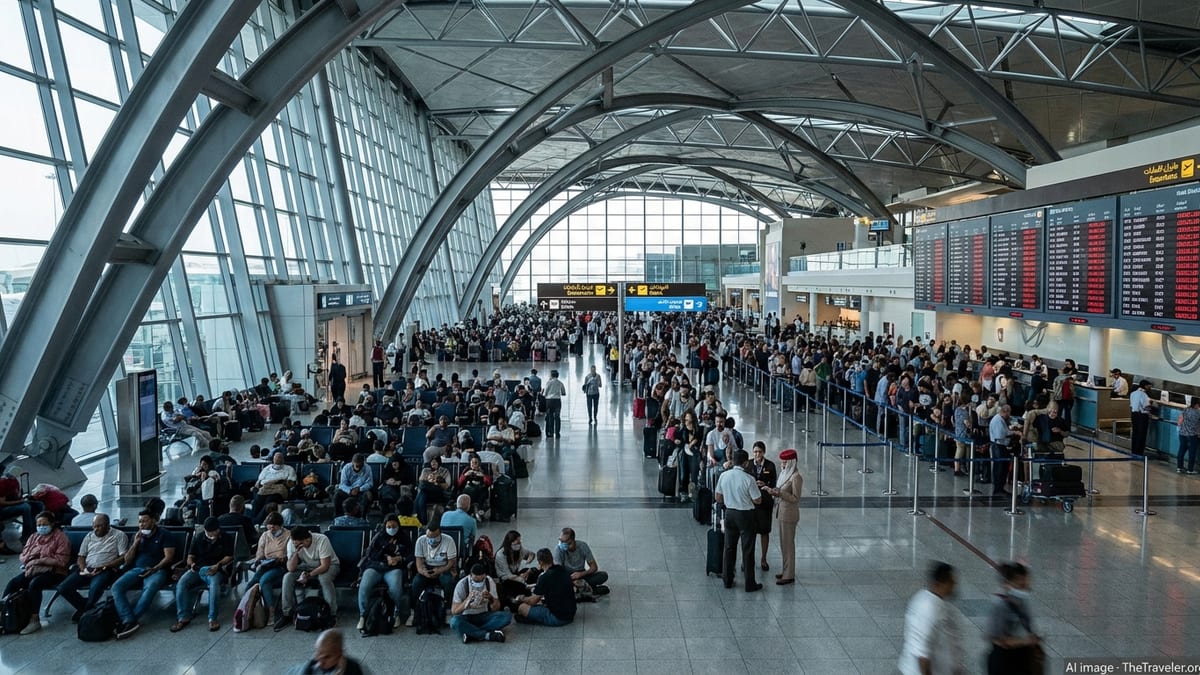
The worldwide notice adds that Americans traveling to or from the region should monitor airport and airline operations closely and check directly with air carriers for schedule status and rebooking details. That’s especially relevant for itineraries that rely on major Gulf hubs and other regional transit points, where reroutes and last-minute cancellations can cascade across connecting flights.
Separately, the State Department’s destination-specific Travel Advisories list shows several Middle East countries at Level 3, “Reconsider Travel,” with update dates in late August 2026 for countries including Bahrain, Israel (including the West Bank and Gaza), Jordan, Kuwait, and Qatar, and a September 15, 2026 update for Saudi Arabia. The same system also maintains Level 4, “Do Not Travel,” advisories for several conflict-affected destinations in the region, and travelers are typically directed to review the precise advisory text for their specific country and circumstances.
Embassy contacts highlighted in the Hamadeh advisory
A central element of Hamadeh’s office advisory is a set of embassy and consulate contact references for travelers seeking country-specific guidance. The notice encourages U.S. citizens to treat the nearest U.S. embassy or consulate in their country of location as the primary point of contact during rapidly changing conditions.
The release also repeats the State Department’s 24/7 phone numbers for Americans needing assistance arranging departure via commercial transportation. It lists the U.S. and Canada number as 1-888-407-4747 and the overseas number as +1-202-501-4444, mirroring the State Department’s emergency contact format used across crisis communications.
For travelers in places where the United States does not operate an embassy, the advisory spells out key constraints. It notes, for example, that the U.S. Embassy in Damascus suspended operations in 2012 and that the U.S. government is unable to provide routine or emergency consular services in Syria, directing travelers to seek help through regional posts. Similar limitations apply for Iran, where the United States does not operate an embassy and assistance is typically routed through alternative channels described in State Department materials.
What travelers should do before a trip, during transit, and if plans change
For travelers who still need to go to the region for family, work, or other essential reasons, the practical takeaway from the advisory ecosystem is preparation for disruption. That includes building extra time into connections, confirming airline schedule status before departing for the airport, and keeping documentation accessible in case rerouting requires rebooking across carriers or changing entry points.
The advisory directs travelers to enroll in the Smart Traveler Enrollment Program, known as STEP, a free State Department service that provides safety and security messages from the nearest U.S. embassy or consulate and can make it easier to contact U.S. citizens in an emergency. STEP enrollment can be particularly useful for travelers moving between multiple countries in a short period, where security alerts may differ by location.
Travelers are also generally encouraged in State Department guidance to follow local instructions in an emergency, monitor official embassy security alerts, and keep a communication plan with family or employers. In a region where airspace and border policy can shift on short notice, having flexible tickets, sufficient funds for unexpected hotel nights, and a backup route out of the country can reduce stress if commercial travel is interrupted.
How to read advisories without overreacting
Travel advisories are designed to communicate risk, not to predict specific incidents, and they often combine broad regional cautions with highly specific destination details. The Hamadeh office advisory functions as a signpost to those official updates, rather than a standalone set of new rules.
For travelers, the most important habit is to treat the advisory level as a starting point and then read the country page for details about where risks are concentrated, what services may be limited, and what actions the State Department recommends. For example, a Level 3 advisory can still encompass a wide range of circumstances, from elevated terrorism risk to the possibility of civil unrest or interruptions to air travel.
Because conditions can change between booking and departure, travelers should check the State Department’s destination advisories and security alerts again close to travel dates, especially for itineraries that include transiting through multiple airports in the region. In a fast-moving environment, the newest update date on a destination advisory can be as important as the level itself.