


More news on this day
The United States has renewed regionwide travel warnings for the Middle East as renewed fighting between Yemen’s Iran-backed Houthi movement and Saudi Arabia raises the risk of rapid escalation, flight disruptions, and shifting airspace restrictions that can affect tourists, business travelers, and connecting passengers.
Get the latest news straight to your inbox!
What prompted the new US alert
In late September 2026, publicly posted US diplomatic security messages across the region highlighted heightened risk tied to Houthi hostilities against Saudi Arabia, including strikes and attempted strikes that have, in published coverage, included civilian aviation-related targets. The alerts emphasize that the security environment can change quickly and that travelers should be prepared for sudden disruptions.
The timing follows several days of reported escalation. Recent published reporting described Houthi drone and missile activity against Saudi territory and Saudi air defenses responding, including incidents in which debris from intercepted threats caused casualties. Separate coverage described Saudi Arabia reporting an attempted ballistic missile strike toward Riyadh, a major aviation hub for international connections.
The US Embassy in Israel also issued a security alert linked to the Houthi-Saudi escalation, underscoring the potential for rapid regional spillover and disruption beyond the immediate area of fighting.
How the advisory affects travelers right now
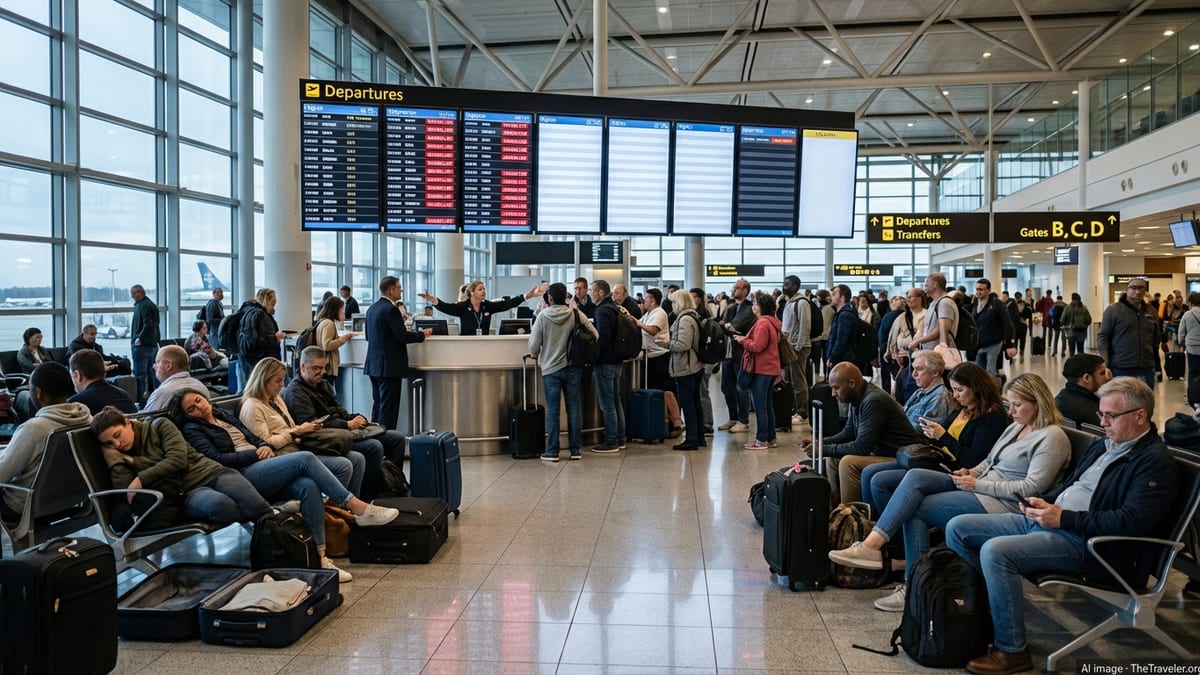
For travelers, the most immediate practical impact is uncertainty: airlines can cancel or reroute flights on short notice, airports can face temporary operational restrictions, and governments can issue airspace limitations that complicate routes even when a traveler is not headed to Yemen or southern Saudi Arabia.
US State Department guidance in 2026 has repeatedly warned that Americans in or transiting the broader region may face periodic airspace closures and flight cancellations. The same advisory framework encourages travelers to monitor their airline for schedule changes and to follow local instructions during fast-moving security developments.
Travelers with itineraries that include connections through Gulf hubs should also factor in ripple effects. Even when airports remain open, airlines may adjust routings to avoid certain corridors, leading to longer flight times, missed connections, and last-minute aircraft swaps that can change seat assignments and baggage handling.
Saudi Arabia and nearby destinations: updated risk levels and key limits
Saudi Arabia’s current US Travel Advisory remains at Level 3, “Reconsider travel,” with risk indicators that include terrorism and other security concerns. The advisory highlights the ongoing threat of drone and missile attacks linked to regional hostilities and notes the risk from falling debris after interceptions, as well as the potential for disruptions to commercial flights.
The Saudi advisory also includes specific restrictions that matter to visitors planning domestic travel: US government personnel are barred from traveling within 20 miles of the Yemen border, and additional limits and authorization requirements apply for certain provinces and areas. While these rules apply to US government staff, they often serve as a practical signal for where risk is assessed as elevated.
Nearby Oman is also listed at Level 3, “Reconsider travel,” with an explicit “Do Not Travel” warning for the Yemen border area due to terrorism and armed conflict. This matters for travelers considering road trips, desert excursions, or cross-border itineraries in the far west and southwest of Oman, where distances can be deceptive and route planning is essential.
Airspace and flight planning: what to watch before you depart
Beyond destination-specific advisories, aviation notices can affect routing across the Eastern Mediterranean, Red Sea, Gulf of Aden, Arabian Sea, Gulf of Oman, and the Arabian Gulf. An FAA advisory notice currently in effect for the Middle East and the Eastern Mediterranean warns of intensified military activity and stresses the importance of accurate identification of civil aircraft in these areas.
The same FAA notice states that Iraq’s territorial airspace is closed to non-coalition aircraft except for specific authorized flights, a limitation that can influence routings between Europe, the Gulf, and South Asia. Even travelers not flying to Iraq can be affected if their airline normally uses that airspace as part of efficient east-west routings.
Separately, European aviation safety guidance has also flagged elevated risk over portions of the Persian Gulf and Gulf of Oman waters, advising operators to avoid certain overwater airspace except as necessary for arrivals and departures. For passengers, this typically shows up as longer routes and occasional last-minute gate changes as carriers juggle aircraft, crews, and fuel planning.
Practical steps for travelers with Middle East trips booked
Travelers with upcoming trips to Israel, Saudi Arabia, the UAE, Qatar, Jordan, Bahrain, Kuwait, Oman, or Lebanon should monitor both country travel advisories and embassy security alerts right up to departure day, not just when booking. Conditions described in publicly available alerts include the possibility of sudden airport constraints and shifting security postures.
Airline notifications matter as much as government advisories in a fast-changing environment. Before leaving for the airport, travelers should confirm flight status directly with the carrier, verify entry and transit requirements for every stop on the itinerary, and keep flexible documentation accessible in case rerouting changes a transit country.
For those already in the region, current US guidance emphasizes staying alert to breaking developments and being prepared for disruption. That can mean keeping passports and essential medications accessible, maintaining a charged phone and backup battery, and having a plan for alternate flights if a key hub experiences delays or temporary closures.